
Electric vehicles definitely lose some range in cold weather, but exactly how much remains a huge point of contention and it’s difficult to get real data. Better range loss data would be helpful for new buyers considering an EV or for those buying another EV to decide what battery size to choose. Fortunately, there are a lot of things that you can do to improve your EV’s cold weather range, and we get into them here.
EV varied opinions about EV range loss in extreme cold has been a popular topic on automotive social media for years now. Here’s a recent post by chupaSach on the r/electricvehicles subreddit:
“I asked the sales person about the loss of range in cold and the sales person said model X will only lose 5% range in extreme cold. I don't believe that is true but sales person was insistent. Any tesla owners can vouch for this?”
Tuctrohs responded with a funny/snarky comment:
“Maybe the salesperson considers 50° F extreme cold.”
Ill_Eye6918 shared his loss of range in cold weather experience:
“I used to have a Model X, and it’s more like 15%. I’d get about 280 miles during winter time. The biggest issue I have is that the reading inside the car for Tesla vehicles is never accurate. My car constantly tells me that I have 320 miles and I can never achieve it. If I’m low and it says I have 55 miles left, it’s more like 45.”
Logitech4873 suggested a better way to estimate the number of miles left:
“Don't use the Guess-O-Meter. Switch to showing battery percentage, and use the energy consumption app in the car or the trip planner for an actually accurate range estimate.”
Virtual-Hotel8156 contributed a thought about how heat pumps on new model EVs help with range:
“Did your old Model X have a heat pump? That makes a difference.”
EV Range in Cold Weather
First off, let’s discuss why it is that EVs lose range in cold weather. Electric vehicles face two major challenges in winter. The first is battery chemistry. Batteries rely on chemical reactions to release and store energy, and those reactions slow down when temperatures drop. Studies show that EVs can lose around 25 percent of their range on days below twenty degrees, simply because the battery is cold.
Cold batteries also charge more slowly, sometimes requiring an extra thirty to forty minutes just to warm up before meaningful charging begins. The second challenge is keeping the cabin warm. Heating the interior draws energy directly from the battery, reducing range even further. In fact, a AAA study found that warming the cabin in twenty degree weather can cut range by up to forty one percent.
How to Maximize Range in Winter
Most EV owners charge at home, which gives them a big advantage in cold weather. Parking in a garage helps keep the battery warmer, which supports better performance and faster charging. Keeping the car plugged in becomes essential because it enables preconditioning. Preconditioning warms the cabin and the battery before driving so the vehicle operates efficiently without draining driving range. Many EVs allow drivers to schedule departure times or use a mobile app to heat the cabin and battery while the car draws power from the home, not the battery. Preconditioning also matters when heading to a public charger. Setting the destination at least thirty minutes before arrival warms the battery so it can accept a charge more quickly.
How to Use Less Energy While Driving
There are several simple habits that help conserve energy on the road. Heated seats and steering wheels use far less energy than heating the entire cabin, so they should be the first choice on cold days. Choosing the right EV also matters. Drivers in colder climates benefit from a heat pump because it warms and cools the cabin more efficiently than a traditional electric heater. Heat pumps can dramatically reduce winter range loss, which is why they appear in many newer EVs.
Efficient driving habits are just as important. Proper tire pressure, gentle acceleration, and keeping speeds below seventy miles per hour all help preserve battery life. For drivers who want some electric capability without committing fully to an EV, a plug in hybrid offers the ability to charge at home and still rely on a gas engine during severe cold.
Heat Pumps
A heat pump is an efficient heating and cooling system that moves heat rather than creating it. It works by pulling warmth from the outside air, even in cold weather, and transferring it into the car’s cabin. The technology has been used in homes for decades, although it began showing up in electric vehicles around the mid to late 2010s as automakers looked for ways to improve winter efficiency. The key benefit is that a heat pump uses far less energy than a traditional electric resistance heater, which means the battery can spend more of its power on driving instead of keeping the cabin warm.
This improvement makes a noticeable difference in cold climates where EVs typically lose range. A heat pump reduces that loss and helps the battery operate more efficiently so drivers can travel farther on a charge. Several popular EVs now include heat pumps, such as the Tesla Model Y, Hyundai Ioniq 5, Kia EV6, Nissan Ariya, and many newer models from BMW and Volvo.
Bottom Line
Winter driving in an EV takes a little planning, although it becomes easy once you understand how temperature affects range and charging. Preconditioning, smart charging habits, and efficient driving can make a big difference. Many cold weather countries thrive with EVs, which proves that with the right approach, winter roads and icy mornings are no obstacle. With a few simple adjustments, you will head into ski season with confidence.
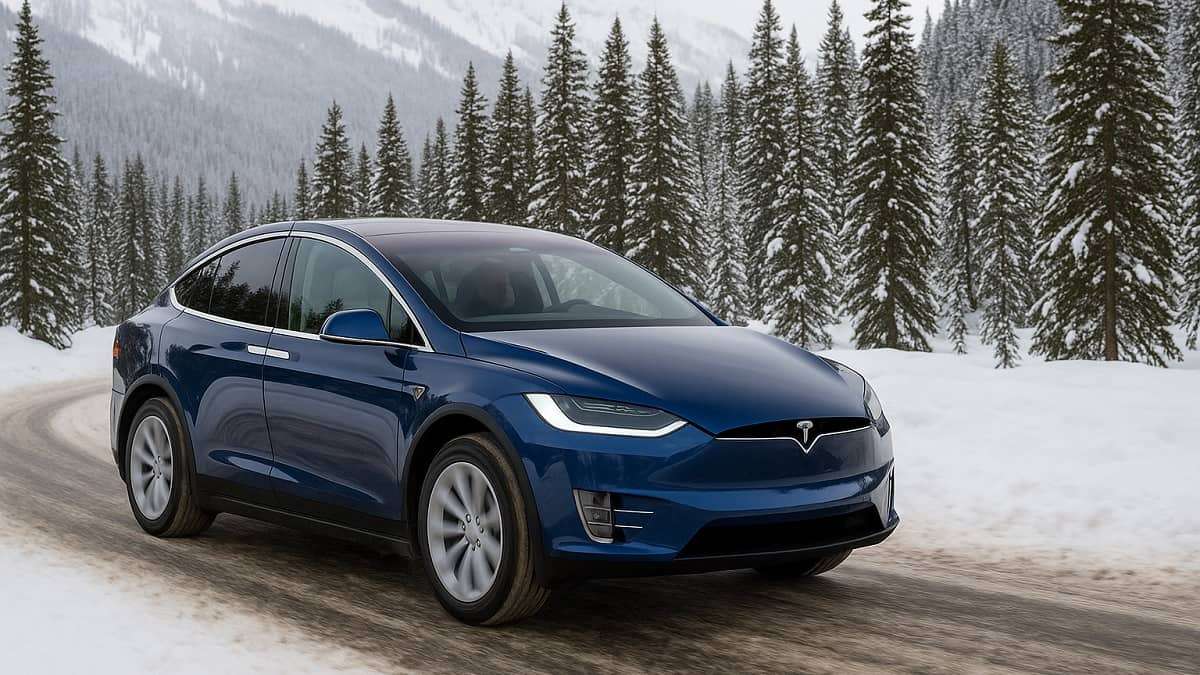
The Tesla Model X
The Tesla Model X is one of the most recognizable electric SUVs on the road because it blends performance, technology, and practicality in a way few EVs can match. It launched in 2015 and quickly stood out for its smooth acceleration, long driving range, and roomy interior. The Model X gained even more attention for its Falcon Wing rear doors, which open upward and give it a futuristic look along with easy access to the third row. It offers strong towing capability, advanced driver assistance features, and a quiet cabin that makes long trips comfortable. The combination of power, efficiency, and a genuinely unique design helps the Model X feel like a flagship in the EV world.
What Do You Think?
How much winter range loss have you personally experienced in your Tesla Model X or any other EV?
Have you ever been told or seen unrealistic range numbers compared to your real world results?
Chris Johnston is the author of SAE’s comprehensive book on electric vehicles, "The Arrival of The Electric Car." His coverage on Torque News focuses on electric vehicles. Chris has decades of product management experience in telematics, mobile computing, and wireless communications. Chris has a B.S. in electrical engineering from Purdue University and an MBA. He lives in Seattle. When not working, Chris enjoys restoring classic wooden boats, open water swimming, cycling and flying (as a private pilot). You can connect with Chris on LinkedIn and follow his work on X at ChrisJohnstonEV.
Photo credit: Provided by author
Set Torque News as Preferred Source on Google
Follow us today...