
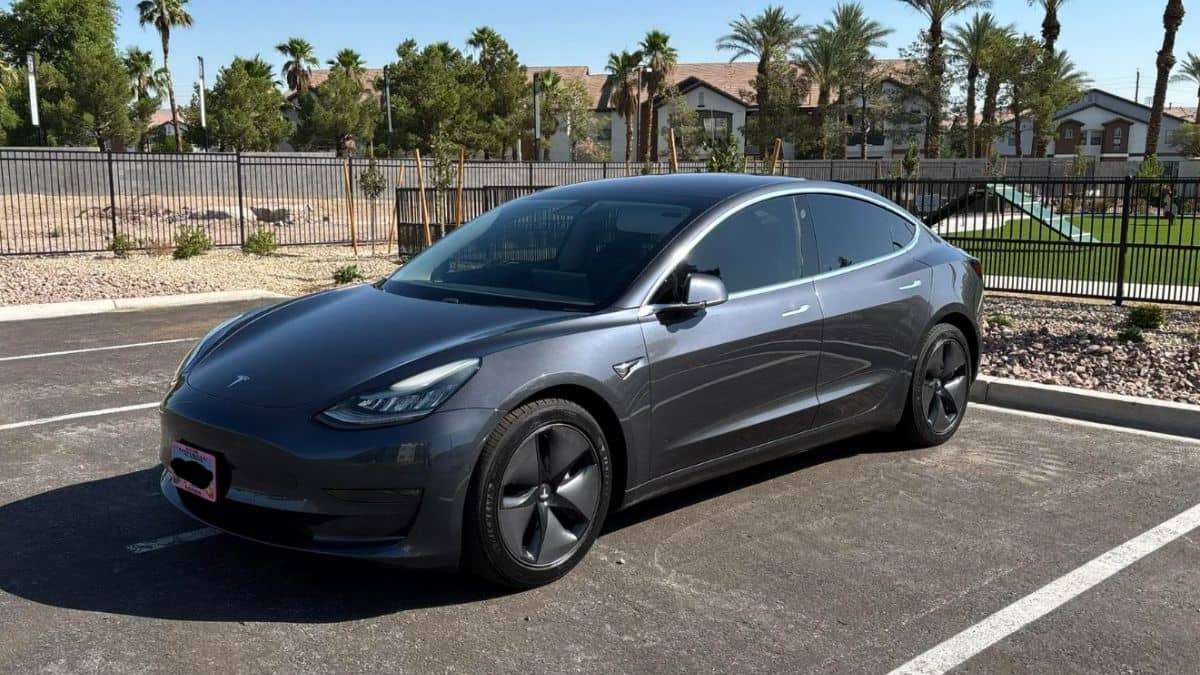

Range anxiety is something every EV driver knows about. But what happens when you're confused by why it's disappearing so fast in the first place? It's one thing to push your car hard and see the battery drop faster, but it's totally another thing when you're doing everything right, driving conservatively, and the numbers still don't add up. That’s what caught my attention in the “Tesla Model 3 and Model Y Owners Club” Facebook group this morning.
A 2018 Model 3 owner named Cody Nardozzi was voicing a concern that many EV drivers dread: unexpected energy consumption spikes. His post wasn’t about something dramatic like a full-on breakdown or a shattered touchscreen. Instead, it was something quieter but arguably more frustrating. If you’ve owned a Tesla for a few years, you already know how subtle performance shifts like this can signal bigger issues under the surface.
Here’s how Cody put it in his post:
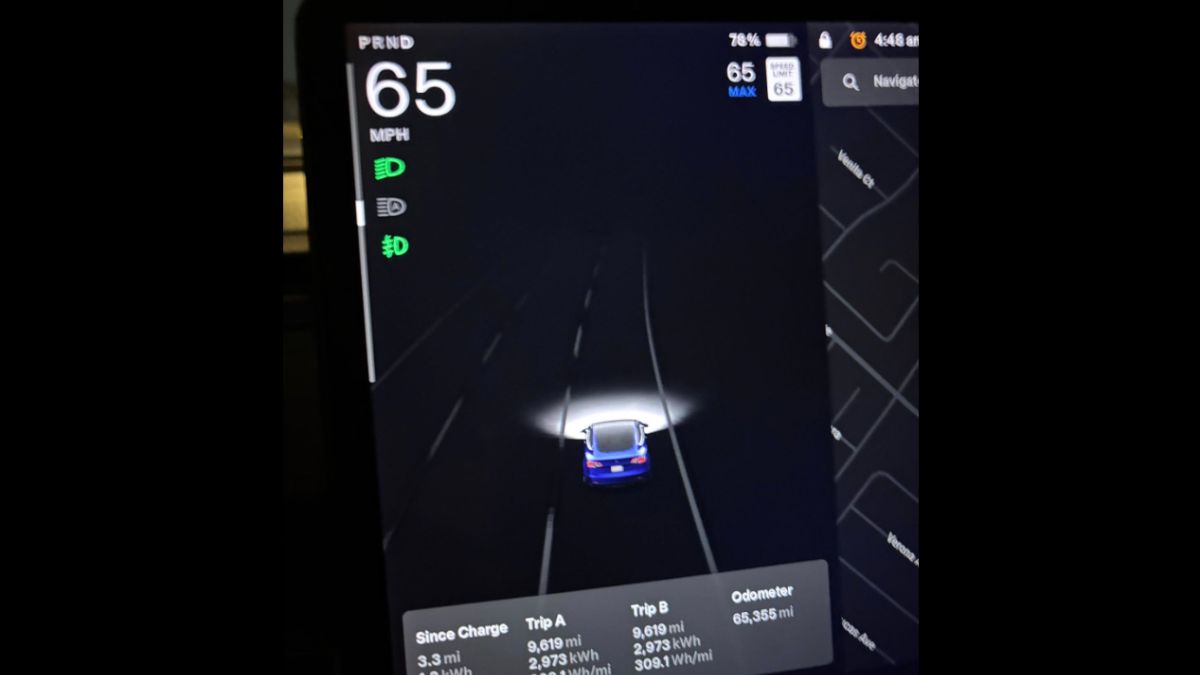
“My 2018 Model 3 Long Range is using up range excessively no matter what I do. It's not getting better. I previously got 220 miles at 80%, but now I'm getting 199 miles with very high wh/mi. I'm driving at the 65mph speed limit with no AC/heat or other accessories on. This is crazy.”
For anyone familiar with the Model 3 Long Range, these numbers raise an eyebrow. This isn’t a car with a worn-out battery at the tail end of its life. In fact, these vehicles have a reputation for holding their own well beyond 100,000 miles. We’ve even reported on owners like this one who saw their Tesla Model 3 hit 200,000 miles and still drive like new with the original battery. So when range starts dropping this significantly, without any major behavioral changes, it signals a need for closer inspection.
Is It Battery Health or Something Else?
One of the first things that many owners look at in cases like this is battery health. While Tesla doesn’t always make it easy to get a direct state-of-health reading like a traditional battery test, there are tools and third-party apps that give a decent picture of degradation. It’s worth noting that some owners who skipped this step before buying have come to regret it. Take this Model Y buyer, for example, who expressed frustration over not asking for a battery health test before purchasing their 2021 Long Range Model Y. When you’re dealing with a drop in charge, it might not seem huge at first glance, but it can feel massive on a road trip or tight commute.
What Other Owners Had to Say
Interestingly, Cody’s problem isn’t unique, and it’s not even the first time we’ve seen Tesla owners baffled by unexplained range losses. Several commenters chimed in with experiences and theories that painted a much larger picture.
Kevin Knott replied, asking, “Did this just start recently? Like maybe after an update? I feel like my mileage dropped after the last update.”
Kevin brings up another concern. Tesla over-the-air (OTA) updates are a double-edged sword. They obviously offer incredible software improvements, new features, and safety upgrades. But in some cases, users have quietly reported range loss or changes to energy usage behavior after receiving a new firmware package. While Tesla doesn’t always disclose every background tweak that comes with an update, it’s not uncommon for range estimations or battery behavior to be adjusted under the hood. For Cody, if this drop came right after an update, it could be worth checking the software release notes or contacting Tesla service.
Next came a technical and location-based insight from John Tashjian:
“From the pic it looks like you live in a very hot place. Not only does A/C use more energy, but so does the battery cooling system. I used to average 220 wh/mi year round in northern CA in our standard range Model 3.”
John’s point about heat is a key one that’s often overlooked too. Even when the A/C isn’t actively running, the battery management system in EVs like the Model 3 will pull extra energy just to keep cell temperatures in an optimal range. So for drivers in Arizona, Nevada, or even Texas in the summer, you could be experiencing higher energy use even if you think you’re driving efficiently. Still, Cody clarified that he had no climate control running, so while environmental factors can contribute, they may not fully explain the spike he’s seeing.
Then came this short but impactful reply from Sean Shelby:
“309 wh/mile average is high if you aren't always driving at interstate speed.”
Sean’s observation is especially relevant because Cody explicitly stated he was driving at 65 mph. That’s not especially fast, even by EV efficiency standards. For a healthy Model 3 Long Range, it wouldn’t be strange to see averages in the 220 to 260 Wh/mi range during gentle freeway driving. If you’re hitting 309, and you're not climbing mountains or flooring the accelerator, something could be going on behind the scenes.
Other Possible Culprits
Some owners speculate that tire pressure, wheel alignment, or even sticking brake calipers could be culprits in sudden energy spikes. Others blame phantom battery drain, which can be caused by always-on systems, faulty software loops, or even overactive Sentry Mode in parked conditions. As someone who recently covered this story about a 9,000-mile Tesla Model Y experiencing early signs of battery degradation, I can tell you that these issues aren't just theory. Many are experiencing and documenting these cases in real-world conditions.
From a broader view, EVs are machines of precision. A small deviation in software or mechanics can have ripple effects on efficiency. One user might see 250 Wh/mi on a summer road trip, while another might push 330 on that same route due to something as simple as a stuck vent or outdated firmware. It highlights the importance of continuously tracking your data, which many Tesla owners already do using different available third-party apps.
The Other Side of Tesla Ownership
But it’s not all doom and gloom. There are Tesla owners who swear by the long-term reliability of their vehicles and feel that any drop in range is either minor or manageable. One example we reported recently showed a new Tesla owner admitting that their only regret was not switching earlier after finally buying a Model 3.
I've noticed more and more realization in EV ownership circles: it's not the big failures that rattle people most, but the unexplained inconsistencies. When you buy an EV, you’re also buying predictability and precision. So when things stop making sense, it feels like the car is breaking an unspoken contract. From where I sit watching this space closely, it's these subtle shifts that reveal more about how fragile trust can be in a world built on data, algorithms, and silent software changes happening in the background.
These issues don’t generate the same outrage as a broken screen or a dead battery, but they quietly undermine trust. And in a world where technology moves fast and transparency doesn’t always keep up, trust is everything.
Key Takeaways and Moral Lessons
- Track your energy data: Whether through your Tesla's built-in trip meters or a third-party app, keeping tabs on Wh/mi trends can help you catch small issues before they become bigger ones.
- Don't dismiss the impact of software updates: Sometimes a drop in range or performance isn't mechanical, it's digital. Updates can change efficiency behaviors, intentionally or not.
- Environmental factors matter, but they aren’t everything: Heat, cold, and altitude can definitely affect range, but when you're seeing unusually high Wh/mi in mild conditions, it might be something deeper.
- Proactively test and check battery health: Especially when buying a used Tesla, you should consider requesting or performing a state-of-health battery check.
- The community is a wonderful resource: Posts like Cody's, and the insightful comments that followed, show just how much knowledge is floating around in owner groups. Don’t hesitate to ask questions or share data.
What Do You Think?
Do you think a software update could have something to do with this range loss? Or something as simple as the weather?
And if you've experienced something like this yourself, what was the culprit in your case?
I'd love to hear your thoughts and stories, as they might just help someone else.
Aram Krajekian is a young automotive journalist bringing a fresh perspective to his coverage of the evolving automotive landscape. Follow Aram on X and LinkedIn for daily news coverage about cars.
Image Sources: The “Tesla Model 3 and Model Y Owners Club” public Facebook group.
Set Torque News as Preferred Source on Google
Follow us today...






Comments
By the way, EV batteries…
Permalink
By the way, EV batteries exposed to mixed driving conditions—including brief bursts of high-speed acceleration, frequent starts and stops, and variable cruising speeds—lasted longer than those discharged at a constant and steady current. This is according to Stanford University study. So, want longer EV battery life? Skip steady cruising, try mixed driving.