
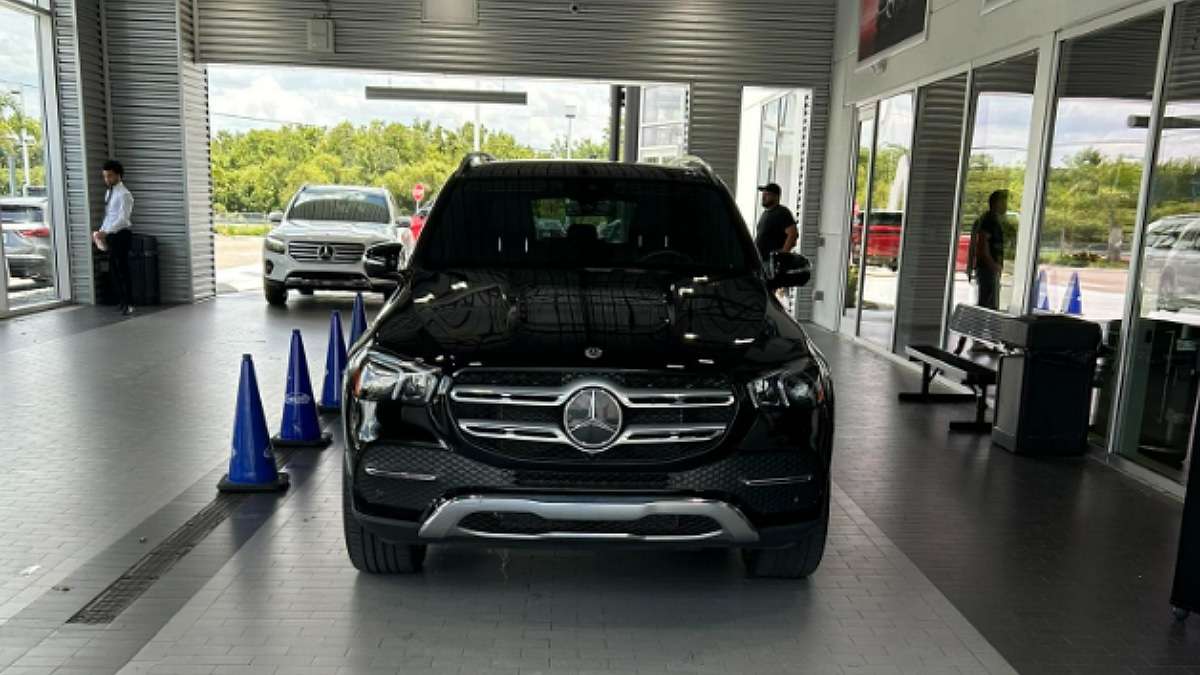

Luxury cars, including modern models like the Mercedes-Benz GLE 350, have come to be seen as more than just comfortable and fast. Many see them as providing long-term peace-of-mind when it comes to owning one. That's why when a vehicle is in need of such an expensive repair item as a cylinder head replacement due to issues with oil leaks, worn out motor mounts, and failing electronic components, questions arise regarding what reliability means today in terms of all things technical within the luxury market. Add in low oil warnings after major engine work and new recommendations for brakes, rotors, and tires, and the ownership experience quickly begins to feel far more intensive than most would expect this early on. This was the concern that came into focus through a post shared by Mercedes owner Ry Con, who detailed an ownership experience that quickly shifted from excitement to frustration.
Here's him describing the catastrophe: “I think I’ve come to the end of the road with my GLE 350. I bought it with 22,000 miles and in the past year, it has needed a cylinder head replacement, oil pan reseals, motor mounts, steering wheel motor, new side mirror housings. It only has 38,000 miles on it, and to put the cherry on top, the dealer says it needs front brakes, rotors, and two new tires.
After the cylinder head replacement, about a month later, the oil light came on and the oil was low. I took it back to Mercedes and they tried to tell me that Mercedes says it is normal for you to lose 1 quart of oil per 1,000 km. I just can’t do the gaslighting anymore.
The warranty is up in about five months. Are these normal problems that people are experiencing or is just just a bad example? I’m about to trade it in for a Lexus GX460 so I can have a piece of mind. Please share your thoughts, thanks!”
When Ownership Starts to Feel Like a Burden
What's most interesting isn't merely the sheer number of repairs, it's the variety of repair types. A cylinder head replacement represents a top end engine job that can involve heavy amounts of labor, disassembling, and expense. Such repairs often occur due to prolonged use or overheating, not something owners expect to face this early in ownership.
Layer that on top of an oil pan reseal, worn motor mounts, and a failed steering wheel motor, it becomes clear that there is no simple explanation for why all of these repairs occurred. All of these components are integral to different vehicle systems, which indicates that the problem is not centered around one particular weak link but rather the way modern vehicles have evolved to combine numerous systems together.
To me, I believe this scenario resonates with consumers because of how rapidly the ownership experience changed. Instead of enjoying a luxury SUV, the owner is now managing service appointments, waiting on parts, and trying to interpret whether new symptoms are normal or signs of something bigger. This mental transition from confident/assured ownership to constantly monitoring the vehicle for potential problems is a common topic among newer luxury car owners.
There is also a financial layer that is easy to overlook. Although the repairs may be under warranty at this point in time, each repair requires downtime, inconvenience, and creates uncertainty regarding what might occur after the warranty ends. If a warranty expires shortly after this period of time begins, every new noise, warning light or fluid loss will become even more significant.
The Oil Consumption Explanation That Doesn’t Sit Right With Owners
One of the things that makes it so difficult for Ry's experience is hearing that losing 1 quart of oil every 1,000 km is "acceptable." While manufacturers have long defined acceptable oil consumption ranges, those standards often come from engineering tolerances rather than real-world expectations.
Because modern turbocharged engines (like those in many Mercedes cars) run at much higher pressure and temperature, they require much more tight tolerances and put far greater strain on engine components. So, even when oil consumption falls into "acceptable" limits, owners could feel like they're experiencing something out of the ordinary, especially if they've never experienced needing to add oil in-between service visits.
That is where I believe the biggest disconnect becomes most visible. The car works according to design specifications from an engineering perspective. However, from an owner perspective, consistently monitoring oil levels, particularly after some form of repair, does nothing but erode the sense of reliability that high-end buyers expect from their vehicles.
It also raises a bigger question: if a vehicle technically meets manufacturer standards but leaves the owner feeling uncertain, is that really acceptable in the luxury segment?
Community Reactions Show This Isn’t an Isolated Feeling
Looking through the responses, it becomes clear that Ry’s experience isn’t entirely unique.
Raj Nazarian shared a nearly identical experience:
“I had the same car which I bought new. The problems started at 15k miles with almost the same issues. Mercedes had my car in the shop more than I had to enjoy. The warranty department was a joke. I finally sold it at 18k miles. Now I'm getting contacted by lawyers wanting me to sue. Fortunately, I also replaced it with a much better Lexus SUV and I am thrilled with it. Quality in Mercedes is not present anymore. They only build trash.”
What stands out in Raj’s comment is not just the frustration, but how quickly the situation escalated to legal discussions and an early exit from ownership. When a vehicle spends more time in service than on the road, it fundamentally changes how an owner views the brand.
Tony Gulotta offered a different but equally telling perspective:
“I brought my ‘21 in for service with 63k miles on it and it runs like a charm. I asked the service advisor what he thought of the ‘25 & ‘26 GLE and after a pause he looked at me and said: ‘You’re good with this one…just wait.’ Your problems are only going to get worse.”
This introduces another dimension to the conversation. It suggests that even within the same model line, there may be noticeable differences between earlier and newer production years. Whether that comes down to cost-cutting, supplier changes, or increasing complexity is hard to pinpoint, but it's a perception that continues to surface among owners.
Then there’s Paul Russo, who captured something that often gets overlooked in these conversations:
“Go Lexus. I had 3 Mercedes-Benz’s and had decent luck with them but they didn't stand behind the vehicles. I went Lexus when I never thought I would go that way but they follow up on things. I’m never going back!”
What stands out here is not just reliability, but the ownership experience itself. I think more and more drivers are not just buying cars, they’re buying into how a brand supports them when things go wrong. Feeling heard and taken seriously matters just as much as the vehicle itself. When support feels inconsistent or dismissive, even loyal customers begin to reconsider their options.
More Owners Are Looking Toward Lexus
It’s not surprising that Ry mentioned switching to a Lexus GX 460. Vehicles like the GX are known for using long-standing, less aggressively tuned powertrains that prioritize durability over cutting-edge complexity. We’ve also even seen broader momentum building around the brand, with a fellow Torque News colleague’s report showing how a new Lexus compact crossover is positioned to pull buyers away from traditional European competitors like BMW and Mercedes.
At the same time, it’s important to keep things balanced as Lexus isn’t perfect either. In one case, our report revealed how a former Lexus finance manager exposed dealership practices that can lead to significant markups and profit margins on vehicles, showing that ownership costs and dealership experience can still vary widely depending on where you go.
The Bigger Shift in European Luxury Vehicles
I think stories like this point toward a larger change in how European luxury vehicles are engineered today compared to 15 or 20 years ago as modern vehicles are far more complex. Turbocharged engines, advanced emissions systems, electronic components, and software integration all bring incredible performance and convenience, but they also introduce more potential points of failure.
That doesn’t necessarily mean quality has disappeared, but it does mean priorities have shifted. Efficiency, performance, and technology have become just as important as durability, and sometimes that balance can feel off for owners expecting long-term simplicity. This shift becomes even more noticeable when you look at how brands continue to emphasize consistency and safety, as highlighted in how models like the Lexus NX have been recognized among the safest vehicles in their class while many European competitors fall short in similar rankings.
A Personal Take on What This Really Means
I think what’s happening here isn’t just about one GLE or even one brand. It’s about how expectations haven’t really changed but the vehicles themselves have.
In many cases, drivers expect something that will get them safely from point A to B every single day with no need to worry about a thing. However, modern luxury vehicles are now very much in line with being considered "high-end" products requiring a greater degree of understanding and acceptance of increased complexity. In some cases, those who buy into these vehicles feel the trade-off was well worth it. In other cases, when problems begin to surface at an early stage, they find it difficult to continue to justify this cost.
The distinguishing feature of this case is how rapid confidence can deteriorate. Once lost, even a great brand identity may not provide sufficient justification to prevent owners from exploring alternative options.
Key Takeaways for Drivers
- Early issues can change the entire ownership experience: Even a few major repairs at low mileage can shift how a driver feels about a vehicle long-term.
- Complexity brings both benefits and risks: Advanced engineering delivers performance and features but also increases potential failure points.
- Dealer support plays a major role in satisfaction: How a brand responds to problems can matter just as much as the problems themselves.
- Brand loyalty is becoming more flexible: Many drivers are willing to switch brands if their expectations are not met.
- Simple engineering still has strong appeal: Vehicles known for durability continue to attract buyers seeking peace of mind.
Share Your Thoughts With Us
Have you experienced something similar with a newer Mercedes-Benz or another luxury vehicle that made you question long-term reliability?
And if you were in this situation, would you stick with a brand you like or move toward something like Lexus for the added peace of mind?
I'd love to hear your thoughts in our comments below.
About The Author
Aram Krajekian is a young automotive journalist bringing a fresh and analytical perspective to the evolving automotive landscape by reporting on real-world ownership experiences and providing industry analysis. Based in North Carolina, he covers electric vehicles, trucks, and broader automotive trends with a focus on contributing a balanced evaluation. His reporting cuts through brand bias to provide readers with grounded insight into how vehicles perform for everyday drivers beyond marketing narratives.
Aram can be reached on X and LinkedIn for ongoing automotive coverage.
Image sources: The “Mercedes-BENZ GLE” Facebook group and Mercedes-Benz’s gallery, respectively.
Set Torque News as Preferred Source on Google
Follow us today...







Comments
Owned a C200 30 years sgo,…
Permalink
Owned a C200 30 years sgo, switch to numerous E classes over the yeaes. Eventually went into an S Class. The final straw was the dealer did no remind me the renew the warranties because 8 years ago owning a hybrid you own a battery too and those batteries can be super expensive to replace. In 2000, tried a Tesla Model 3 and since that day never looked back. Ice or Hybrid has got nothing to do with me. I still own my Model 3 until today, minimal services and parts replacement needed. You can go for a 6 months sea cruise, come back to your Tesla, open the door and drive off. Never needed to plug in for the 6 months. Now we have 3 Model Ys with the Model 3.
That's a fascinating shift…
Permalink
In reply to Owned a C200 30 years sgo,… by Jason T (not verified)
That's a fascinating shift Jason. From climbing the Mercedes-Benz lineup to fully committing to Tesla, your point about hidden hybrid battery costs is something many owners don’t think about until it’s too late. I think your experience really shows how appealing the low-maintenance side of the Tesla Model 3 can be compared to traditional luxury ownership.
Thanks for sharing your experience!