
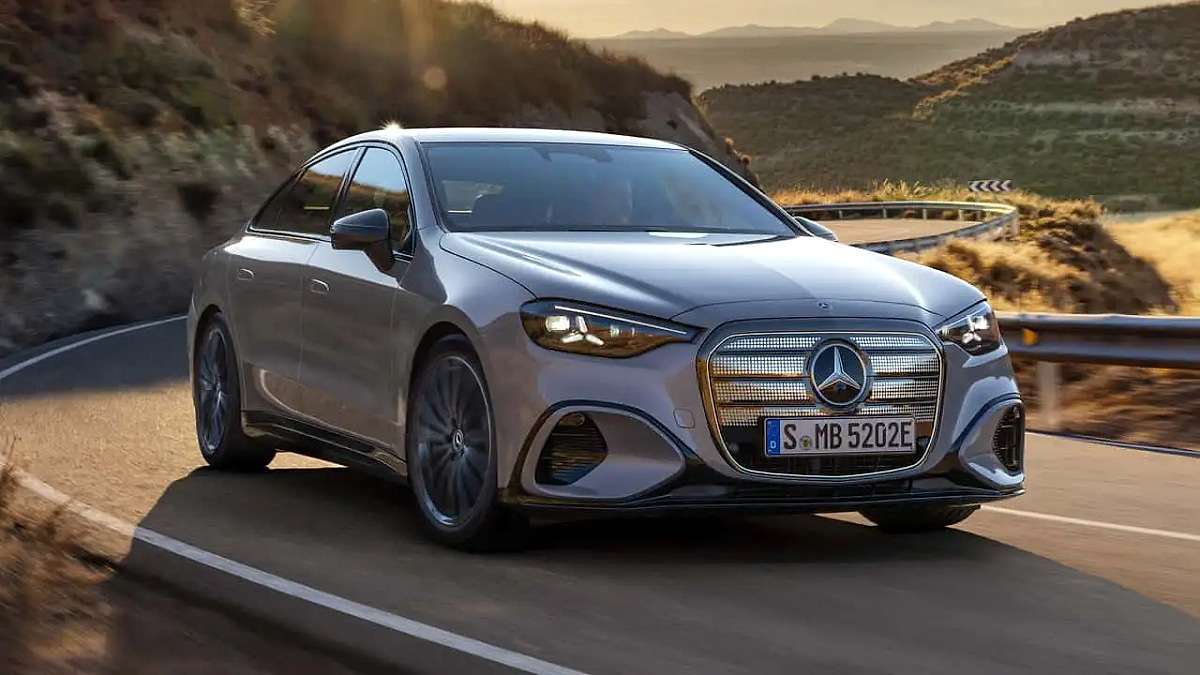

- Mercedes just made the 2027 C-Class quicker than most sports cars… but it’s fully electric. This could be the end of gas-powered fun in the segment.
- This electric C-Class has more rear legroom and luxury than the current gas model. It literally feels like a mini S-Class. Would you upgrade for this interior alone?
- Mercedes positions the new C-Class as the first luxury EV that actually makes long trips effortless and beats gas-car convenience for real-world drivers.
- For many car buyers this may be the "finally" moment, as the new 2027 C-Class EV gets 473 miles WLTP range, add 200+ miles in just 10 minutes of charging. You can make the 1,000+ km trips with one stop.
Something happened on April 21, 2026 that the auto industry has been waiting years to see. Mercedes pulled the cover off the 2027 C-Class Electric. And it changed everything about what an entry luxury sedan can be.
This is not a watered down EV compromise. This is a full rethink. If you have been sitting on the fence about going electric, this car may be the one that finally pushes you over. When you read about what long trips in an electric vehicle with great range actually feel like, the argument for gas gets smaller by the hour. And at Torque News we have been watching this shift for a long time, tracking stories like how EV range anxiety transformed one Ford Mustang V8 owner who was surprised by his Tesla and Kia EV9 real world range results.
A 3.9-Second Sedan That Just Killed the Sports Car Excuse
Here is the number that stops the conversation cold. The 2027 C-Class Electric hits 0 to 60 mph in 3.9 seconds. It makes 482 horsepower and 590 pound-feet of torque from its dual motor setup.
That is AMG territory. Without the AMG badge.
Think about what you used to pay for that kind of performance in a luxury sedan. Now it comes standard in a car that starts around 55,000 dollars. You wake up every morning with a full charge. No fuel stops. No V8 rumble. Just instant, silent authority off the line.
For years, the gas crowd said EVs were fast but soulless. They said EVs were good city cars but not real drivers cars. The 2027 C-Class is here to answer that question. And the answer is not in their favor.
The performance argument for keeping a gas sedan in this class is fading fast. As we have reported here, the growing pressure on luxury electric performance sedans competing with traditional gas cars has been a defining tension in the compact luxury segment.
The Interior Problem Has Been Solved. This Feels Like a Mini S-Class.
Here is what nobody talks about enough. The biggest problem with early luxury EVs was the cabin. You paid a premium price and got a premium badge, but the space and quality did not always match the ask.

Mercedes fixed that with the 2027 C-Class Electric.
The rear legroom in this new model is genuinely larger than the gas C-Class. The cabin is designed to feel closer to an S-Class than anything this size has ever offered. The seats massage. The seatbacks provide physical audio feedback through vibration. The climate system is more responsive than the gas version. The panoramic roof has 162 illuminated stars embedded in the glass.
That is not a feature. That is a statement.
Mercedes did not scale a luxury experience down to fit a smaller car. They pulled the S-Class experience down to this size. That is a completely different design philosophy. And it shows. When we reviewed the 2022 Mercedes EQS 450 Plus Sedan, one of our readers described the EQS as "otherworldly in every respect." Now Mercedes is delivering that same ethos in the C-Class. If you appreciate what a truly refined electric cabin can do for a daily driver, read our full 2022 Mercedes EQS review that set the benchmark for long range luxury EV design.
473 Miles of Range. This Is the "Finally" Moment.
Let me ask you something. What was your biggest objection to buying an electric car?
Range. Every time. It is always range.
The 2027 C-Class Electric has 473 miles of WLTP range with its dual motor configuration. A single motor rear wheel drive version coming in 2027 will go even farther. For U.S. buyers, EPA estimates will likely land between 350 and 400 miles, which is still more than enough to eliminate range anxiety for virtually every driver.
The average American drives fewer than 40 miles per day. You could go nearly two weeks without touching a charger on normal driving. The math is not close.
But here is the part that changes road trips forever. Read the next section carefully.
Add 200 Miles in 10 Minutes. Long Trips Are Now Easy.
This is the engineering that turns skeptics into buyers.
The 2027 C-Class Electric uses an 800 volt architecture with 330 kilowatt peak charging capability. Under the right conditions, it adds roughly 200 miles of range in about 10 minutes at a high power DC charger.
Think about what that means in practice. You can drive 1,000 kilometers, which is about 620 miles, with one single charging stop. You pull in, grab a coffee, come back, and you are ready to go again. The trip does not feel like a charging expedition. It feels like a normal road trip with one short pause.
This directly solves the problem that EV critics have been pointing to for years. It is not theoretical. As one of our writers at TorqueNews found, EV charging anxiety in practice is often less about the car and more about the reliability of the charging infrastructure itself, a solvable problem as the network grows. The C-Class, with its 800 volt system, further reduces that worry by cutting your time at a charger dramatically.
Mercedes has also confirmed that the car includes navigation that actively plans around energy use and charging stops. The car thinks ahead for you. That is the kind of intelligence that makes real world driving easier, not just spec sheet impressive.
Why Mercedes Dropped the "EQ" Name. This Is Bigger Than a Badge.
Pay attention to this detail. Mercedes did not call this the EQC Sedan. They did not put "EQ" anywhere near this car. They called it the C-Class Electric.
That is not an accident.
Mercedes is telling the market that the electric car is no longer a separate category. It is the C-Class. Full stop. The era of segregating EVs into a parallel lineup with awkward names is over for Mercedes.
This naming choice signals something important. The brand is committing to the idea that its electric cars should live up to the same standards as their best gasoline models, not be measured on a separate EV curve. That is a harder standard to meet. And the 2027 C-Class Electric appears to meet it.
The 800 volt GLC Electric paved the way for this moment. The 800 volt revolution in Mercedes vehicles and why the GLC EV is accelerating a major charging infrastructure shift is a story we covered in depth here at TorqueNews.
The Design Speaks to a Different Buyer Now.
The 2027 C-Class Electric looks nothing like the gas model. The grille is illuminated with 1,050 optional pixels. The headlights and taillights carry the star motif. The body style is a liftback, giving you more practical loading than a traditional trunk.
This is not a sleek EV compromise. It is a bold declaration.
Mercedes drew from its heritage with the W111 and W108 for grille inspiration. A modern interpretation of classic proportions, combined with EV technology. That combination appeals to a buyer who wants premium design alongside premium efficiency.
For the buyer coming from a gas C-Class, this is a genuine upgrade in nearly every dimension. More power. More range. More rear legroom. More technology. And a cabin that competes above its class.
If you have been watching how Mercedes struggled in the past to fully satisfy buyers crossing over from their traditional lineup, our 2023 review of the Mercedes EQE 350 as a luxury EV sedan between Tesla Model 3 and Model S is worth reading for context on how far the brand has come.
What This Means for Gas C-Class Owners Right Now.
Here is the honest question. If you own a current gas C-Class, what does this car take away from you?
The rumble? Yes. Some would say that is a loss. A gas engine has character that no electric motor replicates. That sound, that feel, that mechanical texture has been part of what made performance sedans enjoyable for generations of drivers.
But the 2027 C-Class Electric offers something the gas model cannot. It offers a genuine long distance cruiser that costs less per mile to run, requires less maintenance, and feels quieter and more refined at every speed.
The tradeoff is real. The question is whether the exchange is worth it for you.
Our advice here at Torque News has always been to look at the whole picture. The question of how much range we actually need versus how much we imagine we need is one the data consistently answers differently than our instincts do. Most of us would barely scratch the surface of 473 miles on most days.
The BMW i3 Is the Other Name You Should Know.
The 2027 C-Class Electric was built with one competitor clearly in mind. The upcoming BMW i3 sedan, a new generation take on BMW's compact luxury EV strategy, is coming for the same buyer. That battle is going to be worth watching. Our coverage of why BMW is returning to the compact electric segment with the new i3 and what it needs to succeed explains the competitive pressure pushing both brands toward this market.
But right now, Mercedes moved first. And they moved decisively. The spec sheet for the 2027 C-Class Electric is impressive enough that BMW will need to deliver something genuinely special to match it.
That competition is great news for buyers. When two premium brands fight this hard over the same customer, everyone wins.
As Motor1 noted in their reveal coverage, this electric C-Class travels about 30 miles farther than the electric GLC, largely because the sedan shape is considerably more aerodynamic than the crossover. Engineering choices matter. Mercedes made the right ones here.
The Moral Worth Remembering When You Make This Decision.
Here is something I want to leave you with. Not every car purchase is just a car purchase.
When you choose to upgrade, you are choosing what you value. The 2027 C-Class Electric is not cheap. It asks you to think ahead. It asks you to learn a new way of fueling. It asks you to trust that range anxiety is mostly behind us now.
The buyers who did that thinking years ago, who chose the smarter long term option over the comfortable familiar one, they do not regret it. The ones who waited for the right car to make the leap? This might be that car.
There is wisdom in patience. And there is wisdom in knowing when patience has become delay. The 2027 C-Class Electric is a signal that the wait is largely over.
Two Questions for You
Now I want to hear from you. Would you upgrade from a gas C-Class to the 2027 electric version for the interior and rear legroom improvements alone, even if the performance numbers did not matter to you? And if the 10 minute charging stop for 200 miles of range is real world reliable, does that fully solve your concern about road trips in an electric car?
Share your honest experience and thoughts in the comments section below.
Images by Mercedes-Benz.
About The Author
Armen Hareyan is the founder and Editor-in-Chief of Torque News and an automotive journalist with over 15 years of experience writing car reviews and industry news. Now based in the Charlotte region (Indian Land, SC, he founded Torque News in 2010, which since then has been publishing expert news and analysis about the automotive industry. He can be reached at Torque News on X, Linkedin, Facebook, and Youtube. Armen holds three Masters Degrees, including an MBA, and has become one of the known voices in the industry, specializing in the landscape of electric vehicles and real-world stories of actual car owners. Armen focuses on providing readers with transparent, data-backed analysis bridging the gap of complex engineering and car buyer practicality. Armen frequently participates in automotive events throughout the United States, national and local car reveals and personally test-drives new vehicles every week. Armen has also been published as an automotive expert in publications like the Transit Tomorrow, discussing how will autonomous vehicles reshape the supply chain, and emerging technologies in vehicle maintenance.
Reference: Mercedes-Benz Newsroom.
Set Torque News as Preferred Source on Google
Follow us today...





Comments
I drive a 2024 GLC300 SUV. …
Permalink
I drive a 2024 GLC300 SUV. Am loving the Exterior and Interior LOOKS and SPECS of the 2027 Electric GLC400 SUV and C-Class (No number?) Sedan. Will be getting a 2027 when my lease expires in April of 2027, or sooner. The longer range and quick charging of the Mercedes has virtually eliminated those concerns. All that's left for me to resolve now is how many FAST charges are close to the highways East of the Rocky Mountains, and are they in good areas. (Saw thugs waiting for prey at a set of stations in St Louis last year.) And, how would I charge my car at home in the driveway. (Wife's Mercedes gets the garage.) Also, what about the 10 below zero days and nights here in the Chicago area. What will they do to the battery? I'd prefer a gas version of the 2027 GLC SUV if it had the same looks as the Electric version. We'll see what the next 12 months brings from Mercedes. -Allen in Suburban Chicago 5/10/2026