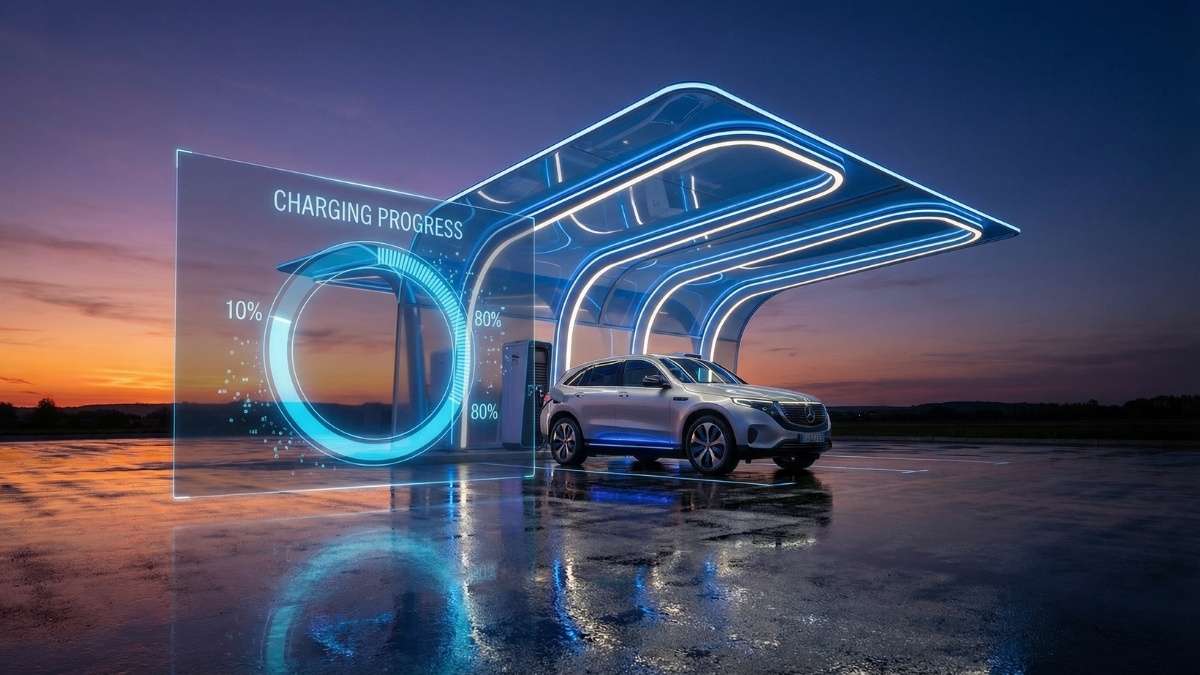

For the better part of a decade, the electric vehicle industry has been comfortably settled in a 400-volt world. This architecture served the first generation of modern EVs well, providing a balance between battery safety, component cost, and charging speed. However, as the market matures and consumer expectations for "refueling" times begin to mirror the internal combustion engine (ICE) experience, the 400V ceiling has become a bottleneck.
An 800V architecture essentially doubles the voltage of the electrical system. In physics terms, Power (Watts) = Voltage (Volts) x Current (Amps). By doubling the voltage, manufacturers can achieve the same power output with half the current. This is the "secret sauce" of the 800V shift. Reducing current allows for thinner, lighter wiring throughout the vehicle, reducing weight and heat generation. More importantly, it allows the battery to accept massive amounts of energy—up to 350kW or more—without the cables or battery cells melting under the electrical friction of high amperage.
While this tech was pioneered by "halo" cars like the Porsche Taycan, we are entering the era of mainstreaming. The upcoming 2026-2027 Mercedes-Benz GLC EV is set to bring this high-voltage capability to the most competitive segment of the market: the luxury compact SUV.
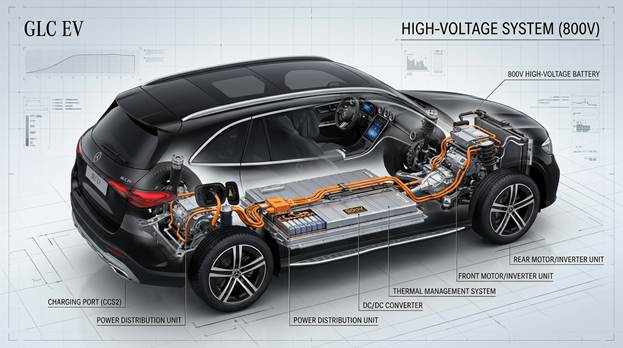
The Advantages: Speed, Efficiency, and Thermal Management
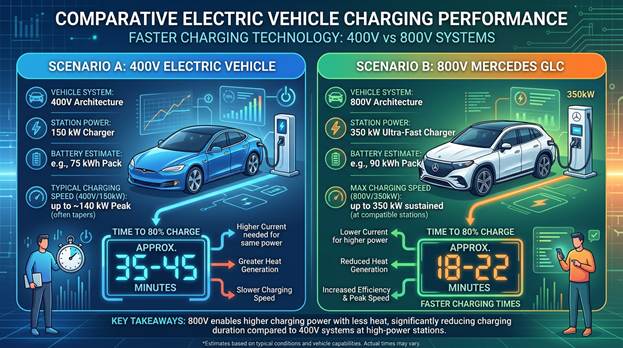
The primary advantage of 800V technology is charging speed. A typical 400V EV might take 30 to 45 minutes to charge from 10% to 80%. An 800V system can often accomplish this in under 18 minutes. This effectively cuts the "dwell time" at charging stations by more than half, which is critical for long-distance travel.
Efficiency is the second pillar. Because higher voltage allows for lower current, there is less "I2R" (joule heating) loss in the system. This means more of the energy leaving the battery actually makes it to the wheels, and more of the energy coming from the charger makes it into the battery. This improved thermal management means the car can maintain peak performance and peak charging speeds for longer periods without the system "throttling" due to heat.
Killing Battery Anxiety: The End of the "Long Stop"
"Range anxiety" has largely been replaced by "charging anxiety"—the fear that while the car can go 300 miles, the time required to regain those miles will turn a six-hour road trip into a nine-hour ordeal. 800V architecture is the primary cure for this.
When a driver knows they can pull into a station and regain 200 miles of range in the time it takes to use a restroom and grab a coffee, the psychological barrier to EV adoption vanishes. The Mercedes GLC EV, by moving this tech into a high-volume family vehicle, validates that ultra-fast charging is no longer a luxury—it is a requirement. This shift forces a "rip and replace" cycle for Charge Point Operators (CPOs) who currently rely on 50kW or 150kW hardware that cannot take advantage of the GLC’s potential.
The Landscape of High-Voltage Competitors
Mercedes is not alone in this race, though they are aiming for the "sweet spot" of the market. Several manufacturers have already established a foothold in the 800V space:
- Hyundai/Kia: The E-GMP platform (Ioniq 5, Ioniq 6, EV6, EV9) was the first to bring 800V to a relatively affordable price point.
- Lucid Motors: The Lucid Air uses an even higher ~900V system, allowing it to charge at rates up to 300kW+.
- Xiaomi and Zeekr: In China, the "budget" 800V revolution is already in full swing. The Xiaomi SU7 and various Zeekr models are standardizing 800V, putting immense pressure on European and American legacy automakers to keep up or be left behind.
Even better solutions are on the horizon. The Rimac Nevera pushes the boundaries of discharge and charge rates that exceed even the 800V mainstream standard, serving as a laboratory for what will eventually trickle down to consumer cars.
Beyond 800V: Megawatt Charging and Solid-State Dreams
As 800V becomes the baseline, the next frontier is Megawatt Charging Systems (MCS). Primarily designed for heavy-duty trucking, MCS can deliver over 1,000 kilowatts. While overkill for a passenger car today, the cooling technologies developed for MCS will eventually allow passenger cars to charge even faster than 18 minutes.
Furthermore, the arrival of Solid-State Batteries (SSBs), expected in limited production by 2028-2030, will complement 800V systems. SSBs are inherently more stable at high temperatures, meaning they can potentially handle the "firehose" of energy provided by an 800V or 1000V charger without the degradation risks associated with current lithium-ion liquid electrolytes.
The Grid Impact and the 5-Year Projection
The move to 350kW+ charging places immense strain on the local electrical grid. A single charging hub with ten 350kW chargers has a peak demand of 3.5 Megawatts—equivalent to powering a small town.
Over the next five years, we will see the rise of Battery-Buffered Charging. Instead of drawing 350kW directly from the grid (which triggers massive "demand charges" from utility companies), charging stations will use large onsite storage batteries. These onsite batteries trickle-charge from the grid 24/7 and "dump" the energy into the EV at high speed when needed. We will also see increased integration of Vehicle-to-Grid (V2G) technology, where cars like the GLC EV could actually support the grid during peak hours, potentially lowering the cost of ownership for the user.
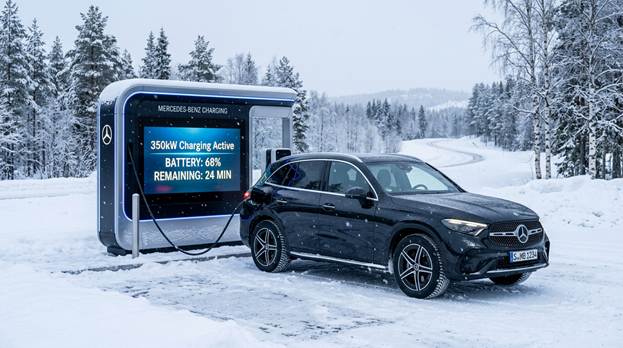
Does This Give Mercedes a Unique Advantage?
Mercedes-Benz has a history of defining the "standard" for luxury. By integrating 800V into the GLC EV, they are effectively making 400V competitors like the current Tesla Model Y or Audi Q4 e-tron look like "legacy" tech.
The advantage for Mercedes isn't just the voltage; it's the brand's ecosystem. Mercedes is building its own High-Power Charging (HPC) Network, ensuring that GLC owners have a seamless, "Plug & Charge" experience. While others have the tech, Mercedes is combining it with luxury finishes and a dedicated infrastructure that addresses the reliability issues often found at third-party stations.
Wrapping Up
The transition of 800-volt architecture from the racetrack and the six-figure supercar to the suburban driveway marks the second "Great Leap Forward" for the electric vehicle. The Mercedes GLC EV is the herald of this change. As 800V becomes the mainstream standard, the infrastructure industry faces a reckoning. The old 50kW and 150kW chargers that defined the early 2020s are quickly becoming the "dial-up internet" of the automotive world.
For the consumer, this means the end of long waits and the beginning of true long-distance viability. For the grid, it means a need for smarter storage and management. The next five years will be defined by a "rip and replace" cycle that will eventually result in a charging network that finally matches the speed and convenience of the gas station.
Disclosure: Images rendered by Artlist.io
Rob Enderle is a technology analyst at Torque News who covers automotive technology and battery developments. You can learn more about Rob on Wikipedia and follow his articles on TechNewsWord, TGDaily, and TechSpective.
Set Torque News as Preferred Source on Google
Follow us today...