
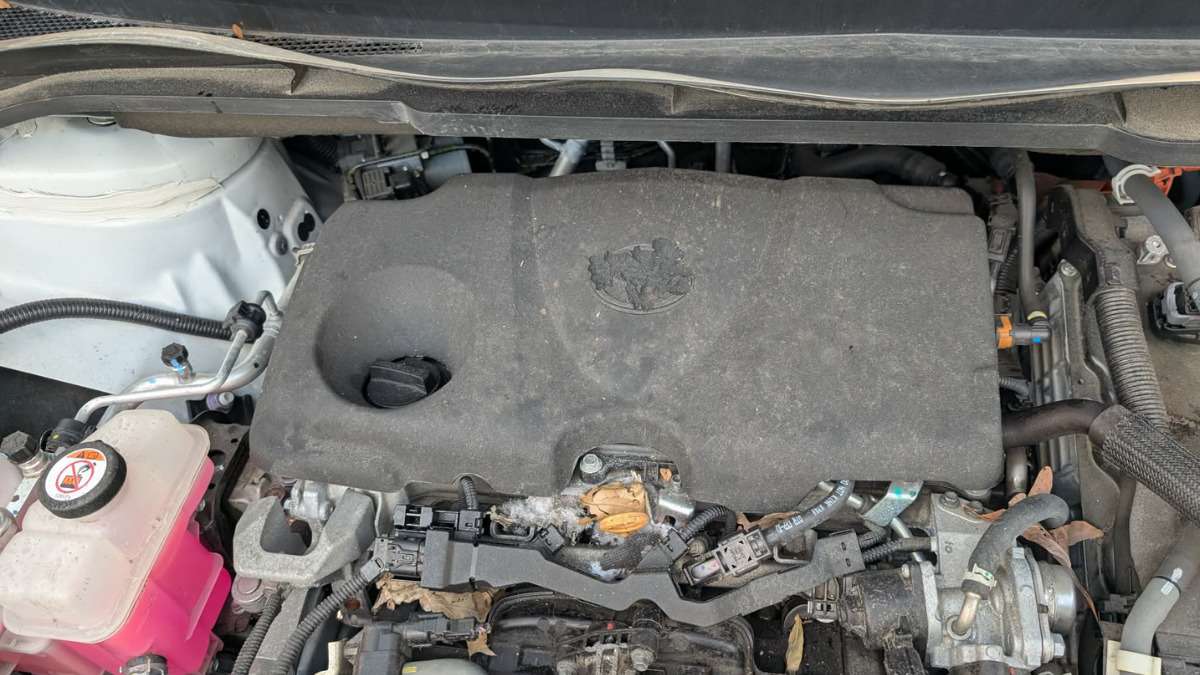

The fact is that for many of us, parking our cars for a day or so on the street is simply a common activity we perform without giving it much thought. In addition, since parking on the street can be an ordinary occurrence in urban areas, most of us don't think about all the things that could go wrong with our vehicle's electronics when we park our cars for an extended period.
However, I discovered that vulnerability firsthand last night by going through posts in the "Toyota Sienna 2025+" Facebook group and reading one posted by Anna K-g. What started as a routine parking decision quickly turned into a major ownership headache after her Toyota Sienna sat on a Washington, DC street for just under two days and was found with severe rodent damage that chewed through critical wiring and left the vehicle completely undriveable.
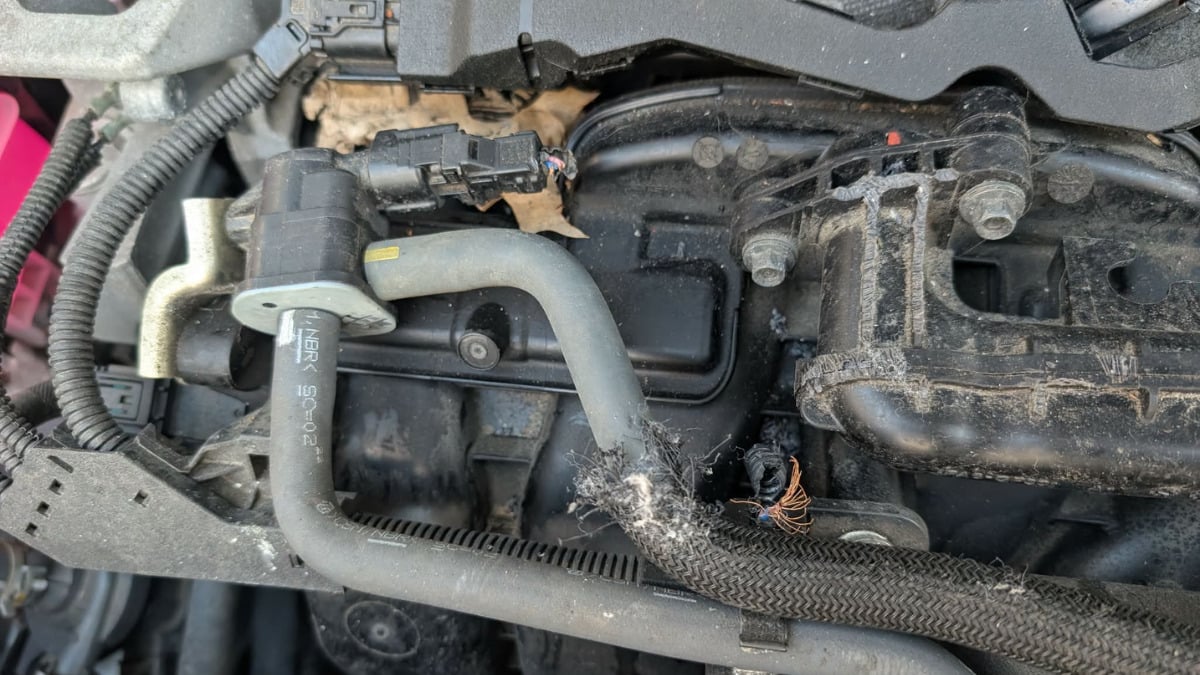
Here's how she described the situation: “I was parked for exactly 39 hours in Washington, DC, from Sunday to Tuesday. I parked on the street on the Sunday before Presidents’ Day. During that time, a squirrel or a rat caused $13,000 worth of damage to my car, chewing through wires, insulation, etc. and three newborn babies were found. We aren’t sure whether it was a rat or a squirrel but it's a lesson not to park on the street for too long. I would like to add that the Toyota does not drive, there are some strange noises coming from the engine, and neither the accelerator nor the brake is working. It can’t accelerate. Many malfunction messages are displayed, and all the warning lights are on. Both front headlights' plastic is chewed and there are holes. The entire electrical system has been chewed through and damaged. We had to tow it for 4 hours to New Jersey, and we are now waiting for the insurance representative.”
How Modern Vehicle Systems Turn Small Damage Into Major Failures
What's notable about this incident isn't the amount of damage that occurred, but rather how quickly it rendered the vehicle undriveable. Older vehicles could have a damaged wire likely leading to a display of a warning light and/or possibly shut down one system. However, because of the high level of connectivity in newer vehicles such as the 2025 Toyota Sienna, when there are issues with sensor data being sent to control module(s) for throttle input, brake assist, fuel injection, etc., many newer vehicles will turn off the functionality of several key safety systems to protect occupants from further possible injury.
I’ve seen similar patterns show up in other ownership experiences, including one case I reported on where a driver explained how a simple sensor issue turned into a major diagnosis after rodents chewed through wiring in their 2025 Toyota Camry. It just adds on to the fact that even minor damage can escalate quickly in today’s vehicles.
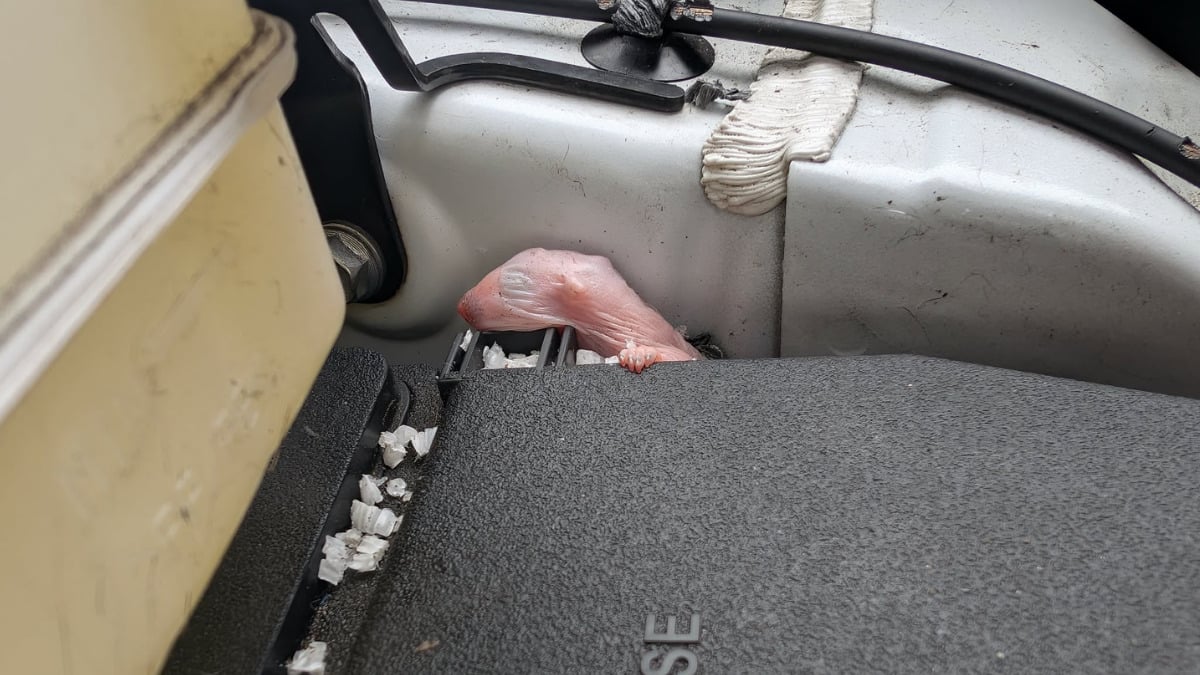
The Hidden Reason Rodents Are Going After Vehicle Wiring
One of the most underreported reasons behind this type of incident (involving rodents inside car engines) is related to the use of new, "green" materials that vehicle manufacturers now utilize in their wiring insulation systems. Many automakers have shifted toward more environmentally friendly compounds, including soy-based materials.
This shift towards green materials by automobile manufactures is argued as being beneficial to the environment. But as we are seeing, this also presents some unexpected consequences. The green materials present in the insulation on many of today's vehicles attract rodents who think they are either food or a place to build nests. Combine this with the heat produced within an engine compartment and you create an attractive area for rodents to seek shelter and be warm.
The above-mentioned issue does not appear to be limited to a single manufacturer either, so we can't really blame Toyota here. Similar issues have occurred on numerous different models and brands. This indicates that there may be a problem associated with the design of today's automobiles rather than an issue with a particular model.
Can a Few Chewed Wires Actually Turn Into a $13,000 Repair?
At face value, $13,000 for damage may seem excessive. Once a wiring harness is included with the damaged wiring, the price increases rapidly. The recommended replacement of all or a large section of wiring as opposed to repairing an isolated connection is used by most manufacturers to ensure years of reliable service. However, this method significantly adds both time (in terms of labor) and cost (in terms of parts). Replacing entire wiring harnesses can take many hours to disassemble depending on how much room there is in tight spaces such as an engine bay.
But not everyone agrees that these repairs always need to be this extensive. Elieser Madrigal, an automotive technician, offered a different perspective:
“Automotive technician here. I see this happening all the time. They usually eat the connectors/pigtails of major sensors near intake manifolds (where they like to nest). Any qualified tech that's good with electricals can fix this easily. Toyota will always go for main/body electrical harness replacement hence the crazy price. If insurance declines (most likely they'll cover it), look for a shop that's good with electricals. I don’t see this being more than $1k to repair.”
His insight highlights an important distinction between dealership repair strategies and independent repair options. While dealerships tend to follow manufacturer guidelines that prioritize full replacement, experienced independent shops may be able to repair specific sections at a much lower cost.
What Other Owners Are Starting to Notice About These Incidents
What makes this story more concerning is that it doesn’t appear to be an isolated case. Nicole Czaporowski shared a similar experience:
“Oh my God that's terrible! We recently had $15,000 worth of damage from rats! Thankfully no babies. Our insurance did cover it which was helpful.”
Her experience reinforces how quickly costs can escalate when rodents damage modern vehicle systems. It also highlights how important insurance coverage can be in these situations.
Another commenter, Brenda Granados, focused on how widespread and unsettling these incidents are becoming:
“Reading your story and others in the comments is so scary! It seems like this has become a ‘thing’ and I have a whole new fear! I wouldn’t wish this on anyone. This is terrible! I wish you the best and pray the insurance will help you out!”
That reaction reflects a growing awareness among owners that this isn’t just a random one-off situation. It’s something that more drivers are starting to factor into their ownership experience, especially in urban areas. That's why this broader concern also ties into how buyers evaluate vehicles beyond just performance and efficiency. In another discussion which I covered, buyers comparing the Kia Carnival and Toyota Sienna began prioritizing long-term ownership considerations over just features and pricing, showing us that reliability and real-world usability continue to shape decisions.
When Everyday Situations Turn Into Unexpected Ownership Risks
One of the most interesting aspects in this situation is how something that feels minor can escalate so quickly. Parking on the street for less than two days is typically completely normal. There's nothing about the decision to do so that would usually raise concern. But when you combine urban environments, rodent activity and modern vehicle design, it creates a scenario where damage can happen very fast with serious consequences.
Even outside of wiring issues, I’ve seen similar patterns where seemingly small design or material factors lead to unexpected ownership concerns. In one case my fellow Torque News colleague reported on, a 2025 Toyota Sienna owner raised concerns about exterior trim durability after noticing melting plastic components, which shows how different types of vulnerabilities can surface in real-world use.
My Take on This Situation
The problem with today's vehicles highlights an area that isn't discussed nearly enough when talking about modern vehicles. We often mention the vehicle's performance, fuel efficiency, technology and features, but many people don't usually consider how they perform in an everyday, unpredictable environment.
Although today's vehicles have never been more sophisticated than they are now, there are certain risks associated with their advanced complexity which did not previously exist at all. A vehicle could be very well-refined, efficient, and feature-packed, but it could still be susceptible to something as simple as being left unattended in a parking lot for a few days.
This is another example where the conversation regarding materials becomes critical. Although using soy-based or eco-friendly wire insulations has great intentions, from the owner's perspective, it doesn't seem to work to the benefit of the owner if it makes the vehicles more appealing to rodents. This raises a fair question about whether these alternatives have achieved a balance of short-term benefits versus long-term reliability. To many owners (especially city dwellers), this type of risk is not apparent until after the fact occurs. And once it does, it changes how you think about ownership entirely.
Key Takeaways for Drivers
- Modern vehicles rely heavily on electrical systems: Damage to wiring can disable multiple systems at once, not just a single function.
- Rodent-related damage is becoming more common: Urban environments and material choices can increase the likelihood of these incidents.
- Repair costs can vary significantly: Dealerships may recommend full replacements, while skilled independent shops may offer more affordable repairs.
- Insurance coverage can make a major difference: Situations like this can quickly become expensive without proper coverage.
- Parking conditions matter more than most drivers realize: Where and how long a vehicle is parked can sometimes play a bigger role than expected.
Share Your Thoughts With Us
Have you ever experienced rodent damage or unexpected electrical issues with your vehicle? Especially after it was parked for a period of time?
And if you live in a city, has this kind of story changed how you think about where or how long you leave your car parked?
I'd love to hear what you have to say in our comments below.
About The Author
Aram Krajekian is a young automotive journalist bringing a fresh and analytical perspective to the evolving automotive landscape by reporting on real-world ownership experiences and providing industry analysis. Based in North Carolina, he covers electric vehicles, trucks, and broader automotive trends with a focus on contributing a balanced evaluation. His reporting cuts through brand bias to provide readers with grounded insight into how vehicles perform for everyday drivers beyond marketing narratives.
Aram can be reached on X and LinkedIn for ongoing automotive coverage.
Image sources: The “Toyota Sienna 2025+” Facebook group.
Set Torque News as Preferred Source on Google
Follow us today...






Comments
My issue with their "eco"…
Permalink
My issue with their "eco" friendly wire is how brittle it becomes after time, heat, or oil. volvo tried it in 83-84 it failed. Bmw has it in my headlight buckets, its failed. STOP THIS GOING GREEN BS YOURE FEEDING EVERYONE, ITS ALL ABOUT MAKING IT THE CHEAPEST TO SAVE A PENNY
No one is asking the…
Permalink
No one is asking the important question here.....how did those little ones taste?