
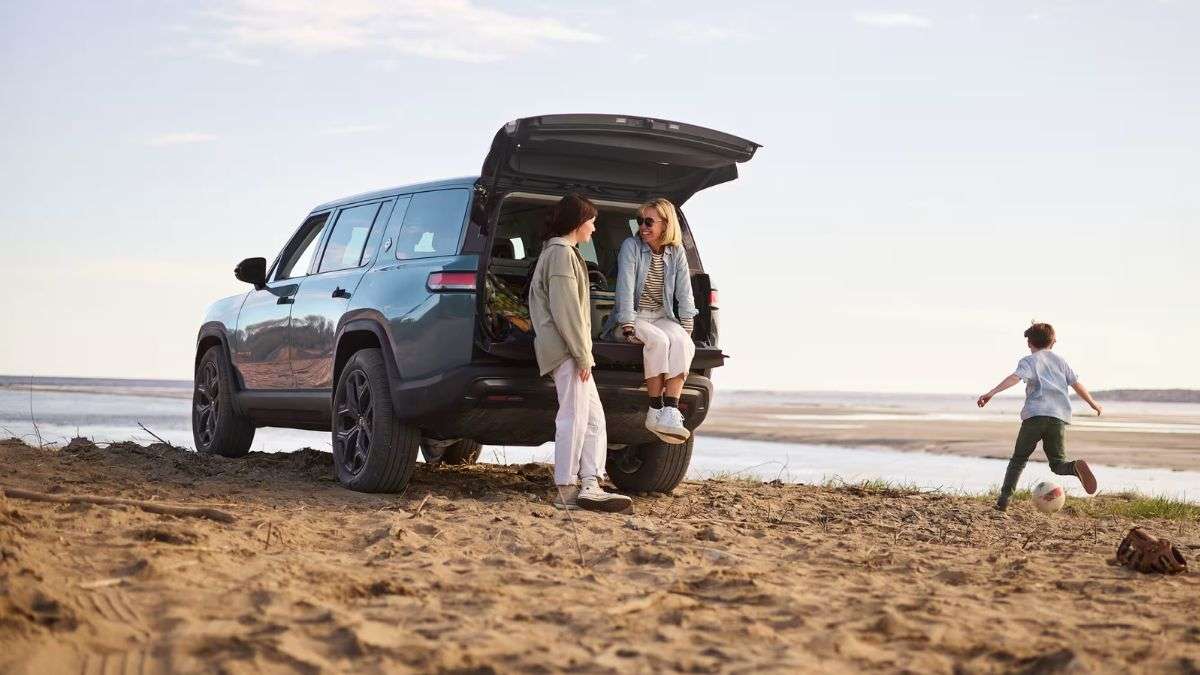

When you buy a new electric SUV like the 2025 Rivian R1S, you expect the drive to feel smooth, quiet, and confidence-inspiring. That’s why unexpected noises stand out so sharply. I think this is exactly why Jesse’s story caught my attention. It shows how a simple service visit can turn confusing when the vehicle behaves differently the moment a technician steps inside.
Jesse shared the full experience in the “RIVIAN Electric Vehicles Discussion” group, explaining the back-and-forth over what service would and wouldn’t address. In his own words: “Dropped my R1S off for the 7,500-mile service and a few specific issues (a clunking front motor, wind noise on the driver side, and rear suspension that was slow to fill). They made me drive with a technician and said they would only address issues that were repeatable during the test drive. The technician argued with me about the wind noise but said he would ultimately take a look. I got it back and they didn’t address it because it wasn’t repeatable in their own test drive the next day. Is this normal? Have you had to go out on a test drive and show them the issues, and then end up having to argue about it? The surprising part is that I couldn’t get the clunking noise to replicate with the technician, but because I paid for the 7,500-mile diagnostic check, they did catch some major issues and replaced the front axle, which I guess they wouldn’t have checked otherwise.”
This is something many EV owners run into: noises appear one day and vanish the next. It also shows the tension between what customers feel and what service centers need before taking action.
Wind Noise Issues Are Becoming More Common
Randal was one of the first people to respond with a nearly identical situation:
“Just turned mine in this week, a 26 G2, for wind noise on the driver side. They admitted there was an issue with the upper molding and are going to replace the upper molding. There’s another post in this group that has a video of this issue. Hope this helps.”
This matters because it confirms Jesse isn’t alone. If other owners are getting molding replacements for the same noise, it points to a pattern Rivian will eventually need to address. It also lines up with experiences other R1T and R1S owners have shared in articles like so I feel like we see all the time Rivian service centers are bad but I got my R1T truck back in 3.5 days, where wind-related complaints were part of the conversation.
Wind noise is one of the most inconsistent problems on EVs. Temperature, wind direction, road speed, and elevation can all change how the air hits the A-pillars and door seals. That inconsistency makes it a lot harder for service advisors to diagnose unless the noise repeats exactly when they test it.

Why Some Owners Have to Prove the Problem Themselves
Benjamin added something many EV owners will recognize immediately:
“Same thing here. I’ve always had to ask for a technician to go with me, and in about 15 service visits for drivetrain and chassis noise, they have never acknowledged an issue unless I drove it with a technician and pointed it out. Honestly, I don’t understand why they don’t use soundwave diagnostics. I know someone who owns a German auto repair shop, and they can place microphones in different areas, drive the car, and let the software identify what the problem might be, which helps narrow issues down much faster.”
EVs are quiet enough that small noises become extremely noticeable, but also extremely inconsistent. And because Rivian doesn’t yet use microphone-based frequency diagnostics, their system still depends on technicians hearing the issue directly.
The same theme appeared in another story about long repair times and deeper quality concerns, covered in my Rivian R1T service took too long but the bigger concern was what it exposed about quality. In that case, a drivetrain issue required multiple visits before a clear diagnosis could be made.
This shows how complicated noise-related repairs can become, especially on vehicles that use multiple motors, air suspension components, and tightly sealed cabins.
Why Technicians Need the Noise to Be Repeatable
Joe, who previously worked at a service center, offered a perspective a lot of owners don’t hear directly:
“It’s normal procedure to only fix what can be duplicated during the drive because they need to hear what you’re hearing. I often noticed other noises that were fixable, but the specific sound the customer was concerned about was actually normal. To properly address your concern, the tech needs to hear the exact noise. If the vehicle isn’t making it when you bring it in, that’s simply how it is. They can’t spend time chasing things they can’t reproduce.”
This is the divide between customers and service teams. Owners often feel dismissed, but technicians can’t replace parts, open cases, or file warranty claims without a repeatable symptom. Some owners interpret this as poor service when in reality it’s protocol.
We saw a similar issue in another story where a customer thought their repairs were scheduled, only to learn later that nothing had actually been initiated, documented in I thought I was finally getting my Rivian R1T fixed until they told me I wasn’t even in service.
Noise issues demand clear documentation, and if the noise disappears on the test drive, everything becomes more complicated.
The Front Axle Discovery That Changed Everything
Even though Jesse couldn’t recreate the clunking with the technician, the full 7,500-mile diagnostic uncovered a major issue:
the front axle needed replacement.
This is the part that stands out the most. If Jesse hadn’t paid for that diagnostic, the axle issue might have been missed. Intermittent clunks can indicate early component wear and catching them early can save a lot of trouble later.
Other Rivian owners have had similar “hidden problems” discovered only through additional diagnostics. One driver described receiving a sudden suspension warning at 40,000 miles, documented in I got a sudden suspension warning on my Rivian R1T at 40k miles and it told me to drive with caution. The symptoms were subtle until the vehicle flagged a major alert.
Jesse’s axle replacement reinforces a simple truth:
Quiet EVs make small noises feel big, but those small noises sometimes reveal the real problem.
Wind Noise on EVs Is One of the Hardest Problems to Solve
Wind noise is especially challenging because of how EV cabins are designed. The Rivian R1S uses:
- thick sealing surfaces
- large door openings
- upright pillars
- air suspension that changes ride height
A tiny misalignment can create noise only under certain conditions. Some owners only hear it when the wind hits the driver's side at a specific angle. Others listen to it on cold mornings but not warm afternoons.
This is also why some, who have piteously loved the truck, still walk away because the service couldn’t isolate the noises. That was the story in Rivian R1T owner says it’s the best vehicle I’ve ever had but he’s getting rid of it due to the service experience.
Wind noise is real, but it’s also incredibly inconsistent.
What Jesse’s Story Says About Rivian Service
When you look at the full picture, a few things become clear:
- Some noises won’t appear when technicians test the vehicle.
- Service centers need reproducible symptoms before replacing parts.
- Wind noise complaints may become more common as more vehicles hit the road.
- Paid diagnostics can uncover issues test drives don’t.
- Owner-technician communication is essential for quick results.
The experiences other owners have shared, both positive and negative, show that Rivian service isn’t universally flawed or universally excellent. Outcomes vary based on how repeatable the issue is.
Noise-related complaints sit right at the center of that uncertainty.
Key Takeaways
- Wind noise is one of the hardest EV issues to reproduce, and many owners deal with intermittent sounds that disappear during service visits.
- Drivetrain clunks should never be ignored, even if they show up only occasionally.
- Technicians need to hear the issue before they can file warranty claims or replace parts.
- Paid diagnostic packages can be worth it, as Jesse’s axle replacement proved.
- Consistent documentation and test-drive partnerships help speed up the entire service process.
Moral Takeaway
Jesse’s experience shows that EV ownership requires patience, clear communication, and persistence. When noises appear, document them. When something feels off, bring it in early. And when technicians need proof, it’s not because they don’t believe you, it’s because EVs demand precision, and diagnosing them requires it.
Two Questions for You
- Have you ever had a noise disappear the moment a service technician got in the car with you?
- Do you think EV manufacturers should introduce advanced microphone-based diagnostics, so owners don’t always have to reproduce issues themselves?
Share your experience in the comments; your story might help the next owner going through the same thing.
Narek Hareyan is a young automotive journalist with experience in a golf cart dealership and an interest in the automotive industry. Follow Narek on X for daily news coverage about cars.
Set Torque News as Preferred Source on Google
Follow us today...






Comments
in addition to the 50 %…
Permalink
in addition to the 50 % depreciation after 18 months, Consumer Reports just crowned Rivian and Lucid the LEAST reliable EVs sold today.. congrats !