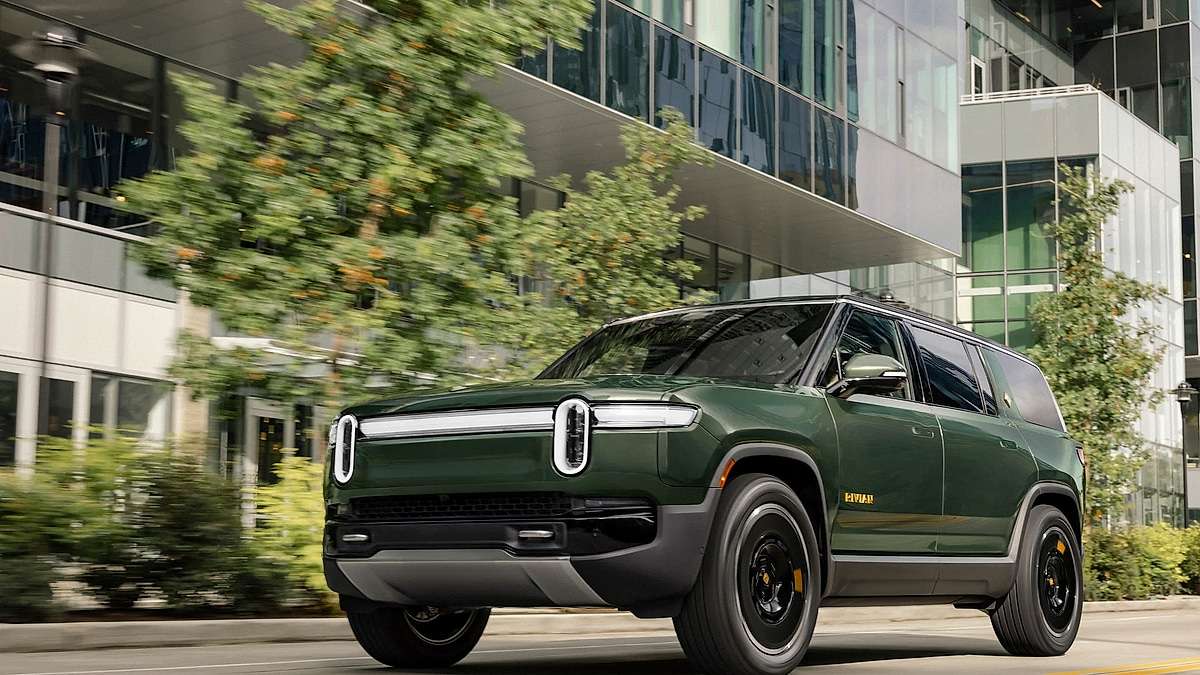

A 2025 Rivian R1S Dual Motor Standard Pack, purchased just last April, is set to cross 90,000 miles tomorrow, driven by a professional chauffeur operating in the Chicago suburbs. This vehicle, which averages 300 miles a day, six days a week, has already seen a half shaft replacement, a heat pump repair, and a charge port harness swapped twice under warranty. The owner estimates $14,000 in fuel savings over a comparable internal combustion engine vehicle, revealing the EV's operational cost advantage in commercial service.
“I’m a professional chauffeur who does Uber and Lyft on the side. I started my private business in July 2025 in the far western suburbs of Chicago.
In April 2025, I purchased a new 2025 Dual Motor Standard pack (with upgraded sound system) and will cross 90k miles tomorrow! This includes missing a month while the car was down for repairs after I was hit in a minor front-end accident. I typically drive 6x/week, 300 miles a day.
I wanted to provide a comprehensive review of every aspect of ownership for possibly the highest daily driver in the country with the smallest battery pack.
This is the 4th of 5 EVs that we’ve owned (2021 Model Y, 2023 Bolt EUV, 2021 ID4, and 2023 e-tron). VERY familiar with EVs.
-The purchase process was a shit show. My initial sales rep over-promised on promos and then ghosted me. The manager stepped in and offered a solution (an extra gear that could be sold privately) that made the situation right. However, he ghosted me for months and had to be escalated to another manager for final approval. It all worked out, but it was a disappointing start.
-Had some initial service work done on rattles and squeaks. One item that could never be addressed was a rattle in the B pillar that was solved by folding up a business card in the “oh shit” handle above my head. For whatever reason, that stopped it.
-Passenger rear seat is starting to show some wear in the padding. Haven’t figured out how to fix that.
-22” OEM tires lasted 40k miles. Defender LTX M/S2 ($1700) has lasted 50k. Rivian techs commented on their comprehensive inspection last week that they thought they were new tires!
-Tire rotations are around 15k miles and done at Belle Tire. Love those guys.
-The car is always in standard height. Efficiency on the systems page shows 1.24 mi/kWh (wildly inaccurate), but by dividing miles (89,826) by kWh over lifetime (32,769) would be 2.74 mi/kWh. Rivian Roamer shows a 30-day driving history of 2.15 m/kWh which should get better as the weather warms up.
-ORIGINAL 12v battery showing good health!
-EVbase running boards were installed and haven’t been an issue for any tire changes or service.
-I charge to 100% overnight every night and at least 50% additional charge once a day, typically at a Tesla Supercharger-sometimes 100%-150% depending on the day. This is my one regret. I wish I had gone for the Max pack.
-In terms of repairs under warranty, I had a half shaft replaced, the heat pump mounting(?) fixed (crazy loud and shaking the entire vehicle when the heat kicked on), major door squeaks on the driver door (mobile service), and alignment had to be redone 2x after the accident. The major one-charge port harness was replaced once in December. Fault showed up and then went away. The diagnostic showed it needed to be replaced. 1.5 days' work covered under warranty. The issue showed up again about a month ago. Covered under parts warranty. That will be done in the first week of May. Here’s to hoping no issues between now and then.
Advertising
-Things not under warranty: driver NFC tag not working, and doesn’t allow use of the key card to enter the vehicle, phone still works. Quoted $500 (work not completed). Rear light bar major condensation-quoted $1100 (work not completed). Button on lift gate replaced-$42. Charge port actuator-$500 (had to manually open and close the door for about a week). The right rear damper of the suspension was found leaking last week-$1800. Comprehensive inspection and brake check also done-all good there.
-Major shoutout to the Melrose Park and Buffalo Grove Service Centers. They’ve taken great care of me as my entire business is around this specific VIN.
-1 windshield replacement at Safelite for $1300 (only certain centers have the software to do the work; Rivian quoted $2k).
-A weird humming sound has always occurred between 31 mph and 36 mph. It has gotten better as time has gone on, but still there.
-Overall, it has been an amazing vehicle. If Rivian offered a long-wheel base (12” recommended), it would be the single best commercial chauffeur vehicle on the market today (currently dominated by the Lincoln Navigator). 6-8 inches needs to be added to the trunk space to allow checked luggage to be stacked long ways if the rear seats are up, CAPTAIN'S CHAIRS IN THE MIDDLE with the bench in the back, and a few more inches for leg room to accommodate infant car seats.
Again, I can’t state this LOUDLY ENOUGH: make a slightly larger R1S, and commercial drivers will come in droves because the operational costs are SO MUCH LOWER than ICE vehicles (I estimate $14k in fuel savings alone, which could have been $20k if I went with the max pack to allow primarily home charging).
Thanks for reading!
Edit: automatic car washes weekly, no towing, no off-roading.”
The owner, Reddit user u/Big_Benefit5659, provides a rare glimpse into the long-term, high-mileage realities of owning a Rivian R1S in a demanding commercial environment. The owner's positive sentiment is tempered by the detailed account of warranty repairs and out-of-pocket expenses, which reveals a vehicle still finding its footing in terms of long-term durability.
Rivian R1S: High-Mileage Commercial Performance
- The 2025 Rivian R1S Dual Motor Standard Pack achieved 90,000 miles in one year, averaging 300 miles daily, six days a week, in a professional chauffeur service. This extreme usage provides valuable data on the vehicle's long-term durability and operational costs.
- The owner estimates $14,000 in fuel savings compared to an equivalent ICE vehicle, with a potential of $20,000 if the Max pack had been chosen, revealing the significant economic advantage of EVs in high-mileage commercial roles.
- Warranty repairs included a half shaft replacement, a heat pump mounting fix, and two charge port harness replacements, indicating recurring issues with critical components that required significant service intervention and vehicle downtime.
- Out-of-warranty repair quotes total over $3,500 for items like a leaking suspension damper ($1,800), a faulty rear light bar ($1,100), and a non-functional NFC tag ($500), suggesting that long-term ownership will involve substantial non-covered expenses.
The repeated charge port harness failure, the heat pump mounting issue, and a leaking suspension damper are not minor inconveniences; they are critical system components that indicate potential design or manufacturing weaknesses that Rivian needs to address as its vehicles age.
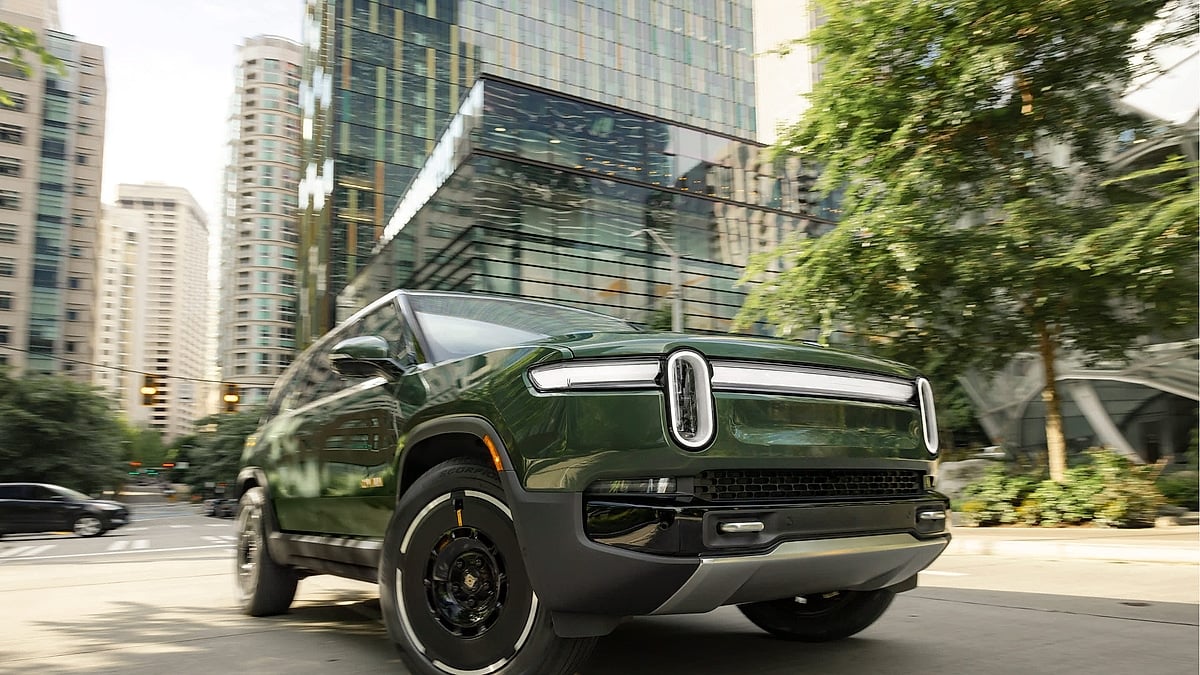
The experience shows a fundamental tension in the EV market: the promise of low operational costs versus the reality of complex, often expensive, repairs. The $14,000 in estimated fuel savings is substantial, but it must be weighed against the nearly $3,500 in quoted out-of-warranty repairs (excluding the windshield) that the owner has opted not to complete or has paid for, plus the downtime for warranty work. This is where the true cost of ownership emerges, beyond the sticker price and the electricity bill.
Reddit user u/IV-Food, commenting on the post, recognized the significance of this high-mileage report:
Advertising
"Excellent summary of your experience. Your daily mileage exceeds the estimated range of the standard pack, and you lived through 90k miles to tell the tale. Well done, my friend. Let your story shine bright over every person out there who hesitates on an EV purchase because they think they will be stranded everywhere without 400 miles of range. You actually deserve the max pack, and I hope your next adventure leads you to buy a Rivian with one."
This sentiment captures the prevailing anxiety among potential EV buyers regarding range and reliability. u/Big_Benefit5659's experience, despite the repair list, actively combats the "range anxiety" narrative, demonstrating that even a standard pack R1S can handle extreme daily mileage. However, the owner's regret about not opting for the Max pack reveals that while it's possible to manage with less, the added range would significantly reduce the daily charging burden, potentially translating to even greater savings and less stress.
The initial purchase process, described as a "[removed] show" with a ghosting sales rep and manager, points to persistent issues within Rivian's direct-to-consumer sales model. While the situation was eventually rectified, such experiences erode customer confidence and reflect poorly on a brand attempting to establish itself as a premium offering. Similar complaints about communication breakdowns and unfulfilled promises have surfaced across various Rivian owner forums since the brand's inception.
The owner's positive remarks about the Melrose Park and Buffalo Grove Service Centers provide a counterpoint. For a vehicle that is the cornerstone of a commercial business, responsive and competent service is paramount. The ability of these centers to keep the vehicle on the road, despite recurring issues like the charge port, speaks to their dedication. This level of service is what keeps a commercial operator solvent, even when the vehicle itself presents challenges.
The owner's calculated real-world efficiency of 2.74 mi/kWh (lifetime) and 2.15 mi/kWh (30-day) stands in stark contrast to the wildly inaccurate 1.24 mi/kWh displayed on the vehicle's system page. This discrepancy is not merely an oversight; it's a critical flaw in the vehicle's telemetry that misinforms the driver about their actual energy consumption. For a commercial operator, accurate efficiency data is essential for business planning and cost analysis. The Rivian Roamer app provides more accurate data, meaning the in-car display is either poorly calibrated or suffering from a software bug Rivian has yet to prioritize.
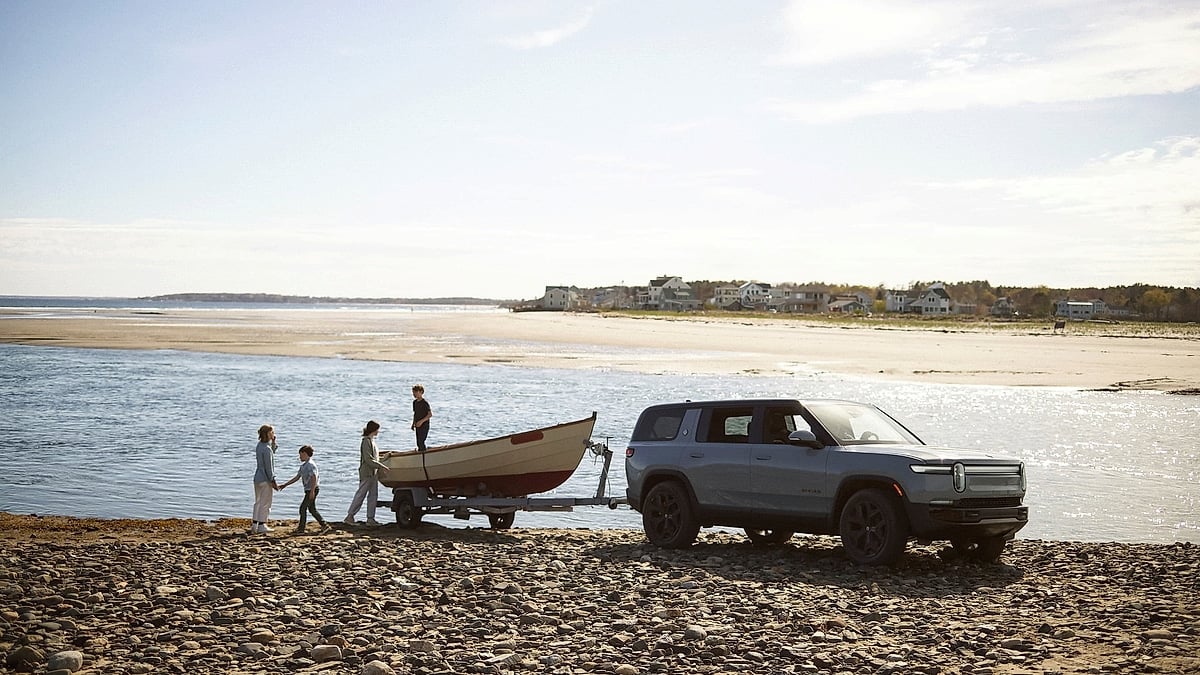
The suggestions for a long-wheelbase R1S with captain's chairs and increased trunk space for commercial use are not merely wishful thinking; they are practical design recommendations from an operator who understands the demands of the chauffeur market. The Lincoln Navigator dominates this segment for a reason: space and comfort. If Rivian intends to capture a piece of this lucrative commercial pie, listening to users like u/Big_Benefit5659 is not optional. The potential for $20,000 in fuel savings with a Max pack R1S would be a compelling argument for fleet managers, provided the vehicle can match the reliability and passenger amenities of its ICE competitors.
The Rivian R1S, even in its standard pack configuration, is proving itself a capable, cost-effective workhorse for high-mileage commercial applications, primarily due to its significant fuel savings. However, the frequent, often critical, warranty repairs and the growing list of out-of-warranty issues show that Rivian still has substantial work to do on long-term durability and quality control. The operational cost benefits are clear, but they are currently offset by a service experience that, while praised for its local execution, is necessitated by a vehicle that demands too much attention. Rivian needs to refine its sales process, improve its in-car data accuracy, and critically, engineer out the recurring component failures if it truly intends to be a serious contender in both the consumer and commercial markets.
Image Sources: Rivian Media Center
About The Author
Noah Washington is an automotive journalist based in Atlanta, Georgia, covering sports cars, luxury vehicles, and performance culture. His reporting focuses on explaining the engineering, design philosophy, and real-world ownership experience behind modern vehicles.
Noah has been immersed in the automotive world since his early teens, attending industry events and following the enthusiast communities that shape how cars are built and driven today. His work blends industry insight with enthusiastic storytelling, helping readers understand not just what a car is, but why it matters.
Noah is also a member of the Southeast Automotive Media Association (SAMA), a professional organization for automotive journalists and industry media in the Southeast.
His coverage regularly explores sports cars, luxury vehicles, and performance-driven segments of the automotive industry, including the evolving culture surrounding Formula Drift and enthusiast builds.
Read more of Noah's work on his author profile page.
You can also follow Noah here:
Set Torque News as Preferred Source on Google
Follow us today...