
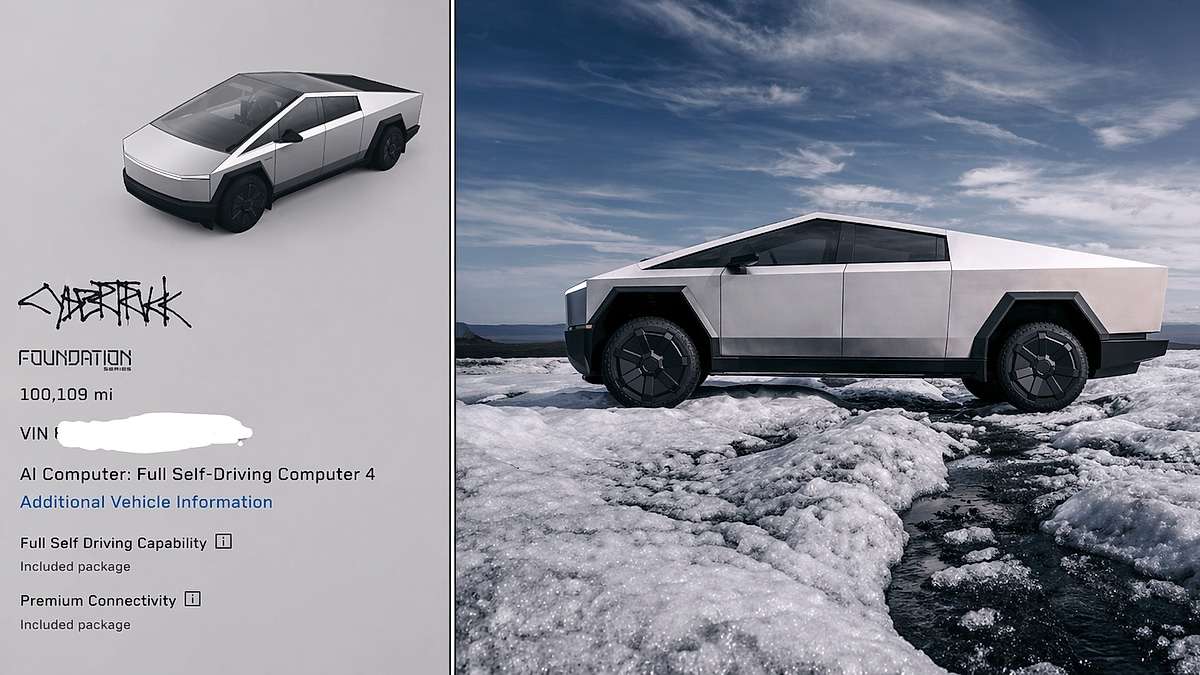

One of the first 10,000 Cybertrucks built just crossed 100,000 miles. The owner drives for Lyft in Nashville. He has hauled passengers through Tennessee summers, towed a bass boat at 800 watt-hours per mile, and driven from Nashville to Bangor, Maine, in a November snowstorm that dropped 10 inches in 40 minutes. He has also paid Tesla $7,200 for an out-of-warranty repair at 60,000 miles, replaced a set of tires at 40,000 miles for $2,500, and watched his full-charge range drop from roughly 340 miles to 299.
His name is LyftDr1ver on the Cybertruck Owners Forum, and he writes like someone who paid for every repair himself.
The truck is a 2024 Cybertruck Foundation Series dual motor, one of the earliest production units. LyftDr1ver took delivery in early 2024 and immediately put it to work. Nashville's rideshare market is competitive, and the Cybertruck's distinctive appearance draws attention. Passengers compliment the room, the panoramic roof, and what they describe as a smooth ride. The driver credits the steer-by-wire system and 180-degree lock-to-lock steering for saving him from several near-accidents and tight parking situations. For a vehicle that weighs roughly 6,800 pounds and measures 223 inches long, it handles downtown Nashville better than he expected.
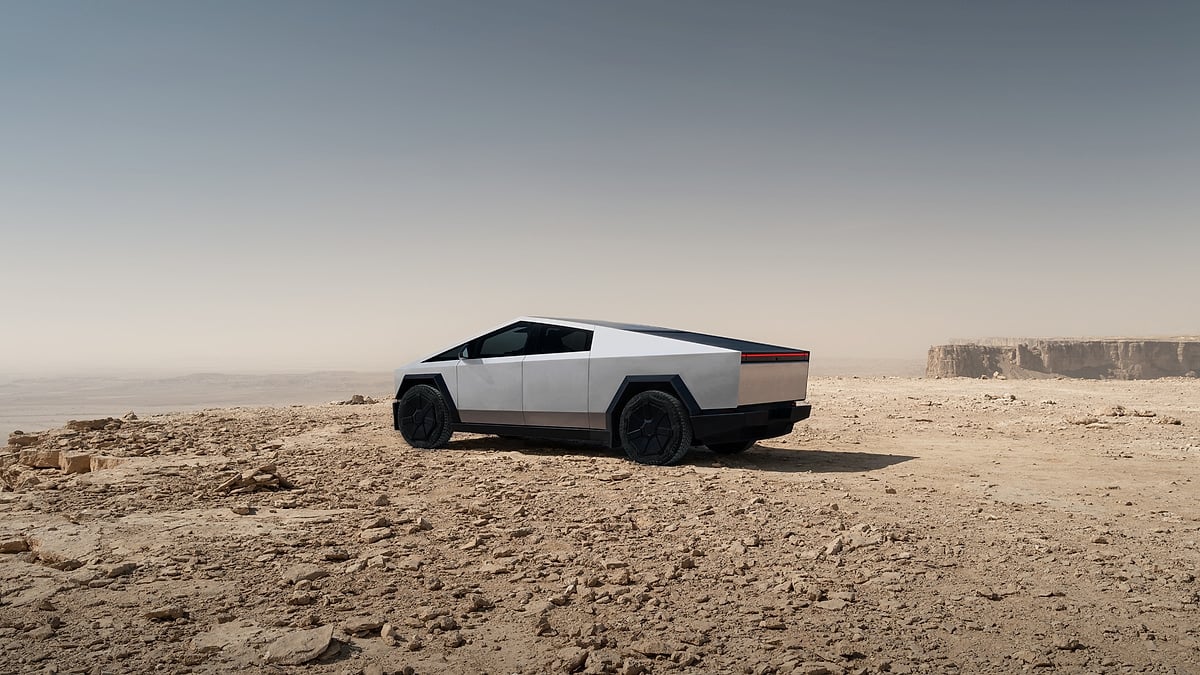
At 60,000 miles, the power conversion system failed. The PCS is the component that manages energy flow between the battery, motors, and charging port. It is not a wear item like brakes or tires. It is a core drivetrain component. Tesla's basic warranty covers the Cybertruck for 4 years or 50,000 miles. The battery and drivetrain warranty extends to 8 years or 150,000 miles. But the PCS fell into a gray area, and Tesla billed the full $7,200.
That repair cost is not theoretical. It is 14.4% of the Cybertruck's $49,890 base price, or roughly 7.2% of a fully equipped Foundation Series price. For a commercial driver who depends on the vehicle for income, a $7,200 unexpected bill at 60,000 miles is a cash flow disaster. Most internal-combustion trucks would not require a $7,200 drivetrain repair at that mileage unless the engine or transmission had suffered catastrophic failure, though Ford and Ram owners have certainly documented their share of early drivetrain failures that rival the cost of Tesla's PCS replacement.
LyftDr1ver's battery degradation is more nuanced than the headline suggests. His full-charge range has dropped to 299 miles. The Foundation Series dual motor was originally rated at approximately 340 miles. That is a 12% reduction after 100,000 hard miles. A gas truck loses no range over its life, but it loses fuel economy as the engine wears. An EV loses range as the battery ages. The question is whether 12% at 100,000 miles is acceptable. Ford's F-150 Lightning warranty guarantees 70% battery capacity over 8 years. Tesla's battery warranty guarantees 70% capacity retention over 8 years or 150,000 miles. At 88% remaining after 100,000 commercial miles, LyftDr1ver's pack is well above that threshold.
The money story is more complicated than repair costs alone. LyftDr1ver spends $350 per month on electricity. At Tennessee's residential rate of roughly 10 cents per kilowatt-hour and his measured consumption of 400 watt-hours per mile, his effective cost is 4 cents per mile. A comparable gas-powered truck, such as a Ford F-150 with the 3.5-liter EcoBoost, averaging 15 miles per gallon at $3.25 per gallon, costs 21.7 cents per mile. Over 100,000 miles, that difference amounts to approximately $17,700 in fuel savings.
But savings are not profit. The $7,200 PCS repair eats 41% of those fuel savings. The $2,500 tires eat another 14%. Add estimated maintenance costs for a commercial vehicle at this mileage, and the net savings versus a gas truck shrink to roughly $8,000 over 100,000 miles. Still positive. Not the revolution Tesla's advertising suggests.
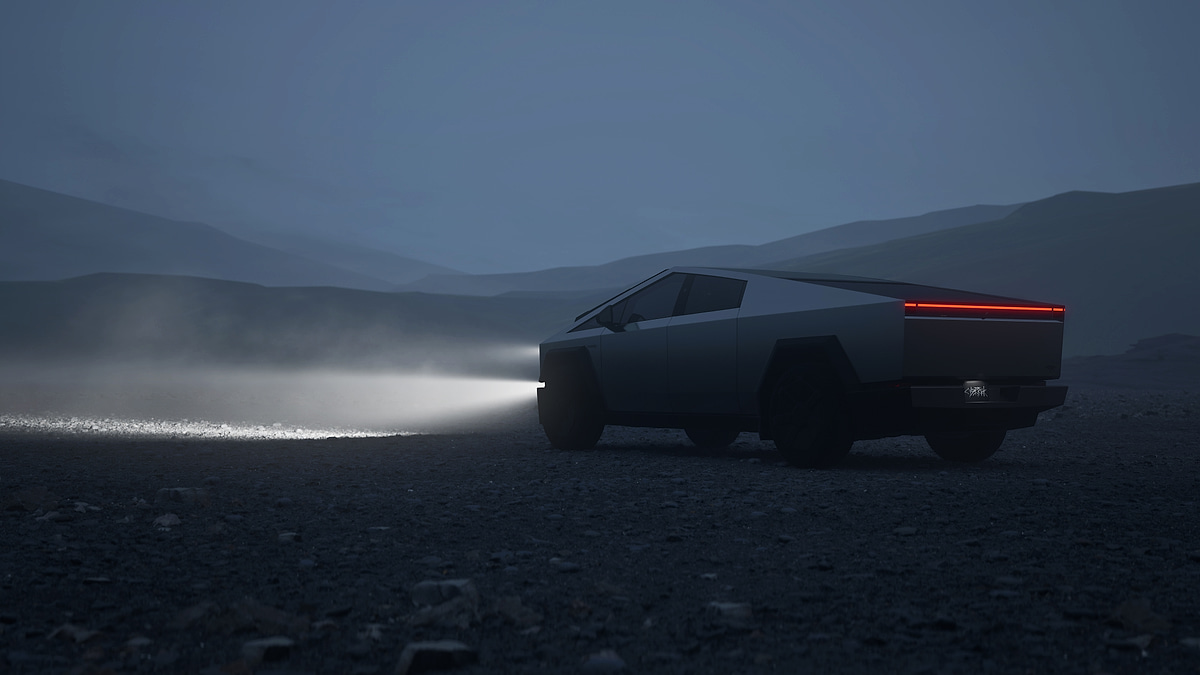
At 40,000 miles, the stock Goodyear Wrangler All-Terrain tires were hydroplaning in wet conditions. LyftDr1ver replaced them with Michelin Defender Platinum LTX tires for $2,500. The Michelins have lasted 60,000 additional miles with only occasional slips. That replacement cost is not unusual for a heavy truck doing commercial duty. A Ford F-150 Lightning running similar rideshare miles would likely need new tires in the same window.
He towed a working bass boat with the Cybertruck. Range consumption spiked to 800 watt-hours per mile, effectively halving his usable distance. That is not a Cybertruck-specific problem. Every EV loses roughly 50% of its range when towing. But it is a reality that buyers who plan to use their Cybertruck for work or recreation need to understand.
The winter trip to Maine is where the marketing falls apart. Twelve supercharger stops. Eight hours of total charging time. A 10-inch snowfall in 40 minutes forced him to use the rear locker differentials to extract himself from his brother's driveway. Snow is collecting in the half-inch recessed lightbar space, scattering the headlights and reducing visibility to 10 or 15 feet. These are observations from someone who actually used the truck in conditions most reviewers simulate in climate-controlled garages.
FSD has been helpful, not perfect, but essential to his workflow, a technology that has drawn both praise and scrutiny. A Tesla FSD safety investigation examined whether advanced driver assistance systems reduce collision risk even as regulators deepen their oversight, a tension LyftDr1ver experiences daily. LyftDr1ver uses FSD for interstate stretches and passenger pickups. He says he could not do the job the same way without it. But he also notes it is not perfect, and when fatigued, he sometimes cannot make sense of road layouts that the system handles automatically.
Other details from 100,000 miles of real use: the tonneau cover leaks and always has. The suspension clunks when the nose dives over uneven parking lots, a problem that was fixed once and has since returned. The button to exit the truck began wearing at 30,000 miles, and now passengers need to press it two or three times. The wireless charger overheats phones. The rear-view camera is difficult to use for judging closing speeds on the interstate. The built-in bed cooler melts ice too fast. Cybertruck out-of-warranty seat failures have hit other owners at similar mileage, with one Virginia owner reporting that both front seats became unadjustable after the 50,000-mile warranty expired.
And then there are the details that survived. The frunk fits a 30-06 rifle. The cargo divider makes airport pickups practical. The side foot steps help with bed access. The jump seats from Tesla's limited production run allow three children to sit comfortably on the tailgate. The sound system, he says, is better than the Model Y Performance he previously owned. The ventilated seats, he jokes with unusual candor, help clear the air before passengers arrive.
The Cybertruck is not a disaster. It survived 100,000 miles of commercial use in one year. It towed, hauled, charged, and drove through a Maine blizzard. But it also required a $7,200 repair that most buyers would not budget for. It lost 12% of its range. Widespread Cybertruck PCS failures suggest LyftDr1ver's $7,200 repair at 60,000 miles may not be an isolated case, as multiple early owners have reported the same component failure. And its total cost of ownership, while lower than a gas truck, is lower by a smaller margin than Tesla's marketing implies.
The Cybertruck is a capable vehicle. It is not a miracle. And for buyers who plan to use it for work, the $7,200 lesson from LyftDr1ver's 60,000-mile service call is the most important number in the entire review. Another 100,000-mile Cybertruck owner's repair costs totaled $5,848, including a similar PCS replacement, suggesting the power conversion system is emerging as a known weak point for high-mileage Foundation Series trucks.
Image Sources: Tesla Media Center
About The Author
Noah Washington is an automotive journalist based in Atlanta, Georgia, covering sports cars, luxury vehicles, and performance culture. His reporting focuses on explaining the engineering, design philosophy, and real-world ownership experience behind modern vehicles.
Noah has been immersed in the automotive world since his early teens, attending industry events and following the enthusiast communities that shape how cars are built and driven today. His work blends industry insight with enthusiastic storytelling, helping readers understand not just what a car is, but why it matters.
Noah is also a member of the Southeast Automotive Media Association (SAMA), a professional organization for automotive journalists and industry media in the Southeast.
His coverage regularly explores sports cars, luxury vehicles, and performance-driven segments of the automotive industry, including the evolving culture surrounding Formula Drift and enthusiast builds.
Read more of Noah's work on his author profile page.
You can also follow Noah here:
Set Torque News as Preferred Source on Google
Follow us today...







Comments
As somebody who drives…
Permalink
As somebody who drives electric cars every day, you can never rely on the range that the car displays. It is always very generous. Batteries are very inefficient by design, it is nearly impossible to keep them in good working order for years to come.
Even a dedicated battery-life testing machine is shockingly inaccurate. That being said, if you live in the city and rarely leave the city, then you should get an electric car. Don't get a hybrid, they are nightmares.
Hybrids aren't nightmares.
Permalink
In reply to As somebody who drives… by Rem Alavard (not verified)
Hybrids aren't nightmares.