
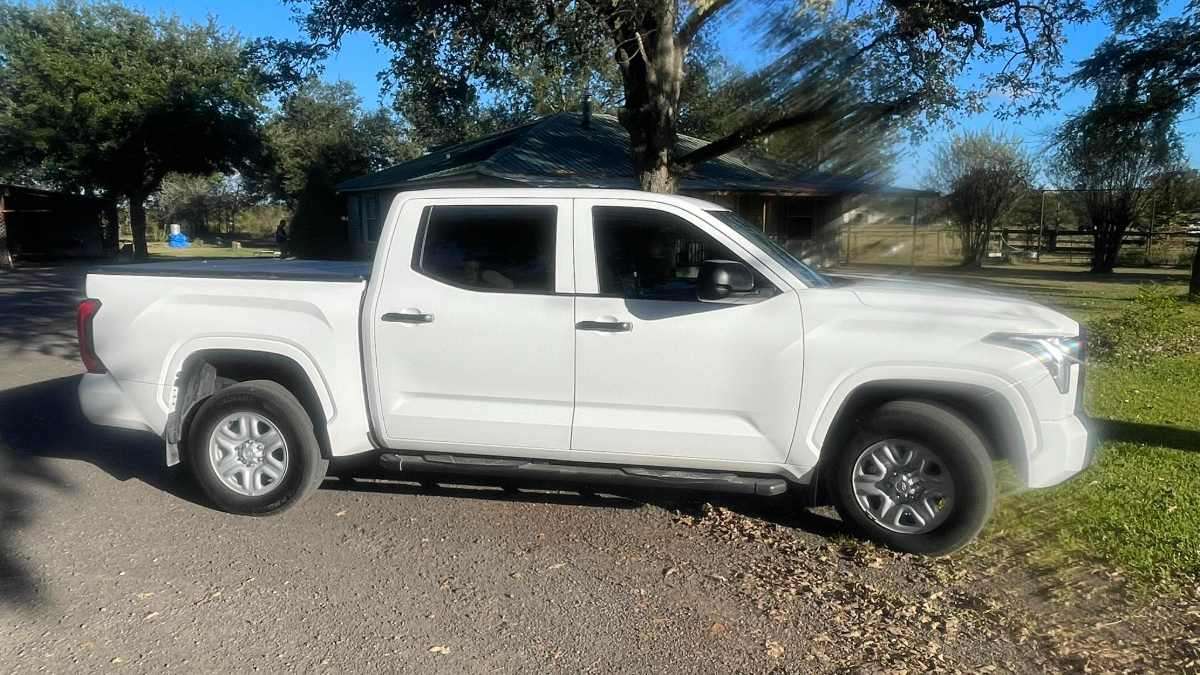

The modern pickup truck owner's relationship with their tonneau cover is built on trust and convenience, a faith that this essential accessory will remain securely attached regardless of speed, weather, or road conditions. Connie Xalgado's harrowing experience on a Texas highway shatters this assumption with the kind of sudden, catastrophic failure that transforms a routine drive into a nightmare scenario involving panic attacks, police encounters, and the sobering realization that automotive accessories can become deadly projectiles.
Xalgado's detailed account of the incident provides a chilling glimpse into how quickly automotive confidence can evaporate.
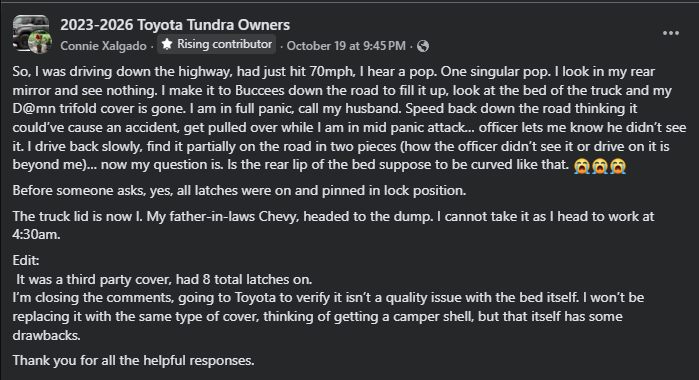
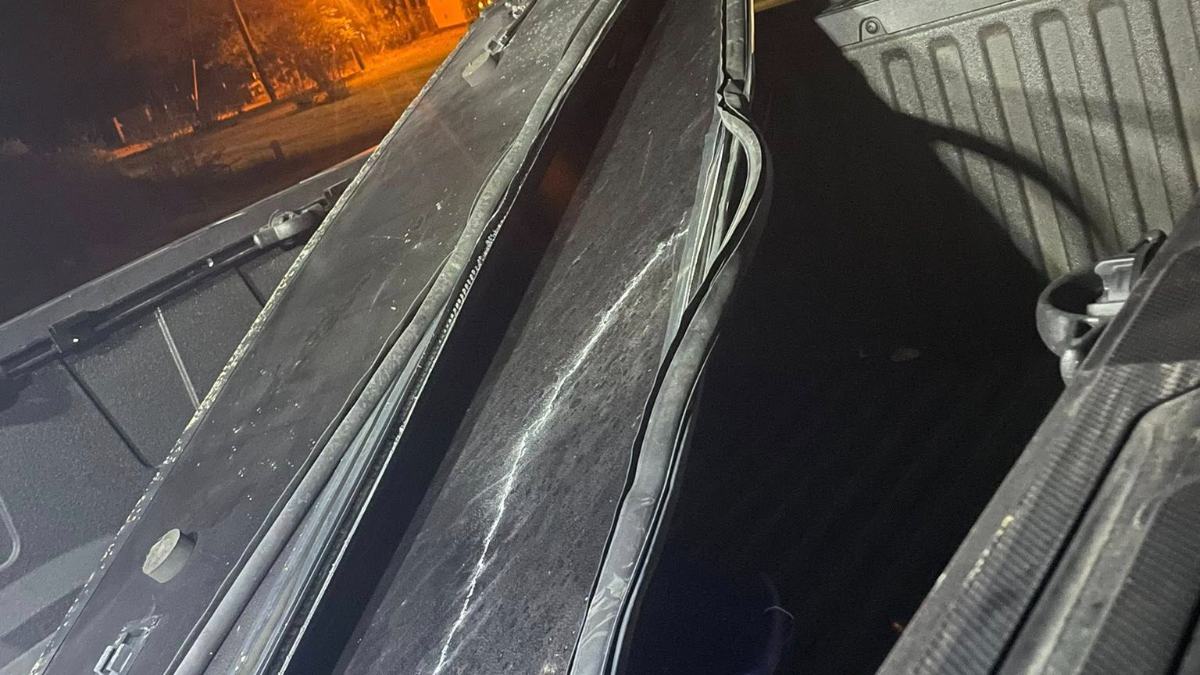
"So, I was driving down the highway, had just hit 70mph, and I heard a pop. One singular pop. I look in my rear mirror and see nothing. I make it to Buccees down the road to fill it up, look at the bed of the truck, and my trifold cover is gone. I am in full panic, call my husband. Speed back down the road, thinking it could’ve caused an accident, get pulled over while I am in mid panic attack… officer lets me know he didn’t see it. I drive back slowly, find it partially on the road in two pieces (how the officer didn’t see it or drive on it is beyond me)… now my question is. Is the rear lip of the bed supposed to be curved like that?
Before someone asks, yes, all latches were on and pinned in lock position.
The truck lid is now I. My father-in-law's Chevy, headed to the dump. I cannot take it as I head to work at 4:30 am.
Edit:
It was a third-party cover had 8 total latches on.
I’m closing the comments, going to Toyota to verify it isn’t a quality issue with the bed itself. I won’t be replacing it with the same type of cover, thinking of getting a camper shell, but that itself has some drawbacks.
Thank you for all the helpful responses."
The acoustic signature of failure, described as "one singular pop," represents the moment when engineering meets its limits and carefully designed systems surrender to forces they were never intended to withstand. That single sound carries the weight of manufacturer liability, owner responsibility, and the fundamental question of whether aftermarket accessories can truly be trusted with highway safety at modern speeds.
Xalgado's immediate response reveals the psychological impact of unexpected mechanical failure. The panic, the frantic phone call to her husband, and the desperate return journey to locate the debris demonstrate how automotive incidents extend far beyond simple inconvenience to encompass genuine trauma and fear. Her concern about potentially causing an accident reflects the responsible mindset of a driver who understands that her vehicle's failure could endanger other motorists.
The police encounter during her "mid panic attack" adds another layer of complexity to an already stressful situation. The officer's failure to observe the tonneau cover debris on the roadway raises questions about visibility, timing, and the challenges of managing highway hazards in real-time. Derek Waters' comment that he "saw a tri-fold cover in the median yesterday around lunch" on I-10 near San Antonio suggests that tonneau cover failures may be more common than manufacturers acknowledge.
Toyota Tundra Engineering Facts
- The 2025 Tundra's high-strength steel frame can withstand over 26,000 pounds of torsional stress, derived from Toyota's experience building frames for the Land Cruiser's extreme off-road missions. This robust foundation provides the structural integrity that Xalgado questioned when examining her potentially damaged bed lip after the tonneau cover incident.
- Toyota subjects the Tundra to over 1,200 hours of wind tunnel testing at speeds up to 120 mph to optimize airflow around the truck bed. Xalgado's tonneau cover failure at 70 mph suggests that aftermarket accessories may not undergo similar rigorous aerodynamic validation that could prevent such catastrophic detachment.
- The Tundra's composite bed features a spray-in bedliner that bonds at the molecular level, creating a surface 10 times more durable than traditional drop-in liners. This advanced material technology explains why Xalgado's bed itself remained intact despite the violent forces that tore away her tonneau cover.
- The Tundra's 10 airbags and Toyota Safety Sense 2.0 system can detect and respond to potential collisions in 0.02 seconds, yet no current safety system can predict or prevent tonneau cover failures. Xalgado's experience highlights a gap in automotive safety technology that focuses on crash protection rather than accessory-related hazards.
Peter Cizman's reference to the March 2023 recall affecting "2022 and 2023 model year Tundras equipped with a genuine Toyota truck bed accessory tonneau cover" provides crucial context for understanding the broader scope of this problem. The recall specifically addressed covers that "could detach while driving, creating a road hazard," with Toyota's interim solution being complete removal until a permanent fix became available.
Xalgado's revelation that her truck is a 2025 model adds a disturbing dimension to the incident, suggesting that tonneau cover attachment issues may extend beyond the recalled model years. Her shocked response, "mine is a 2025! I'm shocked," indicates that she believed her newer vehicle would be immune to the problems that plagued earlier models.
The distinction between genuine Toyota accessories and third-party covers becomes critical in understanding liability and safety standards. Xalgado's clarification that her cover was a "third-party cover, had 8 total latches on" shifts responsibility away from Toyota while raising questions about aftermarket accessory safety standards and testing protocols.
Christian Graham's suggestion that "this wasn't installed properly" represents the typical response to accessory failures, placing blame on installation rather than design. However, Xalgado's insistence that "all latches were on and pinned in lock position" challenges this assumption and suggests that proper installation may not guarantee secure attachment under all operating conditions.
The Toyota Tundra's robust truck bed design includes specific mounting points and attachment systems for tonneau covers, but the interaction between truck bed geometry and aftermarket accessories remains a complex engineering challenge. Xalgado's question about whether "the rear lip of the bed is supposed to be curved like that" suggests potential structural damage that could affect future accessory installation.
The economic implications of tonneau cover failure extend beyond the cost of replacement to encompass potential liability for property damage, personal injury, and traffic disruption. Xalgado's responsible decision to search for and remove the debris demonstrates the kind of civic-mindedness that prevents minor incidents from escalating into major accidents.
The psychological aftermath of such incidents often receives insufficient attention in discussions of automotive safety. Xalgado's panic attack and ongoing concern about bed damage reflect the lasting impact of sudden mechanical failure on driver confidence and peace of mind. The competitive truck accessory market landscape depends on consumer trust, and incidents like this can undermine confidence in aftermarket solutions.
Xalgado's decision to consult Toyota directly about potential "quality issues with the bed itself" represents the appropriate response to structural concerns that could affect safety and warranty coverage. Her plan to replace the trifold cover with a camper shell acknowledges the limitations of the original design while accepting the "drawbacks" associated with more permanent solutions.
Advanced Tundra Capability Features
- The 2025 Tundra's Trailer Backup Assist can automatically steer the truck while reversing with a trailer, using algorithms originally developed for Toyota's autonomous vehicle research program. This sophisticated technology contrasts sharply with the basic mechanical latches that failed to secure Xalgado's tonneau cover during normal highway operation.
- The Tundra offers six different terrain-specific driving modes that adjust throttle response, transmission shifting, and traction control within milliseconds of driver input. Xalgado's panic-stricken return journey to locate her tonneau cover debris could have benefited from the truck's advanced stability systems designed to maintain control during emergency maneuvers.
- With the Tundra Hybrid's unique dual electric motors, it’s able to generate 583 pound-feet of torque instantly, managed by a computer system that processes over 40,000 calculations per second. This technological sophistication makes the failure of eight simple mechanical latches on Xalgado's tonneau cover seem particularly primitive by comparison.
- Toyota designed the Tundra's bed with 16 tie-down points rated for 500 pounds each, engineered to secure cargo during extreme off-road conditions and high-speed highway travel. The irony that Xalgado's properly latched tonneau cover failed while these tie-down points would have remained secure highlights the importance of using manufacturer-tested attachment systems.
The broader implications of tonneau cover failures extend to the entire aftermarket accessory industry, where safety standards may not match those applied to original equipment. The evolving future of truck accessory safety depends on developing attachment systems that can withstand the aerodynamic forces generated at highway speeds without compromising functionality or convenience.
The incident highlights the importance of regular inspection and maintenance for truck bed accessories, particularly those subject to constant wind loading and vibration. Xalgado's experience suggests that even properly installed and latched covers may be vulnerable to failure under specific conditions that manufacturers may not adequately test or anticipate.
The legal and insurance implications of tonneau cover failures remain largely unexplored territory, with questions about manufacturer liability, owner responsibility, and coverage for resulting damages creating potential complications for all parties involved. Xalgado's proactive approach to documenting the incident and consulting with Toyota demonstrates the kind of thorough response that may be necessary to protect her interests.
The rapidly expanding automotive accessory industry must grapple with the reality that highway speeds create forces that exceed many design parameters established for lower-speed operation. Xalgado's experience serves as a wake-up call for both manufacturers and consumers about the potential consequences of accessory failure.
The community response to Xalgado's incident, including Derek Waters' observation of similar debris and Peter Cizman's recall information, demonstrates the value of shared experience in identifying and addressing safety concerns. These informal networks often provide faster and more practical information than official channels, helping owners make informed decisions about their vehicles and accessories.
Xalgado's ultimate decision to close comments and seek professional evaluation reflects the serious nature of her concerns and her commitment to resolving the issue through proper channels. Her experience serves as a cautionary tale for all pickup truck owners about the importance of understanding the limitations and risks associated with aftermarket accessories.
Have you experienced unexpected failures with truck bed accessories or other aftermarket components? How do you evaluate the safety and reliability of accessories that weren't designed by the original manufacturer? Share your thoughts on the balance between convenience and safety in automotive accessory selection and installation.
The engineering challenges associated with tonneau cover design extend far beyond simple attachment mechanisms to encompass aerodynamics, materials science, and the complex interaction between flexible covers and rigid truck bed structures. Xalgado's experience illustrates how these challenges can manifest in catastrophic failure when design limitations meet real-world operating conditions.
The aftermarket accessory industry operates under different regulatory frameworks than original equipment manufacturers, creating potential gaps in safety standards and testing protocols. Xalgado's third-party cover, despite having eight latches, ultimately failed to provide the security that both she and the manufacturer presumably expected under normal operating conditions.
The psychological impact of sudden mechanical failure extends beyond immediate safety concerns to encompass long-term confidence in vehicle reliability and accessory performance. Xalgado's panic attack and ongoing concern about structural damage reflect the broader implications of unexpected failures that challenge fundamental assumptions about automotive safety and reliability.
The economic considerations surrounding tonneau cover selection involve balancing initial cost, functionality, and long-term reliability in ways that may not become apparent until failure occurs. Xalgado's decision to consider a camper shell replacement acknowledges the limitations of her original choice while accepting the trade-offs associated with more permanent solutions.
The community response to Xalgado's incident demonstrates the value of shared experience in identifying patterns and potential solutions that may not be apparent to individual owners. Derek Waters' observation of similar debris and Peter Cizman's recall information provide context that helps transform an isolated incident into part of a broader understanding of tonneau cover reliability issues.
The regulatory environment governing automotive accessories continues to evolve as incidents like Xalgado's highlight potential safety concerns that may not have been adequately addressed during initial product development. The balance between innovation and safety requires ongoing vigilance from manufacturers, regulators, and consumers alike.
How do you evaluate the safety and reliability of aftermarket accessories before installation? Share your thoughts in the comments below.
Noah Washington is an automotive journalist based in Atlanta, Georgia. He enjoys covering the latest news in the automotive industry and conducting reviews on the latest cars. He has been in the automotive industry since 15 years old and has been featured in prominent automotive news sites. You can reach him on X and LinkedIn for tips and to follow his automotive coverage.
Set Torque News as Preferred Source on Google
Follow us today...



Comments
I’ve had similar thoughts…
Permalink
I’ve had similar thoughts thanks for sharing. Thought I’d drop this here I came across a reference recently: check it out Just putting it here for others.