
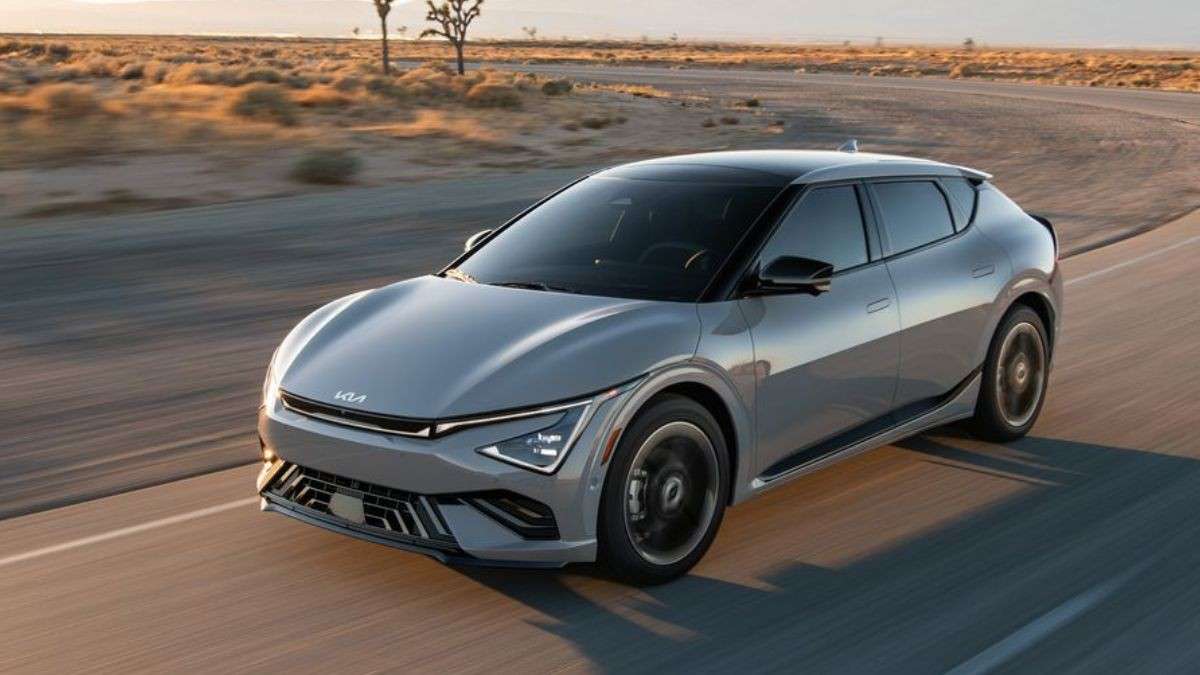

There’s a quiet assumption behind the wheel of most electric vehicles, that slower is always better. Better for range, for efficiency, for nerves. And while that’s still largely true, a growing body of data from real-world EV owners suggests that the time-versus-speed equation isn’t as simple as it used to be.
Can Driving Faster and Ultra-Fast Charging Shorten EV Road Trips?
With ultra-fast charging and evolving infrastructure, there are cases, not recommendations, where traveling at higher speeds may result in shorter overall trip times. This isn’t to promote speeding; it’s about exploring how electrification is subtly changing the way long-distance travel works.
One Redditor summed it up beautifully:
“When the topic of range comes up, there's always discussion about driving 70 vs. 80 and how much further you'll be able to drive on a single charge. And it's true, the efficiency drop is non-linear, so 70 to 75 loses more range than 65 to 70.
However, what I think gets lost in this conversation is that the thing most people care about on road trips is not the efficiency or raw number of stops, but rather time to destination. DCFC is becoming increasingly more common, and as long as you don't have to go out of your way and have decent charging speeds, you'll save a significant amount of time by going 80 vs trying to hypermile to avoid stopping.
To give an example, let's say you are driving a vehicle that charges at 100 kW on average, and let's take the two situations of chilling at 65 mph vs. speeding at 80 mph, over the course of a 500 mile trip. I'll be very generous to the slowpoke and say that at 65 mph you'll get 4 miles/kWh, while at 80 you only get 2 miles/kWh, and you start by leaving home at 0% (just so we don't have to deduct an arbitrary amount of charging time from both). Putting this into table form:
Even if you add in a flat 5 minutes per stop to get to the charging spot and get payment sorted, it's still clear that speeding beats going slow. Plus, these numbers are exaggerated already in favor of the slower speed, and it still loses (my personal numbers are 3.4 mi/kWh at 65 mph and ~2.5 mi/kwh at 80, at least in good weather). There's a bit of calculus involved in determining the optimum driving speed since the specific relationship between your speed and efficiency is key to the calculation, but in practically every situation I could plug into that calculation above, driving 80 came out ahead on time.
Now, you will pay more, but I'd gladly pay an extra $20 to get to my destination an hour faster.
Edit: Fixed the table. It was mixed up originally, and made the exact opposite point of what I was trying to say. Sorry!
Edit2: Since it apparently needs to be said, I do not recommend literally driving 80 mph. If you can save time driving 80, you can also save time at 75 or 70, even in the worst-case scenario I outlined of excessive efficiency loss and relatively slow charging speeds.
Edit3: To give an actual scenario from reality, here are the stats for my EV6 from a driving the same speed for like ~50 miles at a time on a recent roadtrip. I rounded a few numbers, but this is very close to "real data". Left at near 100%, so I'm subtracting the charge time. Total trip miles was 400, and charge speed was something like 180 kW. I'm not going to factor in the starting charge, but you can subtract ~30 minutes from the charge and total times if you want to be pedantic.
Advertising
So in my situation, there's almost an hour of hypothetical savings, at the cost of 50 kWh, which is about $20. Again, I'm not recommending you drive 80 in general, just that you don't need to drive slower just because it's an EV.” - chilidoggo, Reddit
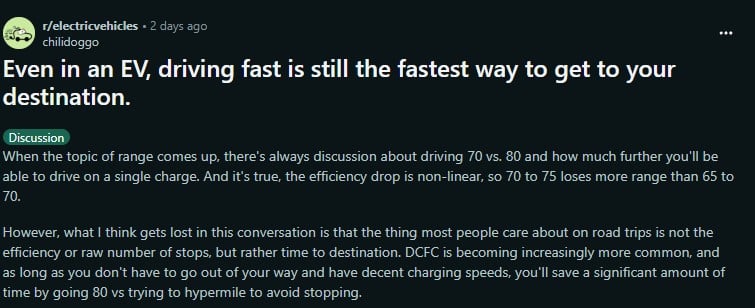


That quote comes from a Reddit user who recently broke down their road trip experience in a Kia EV6. At 80 mph, the trip took 5.9 hours and consumed 167 kWh. At 65 mph, it stretched to 6.75 hours but only used 118 kWh. The faster pace shaved off nearly an hour of travel time but came with a roughly $20 premium in electricity.
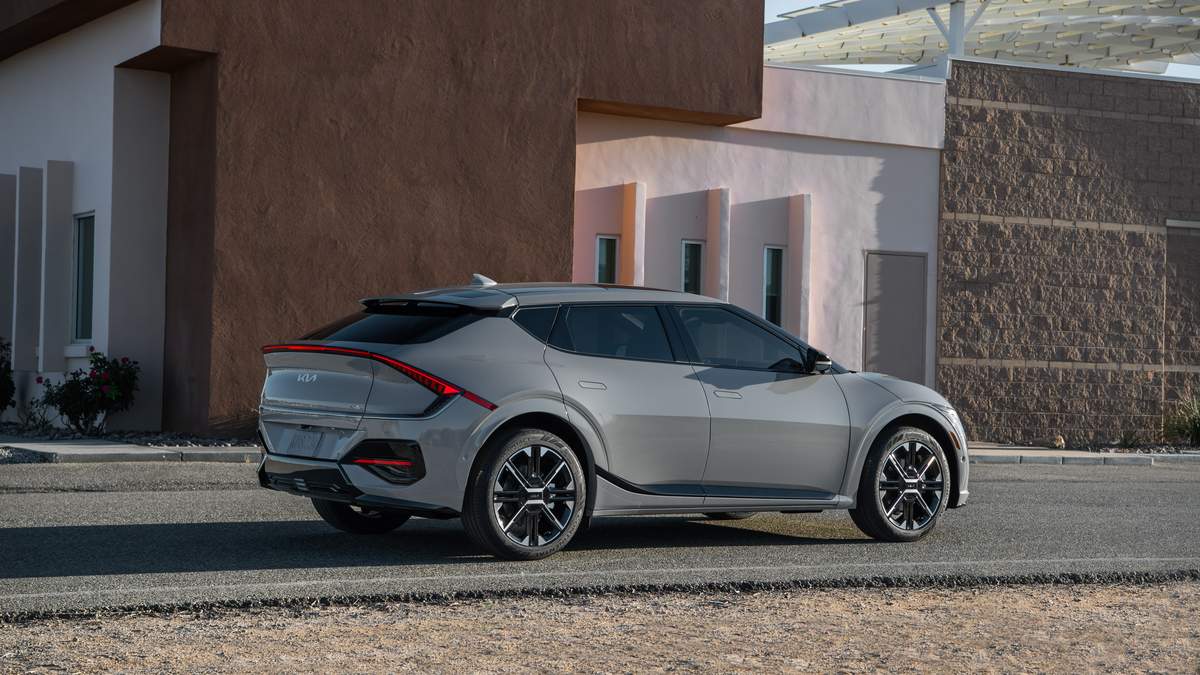
It’s not a definitive argument for driving faster, it’s a situational observation. In vehicles with fast charging capability, the extra time spent recharging might be offset by higher cruising speeds, depending on conditions.
Real-World Infrastructure Hurdles for EV Fast Charging Reliability
- High-power DC fast chargers (150–400 miles/hr equivalent) can typically refill an EV from 10 % to 80 % in about 30–60 minutes. Most models top up roughly 100 miles in 30–35 minutes
- EV road-trippers often schedule charging stops every ~3 hours (or ~200–250 miles) to match battery absorption rates and driver fatigue patterns.
- For efficient pit stops, drivers tend to charge for about 15–25 minutes, roughly the time needed for restroom breaks, snacks, stretching, and topping off charge curves .
- If using primarily Level 2 chargers or stopping for a full meal, pauses can extend to 30 minutes (quick meals) or 45–60 minutes (sit-down restaurants), partially depending on slower charging rates.
Supporting this idea is a detailed breakdown of the Ford F-150 Lightning’s performance over a 1,000-mile trip. At 75 mph, the Lightning made it in 16.58 hours with four charging stops.
At 70 mph, it took just five minutes longer, but required only three stops. Here, again, we see a tradeoff. Slightly lower speeds can reduce the number of charging breaks without adding much to the clock. But each vehicle is different, and as one commenter smartly noted,
“Each vehicle will have its own optimal speed.”
It’s not about speed for speed’s sake; it’s about understanding how your EV behaves on long hauls.
Why the Kia EV6’s 800V Architecture Revolutionizes Long-Distance Travel
Still, there are real-world variables that complicate these theoretical gains. As u/s6511 pointed out,
“There’s a bit of risk with an EV charger being in use, partly operational, or not operational.”
Even Tesla owners have occasionally found themselves in difficult situations when charging stations were unavailable or under repair.
One user recalled being stranded because the only accessible Supercharger in range was offline, leaving them to watch a working charger they couldn’t use. These hiccups remind us that even if a faster pace works on paper, execution depends heavily on infrastructure reliability.
Key EV Charging Stop Strategies for Efficient Road Trips
In that context, the Kia EV6 stands out. It’s one of the few EVs that can make this time-vs-speed discussion meaningful thanks to its 800-volt architecture and high-speed charging capability, often topping 200 kW in ideal conditions. Kia claims it can charge from 10% to 80% in around 18 minutes, and independent testing has shown that this performance is consistent. With that kind of speed, the penalty for stopping becomes less of a burden, and trip planning becomes more flexible.
That said, the cost of efficiency is still real. The Reddit user’s faster 80 mph trip burned through 50 kWh more than the 65 mph run in most public charging networks, which translates to about $20. For some, that’s an easy trade-off for an hour saved.
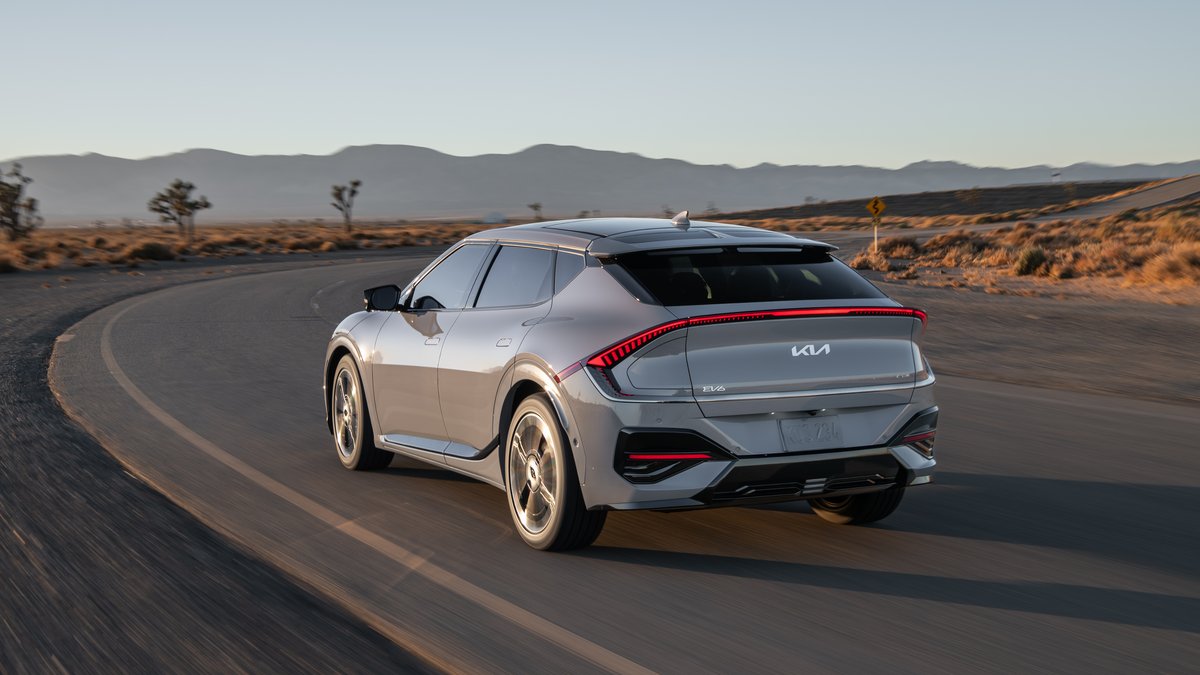
For others, particularly those with tighter budgets or access to cheaper home charging, it might not be worth it. The key takeaway isn’t that one approach is better, it’s that you now have the option to tailor your strategy based on the capabilities of your vehicle and your travel goals.
2025 Kia EV6 Specs: Battery, Price, and Performance Highlights
- The refreshed 2025 EV6 offers upgraded battery options, 63 kWh for standard models and up to 84 kWh for long-range trims. Kia claims the rear‑wheel-drive long‑range version now achieves around 319 miles per charge
- U.S. prices start around $42,900 for the base Light RWD, rising to approximately $63,800 for the GT performance variant, plus a destination fee (~$1,475)
- Built on the E‑GMP architecture (shared with the Ioniq 5), the EV6 supports DC fast-charging at up to 240 kW and electric outputs ranging from ~125 kW in entry trims to as much as 430 kW (approximately 576 hp) in the GT
- Its main rivals include the Hyundai Ioniq 5, Chevy Bolt EUV, Ford Mustang Mach‑E, Tesla Model Y, Volkswagen ID 4, and luxury models like the Volvo EX40/C40 and Mercedes EQA. The EV6 often stands out for superior charge speed, range, and driving dynamics
But let’s not get ahead of ourselves. As mmiggs commented, even under ideal conditions, the difference in total travel time can be modest, sometimes just 12 minutes over a full day of driving.
And as they also noted, EVs still trail gas vehicles when it comes to overall trip speed, especially when infrastructure is inconsistent. In one example, an EV driver arrived more than two hours behind their sibling driving an ICE vehicle over the same route.
The emerging data suggests that traditional driving habits may need some rethinking in the EV era. Slower speeds may preserve range, but they don’t always preserve time. And for vehicles like the Kia EV6, with a strong charging curve and real-world efficiency, it may sometimes be more practical, not necessarily smarter or safer, to drive at moderate highway speeds and take advantage of rapid charging along the way.
Will this change the way you drive your EV? At what speeds is your car most efficient?
Let us know in the comments below.
Image Sources: Kia Newsroom
Noah Washington is an automotive journalist based in Atlanta, Georgia. He enjoys covering the latest news in the automotive industry and conducting reviews on the latest cars. He has been in the automotive industry since 15 years old and has been featured in prominent automotive news sites. You can reach him on X and LinkedIn for tips and to follow his automotive coverage.
Set Torque News as Preferred Source on Google
Follow us today...




Comments
I feel like this is obvious…
Permalink
I feel like this is obvious for anyone whom ever had moved or drove or rode bikes, etc. You are going to exert more energy by moving faster, depleting your energy source quicker. I feel like I could have wrote this article without actually taking the time to do the experiment. Don't they still teach this in high school? SMH
Totally get where you're…
Permalink
In reply to I feel like this is obvious… by CSlayer (not verified)
Totally get where you're coming from it’s basic physics for sure! I just wanted to put real-world numbers behind it for EV drivers curious about the actual trade-offs.
This headline is also…
Permalink
This headline is also confusing. As written it suggests that driving at 65 saves time “versus” -as opposed to - driving at 80. My first hypothesis was that the slower speed saved a recharging session, but the article suggest the opposite. What point are you trying to make?
Great catch can see how the…
Permalink
In reply to This headline is also… by Happy (not verified)
Great catch can see how the headline might be a bit unclear. The point was to show that even though 80 mph used more energy, it still got me there nearly an hour faster. Appreciate you pointing that out!
How did you come up with a…
Permalink
How did you come up with a good estimate of how long it takes the police officer to write you a citation?
You'll get there faster and…
Permalink
You'll get there faster and cheaper with a hybrid. It's always electric vs ice. Just put them together, argument over. My 2020 Ioniq Hybrid gets 65 to 70 mpg taking it lightly on short trips like 5 miles in the City. Average highway 55 to 60mpg going 55 to 60mph. When I do 90mph and floor it often passing some vehicles I still get 40 to 45mpg. It's amazing how I don't see many more hybrids on the road. I guess people just don't know much about them or how to work on them. Yes there's a little more maintenance but I do it myself. Easy. I understand that hybrid parts cost more like the generator motor and battery pack but they go over 150k miles and 10 years easy. Most people don't keep their vehicles that long anyway. Whatever, to each their own.
That's a great point about…
Permalink
In reply to You'll get there faster and… by Jason C (not verified)
That's a great point about hybrids and their impressive efficiency, especially with your Ioniq Hybrid! It's true that they offer a fantastic balance for many drivers, and it's always interesting to see how different technologies cater to varying needs and driving styles. Thanks for sharing your experience and insights!
The only problem is when…
Permalink
The only problem is when driving my compact ev at lower speeds every single ice motor driver wants to run me off the road or curses at me as they pass. They have zero concept of regen or using a battery efficiently.
That's certainly an…
Permalink
In reply to The only problem is when… by jaymoney (not verified)
That's certainly an interesting and unfortunate observation! It sounds like a bit of a learning curve for everyone on the road as EV technology becomes more common.
One thing I haven't seen…
Permalink
One thing I haven't seen mentioned by the author or comments is the variables in charging speeds.
I've been driving my EV6 RWD for almost a year now, having added 26,000 miles to the odometer by the end of this month (I drive back and forth between Detroit and Toronto almost weekly + road trips + Uber). The number one inconsistency I'd seen (until Tesla's Supercharger network entered the picture) was in the charging speeds at DC Fast Chargers.
Chargers will report being capable up to 350kW but often—perhaps due to lazy maintenance, having had monopoly in their respective area(s)—would barely perform past 88kW, and especially slower/less reliably in the winter. Your time saved becomes time lost when you account for longer road trips, and as another commenter pointed out, when you have access to overnight charging within the range that you would otherwise have to charge again.
Even at 80mph, I've seen trips still take 3 hrs longer than an ICE would have for what should have been a 9-10 hour trip.
Ironically enough, the best way we would've been able to accommodate against this is by having the heat pump system installed the same as the European models have by default, but instead all we received in the U.S. is the preconditioning system. But hey, let's just worry more about the fun and easy summer numbers, yeah?
absolutely crucial point…
Permalink
In reply to One thing I haven't seen… by Mok (not verified)
absolutely crucial point about the variability in charging speeds, and you're right, it's a factor that can significantly impact overall trip time and the real-world EV experience! It's definitely something that needs to be considered, especially on longer journeys. Thanks for bringing that up and sharing your extensive experience with your EV6!
Start
So basically gas is still…
Permalink
So basically gas is still king. Paying more in charges than gas. Especially if you want to go fast lol.
It's true that the cost and…
Permalink
In reply to So basically gas is still… by Robert Henderson (not verified)
It's true that the cost and convenience of fueling are big considerations for many drivers, and gas vehicles definitely have a long-standing advantage there!
So let me get this straight,…
Permalink
So let me get this straight, when you drive faster it's less efficient so you have to spend more but you get where you are going faster...how did they figure this out
It really boils down to that…
Permalink
In reply to So let me get this straight,… by Noticer (not verified)
It really boils down to that balance between efficiency and time. Sometimes, getting there faster is the priority, even if it means a bit more energy consumption.
What is missing from this…
Permalink
What is missing from this analysis is the additional load on the electrical grid. It's already being taxed. If we all are in EVs and many take to driving faster, the extra, avoidable, load on the grid will be significant.
It highlights a crucial…
Permalink
In reply to What is missing from this… by Steve Hume (not verified)
It highlights a crucial aspect of the broader infrastructure needed to support a widespread shift to EVs, especially as driving habits evolve. Thanks for bringing that important consideration into the discussion!