
He posted the details on r/F150Lightning under the name -ImYourHuckleberry-, walking through a Temecula–Riverside run and back. The truck left home at 95% and rolled back in at 47%.
Efficiency wasn’t the same both ways. The drive toward Riverside came out to 1.8 mi/kWh, with a long downhill near the end giving it a boost. The return leg slipped to 1.5 mi/kWh, weighed down in part by roughly half an hour of sitting still while the truck powered trailer lights and handled some setup.
"Just trailered my horses 126.6 miles using 48% of the battery," he wrote. "Took all backroads and never really went above 50mph."
The Run
The route was not flat. Temecula to Riverside cuts through rolling terrain in Riverside County, and the owner noted the topography directly affected his efficiency. The downhill run to the ranch boosted his outbound average. The climb back home dragged it down. Both figures, however, sit well above what most F-150 Lightning owners report when towing at highway speed.
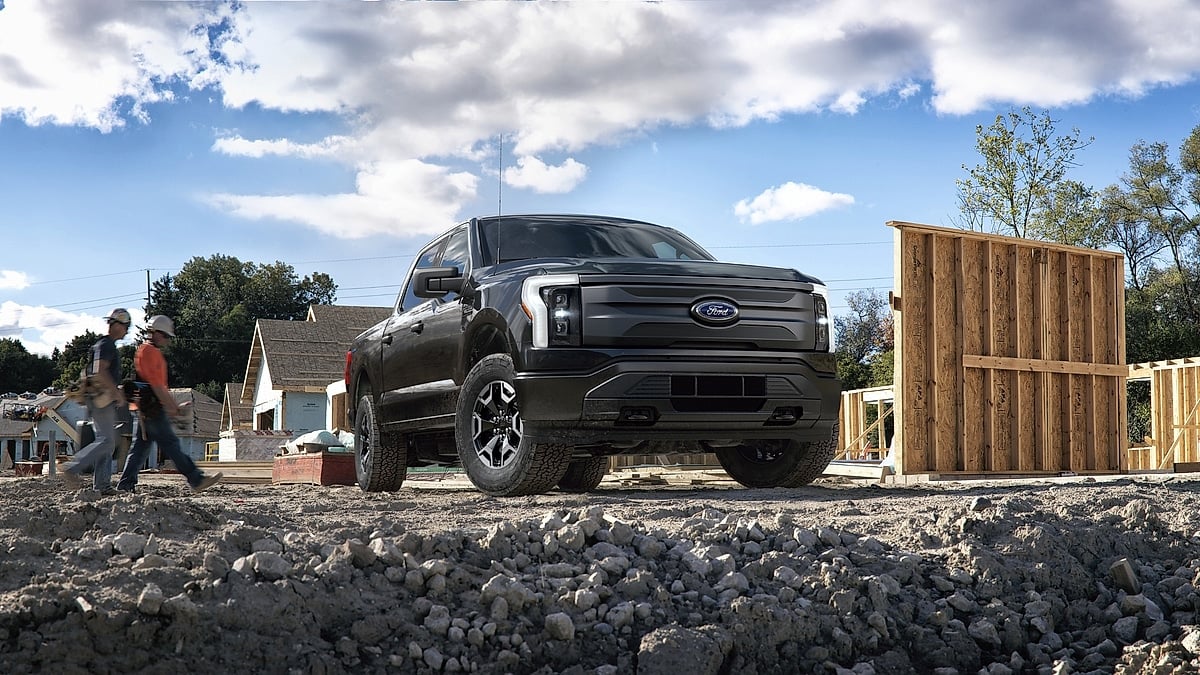
Independent testing and owner data consistently show that towing at 70 mph can cut an F-150 Lightning's range by roughly half. An extended-range truck EPA-rated at 300–320 miles unladen often delivers 100–150 miles while towing a moderate trailer at interstate speeds. The physics are simple: aerodynamic drag increases with the square of velocity, and a trailer acts like a parachute. At 50 mph, that drag collapses.
The owner's trailer carried two horses, approximately 5,500 pounds, according to a commenter who asked, plus the trailer itself. The key insight from the thread was not the weight but the speed. "It has more to do with aerodynamics than weight," wrote Cambren1, another Lightning owner who reported similar efficiency towing a 1993 Airstream Sovereign at 55 mph. "Towing at speeds below 60 really helps."
The Equipment
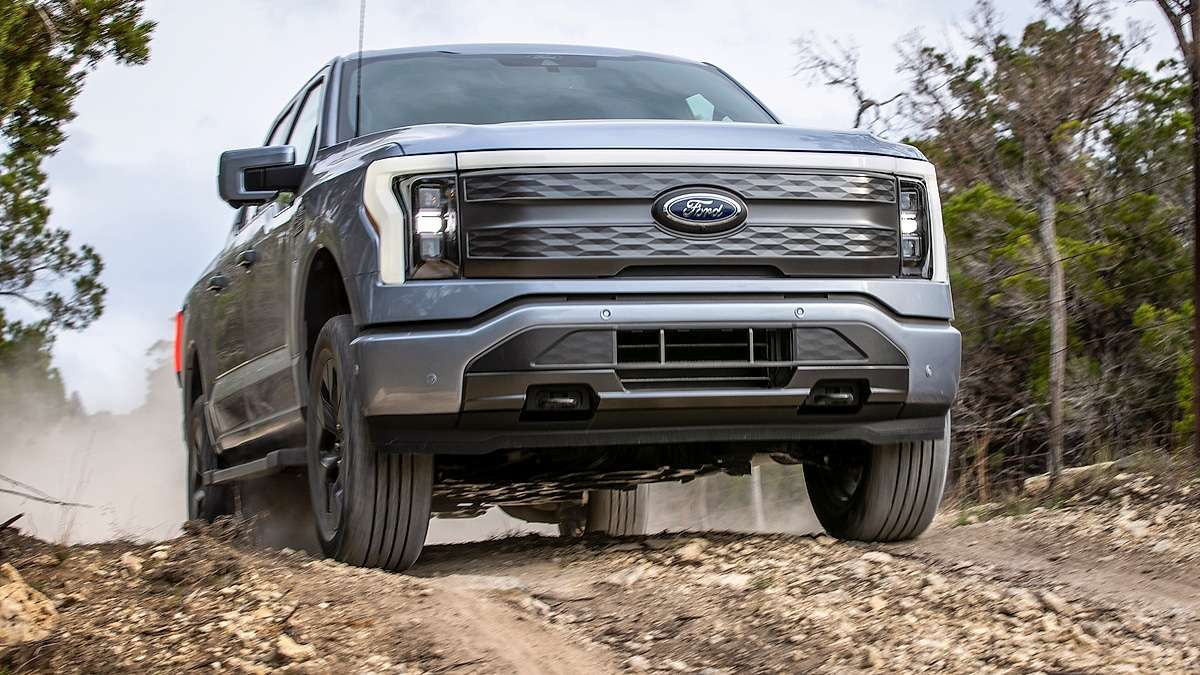
The truck in question runs Fuel Flux 6 wheels wrapped in Nitto Grappler Recon A/T tires sized 275/65/R20. The all-terrain tread is heavier and noisier than factory rubber, which typically shaves a small fraction off efficiency. That the owner still hit 1.8 mi/kWh downhill suggests the low-speed, backroad environment overwhelmed any penalty from the tire setup.
The trailer itself was a horse hauler, not an enclosed box. Open stock trailers create less wind resistance than tall campers or box trailers, which helps explain why the efficiency stayed in the 1.5–1.8 range rather than the sub-1.0 mi/kWh figures some owners see with high-profile loads at highway speeds.
The Context
Ford's EPA ratings for the first-generation Lightning range from 230 miles on the standard-range battery to 320 miles on the extended-range pack, with combined efficiency around 2.1 mi/kWh. One owner who charged to 100 percent every night for 60,000 miles reported zero detectable battery degradation, suggesting the drivetrain itself can go the distance when conditions are right. Real-world highway driving at 70–75 mph typically drops that to 1.5–1.9 mi/kWh without a trailer. Add a trailer at interstate speeds, and the number can fall below 1.0.

The owner’s result, 1.5 mi/kWh while towing, at 50 mph, suggests that low-speed towing on secondary roads can deliver efficiency nearly matching what some drivers see on the highway with no load. In 2025, another Lightning owner reported 1.8 mi/kWh towing a fully loaded U-Haul at 45–55 mph, only to watch efficiency crater to 1.4 mi/kWh on the return leg when he tried 70 mph. Wind direction, he realized, was the variable he had not accounted for.
The Human Element
The trip was not a test. It was a haul to a barrel racing competition, and the owner’s daughter placed first in the 2D division. "Made 4x the money it cost to enter the race," he wrote in a reply to a commenter asking about the Temecula area. The truck was not the story that day. But the data it generated is useful to anyone trying to understand what EV towing looks like outside of controlled media tests and interstate slogs.
What It Means
The F-150 Lightning's towing reputation has been defined by its worst-case scenarios: 70 mph on the interstate with a tall camper, range cut in half, and charger anxiety in rural Idaho. This trip shows the other side of the curve. For owners who tow short distances on backroads, horse shows, local construction, and farm work, the truck can deliver a usable range without the drama.
Ford is betting the next generation will solve the highway problem. The second-generation F-150 Lightning is targeting 450 miles of EPA range, which would leave roughly 225 miles of towing range even after a 50 percent cut. For now, owners like -ImYourHuckleberry- are proving that the current truck works fine if you stay off the interstate and keep the speed down.
Whether that fits your use case depends on where you tow, how fast you drive, and how patient you are. But the data is clear: 50 mph changes everything.
Image Sources: Ford Media Center
About The Author
Noah Washington is an automotive journalist based in Atlanta, Georgia, covering sports cars, luxury vehicles, and performance culture. His reporting focuses on explaining the engineering, design philosophy, and real-world ownership experience behind modern vehicles.
Noah has been immersed in the automotive world since his early teens, attending industry events and following the enthusiast communities that shape how cars are built and driven today. His work blends industry insight with enthusiastic storytelling, helping readers understand not just what a car is, but why it matters.
Noah is also a member of the Southeast Automotive Media Association (SAMA), a professional organization for automotive journalists and industry media in the Southeast.
His coverage regularly explores sports cars, luxury vehicles, and performance-driven segments of the automotive industry, including the evolving culture surrounding Formula Drift and enthusiast builds.
Read more of Noah's work on his author profile page.
You can also follow Noah here:
Set Torque News as Preferred Source on Google
Follow us today...