
The range estimator had already gone quiet, the map showed nothing but pine forest ahead, and the state-of-charge display was ticking down toward single digits. Somewhere north of Sedona, climbing from the desert floor toward Flagstaff, Arizona, Wei_ping watched his Hyundai Ioniq 9's battery slide past 10 percent, then 8, then 6. When he finally rolled into a Flagstaff charging station, the dash read roughly 5 percent. He had just spent the last miles of a 140-plus-mile leg threading the needle between gravity and hope, and the lesson was now etched into memory: elevation gain does not forgive overconfidence.
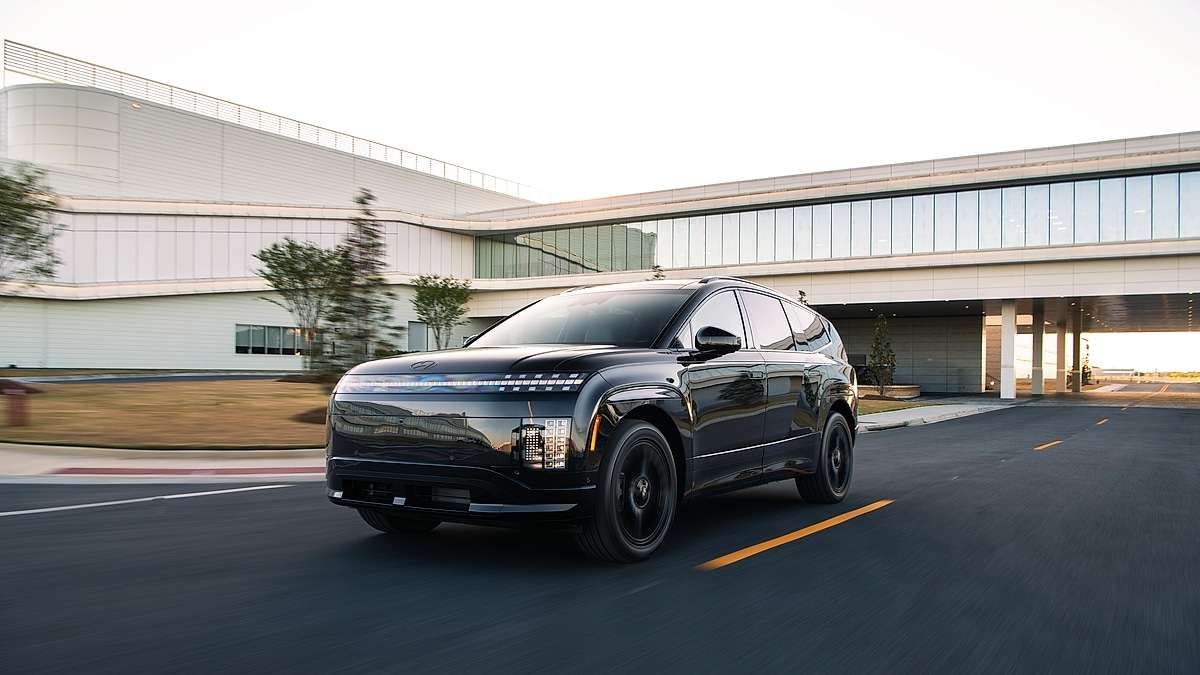
That moment of white-knuckle arithmetic was just one episode in a 4,300-mile round trip that took Wei_ping from Seattle to Arizona and back, a route stitched together with bike parks, national parks, hotel nights, and stretches of car-camping in the Ioniq 9's Utility mode. Traveling with bikes mounted on a hitch rack and a Starlink Mini wedged in a partially open sunroof for connectivity in remote stretches, the setup was ambitious. The vehicle was a 2026 Hyundai Ioniq 9 Calligraphy, the three-row flagship that has been drawing attention from owners across the country.
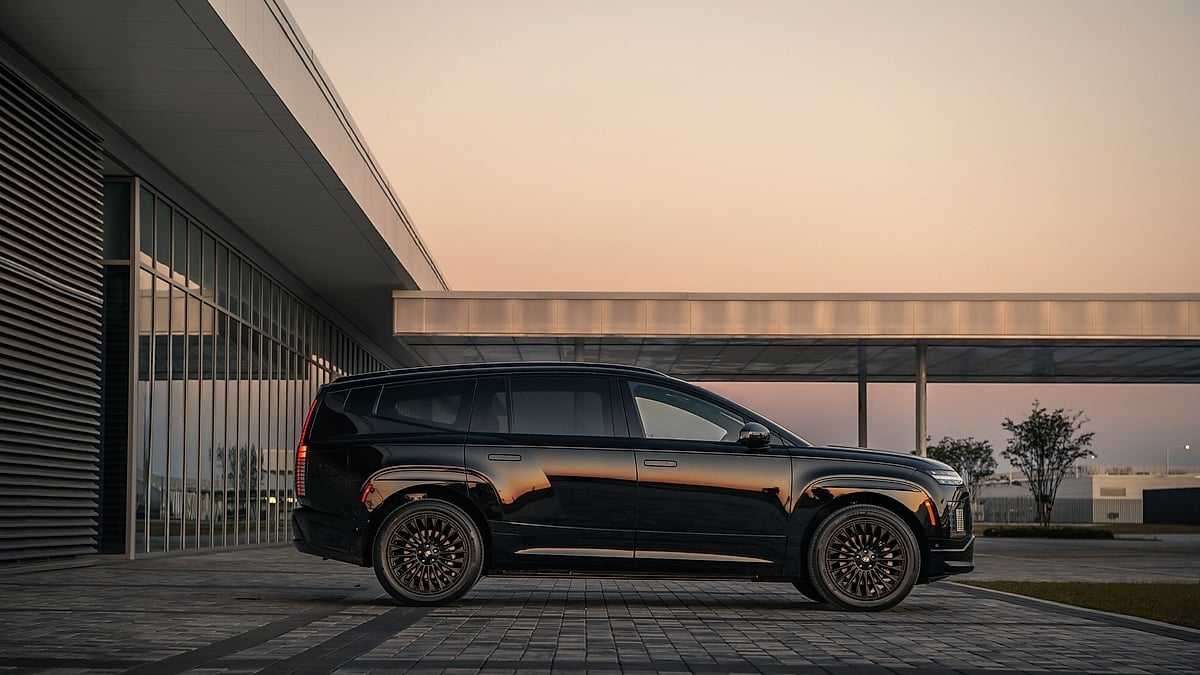
At highway speeds across the American West, the Ioniq 9 proved to be a surprisingly pleasant long-haul companion. Adaptive Cruise Control and Lane Keeping Assist handled empty straight stretches with competence, and the Calligraphy trim's ergo-motion pseudo-massage activated automatically every 30 minutes, keeping driver fatigue at bay. The sunroof turned out to be an ideal perch for the Starlink Mini, with the front USB ports supplying enough power to keep the terminal running through remote stretches where cell service vanished. For overnight stops, Utility mode allowed climate control to run without the vehicle fully awake, and the passenger seat folded nearly flat with its footrest extended, creating a surprisingly usable sleeping surface.
Charging infrastructure, Wei_ping noted, was "functional" if not always convenient. Using PlugShare to route the journey, he managed to stretch a $400 Chargepoint credit down to roughly $170 remaining by the trip's end. Over the entire 4,300 miles, he never encountered a charging station he could not use, though he admitted to missing a few Tesla-exclusive locations. There were occasional re-parking maneuvers, but the network held up. That reliability, however, did not erase the arithmetic of the route. Between charges, the usable window typically ran from about 80 percent down to 20 percent, yielding roughly 150 miles of real-world range per leg. Some stretches were a few hours apart; others demanded a stop after just two hours.
Then came the Phoenix-to-Flagstaff leg, the one that turned range planning from a spreadsheet exercise into a physical sensation. The climb from the Sonoran Desert floor to Flagstaff's 6,900-foot elevation represents roughly 6,000 vertical feet of sustained ascent, much of it at 75 mph. Wei_ping skipped intermediate chargers, assuming the Ioniq 9's 110.3 kWh battery could absorb the climb. It could not, or at least not at that speed with that load. He coasted into Flagstaff at approximately 5 percent state of charge, the closest brush with running dry of the entire trip. Another Ioniq 9 owner, commenting on the thread under the handle CheekanGood, confirmed the severity of that same climb: leaving southeast Phoenix at 100 percent and driving 85 mph with air conditioning running, he arrives in Flagstaff at roughly 15 percent. On a hot day with a heavy right foot, even a full battery offers slim margins.
The underlying culprit behind the short legs was not the Ioniq 9 itself, but the aerodynamic penalty of the setup. Wei_ping averaged approximately 2.2 miles per kilowatt-hour across the trip, a figure that drew questions from fellow Redditor k1ngr2, who wondered aloud whether that efficiency was unusually low. The answer lay in the swing-away hitch arm. The rack pushed the bikes roughly one foot rearward from the trunk line, amplifying their drag signature at highway speeds. Combined with sustained 75-mph cruising across the Mountain West, the bicycles became a sail that the 110.3 kWh battery had to overcome. Without the rack, the Ioniq 9 is capable of far better efficiency; with it, the SUV became a wind tunnel test subject.
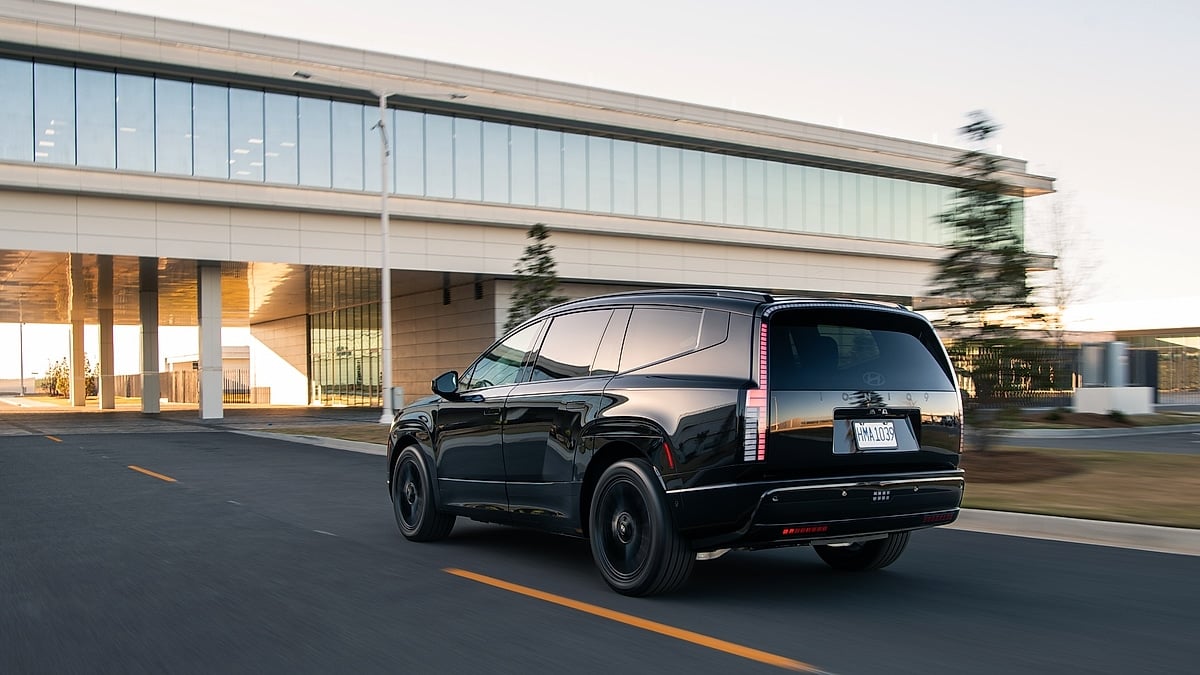
The physical arrangement also created daily friction at charging stops. The rear-mounted charge port, a Hyundai staple, became a liability whenever the bikes were attached. Tesla V3 Supercharger cables are notoriously short, and with a swing-away rack blocking close parking, plugging in became a two-person operation. Wei_ping admitted he was jealous of Rivian's front charge port, which would have eliminated the yoga routine entirely. Then there was the CCS adapter ritual, a constant fumbling that added minutes and irritation to every stop. The charging sessions themselves fell into an awkward temporal gap: too long to simply use the restroom, too short to sit down for a proper meal. The result, he joked, was that the trip turned his family into "speed-eaters," wolfing down food in parking lots before the state-of-charge display climbed high enough to leave.
Not every obstacle was external. On Day 1, before the trip had even found its rhythm, the Ioniq 9 threw a "Check Electrical System" warning. Wei_ping shut the vehicle down, restarted it, and the error vanished. It never returned. But the timing was unsettling: the warning appeared just before a planned stretch through Death Valley, one of the most remote and unforgiving corridors in the American road network. For an EV driver, an electrical system warning in the desert is the automotive equivalent of a doctor saying "this might be nothing" just before a transatlantic flight. The fact that it proved benign did not erase the anxiety.
There were smaller indignities, too. Fellow Redditor tracer_ca asked about rear visibility with the bike rack installed, and wei_ping's assessment was blunt: the backup cameras were effectively worthless with the rack and bicycles in place, and the parking sensors were so aggressive that he had to hold the parking alert button for approximately three seconds every single time he shifted into reverse to prevent the automatic braking system from intervening. It was a minor annoyance that compounded into a major frustration over 4,300 miles.
The physics of the Flagstaff episode are well understood in the EV community, but they still catch experienced drivers off guard.
Wei_ping's journey is part of a growing body of real-world Ioniq 9 road-trip reports that are shaping how prospective buyers view the vehicle. In a separate incident, one Ioniq 9 owner learned that lesson the hard way during a Thanksgiving ice storm when regenerative braking caused his SUV to slide on icy roads, forcing him to disable driver-assistance systems and limp into a rural Iowa charger at 8 percent. The thread of close calls seems to follow early adopters as they map the limits of the platform.
The Ioniq 9's cabin has also earned converts from unexpected corners of the market. A Volvo EX90 owner who spent more than 620 miles behind the wheel of the Ioniq 9 called it "seriously impressive" and said it felt even roomier than the Kia EV9, admitting that had the Ioniq 9 launched earlier, he might have chosen it over his own Swedish lease. That kind of cross-shopping praise, from a driver already committed to a premium competitor, underscores how competitive Hyundai's packaging has become.
Even Tesla loyalists have found themselves unsettled by the big Hyundai. A loyal Tesla Model Y owner took an unexpected after-church Sunday drive in the Ioniq 9 and admitted it left him questioning everything about his own car, declaring it "the best electric 3-row SUV" he had seen and openly asking why Tesla does not offer comparable interior volume.
For Wei_Ping, the verdict was similarly mixed but ultimately favorable. The Ioniq 9 never tired him out over 4,300 miles. The charging infrastructure, with its adapters, short cables, and occasional re-parking, was functional enough to keep the wheels turning. The 5 percent arrival in Flagstaff was a self-inflicted wound, born of skipped chargers and overconfidence in the face of 6,000 feet of climbing. The swing-away rack taught a hard lesson about drag at 75 mph. And the Day 1 electrical warning, though it never repeated, served as a reminder that even the most polished EV is still a computer on wheels, prone to cryptic hiccups in the middle of nowhere.
The road from Seattle to Arizona and back is no longer theoretical for the Ioniq 9. It is a real route, with real bike parks and real pine forests and real moments where the battery percentage drops faster than the altitude climbs. The vehicle survived it. The driver survived it. And the next time Wei_ping faces a 6,000-foot climb, it is a safe bet he will not skip the charger.
Image Sources: Hyundai Media Center
About The Author
Noah Washington is an automotive journalist based in Atlanta, Georgia, covering sports cars, luxury vehicles, and performance culture. His reporting focuses on explaining the engineering, design philosophy, and real-world ownership experience behind modern vehicles.
Noah has been immersed in the automotive world since his early teens, attending industry events and following the enthusiast communities that shape how cars are built and driven today. His work blends industry insight with enthusiastic storytelling, helping readers understand not just what a car is, but why it matters.
Noah is also a member of the Southeast Automotive Media Association (SAMA), a professional organization for automotive journalists and industry media in the Southeast.
His coverage regularly explores sports cars, luxury vehicles, and performance-driven segments of the automotive industry, including the evolving culture surrounding Formula Drift and enthusiast builds.
Read more of Noah's work on his author profile page.
You can also follow Noah here:
Set Torque News as Preferred Source on Google
Follow us today...