
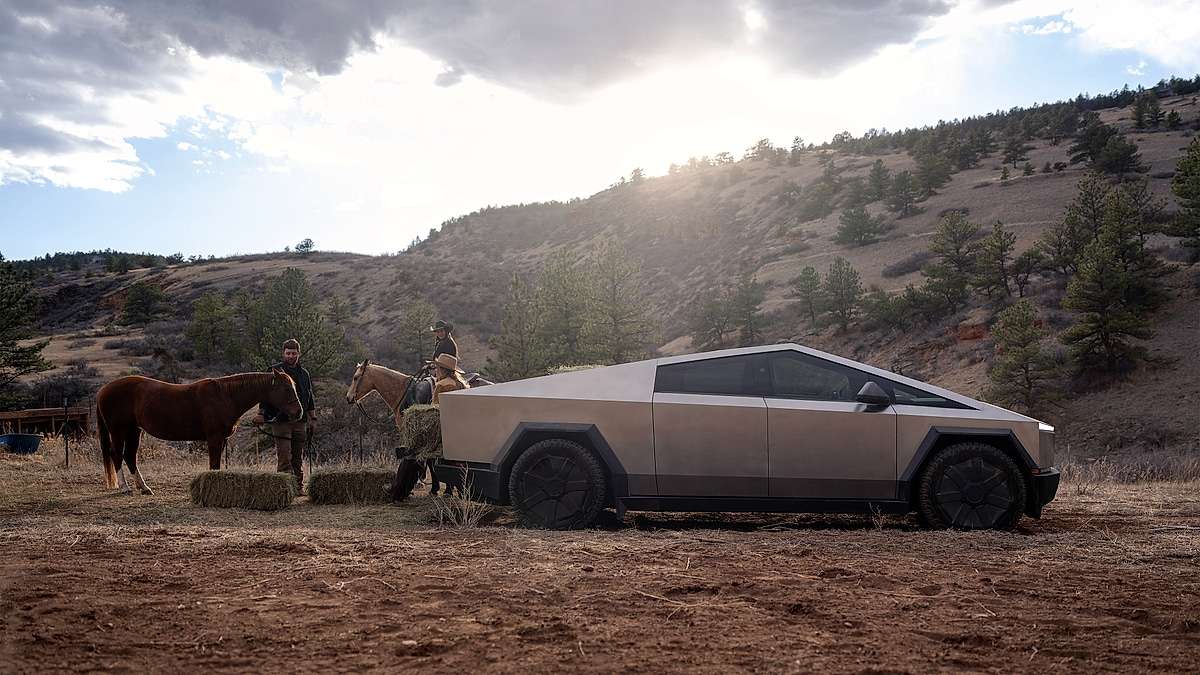

EmmA bought a Tesla Cybertruck in May 2024. Within 48 hours of taking delivery, the Power Conversion System failed. Tesla replaced it. At 8,000 miles, the second PCS failed. Tesla replaced it again. Now, in April 2026, with 33,000 miles on the odometer, the third PCS is showing the same red error code that preceded both previous failures. If this one goes, it will be her fourth PCS in less than two years of ownership.
"I love this truck, but it has been in service for more than 2 months over the last 23 months," EmmA wrote on the Cybertruck Owners Club forum. "And not for finicky stuff."
The list she attached was not cosmetic. Three power conversion system failures. The lights are going out. The driver's seat stopped moving. A sail appliqué flew off. The compressor was damaged during a PCS replacement. Before the latest PCS warning, she had already scheduled service for constant camera calibration failures and Full Self-Driving issues. Now she is considering a buyback.
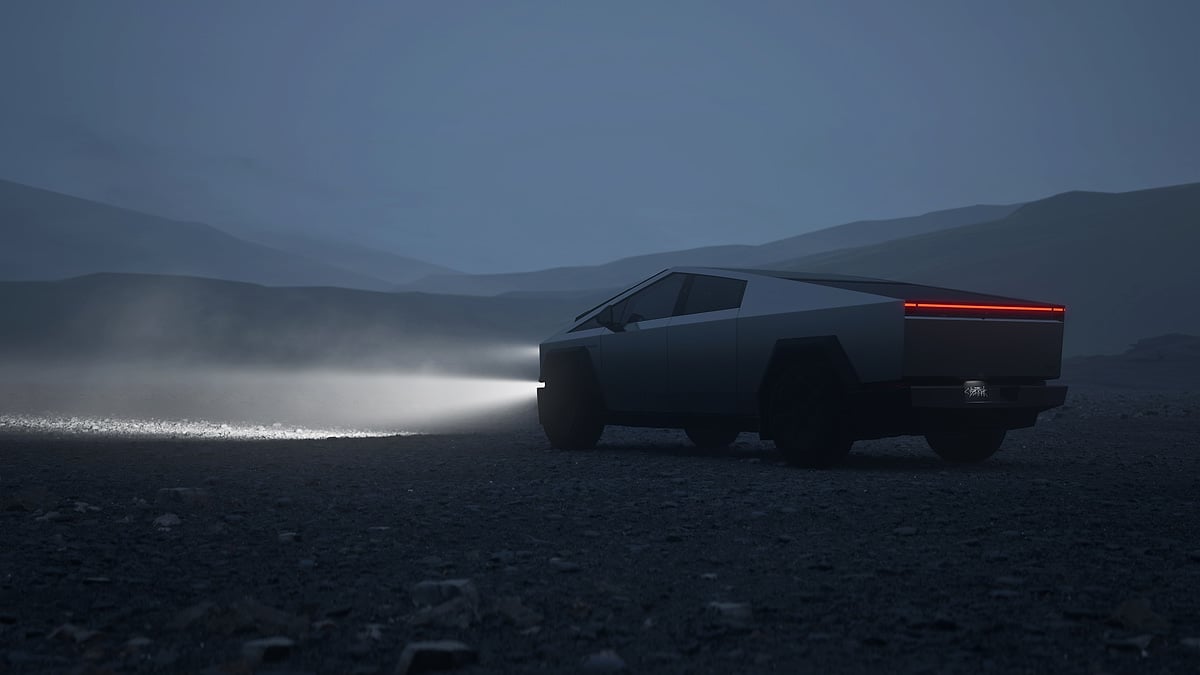
What makes EmmA's case more than an isolated horror story is the context around it. Tesla service centers are reportedly overwhelmed with PCS failures. Replacement parts are on backorder until late May. The company has pushed a firmware update that allows affected trucks to Supercharge even when their AC charging is dead. And Tesla is covering Supercharging costs for owners while they wait for parts. These are not the moves of a company handling a routine defect. They are the moves of a company managing a pattern.
The EV community has seen this pattern before. It was called the ICCU.
What PCS Is and Why It Matters
The Power Conversion System in the Cybertruck is the bridge between the outside world and the high-voltage battery. It converts AC power from a home wall connector or public Level 2 station into DC power that the battery can accept. It also manages DC fast charging, bidirectional charging for Powershare, and the internal distribution of high-voltage power throughout the vehicle.
When the PCS fails, AC charging stops. Owners plug in at home, and nothing happens. The error codes that appear on the center screen, typically PCS2_a136 or PCS2_a094, come with the same instruction: Schedule service. For a vehicle designed to charge primarily at home, a dead PCS is not an inconvenience. It is a functional amputation.
EmmA's first PCS failed on day two. Her second failed at 8,000 miles. The third began showing symptoms, home charging dropping from normal amperage to 24 amps, before throwing the red PCS2_a136 error. Each replacement carried a different part number. The first was revision 1777777-02-D. The second was revision 1777777-12-E.
Other owners in the same thread recognized the sequence. A member known as webspeedracer, who has driven 55,000 miles on a March 2024 build, noted that the repeated failures on the same truck suggest something deeper. "That is so weird, it seems like something else in the truck is causing PCS to fail," webspeedracer wrote. "Grounding issue?"
A member known as Black306 put it more bluntly: "At best, it is the PCS itself that is going bad. At worst, there is something else in the truck making the PCS go bad, or techs are not doing the repair correctly."
The Scale Is Bigger Than Individual Cases
EmmA is not alone, and the evidence goes beyond forum anecdotes. CleanTechnica editor Kyle Field, who owns a Cybertruck and has covered Tesla for years, received an official update from Tesla about the PCS situation. In a post on X, Field summarized Tesla's response: the company has pushed a firmware update to all affected Cybertrucks that enables Supercharging while AC charging is down. The firmware is configured to bypass Wi-Fi delay, so any owner can download it immediately. And Tesla will cover Supercharging costs for all affected owners until the parts delay is resolved, which the company said should be within days.
The fact that Tesla pushed an emergency firmware workaround and is paying for owners to fast-charge instead of fixing their trucks tells its own story. It tells you the failure rate is high enough that a temporary charging subsidy is cheaper than expediting thousands of hardware replacements.
Field's own service experience illustrates the parts shortage. A Tesla service representative named Karen messaged him that the specific PCS part he needed was on backorder and expected to arrive between mid and late May. The message added, due to a high volume of work and limited part availability, we are unable to provide a courtesy vehicle at this time.
A separate thread on the Cybertruck Owners Club forum, started by a member known as mongo, confirmed that Tesla is pushing the update broadly. The thread title: "Tesla pushing update for Cybertrucks with failed PCS to enable supercharging while awaiting PCS repair part." Multiple owners reported receiving the update or already experiencing the failure. One owner, freyguy, woke up to an "AC charging unavailable" message and drove straight to the service center, demanding a loaner. He got a CyberBeast as a replacement while his truck sat waiting for parts.
The Hardware Revision Treadmill
Tesla's approach to the PCS failure follows a playbook that should feel familiar to anyone who has watched the company iterate through hardware problems. Revision D failed. Revision E failed. Now the service network is installing revision G, which owners on the forum claim is stable and "what should have been in the trucks in the first place."
A member known as Gigahorse advised EmmA directly: "Get the G version of the PCS. If that goes out, do a buyback. G has been very stable and has had almost no issues."
A member known as mongo, who has tracked the issue closely, added: "G is the new version. So far, those have been ok."
The problem with hardware revision cycles is that each new revision is proclaimed the fix until it is not. Owners who received revision E were told it resolved the problems that plagued revision D. EmmA's second failure came with revision E installed. The gap between revision D and revision E did not save her from a third failure.
This is where the ICCU parallel becomes difficult to ignore.
The ICCU Precedent
The Integrated Charging Control Unit in Hyundai and Kia electric vehicles began failing in 2022 and 2023 at rates that initially looked like isolated incidents. Owners would wake up to find that their vehicles would not charge. The 12-volt battery would drain. In some cases, the vehicle would not start at all.
Hyundai's initial response was similar to Tesla's today: individual service cases, hardware replacements, and quiet acknowledgment that a problem existed. The company revised the ICCU hardware. Service bulletins went out. But the failures continued, and the scale became impossible to contain through routine service.
By 2024, the ICCU failures had become one of the most documented defect patterns in modern EV history. Hyundai extended warranties. Class-action lawsuits followed. The National Highway Traffic Safety Administration opened investigations. What started as forum complaints became a defining liability for the brand's early EVs.
The parallel is not exact. The Cybertruck's PCS does not appear to cause the same total immobilization that ICCU failures caused in some Hyundai EVs, because the Cybertruck can still drive on its high-voltage battery even when the PCS is dead. But the functional impact is similar: an EV that cannot charge at home is an EV that cannot fulfill its primary purpose for most owners.
And the trajectory is similar. Isolated reports. Then a pattern. Then, the service center backlog. Then parts shortages. Then, hardware revisions are promised to be the final fix. The ICCU story took roughly two years to move from stage one to stage four. The Cybertruck PCS is already at stage three.
Tesla's Band-Aid and What It Hides
The firmware update that enables Supercharging on a truck with a dead PCS is a clever piece of customer service. It is also a deflection.
By allowing owners to DC fast charge while their AC charging is inoperable, Tesla solves the immediate problem of stranded owners. By covering Supercharging costs, Tesla avoids the public relations disaster of owners paying out of pocket for a defect that is not their fault. But neither action addresses the underlying question of why the PCS is failing at rates high enough to overwhelm service centers and exhaust parts inventories.
The firmware workaround has another effect: it reduces the urgency for owners to push for faster repairs. If you can still charge for free at a Supercharger, the broken PCS becomes an annoyance rather than an emergency. That lowers the temperature on complaints and extends the window before a formal recall or NHTSA investigation becomes inevitable.
This is not speculation. It is exactly how Hyundai managed the ICCU in its early stages: warranty extensions and service accommodations that kept owners functional while the company worked through hardware revisions behind the scenes. The difference is that Hyundai eventually ran out of runway. The question for Tesla is whether revision G actually ends the cycle, or whether it simply resets the timer.
The Buyback Question
For owners like EmmA, the practical question is no longer whether the next PCS will fail. It is whether the truck is worth the cumulative downtime. Two months of service appointments in 23 months, for a vehicle that cost roughly $100,000, crosses into lemon law territory in several states.
A member known as REM, who has tracked PCS issues closely, advised EmmA to pursue a buyback rather than just consider one. "Your 2nd PCS replacement in October 2024 is part of the batch for internal recall, so that checks out. But still, you are unfortunately very unlucky in this case."
A member known as Cybermo put it more directly: "I would not consider a buyback, I would pursue it."
The buyback math is specific to each owner and each state's lemon law thresholds. But the pattern is clear enough that owners with multiple failures are being advised by their own community to exit the vehicle rather than trust the next hardware revision.
What Owners Should Know
For Cybertruck owners who have not yet seen a PCS failure, there are two pieces of information worth tracking. First, the failure appears to cluster in early builds. EmmA's truck was a May 2024 delivery. webspeedracer's March 2024 build has gone 55,000 miles without a failure, but he noted that he stopped driving the truck before hitting the 50,000-mile warranty expiration specifically because he feared the PCS would fail at mile 50,001.
Second, the symptoms before total failure are consistent. Home charging amperage drops unexpectedly. The truck may show intermittent PCS errors. If these appear, scheduling service before total AC charging loss improves the odds of getting a replacement before the parts backlog worsens.
For owners already affected, the firmware update and free Supercharging program are temporary lifelines, not solutions. The service message Field received from Tesla estimated parts availability within days, but Field's own service advisor said late May. That gap between corporate optimism and service center reality is where owners live while they wait.

Torque News reported in March 2026 that PCS failures were spreading among early Foundation Series Cybertrucks, with owners reporting scheduled replacements before they had even experienced symptoms. By late April, the story had escalated to a "PCS Failure Crisis," overwhelming service centers and causing weeks-long parts delays. The April 26 report noted that Tesla had issued a service bulletin but had not yet issued a formal recall.
What the forum data and owner reports add is the longitudinal view. A service bulletin addresses a defect at a single point in time. EmmA's experience shows a defect that repeats across multiple hardware revisions over nearly two years. That is not a service bulletin problem. That is a design validation problem.
Whether the PCS failure reaches ICCU scale depends on what revision G does in the real world over the next 12 to 18 months. If the failures stop, Tesla will have contained the issue through iteration, which is how the company has solved problems before. If they continue, the current firmware workarounds and Supercharging subsidies will look like the early chapters of a much longer story.
The EV industry has learned one hard lesson from the ICCU era: hardware failures in charging systems do not stay quiet. They strand owners. They generate forum archives. They attract lawyers. And eventually, they attract regulators. Tesla has the advantage of seeing that playbook in real time. What the company does with that advantage in the next six months will determine whether the PCS becomes a footnote or a chapter.
About The Author
Noah Washington is an automotive journalist based in Atlanta, Georgia, covering sports cars, luxury vehicles, and performance culture. His reporting focuses on explaining the engineering, design philosophy, and real-world ownership experience behind modern vehicles.
Noah has been immersed in the automotive world since his early teens, attending industry events and following the enthusiast communities that shape how cars are built and driven today. His work blends industry insight with enthusiastic storytelling, helping readers understand not just what a car is, but why it matters.
Noah is also a member of the Southeast Automotive Media Association (SAMA), a professional organization for automotive journalists and industry media in the Southeast.
His coverage regularly explores sports cars, luxury vehicles, and performance-driven segments of the automotive industry, including the evolving culture surrounding Formula Drift and enthusiast builds.
Read more of Noah's work on his author profile page.
You can also follow Noah here:
Set Torque News as Preferred Source on Google
Follow us today...






Comments
"I love this truck, but it…
Permalink
"I love this truck, but it has been in service for more than 2 months over the last 23 months," EmmA wrote on the Cybertruck Owners Club forum.
This chick doesn't understand the first thing about automobile ownership, does she?
Liking the truck and being…
Permalink
In reply to "I love this truck, but it… by Buzz Wired (not verified)
Liking the truck and being frustrated by repeated PCS failures can both be true. That is exactly why the case is worth paying attention to.