
For generations, we were told that cars should be as solid as a bank vault. Steel was king, and survival was assumed to correlate with the number of pounds a vehicle forced upon the earth. That philosophy is long gone. Modern vehicles are engineered to break apart in carefully scripted ways because physics leaves no room for romance. When the world suddenly stops in front of you, the energy has to go somewhere. Better it goes into shearing metal than into the human body.
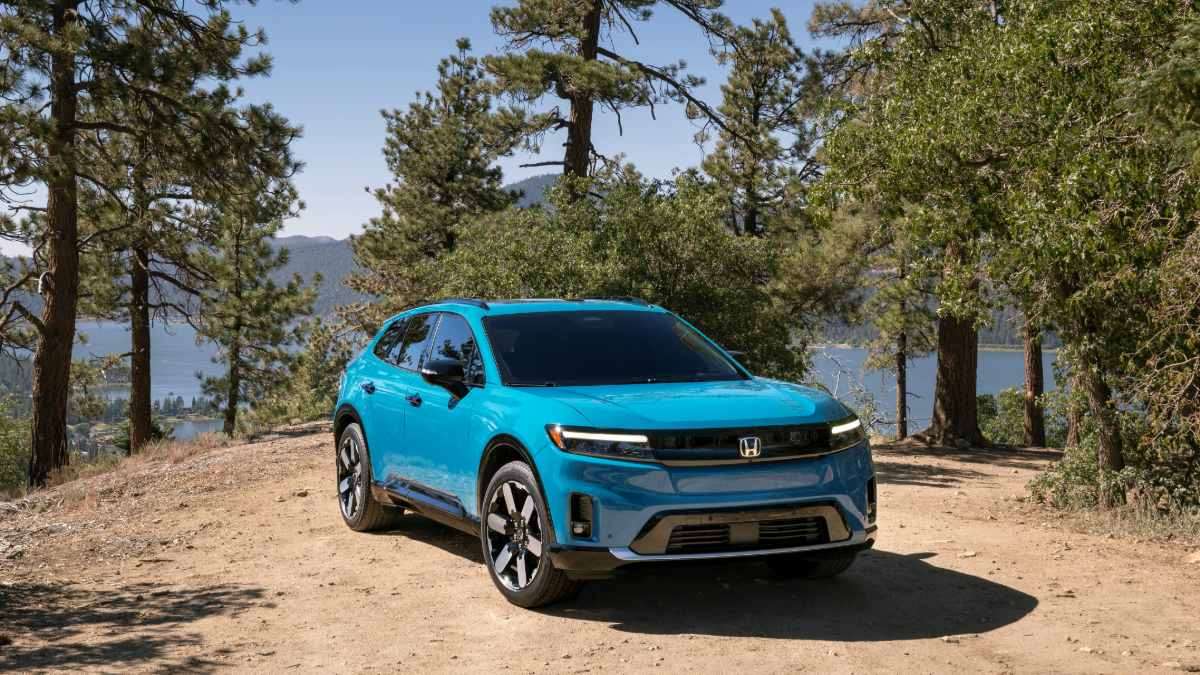
This engineering doctrine became personal for a Honda Prologue owner who recently shared a frightening experience in the Honda Prologue Owners Group on Facebook, prompting a wave of analysis from fellow drivers and amateur sleuths.
“Hey guys, I loved my 2025 prologue before I suddenly lost control. It happened in a blink, driving on a road I know very well. All of a sudden, I'm waking up in the hospital. I've been doing some "minor Google" research regarding what could've contributed to me losing control of my car. I saw something about faulty control arms that could fracture during use, and different suspension concerns. I made it to about 4.5k miles before this catastrophe.
I'm not a hater or detractor of Honda. I have little knowledge about cars, and this is my first Honda. I truly hope this wasn't an issue with the car.
Also, I'll provide updates if I get any.”

The comments that followed were not the usual social media brawl. Instead, they were an orderly attempt at understanding what may have happened. One member noted that the Prologue is fundamentally a GM product. Another countered that Honda still carries responsibility for what it sells. Others suggested that before anyone blames design or manufacture, a number of human and environmental factors must be considered. It had the atmosphere of an impromptu town hall, except the villagers were discussing alignment geometry and suspension load paths instead of property taxes.
Honda Prologue: Key Dimensions
- The Prologue offers a spacious cabin with generous legroom; front seat legroom is 41.4 inches, and rear seat legroom is 39.4 inches, helping ensure comfort for all occupants.
- In terms of headroom and other interior dimensions, it gives around 39.6 inches of front headroom (in certain trims) and 38.1 inches of rear headroom, with shoulder room of 59.4 inches up front and 57.6 inches in the back.
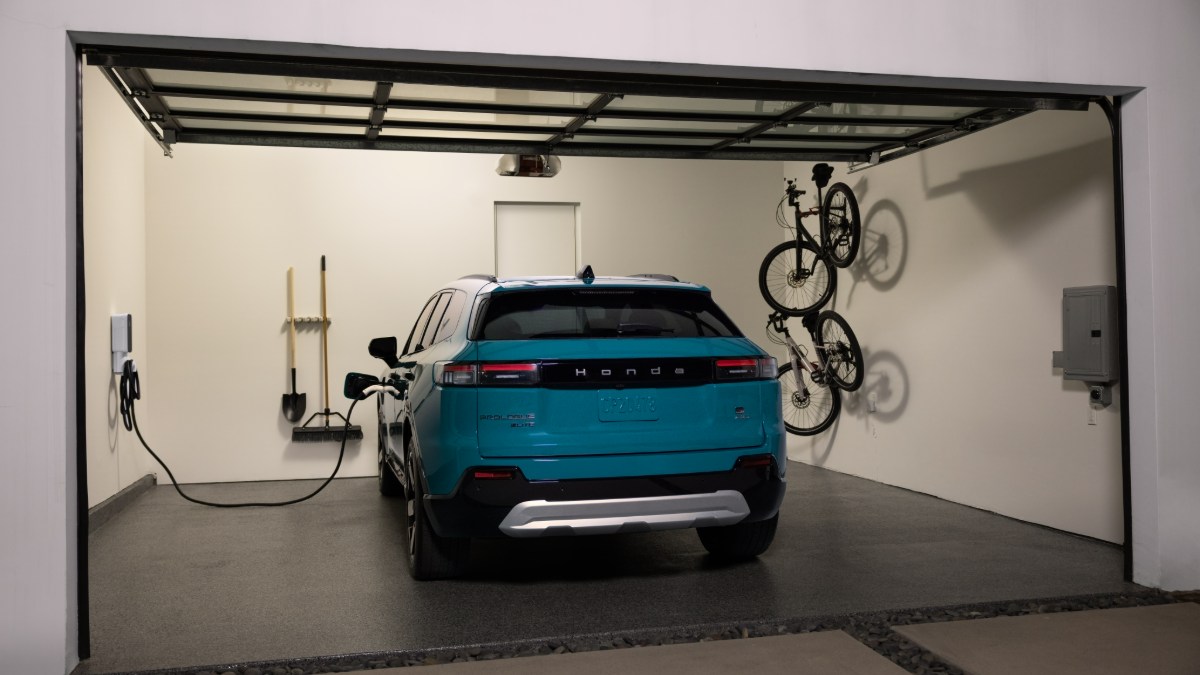
- The vehicle is built on a dedicated electric platform (the BEV 3 architecture shared via a partnership) with a battery pack around 85 kWh and an estimated electric range around 283-308 miles, depending on drive-type and trim.
- As a mid-size electric SUV, it balances modern technology and practical size: length approximately 192 inches, width 78.3 inches, and it delivers the kind of room and convenience you’d expect from a family-oriented Honda with an EV twist.
The most detailed breakdown came from Chris Ramsey. After studying the accident photos, he described one control arm still attached with a sheared ball joint, the other missing entirely, and the axle gone as well. He concluded that the wheel was likely intact when the vehicle first struck the guardrail, but was torn off afterward. His reasoning mirrors the principles behind modern crash engineering. Wheels, control arms, and entire suspension assemblies are designed to detach under extreme force so that destructive energy leaves the chassis instead of entering the cabin. Another commenter, Demetri Golpashin, thanked Ramsey for the explanation and noted that he learned something new. That alone shows how unusual it is to see real mechanical literacy in a Facebook thread.

This philosophy of sacrificial structure dates back to the rise of unibody construction in the late 1960s. Engineers learned that rigidity can be a liability when decelerating from highway speeds in fractions of a second. Crumple zones and breakaway components exist to lengthen the crash pulse, which reduces the forces transferred to occupants. This is why older cars often appear cosmetically intact after collisions, yet leave occupants with far more severe injuries, while newer cars tend to look shredded with people stepping out under their own power. The evidence is written across decades of crash testing and real-world data.
What remains unknown in this case is the initial cause of the loss of control. That is the crux of the matter for both the owner and the broader community. Other members asked sensible questions about weather, temperatures, and tire choice. The Prologue is a heavy electric SUV that demands adequate traction, especially during winter conditions. One commenter reminded the group that new models often experience early production quirks. None of these statements drew lines of blame. Instead, they reflected a group trying to separate coincidence from pattern.
The Prologue adds another variable because it is built on shared GM Honda architecture. Platform partnerships are common today, yet they complicate public perception whenever something unusual happens. What remains consistent is that modern suspension components, particularly aluminum control arms and knuckles, are engineered to deform in predictable ways. Tear-away points exist to prevent intrusion into the cabin. When they perform as designed, the vehicle may look catastrophically damaged from the outside while the interior structure remains intact. The mismatch between appearance and outcome often confuses onlookers who expect a modern vehicle to remain visually whole.
The owner intends to provide updates, and those updates will matter. If this were an isolated accident caused by environmental factors, driver condition, or a sudden obstacle, the discussion would fade. If multiple owners report similar failures, authorities like the National Highway Traffic Safety Administration may look closer. What is certain for now is that one driver survived a serious crash because the vehicle surrendered its components in the exact sequence its engineers intended. The destruction that horrifies the eye is the same destruction that protects the body, and that is the strange and brilliant logic of modern automotive safety.
Image Sources: Honda Media Center
Noah Washington is an automotive journalist based in Atlanta, Georgia. He enjoys covering the latest news in the automotive industry and conducting reviews on the latest cars. He has been in the automotive industry since 15 years old and has been featured in prominent automotive news sites. You can reach him on X and LinkedIn for tips and to follow his automotive coverage.
Set Torque News as Preferred Source on Google
Follow us today...