
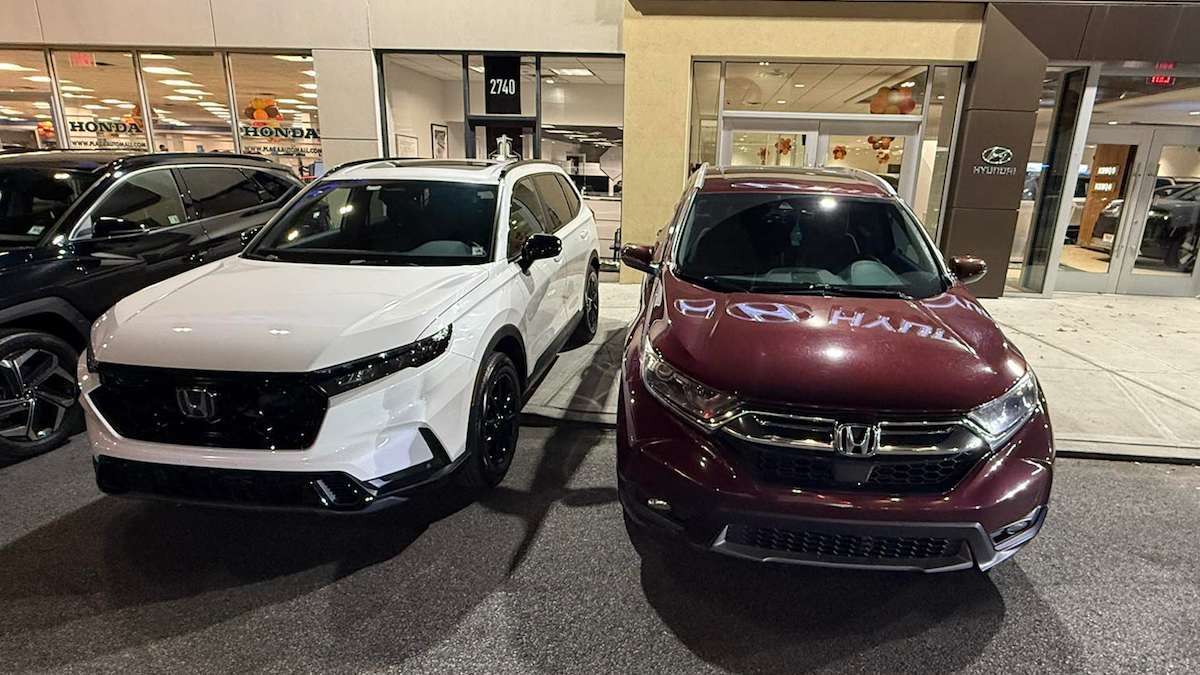

Did a 2026 Honda CR-V Hybrid buyer make a costly mistake, or are his friends stuck in the past? Here is the reality of modern hybrid reliability versus the lingering myths.
While researching hybrid reliability, I came across Ayendy Nicasio on the Honda CR-V Community Facebook page, facing a dilemma that plagues many new owners. Although he loves his new 2026 CR-V Hybrid, friends immediately warned him that the high cost of a future battery replacement would wipe out his gas savings. I dug into the numbers to see if this fear is justified or if his friends are stuck in the past.
When I saw Ayendy's post, it stopped me in my tracks because it perfectly captures the anxiety so many buyers feel when making the leap to electrification, even though it is a hybrid, not a full-electric vehicle.
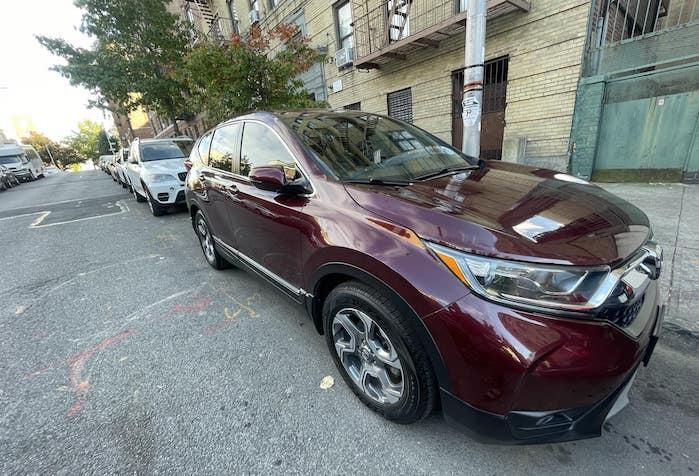
Ayendy posted, "I just traded in my 2018 Honda CR-V EX for a 2026 Honda CR-V Hybrid Sport L. Feels super smooth! But now, a lot of people are telling me I shouldn't have gotten a hybrid- you'll be sorry." They said the cost to replace the batteries isn't worth the money I would save in gas. I hope I'm not sorry."
Is This CR-V Hybris Buyer's Remorse Justified?
It is a classic case of buyer's remorse triggered by "friends" who are likely operating on outdated information from fifteen years ago. The fear is that a massive $4,000 to $6,000 repair bill is looming just over the horizon, waiting to erase every penny he saved at the pump. But is this actually true in 2025 and 2026? Here is my research into the warranty data and real-world owner experiences to see if Ayendy made a mistake or a wise investment.
Ayendy mentioned the drive quality immediately, noting how the new hybrid "feels super smooth" compared to the 2018 model. This isn't a coincidence; it is a distinct engineering choice Honda made for this generation. In a recent report, I covered a similar story in which a buyer noted, "I was determined to get a new Toyota RAV4, but after driving the 2026 Honda CR-V, the RAV4 is not as smooth and not as quiet as the CR-V." That owner found that the CR-V's two-motor hybrid system provided a level of refinement that even the wildly popular RAV4 couldn't match. Ayendy is feeling that same premium difference, which is the first tangible benefit of the upgrade.
The Math: Gas Savings vs. The "Battery Tax"
Let's address the elephant in the room: the cost of replacing the 2026 Honda CR-V Hybrid battery. Critics argue that if you save $3,000 in gas over ten years but spend $4,000 on a battery, you are in the red. However, this logic is flawed for two reasons: modern battery longevity and inflation-adjusted gas prices.
I have spent years analyzing these trends, and one thing is clear: the fear of failure often outweighs the reality. In a previous analysis, I discussed the longevity of Tesla and EV Batteries, noting that owners have surpassed 250,000 miles on their original packs. While that report focused on Tesla, the chemistry and management systems in Honda's latest hybrids are designed for lifecycles similar to Tesla's.
The Numbers Add Up
If you drive 15,000 miles a year, the real-world Honda CR-V Hybrid fuel economy (averaging roughly 40 MPG combined) versus a gas model (roughly 29 MPG) saves you about 140 gallons of fuel annually. At $3.50 a gallon, that is nearly $500 a year. Over a 10-year ownership period, that is $5,000 in raw fuel savings. Even if you had to replace the battery at year 11, you have arguably broken even on fuel alone, but that doesn't account for the maintenance you didn't do.
What You Are NOT Repairing
Here is the secret hybrid skeptics forget: Hybrids generally have lower maintenance costs because regenerative braking extends the life of your brake pads. The electric motor takes the strain off the engine. You aren't just saving gas; you are saving on wear and tear.
Compare this to the potential repair bills of a pure internal combustion engine as it ages. I recently reported on an owner who was ready to jump ship, noting, "I'm selling my unreliable Honda CR-V and buying a Toyota. My CR-V with only 68K miles already needs new injectors at a cost of $2,000." In that case, a gas-only powertrain incurred a massive bill well before 100,000 miles. With the Honda CR-V Hybrid vs gas model cost of ownership, you are often trading the risk of a complex transmission or turbo failure for the eventuality of a battery swap—and the battery is often more predictable.

Don't Forget About the Warranty
For Ayendy and anyone buying a 2026 model, the Honda hybrid battery warranty coverage explained is simple: 8 years or 100,000 miles. In "CARB states" (like California, New York, and others), that coverage extends to 10 years or 150,000 miles. This means for the first decade of the car's life, the risk Ayendy's friends are warning him about is precisely zero dollars.
Furthermore, the Honda CR-V Hybrid's battery life expectancy depends largely on how you treat it. Keeping the battery cooling vents clear and driving the car regularly (batteries hate sitting idle) can push lifespan well beyond the warranty period.
However, dealer service departments can sometimes complicate the ownership experience, regardless of what car you drive. It is vital to know your rights and the specific terms of your warranty. I covered an instance where a dealer tried to play hardball with a 2020 Honda CR-V owner. He says, "The dealer is threatening me with a $175 inspection fee for an AC leak that a recall issue causes." While that was about A/C, the lesson applies to hybrids too: unexpected costs often come from dealer policies, not just mechanical failures. Knowing your warranty terms protects you from these surprises.
What Honda CR-V Hybrid Owners Are Saying
To give you a broader perspective, I looked at what current owners are discussing on forums and Reddit about Honda CR-V Hybrid maintenance costs vs. gas models and battery longevity.
- On Battery Longevity: Reddit user SaverPro comments on the lifespan of modern packs: "Batteries themselves come with an 8-year 100k-mile warranty out of the factory. I've seen the batteries last 12-15 years, depending on various conditions. Personally, I easily see mine lasting that long."
- On The Trade-Off: Another user, Cpt-May-I, puts the repair fear into perspective: "How much does a turbo cost? How much does the CVT transmission cost? How about an alternator or a starter? The Hybrid has none of those if you're worried about parts replacements."
- On Managing Costs: A commenter on Torque News, Ron Krikorian, discussed the practical trade-offs of hybrid ownership, noting that even if you give up space or worry about parts, solutions exist: "If you can give up the space, you can purchase a temporary spare from a few vendors for $400-$500."
4 Key Takeaways
- The "Battery Fear" is Outdated: Modern hybrid batteries in the 2026 Honda CR-V Hybrid are designed to last the life of the vehicle, often exceeding 150,000 miles.
- Warranty Protection: You are covered for at least 8 years/100,000 miles, meaning that if the 2026 Honda CR-V Hybrid isn't reliable, it isn't a financial question you need to worry about for a decade.
- Mechanical offsets: The hybrid system eliminates the traditional alternator and starter, reducing brake wear and lowering overall operating costs.
- Smoothness Factor: As Ayendy noted, the hybrid powertrain offers a superior, smoother driving experience compared to the standard gas turbo.
Ayendy can tell his friends to relax.
He traded a 7-year-old car for a modern machine with a federally mandated warranty that protects your wallet for the next decade. By the time you might need a battery in 2036 or later aftermarket solutions will likely be a fraction of the cost they are today. You aren't going to be sorry; you're going to be passing them at the gas station.
What Would You Do?
Are you holding off on buying a hybrid because of concerns about battery replacement, or do you trust that the technology has matured? Let us know in the comments below.
I'm Denis Flierl, a Senior Torque News Reporter since 2012, bringing over 30 years of automotive expertise to every story. My career began with a consulting role for every major car brand, followed by years as a freelance journalist test-driving new vehicles, equipping me with a wealth of insider knowledge. I specialize in delivering the latest auto news, sharing compelling owner stories, and providing expert, up-to-date analysis to keep you fully informed.
Follow me on X @DenisFlierl, @WorldsCoolestRides, Facebook, Instagram and LinkedIn
Photo credit: Denis Flierl via Ayendy Nicasio - Facebook
Set Torque News as Preferred Source on Google
Follow us today...







Comments
What's missing in this…
Permalink
What's missing in this analysis is the higher upfront cost of hybrid vs ICE models. The ICE vs hybrid CRV models aren't exactly comparable, but it appears that the hybrid system adds about $3000 to the price of the car. If that extra $3000 is 'invested' in the car, it will immediately start depreciating, whereas if it is invested in actual investments, it will earn a return. That difference will wipe out part of the fuel savings (probably about $2000 worth over 5 years). The bottom line is that given the high cost of modern new cars, the ownership cost of a hybrid vs equivalent ICE vehicle is fairly negligible -- neither is a big mistake (but probably don't buy a PHEV, since those are considerably more expensive and depreciate more quickly like full EVs do). Another big factor is how you use your car. In the CRV, the hybrid system offers only a minimal advantage with highway driving (the AWD ICE gets 32MPG on the highway while the AWD hybrid model gets 34). If most of your miles are highway miles, the hybrid system is probably a waste of money with little benefit.
Have you driven both to…
Permalink
In reply to What's missing in this… by MarkW (not verified)
Have you driven both to compare? For me the difference in cost goes right out the window after driving a hybrid. Money well spent in my opinion. I also recommend the sport touring trim. ;-)
I lease a 2024 Honda CRV…
Permalink
I lease a 2024 Honda CRV Hybrid, primarily because I wasn't all that confident in the long-term ramifications of owning a hybrid. I'm now halfway through my 2nd lease year, and I've come to the conclusion that I won't buy a hybrid when this lease is over. I love the way the 2024 CRV Hybrid drives (for the most part), and I do in fact get a combined 40 MPG. But there are several things that've turned me off, and at my age (I'm old) I'll stick with what I feel most comfortable with.
1 - Price to purchase a 2025 CRV Hybrid with leather according to Kelley Blue Book runs about $2,300 MORE locally. Essentially the same amenities.
2 - The 5-year Cost-of-Ownership of the 2025 Honda CRV Hybrid according to Kelley Blue Book is roughly $800 MORE than for the gas version.
3 - I've read numerous articles that hybrids generally depreciate MORE by the 10-year point than comparable gas engine variants. Apparently the words 'Trust Me' don't mean much when you're trying to convince prospective car buyers that the hybrid battery will last forever.
4 - Lack of a spare tire is VERY disconcerting when traveling far away from home. Honda provides some silly little kit to inflate flat tires so that they'll go 5-10 miles, then you get to stop and re-inflate them. Reality is that they were too cheap to design the battery storage area properly to store BOTH the spare tire AND the battery.
5 - Gas mileage on super highways for the hybrid is actually lower than for the gas engine variant. I get 30-32 MPG on the interstate (I'm told it's got to do with how Honda 'compromised' the drive trane to get better around-town gas mileage).
How about the issue of no…
Permalink
How about the issue of no spare tire? Especially because hybrids are heavier than non-hybrids and are harder on tires. It seems like a mistake to eliminate the spare tire.
Yes, I included the spare on…
Permalink
In reply to How about the issue of no… by Gary Hartling (not verified)
Yes, I included the spare on the purchase. I got it for when I would go on a road trip. The pros still out weight the cons. Love my CRV Sport touring
Your math left out the…
Permalink
Your math left out the higher initial cost, and thus taxes and financing as well, that a hybrid has. You may not break even. And those parts the ICE has may not fail during that time (ask me how I know), but the battery will wear out. Hybrids may be worth it for other reasons (quietness, quicker, etc), but the real math is not so in favor of a hybrid.
People shouldn't fear the…
Permalink
People shouldn't fear the potential for having to replace the battery in a hybrid. Data shows overwhelmingly that hybrid batteries last the life of the car with the Toyota Prius now residing on the top 10 list of longest lasting vehicles.
In addition, hybrid batteries operate over a reduced range of charge (30-75%) than batteries used in a PHEV or BEV. Batteries live the longest operating in this range of charge with the least amount of degradation.
Finally, batteries have improved immensely over the past 20 years in terms of performance, durability and most importantly cost. As a hybrid battery is typically only 1 to 2 kWh in size, they are vastly less expensive than a larger battery used by a PHEV (17-25kWh) or BEV (60->100kWh).
I just got a 2026 CRV sport…
Permalink
I just got a 2026 CRV sport touring and I love it. Best looking compact SUV, and best ride I can remember. I love hybrids, especially this one. Making the two motors to work together is for me the best solution and a major engineering feat. The comments about the fear of battery replacement are for sure old school. This is my second hybrid and the first one (Prius) is over 10 years old and running strong on the original battery. I recommend the CRV hybrid for sure.
Hi there, I am not sure you…
Permalink
Hi there, I am not sure you are taking into consideration of the initial price point of the new hybrid vehicle, which is probably much higher than a strictly gas powered vehicle. How long would it take to recover that difference in price?
"brake wear"???? Brakes are…
Permalink
"brake wear"???? Brakes are extremely cheap. Top line R1 slotted and drilled would be about 250 all around, with pads around 50 all around. So 300 for full brake replacement all axels, new roters, etc. Even cheaper if you go with standard parts.