
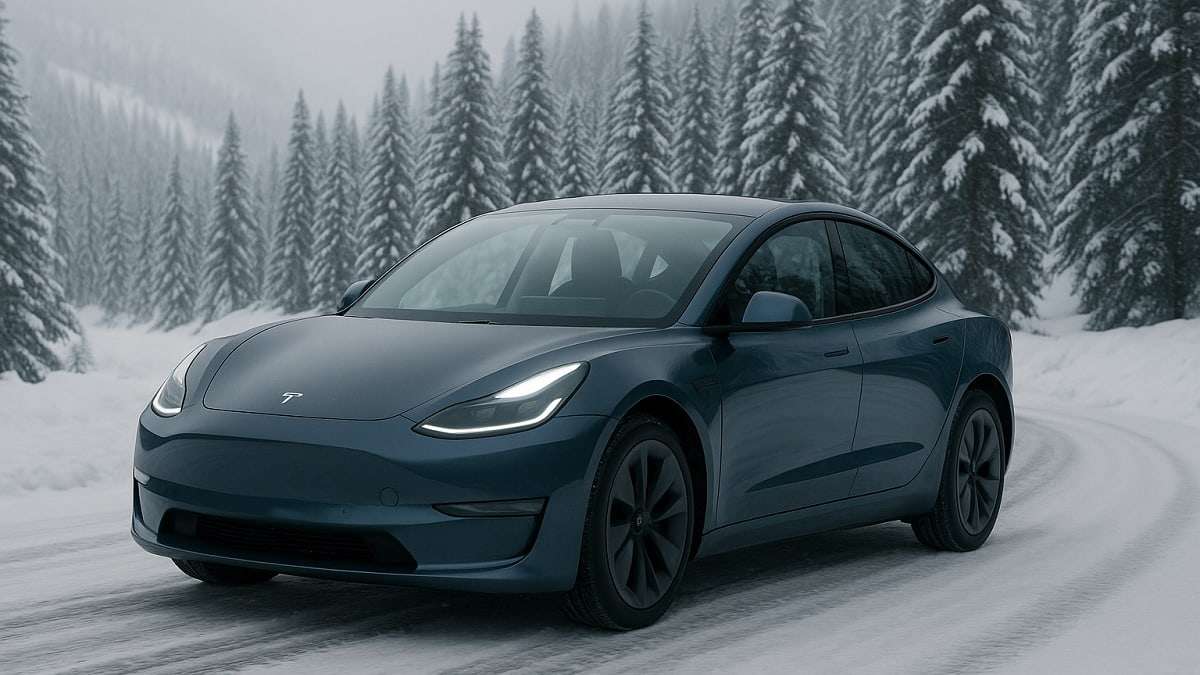

Most of us know that cold weather affects the range of electric vehicles and it’s something that we must actively manage. What’s not as well known is that the cold weather loss of range, and added anxiety, is much greater for shorter trips than for longer ones. This is captured by a great social media post on the r/electricvehicles subreddit where in allium posted:
“Don't judge winter range impact by short trip driving efficiency. The winter cold is not as bad for long trips.
It's that time of year again when the snow piles up, the temperature drops, and winter range anxiety becomes a thing.
The good thing is that the impact of cold temperatures on energy use is ‘much worse for short trips,’ especially if you don't preheat the car. A six-mile drive might use 2% of your battery in the summer; now it's using 5% or more. However, what really matters is road-trip range, and this doesn't mean that your battery will be empty after 120 miles on the highway! Yes, road-trip range is reduced in the cold, but it isn't impacted as much as city driving efficiency.”
By coincidence the very next subreddit thread, laboringwithlove posted:
“I have a fully electric 2024 Jeep Wagoneer S and I just drove 38 miles and used 123 miles of my battery. I was in eco mode. It is winter, and is 12F where I live today. I had the heat on in the car, but only level four so I didn’t have it cranking.
I know I’ll use more battery in the winter and in extreme weather, but I was told to expect to decrease my battery life by like half, I was not expecting to only be able to go like a third of the distance on a full charge. Is there anything I can do to like condition/increase my battery life? is this even a thing?”
Going back to the original post discussed above, allium went on to elaborate with some great insights:
“To see why short trips suffer a greater loss of range, let's see what happens in a city drive starting out with a frozen car:
• You need a burst of high-power heat at the beginning of the drive to defrost/deice the windshield.
• You might want even more heat at the beginning to warm up the cabin.
• The battery is extremely cold, meaning it has a higher internal resistance (making it less efficient).
• The battery is too cold to accept energy from regenerative braking (a massive hit to in-town efficiency).
All this does in town is require a little extra energy at your charger -- but of course gas engines have horrible efficiency when they're cold, too. (If you have home charging you can pull energy out of the grid and preheat, of course.)
If you're going on a long trip, these things are less impactful by mile 30 than they were at the beginning:
• You only have to de-ice the car once.
• Once you warm the cabin, the ongoing power needed to ‘keep’ it warm is much less.
• The battery will gradually warm up from waste heat (the increase in internal resistance isn't ‘wasting’ that energy -- it goes into heat, warming the battery up). Once it gets warm its resistance goes down and it can accept regen energy again.
• Any waste heat beyond that can be scavenged by the car's heat pump system (if you have one) and used to warm the cabin.
• Your first DC fast charging stop will heat the battery up to "well and truly toasty", giving you free heat for a long while afterwards.
You're still going to have reduced range during a winter road trip, of course. Snow tires are less efficient than summer tires, air is thicker when cold leading to more drag, and you may be driving on wet or snow-covered pavement. The battery will still have somewhat higher internal resistance, as it will never get truly ‘warm’ in very cold conditions. Also, running the cabin heat will still take power even once you get up to temperature.”
Cold Weather Reduces the Range of All Vehicles, Not Just Electric
While we are discussing the effect that cold weather on electric vehicle range, let’s be careful to point out that cold weather also has a noticeable effect on the fuel economy of gas-powered cars. Gas vehicles typically lose 10% to 20% of their fuel efficiency in city driving at winter temperatures, with losses climbing to 15% to 33% on short trips. Hybrids experience even larger drops because their engines take longer to warm up and their batteries are less effective in the cold.
Cold weather affects vehicle performance through a mix of mechanical and environmental factors. Engines and driveline components create more friction when fluids are cold, and batteries operate less efficiently. Vehicles also face denser air, lower tire pressure, winter fuel blends, and extra power draw from defrosters and heaters. Snow and ice increase rolling resistance and reduces traction, which makes the car work harder. Slower travel on slick roads and the use of four-wheel drive further reduces fuel economy.
How to Improve Fuel Economy and EV Range in Cold Weather
Gas powered cars benefit from a few simple habits during winter weather. Parking in a warm garage helps the engine reach an efficient temperature sooner, which saves fuel during the first few miles. Drivers can also combine errands to reduce the number of cold starts. Idling to warm the car is not recommended since gentle driving warms the engine faster while using less fuel. Checking tire pressure, limiting the use of seat warmers and defrosters, removing roof racks when not needed, and using the correct cold weather oil all help improve efficiency.
Electric vehicles and plug in hybrids gain range through slightly different winter strategies. Preheating the cabin while the vehicle is still plugged in raises the temperature without draining the battery, which improves starting range. Using seat warmers instead of the main cabin heater requires much less energy and helps preserve driving distance on cold days.
The Tesla Model 3
The Tesla Model 3 has become one of the most popular electric cars in the world because it combines great performance, good efficiency, and modern technology in a clean, simple design. It first launched in 2017 and quickly became Tesla’s best seller, largely because it brought long range electric driving to a broader audience at a lower price point. Current versions usually cost between the mid thirty-thousand-dollar range and the mid fifty-thousand-dollar range depending on range and performance options. The Model 3 stands out from other EVs with its smooth software experience, quick acceleration, and access to Tesla’s large fast charging network. It is sold only as a compact four door sedan, which helps keep it efficient and relatively light compared with many newer electric SUVs.
What Do You Think?
How much winter range loss have you seen with your EV, and does it match what the article describes?
Have you noticed a huge difference between short winter trips and longer drives, or does your experience look completely different?
Chris Johnston is the author of SAE’s comprehensive book on electric vehicles, "The Arrival of The Electric Car." His coverage on Torque News focuses on electric vehicles. Chris has decades of product management experience in telematics, mobile computing, and wireless communications. Chris has a B.S. in electrical engineering from Purdue University and an MBA. He lives in Seattle. When not working, Chris enjoys restoring classic wooden boats, open water swimming, cycling and flying (as a private pilot). You can connect with Chris on LinkedIn and follow his work on X at ChrisJohnstonEV.
Photo credit: Provided by author
Set Torque News as Preferred Source on Google
Follow us today...



Comments
Even after driving EVs for…
Permalink
Even after driving EVs for 12+ years I still forget to pre-heat my cabin. My kids are the ones who remind me to "warm up the car" more than I remember.
I don't worry about decreased efficiency when driving locally in Charlotte. I always have more than enough range in daily driving. 100kWh batteries will do that for ya.
That’s a great point, Eric…
Permalink
In reply to Even after driving EVs for… by Eric Bendler (not verified)
That’s a great point, Eric. When you’re rocking a 100kWh pack, 'efficiency' becomes more of a data point than a daily concern, range anxiety really does disappear once the buffer is that large.
You’re also spot on about the kids being the best 'pre-heat' reminders! It’s funny how we focus on the energy cost of warming the cabin, but for local driving in a place like Charlotte, that 2–3% 'short trip penalty' is a tiny price to pay for the comfort of not shivering for the first five miles. The physics of maintaining a warm battery on a long haul is a totally different animal than the 'stop-start' heating cycles of running errands.