
In the world of technology and automotive forecasting, we often look for "inflection points"—that specific moment when a trend shifts from a niche curiosity to a market-dominating force. For years, critics (myself included) have badgered Toyota for its perceived "laggard" status in the battery electric vehicle (BEV) space. However, the latest February sales results from Toyota Canada have essentially set the skeptics' narrative on fire.
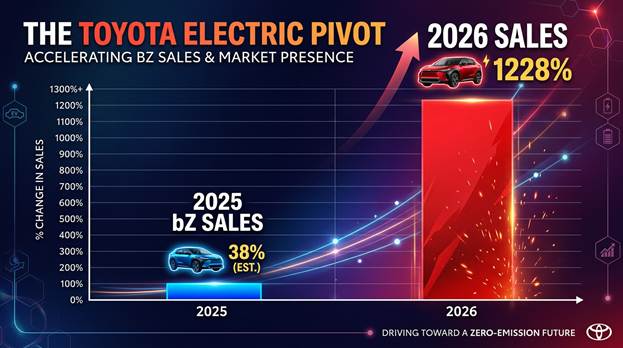
The bZ series, led by the bZ4X, saw a staggering 1,228.3% increase in sales compared to the previous year. While critics might argue that triple-digit or quadruple-digit growth is easy when starting from a low base, the sheer volume of units moving into Canadian driveways suggests something deeper: the "Silent Majority" of Toyota loyalists has finally decided that the water is fine. This isn't just a sales spike; it is a migration of a massive, risk-averse demographic into the EV era.
Why the bZ Series is Finally Connecting
The bZ series (standing for "Beyond Zero") didn't launch to universal acclaim. Early reviews were middling, focusing on range and charging speeds that lagged behind Tesla or Hyundai. So, why the 1,228% surge? The answer lies in the psychology of the Toyota buyer.
The typical Toyota buyer isn't looking for a "spaceship on wheels" or a vehicle that can play video games on the dashboard. They are looking for an appliance - the most reliable, safest, and highest-residual-value appliance money can buy. For decades, Toyota built a "trust bank" with these consumers. Now that the bZ4X has been in the market long enough to prove it won't explode or fall apart, that trust is being cashed in.
The bZ series appeals to the "Pragmatic Majority." These are buyers who were hesitant to jump to Tesla because of build quality concerns or a lack of local service centers. They wanted an EV that felt like a RAV4. Toyota gave them exactly that—a vehicle with familiar switchgear, a predictable driving dynamic, and the backing of a dealership network that spans every corner of North America.
The Toyota Paradox: Why They Fell Behind
To understand why Toyota is just now hitting its stride, we have to look at the "Innovator’s Dilemma." Toyota didn't fall behind because they couldn't build an EV; they fell behind because they were too successful with hybrids. When you own the hybrid market with the Prius and RAV4 Hybrid, transitioning to BEVs feels like cannibalizing your own children.
Former CEO Akio Toyoda famously championed a "multi-pathway" approach, arguing that the world wasn't ready for a 100% BEV future. While he was largely right about the infrastructure challenges, the optics were disastrous. It allowed Chinese manufacturers like BYD and tech-heavy firms like Tesla to capture the "innovation" narrative.
The bZ series is the bridge. It is Toyota’s way of closing the gap by proving they can scale manufacturing faster than anyone else once they commit. The sales surge in Canada is a proof of concept: Toyota doesn't need to be first; they just need to be Toyota.
The Looming Shadow of Chinese EVs
While Toyota celebrates, a storm is gathering in the East. Chinese manufacturers like BYD, Geely (with Zeekr and Volvo), and Xiaomi are producing EVs that are objectively more advanced in terms of software-defined features and, more importantly, price.
A BYD Atto 3 or a Xiaomi SU7 offers significantly more range and "smart" features for a fraction of the bZ4X’s MSRP. In a pure spec-for-spec fight, the bZ4X struggles. The Chinese EV industry has the advantage of a vertically integrated supply chain, particularly in battery minerals and cell manufacturing. China's lead in battery tech allows them to price vehicles at levels that look like "dumping" to Western regulators but are actually the result of massive domestic scale.
For Toyota, the bZ series is a defensive wall. It is priced competitively enough to keep loyalists from wandering into a BYD showroom, but it isn't a "China-killer" yet. If Toyota (and Japan) cannot find a way to lower their Bill of Materials (BOM) for batteries, they risk being relegated to a "luxury" or "niche" reliable choice while China captures the mass market.
Can the Japanese Auto Industry Survive the Influx?
This is the existential question of the decade. The Japanese economy is inextricably linked to the health of its automotive sector. If Japanese cars lose their dominance, Japan loses its economic engine.
To survive the Chinese influx, Japanese makers must move beyond hardware. The era of winning on "better welding" is over. They need to master the Software-Defined Vehicle (SDV). The bZ series shows progress here, but it still feels like a car with a computer bolted on, whereas Chinese EVs feel like computers with wheels.
However, Japan has one ace up its sleeve: Geopolitics. As trade tensions rise, the US, Canada, and the EU are increasingly wary of Chinese-made vehicles for data security and economic reasons. Toyota, by manufacturing locally in North America and Japan,
In the world of technology and automotive forecasting, we often look for "inflection points"—that specific moment when a trend shifts from a niche curiosity to a market-dominating force. For years, critics (myself included) have badgered Toyota for its perceived "laggard" status in the battery electric vehicle (BEV) space. However, the latest February sales results from Toyota Canada have essentially set the skeptics' narrative on fire.
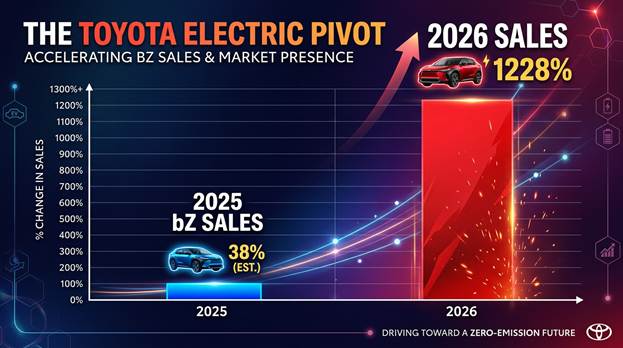
The bZ series, led by the bZ4X, saw a staggering 1,228.3% increase in sales compared to the previous year. While critics might argue that triple-digit or quadruple-digit growth is easy when starting from a low base, the sheer volume of units moving into Canadian driveways suggests something deeper: the "Silent Majority" of Toyota loyalists has finally decided that the water is fine. This isn't just a sales spike; it is a migration of a massive, risk-averse demographic into the EV era.
Why the bZ Series is Finally Connecting
The bZ series (standing for "Beyond Zero") didn't launch to universal acclaim. Early reviews were middling, focusing on range and charging speeds that lagged behind Tesla or Hyundai. So, why the 1,228% surge? The answer lies in the psychology of the Toyota buyer.
The typical Toyota buyer isn't looking for a "spaceship on wheels" or a vehicle that can play video games on the dashboard. They are looking for an appliance - the most reliable, safest, and highest-residual-value appliance money can buy. For decades, Toyota built a "trust bank" with these consumers. Now that the bZ4X has been in the market long enough to prove it won't explode or fall apart, that trust is being cashed in.
The bZ series appeals to the "Pragmatic Majority." These are buyers who were hesitant to jump to Tesla because of build quality concerns or a lack of local service centers. They wanted an EV that felt like a RAV4. Toyota gave them exactly that—a vehicle with familiar switchgear, a predictable driving dynamic, and the backing of a dealership network that spans every corner of North America.
The Toyota Paradox: Why They Fell Behind
To understand why Toyota is just now hitting its stride, we have to look at the "Innovator’s Dilemma." Toyota didn't fall behind because they couldn't build an EV; they fell behind because they were too successful with hybrids. When you own the hybrid market with the Prius and RAV4 Hybrid, transitioning to BEVs feels like cannibalizing your own children.
Former CEO Akio Toyoda famously championed a "multi-pathway" approach, arguing that the world wasn't ready for a 100% BEV future. While he was largely right about the infrastructure challenges, the optics were disastrous. It allowed Chinese manufacturers like BYD and tech-heavy firms like Tesla to capture the "innovation" narrative.
The bZ series is the bridge. It is Toyota’s way of closing the gap by proving they can scale manufacturing faster than anyone else once they commit. The sales surge in Canada is a proof of concept: Toyota doesn't need to be first; they just need to be Toyota.
The Looming Shadow of Chinese EVs
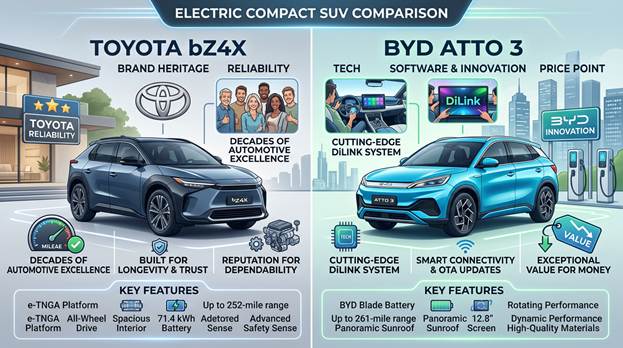
While Toyota celebrates, a storm is gathering in the East. Chinese manufacturers like BYD, Geely (with Zeekr and Volvo), and Xiaomi are producing EVs that are objectively more advanced in terms of software-defined features and, more importantly, price.
A BYD Atto 3 or a Xiaomi SU7 offers significantly more range and "smart" features for a fraction of the bZ4X’s MSRP. In a pure spec-for-spec fight, the bZ4X struggles. The Chinese EV industry has the advantage of a vertically integrated supply chain, particularly in battery minerals and cell manufacturing. China's lead in battery tech allows them to price vehicles at levels that look like "dumping" to Western regulators but are actually the result of massive domestic scale.
For Toyota, the bZ series is a defensive wall. It is priced competitively enough to keep loyalists from wandering into a BYD showroom, but it isn't a "China-killer" yet. If Toyota (and Japan) cannot find a way to lower their Bill of Materials (BOM) for batteries, they risk being relegated to a "luxury" or "niche" reliable choice while China captures the mass market.
Can the Japanese Auto Industry Survive the Influx?
This is the existential question of the decade. The Japanese economy is inextricably linked to the health of its automotive sector. If Japanese cars lose their dominance, Japan loses its economic engine.
To survive the Chinese influx, Japanese makers must move beyond hardware. The era of winning on "better welding" is over. They need to master the Software-Defined Vehicle (SDV). The bZ series shows progress here, but it still feels like a car with a computer bolted on, whereas Chinese EVs feel like computers with wheels.
However, Japan has one ace up its sleeve: Geopolitics. As trade tensions rise, the US, Canada, and the EU are increasingly wary of Chinese-made vehicles for data security and economic reasons. Toyota, by manufacturing locally in North America and Japan, offers a "safe" alternative. This "Geopolitical Premium" might be the only thing keeping the price gap from destroying Japanese market share.
Winners and Losers in the Japanese EV Race
Not all Japanese companies are created equal in this fight.
- Best Situated: Toyota and Honda. Toyota has the capital and the hybrid cash flow to fund the transition. Honda has made strategic partnerships with Sony and GM to bridge the software and battery gaps. They have the scale to pivot.
- The Middle Ground: Nissan. They were first with the Leaf, but they squandered their lead. The Ariya is a solid product, but Nissan lacks the "bulletproof" brand equity that Toyota currently uses to drive these 1,228% sales surges.
- Worst Situated: Mazda and Subaru. These are "boutique" manufacturers. They lack the R&D budgets to develop proprietary EV platforms at the pace required to outrun China. Subaru is currently leaning heavily on Toyota’s bZ platform (the Solterra), which is a smart survival move, but it leaves them without a unique technological identity in the EV era.
How Japan Must Compete
To win, Japanese makers must do three things:
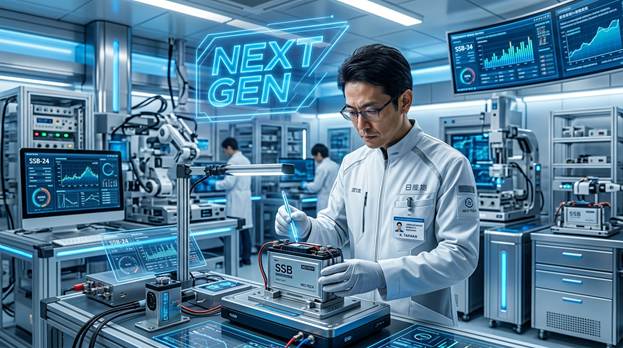
- Solid-State Dominance: Toyota is betting heavily on solid-state batteries. If they can commercialize this first, they leapfrog China’s current liquid-lithium dominance.
- Software Ecosystems: They must stop outsourcing software or treating it as an afterthought. The user interface in a 2026 EV needs to be as fluid as an iPhone.
- Alliance Building: Japan must act as a unified bloc. The recent news of potential cooperation between Nissan and Honda is a sign that they finally realize they are in a fight for their lives.
Wrapping Up
The 1,228% sales surge for Toyota Canada’s bZ series is a monumental achievement that proves the "Toyota Way" still resonates with consumers, even in the electric age. It demonstrates that the brand's core demographic—the pragmatic, reliability-focused buyer—is ready to plug in, provided the badge on the hood is one they trust.
However, this victory is localized and perhaps temporary. The bZ series has successfully closed the gap between Toyota’s past and the electric present, but the future belongs to whoever wins the war of software and battery chemistry. China is currently leading that war. For Toyota to maintain this momentum, they must leverage this newfound EV sales success to accelerate their solid-state battery programs and software integration.
Japan isn't out of the race yet—far from it. If anything, the Canadian sales figures prove that the world is waiting for a reason to buy an electric Toyota. Now, Toyota just needs to give them a reason that is so technologically superior that the "Chinese Wave" looks like a ripple in comparison.
Disclosure: Images rendered by Artlist.io
Rob Enderle is a technology analyst at Torque News who covers automotive technology and battery developments. You can learn more about Rob on Wikipedia and follow his articles on TechNewsWord, TGDaily, and TechSpective.
Set Torque News as Preferred Source on Google
Follow us today...