
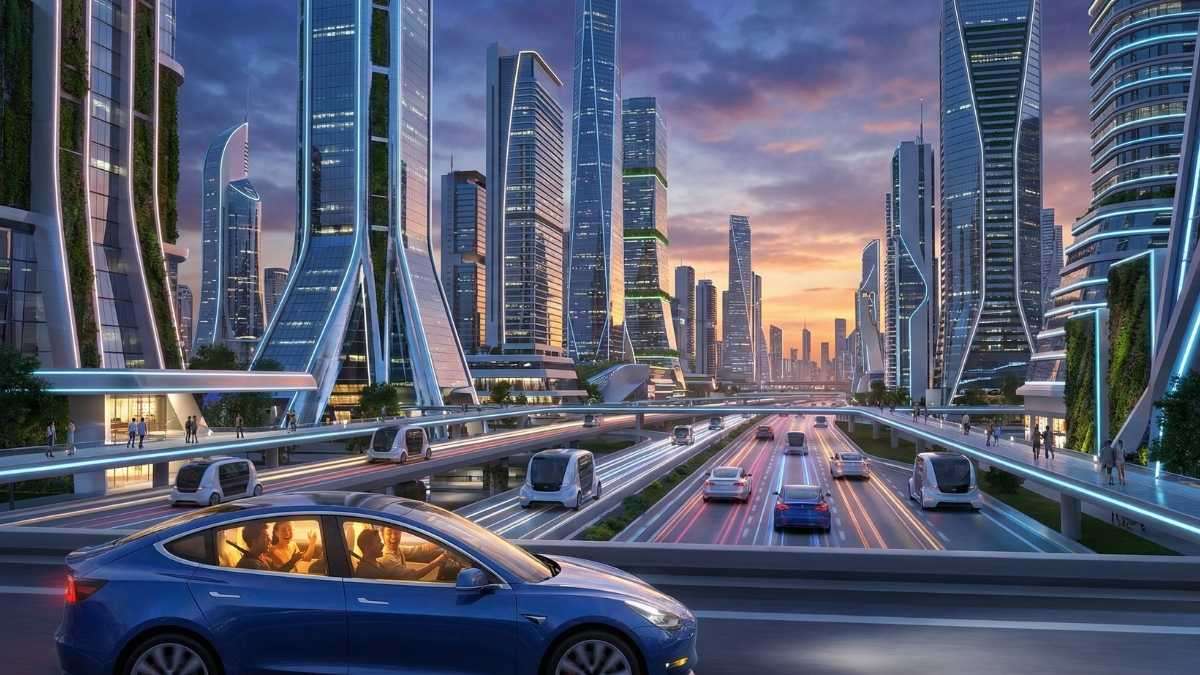

It arrived just in time for Thanksgiving, a digital feast for the Tesla faithful. As families gathered around turkeys, Tesla owners gathered around their screens to welcome FSD v14.2 (and the rapid follow-up v14.2.1). Dubbed by early testers as the "medicated version" for its newfound smoothness, this update isn’t just a patch; it is a statement. After days of testing by the community, the consensus is building: the car feels less like a robot following code and more like a sentient creature learning to coexist on the road.
But beyond the "wow" factor of a car that finally stops stabbing the brakes, v14.2 forces us to confront uncomfortable questions. As the software matures, are we witnessing the beginning of the end for the private garage? Is the technology actually safe enough to trust with our lives? And as Chinese competitors like BYD and Xiaomi close the gap, is Tesla’s lead as secure as Elon Musk claims?
What This Rollout Means for Autonomous Vehicles
The leap from v13 to v14.2 is subtle on the spec sheet but massive on the pavement. The introduction of "end-to-end" neural networks for navigation and routing—where the car makes decisions based on visual data rather than hard-coded maps—has fundamentally changed the driving dynamic.
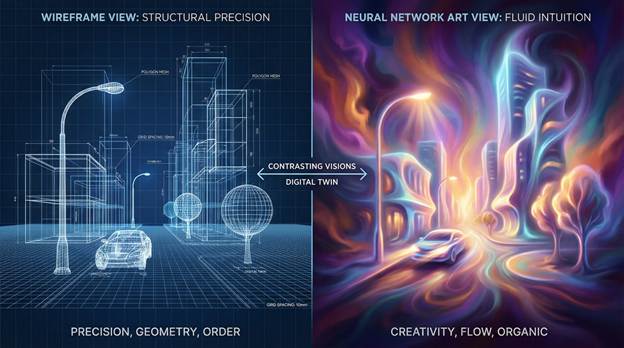
This update signals that we are moving out of the "brittle" phase of autonomy. Previous versions stumbled when map data didn't match reality. V14.2, however, reads the road like a human. Early reports indicate it handles construction zones and unplowed roads with a level of "caution and confidence" that was previously missing. This shift from "rules-based" to "inference-based" driving is the holy grail for the industry. It means autonomous vehicles (AVs) can finally scale to places that haven't been meticulously HD-mapped, breaking the geofenced chains that currently limit competitors like Waymo.
Is This Technology Safe?
Safety is the third rail of the AV conversation. For years, "phantom braking" has been the bogeyman of Tesla ownership. V14.2 appears to have largely exorcised this demon. Testers are reporting zero instances of brake stabbing in complex urban environments, a massive improvement in passenger comfort and safety.
However, we must be realistic. While the car behaves brilliantly on the open road, it still suffers from what can only be described as "parking lot panic." Reviews have highlighted a "parking garage catastrophe" where the vehicle gets stuck in loops or fails to approach ticket booths correctly.
This dichotomy—superhuman performance on highways vs. confusion in parking structures—illustrates the current safety paradox. The system is safer than a human at 65 mph, detecting obstacles and predicting lane cut-ins with uncanny accuracy. Yet, at 5 mph, it can still look like a confused teenager. For the technology to be truly "safe," it cannot just be good at the hard stuff; it has to master the mundane. The addition of "Self-Driving Stats" in the UI is a clever psychological move by Tesla, allowing owners to quantify their safety, but until the car can navigate a dark parking garage as well as it navigates a freeway, the "safety" label remains provisional.
Will Car Ownership Decline?
This is the multi-trillion-dollar question. If v14.2 is the precursor to a true Robotaxi—one that can operate unsupervised—the economics of car ownership collapse.
Analysts project that the cost per mile of an autonomous Uber-like service could drop to around $1, significantly cheaper than the amortization, insurance, and fuel costs of owning a personal vehicle. FSD v14.2 brings us dangerously close to the "good enough" threshold where a fleet of Teslas could reliably transport people 95% of the time without intervention.
If you can summon a clean, reliable Model Y in 3 minutes for less than the cost of a subway ticket, the emotional and financial burden of ownership becomes hard to justify. We are likely looking at a bifurcation of the market: cars as a "service" for the masses, and cars as a "hobby" for the wealthy. The "daily driver" may soon become an artifact of the early 21st century, replaced by a subscription to a fleet.
The Deepening Human-Machine Connection
Paradoxically, while ownership might decline for the masses, those who do keep their cars may find themselves falling deeper in love with them.
FSD v14.2 has a distinct "personality." Drivers describe the new "Mad Max" profile not just as aggressive, but as assertive—like a skilled chauffeur who knows when to push into a gap. When a machine begins to anticipate your needs, slowing down gently for a pedestrian you hadn't even seen yet, it stops being a tool and starts becoming a partner.
[Picture Prompt: A close-up interior shot from the passenger perspective. A human hand is resting loosely near the knee, not on the wheel. The center screen glows with the FSD visualization showing a complex intersection. The lighting is warm, intimate, suggesting trust between human and machine. Location: Insert here in the text.]
Psychological studies on human-AI interaction suggest that we are primed to anthropomorphize entities that exhibit agency. As Teslas gain the ability to "see" and "react" with nuance, owners are reporting that the car feels "alive." This isn't alienation; it's a new form of attachment. We may not drive them, but we will trust them, name them, and perhaps even mourn them when they are traded in. The bond shifts from the tactile joy of shifting gears to the gratitude of being shepherded safely home.
Tesla vs. The Chinese Juggernaut
While American eyes are fixed on Tesla, the real war for autonomy is being fought in the East. FSD v14.2 is impressive, but it is not unrivaled.
Chinese competitors are moving at a blistering pace. BYD’s "God’s Eye" advanced driver-assistance system is being offered at a fraction of the cost of FSD, and Xiaomi’s integration of home-car ecosystems poses a threat Tesla hasn't faced before. In recent ADAS (Advanced Driver Assistance Systems) tests in China, Tesla still outperforms rivals in vision-based tasks, but the margin is shrinking.
The danger for Tesla is not technology, but data and regulation. Chinese OEMs (Original Equipment Manufacturers) have access to state-subsidized infrastructure and a regulatory environment that encourages rapid deployment of V2X (Vehicle-to-Everything) communication—something FSD v14.2 still largely ignores in favor of pure vision. If Tesla cannot solve the "final mile" of autonomy (like those pesky parking garages) quickly, companies like Xpeng and Huawei, which are iterating software just as fast but with lower hardware costs, could capture the burgeoning Robotaxi markets in Asia and Europe before Tesla can export its FSD revolution.
Wrapping Up
Tesla FSD v14.2 is a triumph of software engineering. It smooths out the rough edges of robotic driving and offers a glimpse of a world where cars are safer, smarter, and more "alive" than ever before. However, it also accelerates us toward a future where the private car is a luxury and the steering wheel is a vestige.
As the software gets better, the walls of the garden get higher. We are safer, yes, but we are also more dependent. Whether that trade-off is worth it will be decided not by engineers, but by the market—and right now, the market is hungry for a ride that doesn't require a driver.
Disclosure: Images rendered by Artlist.io
Rob Enderle is a technology analyst at Torque News who covers automotive technology and battery developments. You can learn more about Rob on Wikipedia and follow his articles on Forbes, X, and LinkedIn.
Set Torque News as Preferred Source on Google
Follow us today...


Comments
say goodbye (and good…
Permalink
say goodbye (and good riddance) to car insurance companies and their premiums.