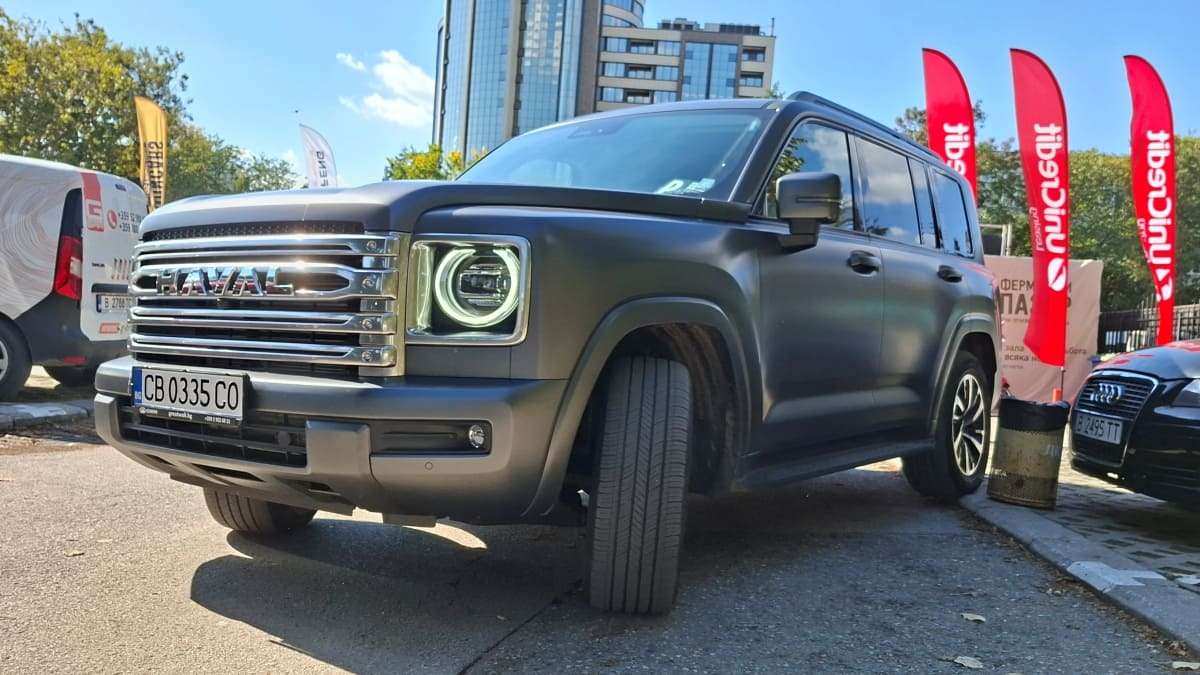

By now, it is clear that the Chinese automotive industry is developing at a rapid pace. I recently went to a car show in Europe where it is clear that Chinese car manufacturers have already flooded the market with offerings of comparable, at least on the outside, built quality, and reasonable prices. Essentially, the Chinese are currently doing what the Japanese and, later, the Korean carmakers did in the past.
Currently, four of the 10 best-selling vehicles in the US are Japanese, and their Korean counterparts are not far behind. After testing Haval’s range-topping, three-row SUV, it got me thinking - can the Chinese do the same?
I was surprised by how well the Haval H9 drives.
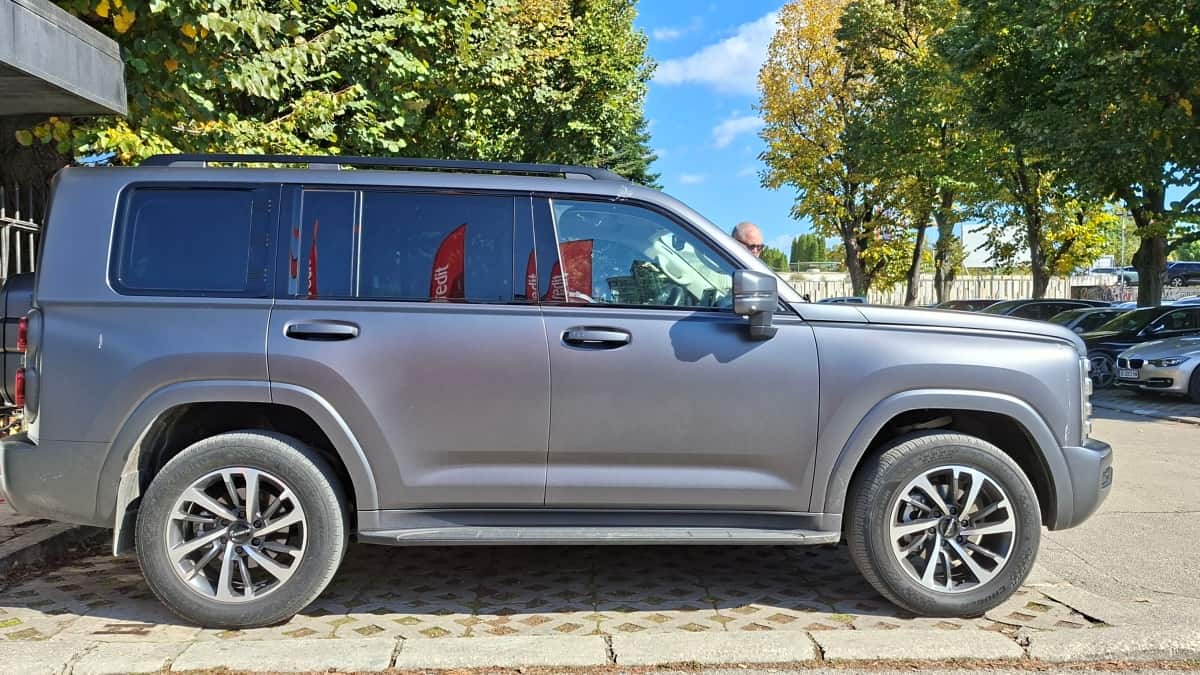
Haval is the premium brand of Great Wall Motors (GWM), which currently owns at least five other Chinese brands, including Ora, Wey, Tank, and others. None of them are currently sold in North America. Immediately after seeing the H9, I thought “this thing wants to be a Land Cruiser”, and on paper, it sort of manages.
The Haval H9’s body-on-frame platform makes it ideal for off-roading and towing, and with 8.8 inches of ground clearance, it is almost on par with the J250 Land Cruiser’s 8.9 inches. The Haval H9’s suspension design is simple and robust. You get double-wishbone suspension in the front and multi-link in the rear. T
he H9 also gets three electronic locking differentials, with low gears, and four-wheel-drive on demand. In addition, the Haval’s three-row SUV comes with four different modes - Auto, Sand, Mud, and Snow, which optimize the drivetrain for a variety of surfaces.
When driving the Haval H9 you feel the curb weight of 5,148 pounds, but actually it feels surprisingly planted. The 214 horsepower feels somewhat adequate, but certainly won’t set your hair on fire. This is a laid-back commuter rather than a roudy stallion. The handling and ride are surprisingly supple.
The H9 is, by no means, athletic, but it sits well on the road and doesn’t require you to constantly correct with the steering. Compared to the INEOS Grenadier, which I test-drove a while ago, the Haval H9 is a breeze to drive on the road and around town.
Towing capacity is where the Chinese model falls short, as it manages 5,511 pounds (for the gas-powered variant) versus the J250 Land Cruiser’s 8,000 pounds. This is down to the 2.0-liter turbo-four engine, which makes 214 horsepower and 280 pound-feet, which is a lot less than the hybrid Toyota Land Cruiser’s 326 horsepower and 464 pound-feet.
The H9’s GW4N20, direct-injected gasoline engine, is developed almost entirely by the mother company Great Wall Motors, although the turbocharger comes from BorgWarner.
For other markets, the J250 Toyota Land Cruiser also gets a 2.8-liter turbodiesel, which recently proved that even with 204 horsepower, it can smack around more powerful off-roaders. The Haval H9 will soon get another engine - a 2.4-liter turbodiesel with 184 horsepower and 354 pound-feet.
Where the Haval H9 supposedly shines is its ability to take punishment. The Haval representative who accompanied me on the test drive was adamant that in Russia and the UAE, these SUVs survive the harshest of conditions with no problem. I reckon that since this is a new model (although not the first H9), it remains to be seen.
The interior might be one place where the Haval H9 surprises
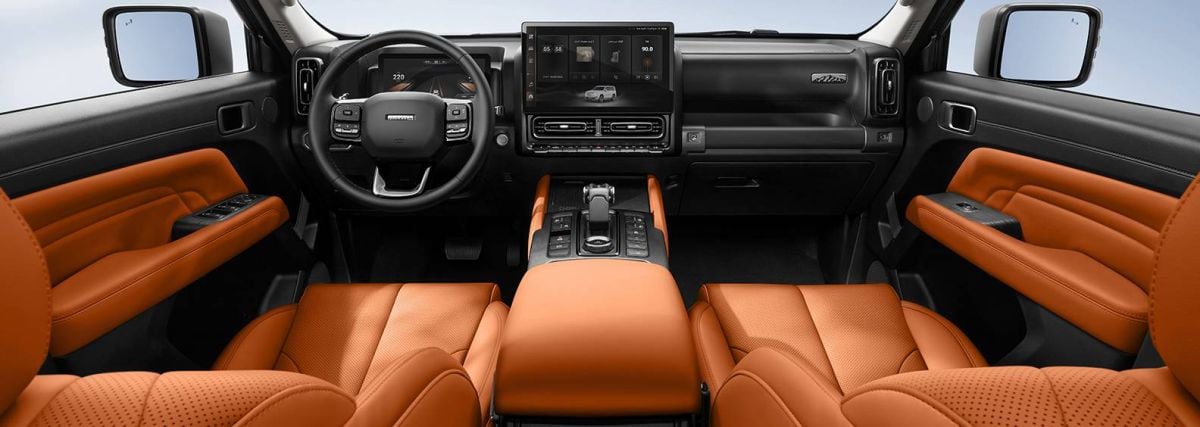
Where Haval H9 shows its premium aspirations is in the cabin (sort of). While not all materials are up to scratch, they are good enough for the Chinese SUV's €56,236.99 sticker price in Europe (approx. $65,371). That’s more than the 2025 Land Cruiser’s starting MSRP of $57,200, although dealerships are shamelessly adding steep mark-ups.
One of the downsides of the J250 Land Cruiser interior, especially compared to the Lexus GX, is the interior quality. The use of hard plastics could have been less extensive. It is a similar story with the Haval H9, although they have put a bit more effort into introducing leather as standard, on contact points like the steering wheel shifter, and a few other areas. The doors are still hard plastic, although not the cheapest type. Build quality is not quite premium, as parts of the interior feel like they are going to start creaking and rattling after a few years.
First and second-row seating is more than adequate, although not the best in the full-size segment. The third-row seats are semi-usable. The 2025 Haval H9 gets a 14.6-inch infotainment touchscreen and a 10.8-inch driver instrument cluster as standard.
Apple CarPlay and Android Auto are wireless and come standard, as does voice control. The infotainment system is fairly easy to get used to, but not the most responsive. I wish I had more physical buttons for some of the functions. Nevertheless, it is not the worst I have seen in the industry. As with all other aspects, longevity remains the largest concern.
One aspect of the H9 isn’t particularly premium, but it is not the one I was expecting
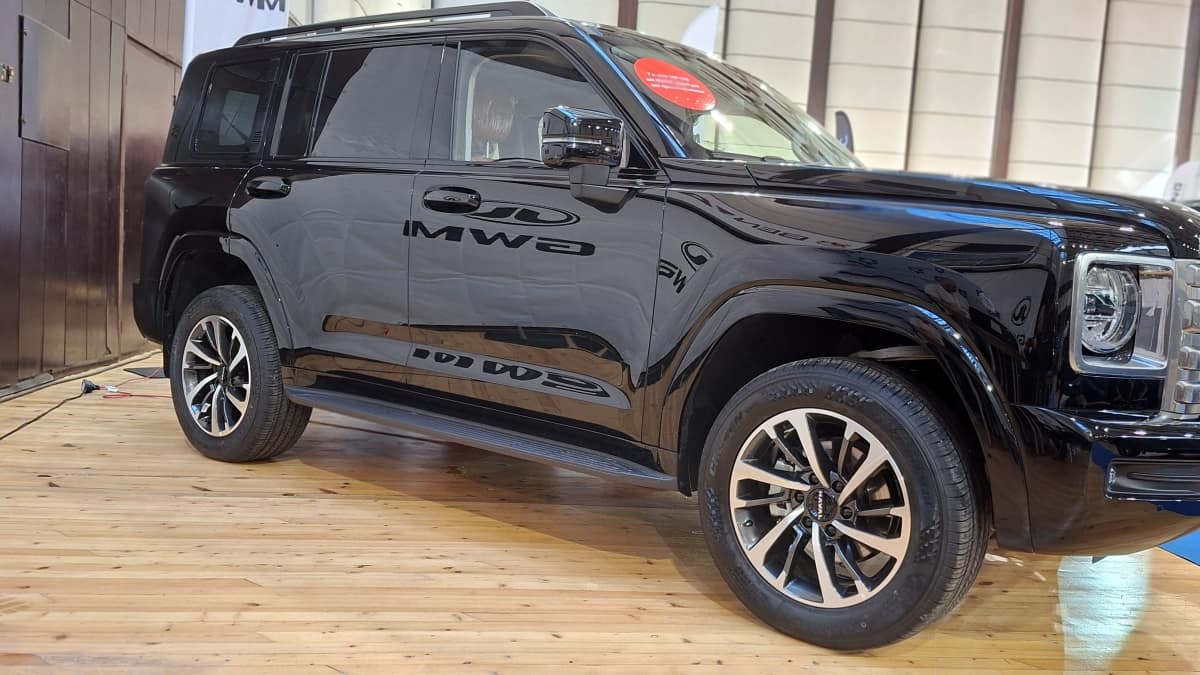
With Chinese cars, I always expect the interior to feel cheap and start falling apart after just a few years. While the Haval H9 interior isn’t quite as premium, it is the exterior that feels a bit cheap. The boxy design is catchy and clean, but the grill and side steps feel somewhat flimsy. I can only guess that they are meant to be cheap and easy to replace if you go off-road and damage them.
Will Haval H9 come to the US, and can it steal some clients from more established models?
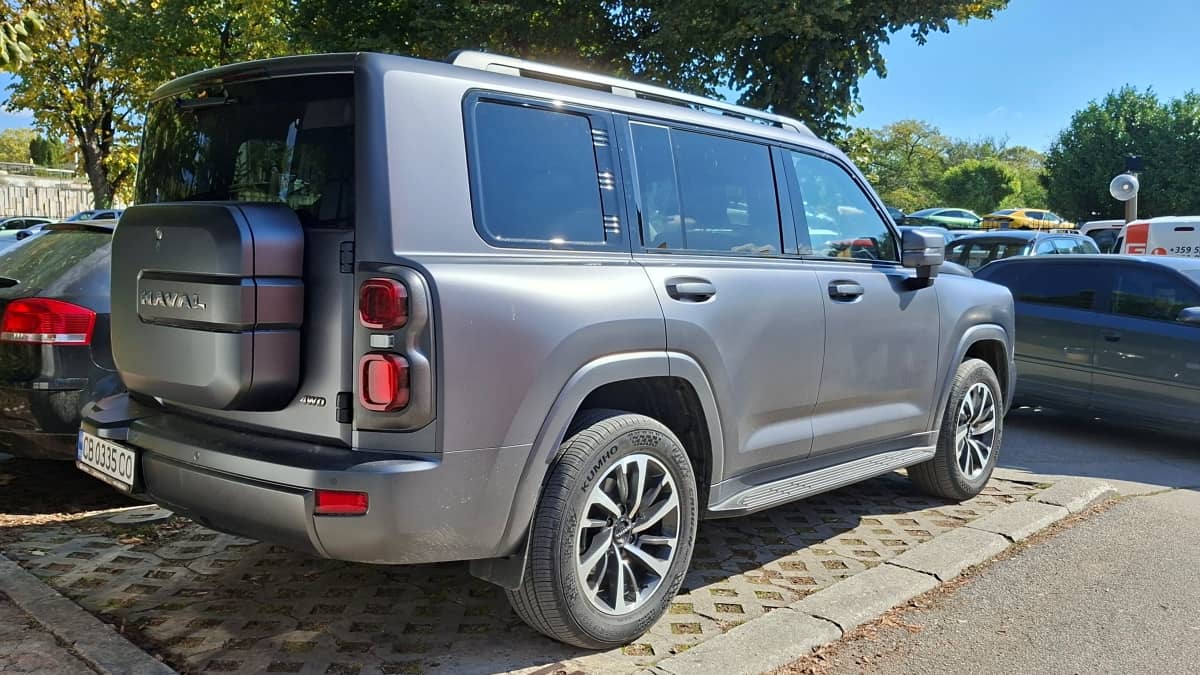
Although Great Wall Motors, Haval’s mother-company, already has a research and development center for autonomous driving on US territory; there are no indications of the company selling any of its models on the continent in the near future. This is mostly down to import tariffs imposed by Trump’s administration, as part of a protective policy.
Currently, Chinese vehicles, along with certain parts imported into the US, are subject to a 25-percent tax. Then, there is the perception of poor quality, which is sometimes (but not always) justified, especially in cases like the BYD Atto 3 EV, which failed to deploy its airbags in a crash test.
Chinese companies are taking the long road to the US market. SAIC Motor already has an established partnership with GM, while another Chinese carmaker, Leapmotor, has partnered up with Stellantis. Meanwhile, Chinese motorcycles are subject to only a 10-percent reciprocal tax, although other tariffs may apply depending on the product. This is one reason why companies like CF Motor and QJ Motor have already established a foothold on the American market.
The Haval H9 is a rather bold move, which showcases the Chinese vision of a capable, traditional SUV. Where it falls short of being a hypothetical success on the US market is the lack of a punchy powertrain, hybrid option, and the brand reputation. But I am curious to learn what you think of this Chinese three-row SUV. Could it be a proper competitor in today’s SUV-packed market? Let me know in the comment section below.
Dimitar Angelov's automotive interests made him an expert in a wide variety of vehicles. Japanese brands like Toyota and Nissan are closest to his heart, although performance cars in general are his favorite segment, which is why he is constantly on the lookout for the best deals on the market. Dimitar Angelov's car passion and knack for the written word led him to complete a Master of Arts in Media and Communications, and classic car restoration. Dim is happy to get behind the wheel of any car and share his impressions. You can follow Dimitar on X, Linked-in, Instagram, and Facebook.
Exterior shots: Dimitar Angelov
Interior shot: GWW UAE
Set Torque News as Preferred Source on Google
Follow us today...