
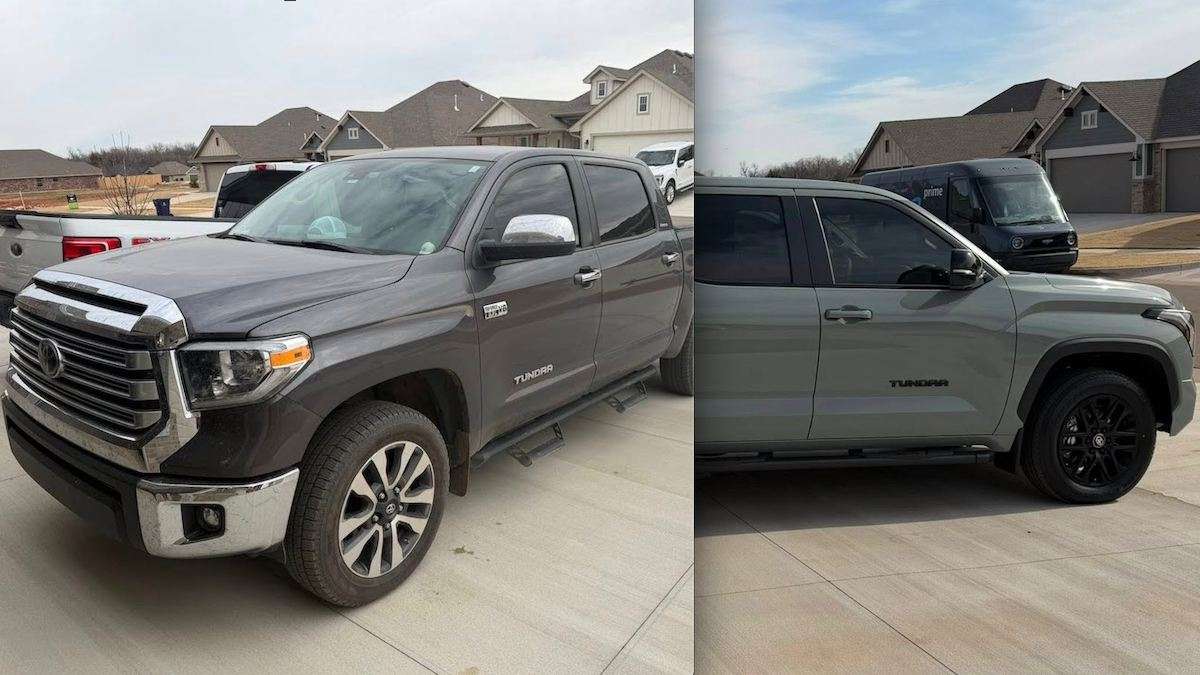

This 2020 Tundra owner discovered a dealer "safety net" that makes trading the world's most reliable V8 for a 2026 twin-turbo actually feel like a genius move.
Imagine that you finally decide to walk away from the legendary reliability of your 2020 Tundra V8, but you only pull the trigger because you’ve secured a "forever" warranty that covers every mechanical nightmare you've been losing sleep over. That is precisely the high-stakes chess move James Henderson made when he navigated the 2026 market by trading iron-clad history for a dealer-backed safety net.
In my deep-dive research into the shifting landscape of Toyota reliability, I came across a recent post shared in a Facebook community of Tundra truck enthusiasts that perfectly captures the current anxiety. James Henderson highlighted the growing concerns about moving away from the "bulletproof" 2020 platform, admitting the steep emotional and financial costs of transitioning to the newer, more complex 2026 models.
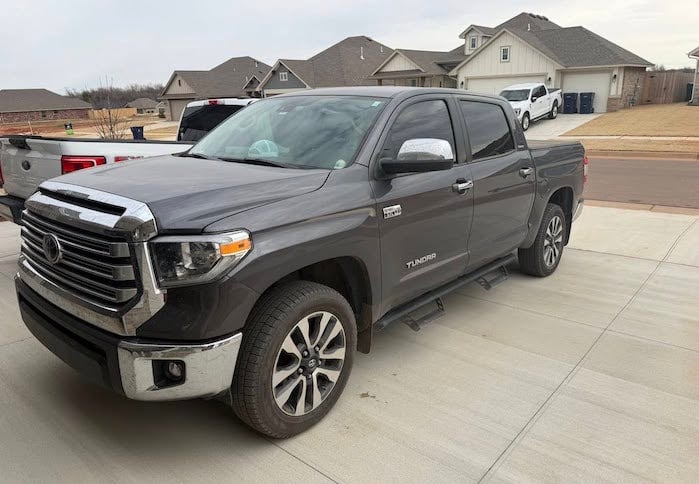
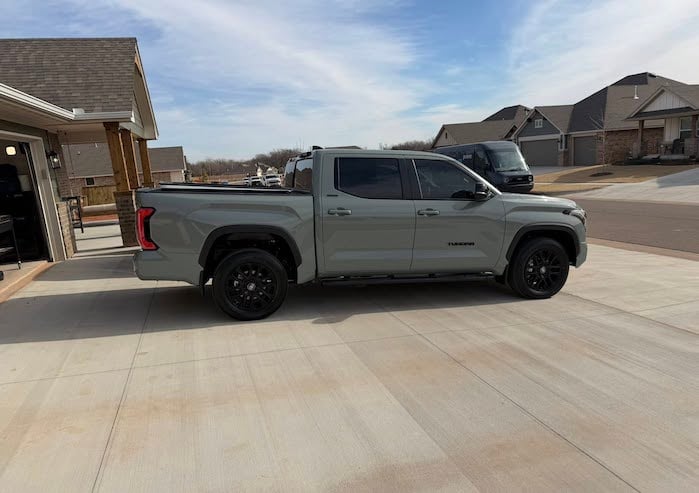
James says, “I traded my 2020 Toyota Tundra for a 2026 Tundra. I hope I don’t regret this. But I was able to get a lifetime powertrain warranty from my dealer. It’s not a factory-based warranty; the dealer offered it as an added incentive for me to buy the truck, so I’ll take it as my way out of trouble.”
James’ post sparked a firestorm of comments, most telling him he made a mistake and should have kept his reliable 2020 Tundra. What would you tell James? Tell us in the comments below.
The fear is not unfounded; even the most respected voices in the industry are sounding the alarm. Consumer Reports recently highlighted that while Toyota remains a reliability leader, the third-generation Tundra has faced "massive engine failure recalls" that have shaken the core of the brand's reputation (Consumer Reports Tundra Reliability Update).
I’ve seen this firsthand in my own reporting, as more owners are sharing heartbreaking stories of premature failures, including one case in which a 2023 Tundra owner reported their engine failing at just 24,000 miles.
My Take
The reality is that the 2026 Tundra is a marvel of engineering, but it is also a departure from the simple, overbuilt machines of the past. As automotive teardown experts have noted, the V35A twin-turbo V6 is a highly stressed, "undersquare, high-torque design" that places immense loads on internal components, such as main bearings, at low RPMs (Engineering Analysis of Tundra V6).
I have consistently warned my readers that this transition is a double-edged sword, noting in my previous reports that Toyota's excellent reputation for building reliable vehicles is in a period of serious transition and uncertainty.
What Tundra Owners Are Saying
The community response has been a mix of guarded optimism and outright frustration. One user on Reddit noted the severity of the situation for those without a backup plan, stating, "Reliability was the main reason I chose Toyota in the first place... even with a new engine, it's hard to fully trust the truck after an experience like this," which you can read in the full discussion here.
Another owner highlighted the vulnerability of the new design and the lack of confidence in the long-term fix, mentioning, "Toyota hasn't fixed the issue, they just bought themselves some time and then passed the problem onto us," found in this Reddit thread.
The Industry Secret: The Truth About "Lifetime" Dealer Warranties
In my 30 years of covering the auto industry, I have seen every "hook" in the book used to move metal off the lot. But in 2026, the "Lifetime Limited Powertrain Warranty" has become the ultimate weapon for dealers trying to overcome the "next-gen" reliability jitters.
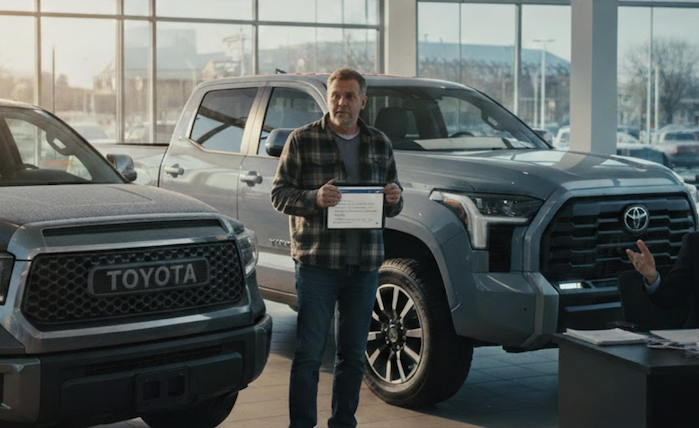
While it sounds like a dream come true, you need to understand the mechanics behind the curtain. These are not factory warranties. Toyota corporate is not the one on the hook here. These are often third-party contracts or dealer-funded "reserve" accounts. Here is the breakdown of the pros and cons that the finance manager won't always highlight.
The Pros: Why It’s a Safety Net
1. The "Forever" Insurance Policy: As long as you own the truck, the most expensive components, the engine block, transmission case, and drive axles, are covered. In a world where a 2026 Tundra engine replacement can easily cost more than $15,000, this is a massive financial shield.
2. Zero or Low Cost: Most "Grand Slam" dealers, like the one James Henderson visited, offer this as a free incentive. It’s an "added value" that doesn't affect your monthly payment, making the decision to trade in that 2020 V8 much easier to swallow.
3. Proof of Confidence: Dealers don't offer lifetime coverage on vehicles they expect to explode every week. By putting their own money behind the 2026 powertrain, they are signaling that the "engine failure" headlines might be more about manufacturing anomalies than a fundamental design flaw.
The Cons: The Fine Print "Traps"
1. The "Service Lock-In" Clause: This is the most common industry secret. To keep the warranty valid, many contracts require you to follow the exact manufacturer's maintenance schedule. Miss an oil change by 500 miles or lose a single receipt? Your "lifetime" coverage could be voided instantly.
2. Non-Transferability: Unlike a Toyota factory warranty, these dealer incentives almost always die the second you sell or trade the truck. They are designed to build "customers for life," not to increase the resale value for the next owner.
3. The "Approved Shop" Restriction: Some warranties require you to return for repairs only to that specific dealership. If you move across the country or the dealer goes out of business, you might find yourself holding a worthless piece of paper.
My Advice
Before you sign, ask for the "Warranty Exclusion List." If it doesn't cover the turbochargers (which are technically bolt-on parts), you aren't really protected from the most likely 2026 failure points. Always ensure the contract is backed by a reputable, nationwide insurance company so you aren't stranded if the dealership changes hands.
The 2026 Tundra Survival Guide
- V8 Reliability vs. V6 Tech: The 2020 Tundra remains the "bulletproof" benchmark. The 2026 i-FORCE V6 is powerful but carries documented risks involving main bearing loads and ultra-thin 0W-20 oil.
- Warranties are the New "Must-Have": I only recommend trading a 2020 for a 2026 if you secure a lifetime powertrain warranty. In this market, you aren't just buying a truck—you are buying a safety net.
- The Turbocharger Loophole: Explicitly confirm that turbos are covered. Many "powertrain" contracts classify them as bolt-on accessories rather than internal engine components.
- Beware the "Service Trap": Many "forever" warranties are voided by a single missed oil change or a lost receipt. Meticulous record-keeping is the only way to keep your coverage alive.
- Nationwide Portability: Demand a warranty that is valid at any ASE-certified shop. If it is "dealer-only," your protection vanishes if you move or if that dealership closes its doors.
- Owner-Only Protection: Remember that these incentives are almost never transferable. They protect your wallet for as long as you own the truck, but they add zero value to the next buyer.
Bring a Flashlight
The transition to the 2026 Toyota Tundra does not have to be a leap into the dark if you bring a flashlight. By leveraging dealer incentives like a lifetime powertrain warranty, you can enjoy the most powerful, capable Tundra ever made without the 100,000-mile anxiety that often comes with a first-gen engine architecture.
While the internet is busy panic-posting about V6 reliability, a few buyers like James are leveraging dealer-backed "forever" warranties to bridge the gap. He traded the old-school V8 for modern tech and a lifetime safety net. It was his only way out of the 2020 model.
What Would You Do? Would you trade a proven V8 for a twin-turbo V6 if you had a lifetime warranty? Leave a comment in the red "Add new comment" link below.
Next Up: If you are wondering if your specific truck is on the list for the latest updates, you need to read my latest breakdown: "My 2024 Toyota Tundra Is a LEMON: This Week I Hit the 30-Day 'Service' Death Sentence," which you can find in my full Torque News report here.
Denis Flierl is a Senior Reporter at Torque News with over 30 years of hands-on experience in the automotive industry. Having served as a professional test driver and industry consultant for major automakers such as Chevrolet, Ford, Toyota, Honda, and Tesla, Denis provides a "boots-on-the-ground" perspective that goes beyond standard reporting. Since joining Torque News in 2012, he has specialized in cutting through market noise to deliver data-backed analysis and real-world owner stories. His work focuses on navigating the transition to EVs and the shifting automotive market.
Have a tip or question for Denis? > Engage with him directly on LinkedIn for industry analysis, or follow his latest updates on X @DenisFlierl and @WorldsCoolestRides. You can also find his latest car features on Facebook and Instagram.
Photo credit: Denis Flierl via James Henderson/Facebook Tundra Owners
Set Torque News as Preferred Source on Google
Follow us today...



Comments
Burned by lifetime warranty…
Permalink
Burned by lifetime warranty's, I’ll never fall for it again!
Keeping my 2016 sunset bronze 1794 V8 for life. My dealer head maintenance guy told me he also will never make the huge mistake himself trading down to the problematic v6. That speaks volumes to gas turbo engine issues!