

The third-generation Toyota Tundra was supposed to be the "World Beater."
While a total engine failure at 24,000 miles would drive most owners to the lemon law lawyer, this Tundra owner’s experience reveals the high-stakes gamble Toyota is making to save its reputation.
When Toyota ditched the legendary, naturally aspirated 5.7L V8 for the high-tech, twin-turbocharged 3.4L V6 (V35A-FTS), the truck community held its breath. Reliability has always been the Tundra’s North Star, but recent months have tested that reputation with high-profile engine failures and a massive safety recall.
Today, a new story is surfacing from the front lines of the 2023-2026 Toyota Tundra Owners Facebook forum that highlights both the fragility of the new powertrain and the absolute masterclass in customer service Toyota is deploying to save its brand image.
The "Death Knock" at 24,000 Miles
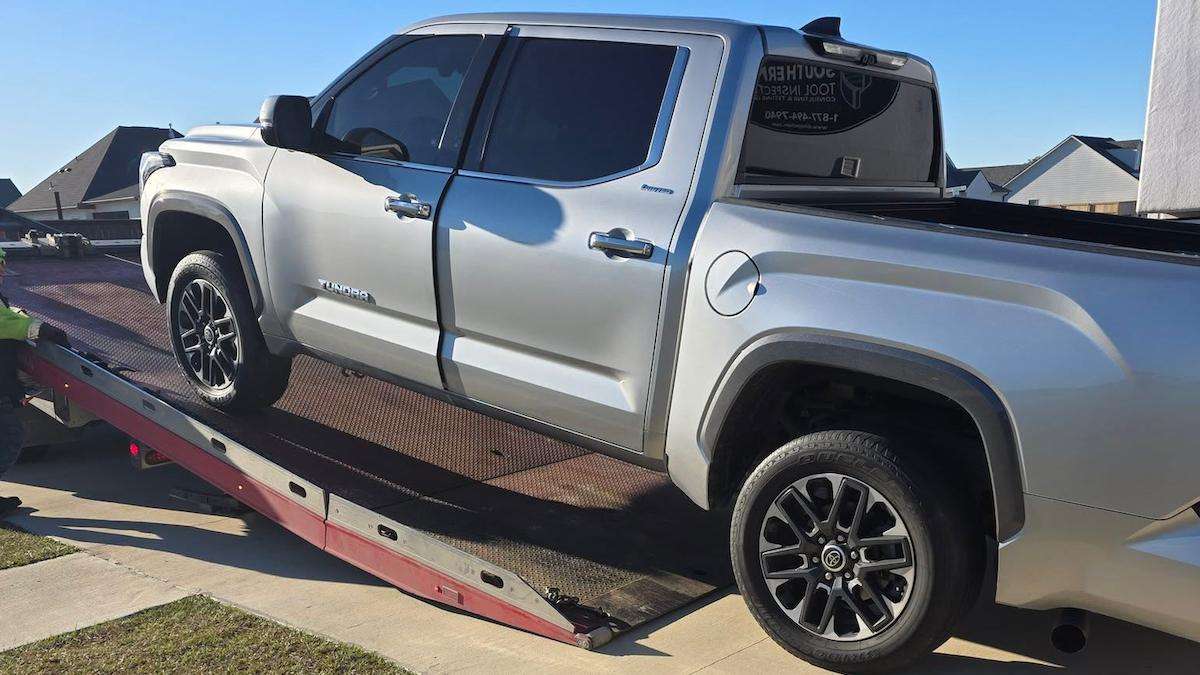
Alex Lemoine, owner of a 2023 Toyota Tundra Limited, recently shared a harrowing experience that is becoming an all-too-familiar script for some Gen-3 owners.
“I have a 2023 Toyota Tundra Limited with 24,000 miles," Lemoine reported. "I heard a loud engine knocking when I started it up yesterday, then it stalled. It was dead.”
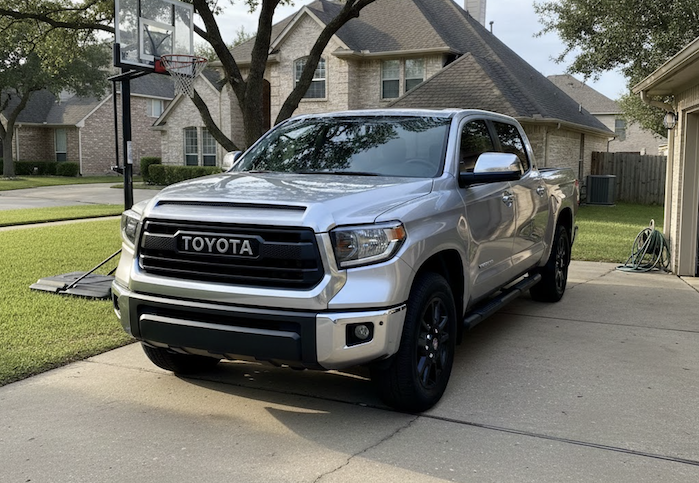
For any truck owner, especially one who likely paid north of $60,000 for a "Limited" trim, this is the ultimate nightmare scenario. A complete engine seizure at just 24,000 miles, well within the powertrain warranty but far short of the "300,000-mile" expectation Toyota fans have lived by for decades.
What’s Happening Inside?
The failure Lemoine describes a loud knocking followed by a stall is symptomatic of the main bearing failure that triggered Toyota’s massive recall earlier this year. The issue stems from machining debris (specifically metal shavings) that may not have been fully cleared from the engine during the manufacturing process.
When these shavings circulate through the oiling system, they can cause the main bearings to seize. This leads to the "knock" (the sound of the crankshaft hitting the bearing) and, eventually, a total engine stall. While Toyota has identified a specific production window for the recall, reports like Lemoine’s continue to surface, leading many to wonder whether the scope of the issue is broader than initially admitted.
The "Golden Handcuffs" Service Strategy
While a dead engine is a disaster, Lemoine’s reaction wasn’t one of anger. In fact, it was surprisingly positive. Why? Because Toyota is currently executing a "Total Care" strategy to prevent a mass exodus of truck buyers.
“The Toyota dealership came and picked it up with no issues and put me in a 2025 Tundra TRD,” Lemoine noted. “It’s supposed to take up to 3 months until I can expect to get my truck back with a new engine.”
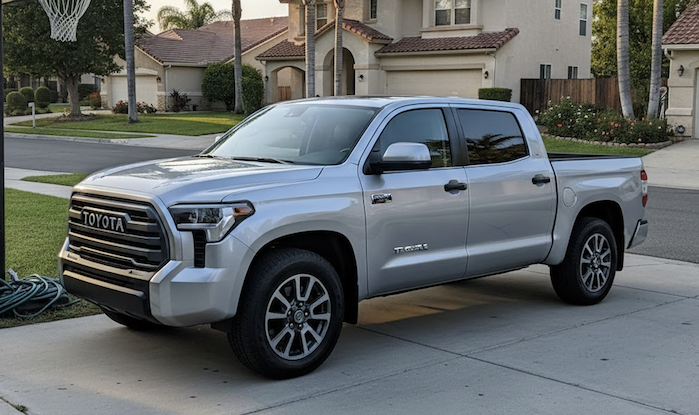
This is the "Value Gap" that separates Toyota from its domestic competitors. By immediately upgrading the customer into a brand-new 2025 TRD model as a loaner, Toyota turns a three-month waiting period into a prolonged "extended test drive" of their latest and greatest equipment.
Key Takeaways from the Dealer Response
- Frictionless Recovery: The dealer handled the towing and logistics without pushback.
- The Upgrade Incentive: Putting a 2023 owner in a 2025 TRD loaner keeps the owner in the "ecosystem" and softens the blow of the 90-day wait.
- The Transparency: A 3-month lead time for a crate engine is significant, but by setting the expectation early, Toyota avoids the "where is my truck?" frustration.
The 2022-2023 Recall Context
It is important to remember that Toyota has already issued a recall for approximately 102,000 Tundra and Lexus LX vehicles from the 2022-2023 model years. The remedy? A full engine replacement.
However, the logistics of replacing over 100,000 engines are staggering. In some cases, the replacement is a "cab-off" surgery, where the entire body of the truck is lifted off the frame to access the powerplant. This is a labor-intensive process that requires specialized dealer training and a steady supply of new "short blocks" or "long blocks" from Japan.
Is the 2025 Tundra the "Safe Bet"?
Lemoine being placed in a 2025 loaner is significant. Toyota has stated that for the 2024 and 2025 models, the machining process was corrected to ensure no debris remains in the engine blocks. If you are a prospective buyer, the 2025 model year represents the "cleaned up" version of the Twin-Turbo V6.
By the time Lemoine gets his 2023 back, it will essentially have the heart of a 2025 model. For many owners, a "zero-mile" engine on a truck with 24,000 miles on the odometer is actually a net gain in long-term value, provided they can deal with the three-month inconvenience.
Toyota Turns Lemons Into Lemonaid
The viral nature of Lemoine's post highlights a fascinating divide in the automotive world. If this were a Ford or a Ram, the comments would likely be flooded with "I told you so's." But because it’s a Toyota, the conversation centers on the quality of the fix rather than on the machine's failure.
Toyota’s willingness to eat the cost of a 2025 loaner and a $20,000+ engine replacement is their way of buying back the "Quality, Durability, and Reliability" (QDR) badge they’ve worn for 40 years.
For the Tundra audience, the story here isn't just that the engine failed; it's that Toyota is making it almost impossible for the owner to be mad about it.
What do you think? Would you be satisfied with a 3-month wait if it meant a brand-new 2025 loaner and a fresh engine? Sound off in the comments below.
With over 30 years of industry experience, Denis Flierl brings an insider’s perspective to Torque News, where he has been a Senior Reporter since 2012. Before picking up the pen, Denis consulted for the automotive industry's biggest brands and honed his skills as a test driver. He cuts through the noise to deliver the latest auto news, compelling owner stories, and the expert analysis necessary to navigate today's changing automotive market.
Have a tip or question? Follow me on X @DenisFlierl and @WorldsCoolestRides, or connect with me on Facebook, Instagram, and LinkedIn.
Photo credit: Denis Flierl via Alex Lemoine
Set Torque News as Preferred Source on Google
Follow us today...





Comments
Spinning a recall for a dead…
Permalink
Spinning a recall for a dead engine as a win for brand loyalty. How big was the check?
This issue will damage…
Permalink
This issue will damage Toyota's reputation for years.
2022-2026 tundra is junk, a…
Permalink
In reply to This issue will damage… by Barry B (not verified)
2022-2026 tundra is junk, a blown engine is not acceptable in a new truck they had 5 years to perfect that turd 3.5 v7 twin turbo , still nothing. Put the 5.7 in, every truck manufacturer offers a V8 option.i will keep my old body 2021 tundra forever.
So Toyota is replacing the…
Permalink
So Toyota is replacing the faulty engine with another faulty one? No thanks. They need to bring back the 5.7L.
Nope! I still wouldn’t be…
Permalink
Nope! I still wouldn’t be satisfied with how TOYOTA is handling this issue.
So, even if l “still considered” keeping a Tundra, I would have them buy my truck back and/or trading it in for a brand new 2026. Otherwise, no deal! They can keep it…
With that being said, l am relatively new to TOYOTA as l currently own a ‘21 Tundra TRD Pro DC and a ‘23 Tacoma TRD Pro (stick shift), as well which l purposely bought brand new since l was aware about the fact that the new crappy TC V6 motors these were gonna be coming with.
Now, in regard to the Ford comments, well those definitely come from haters snd clueless morons who do not know a thing about trucks. Let me tell ya that I have owned several Rangers (still own a 2011 XLT I4, manual tranny), F-150s including two Lightnings (yes, the real ones with the SC Triton 5.4L), and still own a 2007 F-350 Lariat and l will say this; Ford rigs are awesome and super reliable. Just look at what real (privateer) racers build for the desert races like the Baja 1000, and short track courses, and you will see nothing, but Fords!
Oh, and also Ford’s customer service is very good, too. My friend bought a brand new ‘23 Lightning (EV) and had some issue with one or two battery cells and Ford also put him in a brand new Lariat for like four months, l think, until he had his back because of parts shortage. So, Ford does take care of their customers, as well!
So, why then have l bought not one but two TOYOTA rigs, you may ask? Well, because ever since l was a teenager back in the mid ‘80s my rich friends own those indestructible ‘84-‘85 TOYOTA pickup SR5s and Hi-Lux models with those beefy solid front axles to haul our dirt bikes. So, l told myself back then that one day l would own a TOYOTA truck!
So, there you have it..,
Nope! I still wouldn’t be…
Permalink
Nope! I still wouldn’t be satisfied with how TOYOTA is handling this issue.
So, even if l “still considered” keeping a Tundra, I would have them buy my truck back and/or trading it in for a brand new 2026. Otherwise, no deal! They can keep it…
With that being said, l am relatively new to TOYOTA as l currently own a ‘21 Tundra TRD Pro DC and a ‘23 Tacoma TRD Pro (stick shift), as well which l purposely bought brand new since l was aware about the fact that the new crappy TC V6 motors these were gonna be coming with.
Now, in regard to the Ford comments, well those definitely come from haters snd clueless morons who do not know a thing about trucks. Let me tell ya that I have owned several Rangers (still own a 2011 XLT I4, manual tranny), F-150s including two Lightnings (yes, the real ones with the SC Triton 5.4L), and still own a 2007 F-350 Lariat and l will say this; Ford rigs are awesome and super reliable. Just look at what real (privateer) racers build for the desert races like the Baja 1000, and short track courses, and you will see nothing, but Fords!
Oh, and also Ford’s customer service is very good, too. My friend bought a brand new ‘23 Lightning (EV) and had some issue with one or two battery cells and Ford also put him in a brand new Lariat for like four months, l think, until he had his back because of parts shortage. So, Ford does take care of their customers, as well!
So, why then have l bought not one but two TOYOTA rigs, you may ask? Well, because ever since l was a teenager back in the mid ‘80s my rich friends own those indestructible ‘84-‘85 TOYOTA pickup SR5s and Hi-Lux models with those beefy solid front axles to haul our dirt bikes. So, l told myself back then that one day l would own a TOYOTA truck!
So, there you have it..,
If it isn't broke don't fix…
Permalink
If it isn't broke don't fix it. My 2019 with the 5.7 is still running great with well over 100k on the odometer.
Guaranteed you're NOT…
Permalink
Guaranteed you're NOT getting a brand new engine, rather an LKQ or used engine. That's a fact! So you may want to get it in writing (on your paperwork) that it's indeed a "brand new" engine. From their parts department, prior to getting service performed. Call Toyota directly if need be. Trust me... I had a brand new Tacoma. 2 weeks old mind you and the Toyota dealership I purchased vehicle from told me I was receiving a "brand new" transmission when in fact I later found out it was a "used" part. Can you believe that!?? On a 2 week old vehicle purchase. It's in their right so BE SPECIFIC PRIOR. btw the dealership that pulled that stunt with me was Toyota of Turnersville in New Jersey. One of the worst offenders for pulling that stunt.
D DeNero Williamstown NJ...
There is no way that a…
Permalink
There is no way that a vehicle disassembled and reassembled by a dealer mechanic will match the quality of assembly in a factory. Total disaster. I wonder how many bolts will be leftover and little clips broken, connectors buggered, etc, after removing the cab, removing the engine and possibly transmission and transfer case, and reassembling it all. I’m confident that the truck simply won’t be as solid as a factory built unit.
If only Ford followed Toyota…
Permalink
If only Ford followed Toyota’s footsteps and did the same thing when their 6f35 transmissions failed in the fusions. They should have just recalled them, loaned us a 2025 for a short period of time, installed a new transmission free of charge, instead of people like myself having to shed out thousands to fix it.
What happens when the engine…
Permalink
What happens when the engine in the loaner decides to give out, will they loan him another?
My brother in law got one of…
Permalink
My brother in law got one of the new engines on his 2022 Tundra and he had zero issues but a lot of miles so he was excited to get the new engine. The care Toyota is taking on this issue is why I bought a 2025 Tundra over a Ford. I had zero confidence that Ford would do anything close to what Toyota is doing.
I have a 2022 with 80k miles…
Permalink
In reply to My brother in law got one of… by Ronald Ricketts (not verified)
I have a 2022 with 80k miles on it. They told me I'm required to get my engine replaced. I haven't had any issues. Am I permitted to continue to use my truck until I put 200k miles on it and then replace it?
Sounds like Toyota. Has it…
Permalink
Sounds like Toyota. Has it right fix the problem? Keep the customer, happy and give them a quality product. Hyundai, on the other hand has so many hoops that the customer has to jump through. Knowing their engines have an issue. Hyundai wants the customer to drive the vehicle in an unsafe condition, possibly, leaving them. Stranded several times before they will fix the problem Metal shavings in the engine lead to bad, crankshaft, bearings and total failure. They know this! fix the problem!! Thanks Toyota for being a great example.
So just because the dealer…
Permalink
So just because the dealer towed his truck he's happy?? What's his plan when this new engine blows up?? I'm so glad I bought a 2014 with over 200k miles.
Toyota eschewed turbos for…
Permalink
Toyota eschewed turbos for years and years while other makers put them in. I guess we now know why. Toyota quality has really taken a dive. I remember reading an article long ago that the president of Toyota stated they had too many engineers on staff and they were going to reduce the number of they. Within a few years of doing that, Toyotas started having issues. First with the 2.4 ring issues, then transmission issues, 2.5 timing chain cover leaks that have been happening for years and years, low pressure fuel pumps, and now more engine and transmission issues in the Tacoma
and Tundra.
That’s a great story but now…
Permalink
That’s a great story but now they’ve released another hundred thousand recalls on the 24s and 25s. So my 24 that blew up with 25,000 miles on it is sitting in the shop for over a month and a half with absolutely no ETA of repair and I’m stuck driving a 4runner because all the tundras are under recall and they can’t loan me a vehicle that could potentially blow up on me. I don’t wanna be traded into a 26 for fear that the engines are just as crappy as the previous. Trade me into a 21 so I can have the 5.7 back. They never should’ve gotten rid of it to begin with. My only hope is that the end of my lease I can buy the truck for less than what it’s worth and turnaround and sell it so I can buy something decent and reliable because Toyota sure ain’t it.
There is no doubt no other…
Permalink
There is no doubt no other manufacturer would handle it like this big thumbs up to Toyota and hopefully they get their problems behind them
Bought our 2023 Tundra TRD…
Permalink
Bought our 2023 Tundra TRD Sport new December 2022. Wife previously had a 2000 Tacoma TRD manual for 20 years & we had a 2010 Sienna minivan (keep the snickering to a minimum, it was necessary with 3 kids under 5 yo) for 12 years & 200k miles that we traded in on the ‘23 Tundra. Did test drives on Chevy Trail Boss, GMC AT4, Ram & F150. Pros & cons to all but nothing drove or rode as smooth as the Tundra. We have had zero issues with the engine. Last September our son wanted a truck so he took over the payments on the ‘23 Tundra & we bought a ‘26 Tundra Limited TRD, NOT the hybrid b/c I didn’t want to give up the under seat storage to the hybrid battery. Have loved the ‘26 as much as the ‘23. Dealership called Friday & said our ‘23 replacement engine is finally ready for order. Will suck that he has to be without it for up to 3 months but the truck has over 60k miles on it now & he’s getting a new engine. Will talk to the dealership to confirm the loaner. Hopefully no issues with the replacement engine but if there is then we trust Toyota will take care of it. Bottom line every manufacturer has recall issues. Maybe not to the extent of a replacement engine but human error will always exist. As long as Toyota stands behind their vehicles we will keep buying them.