
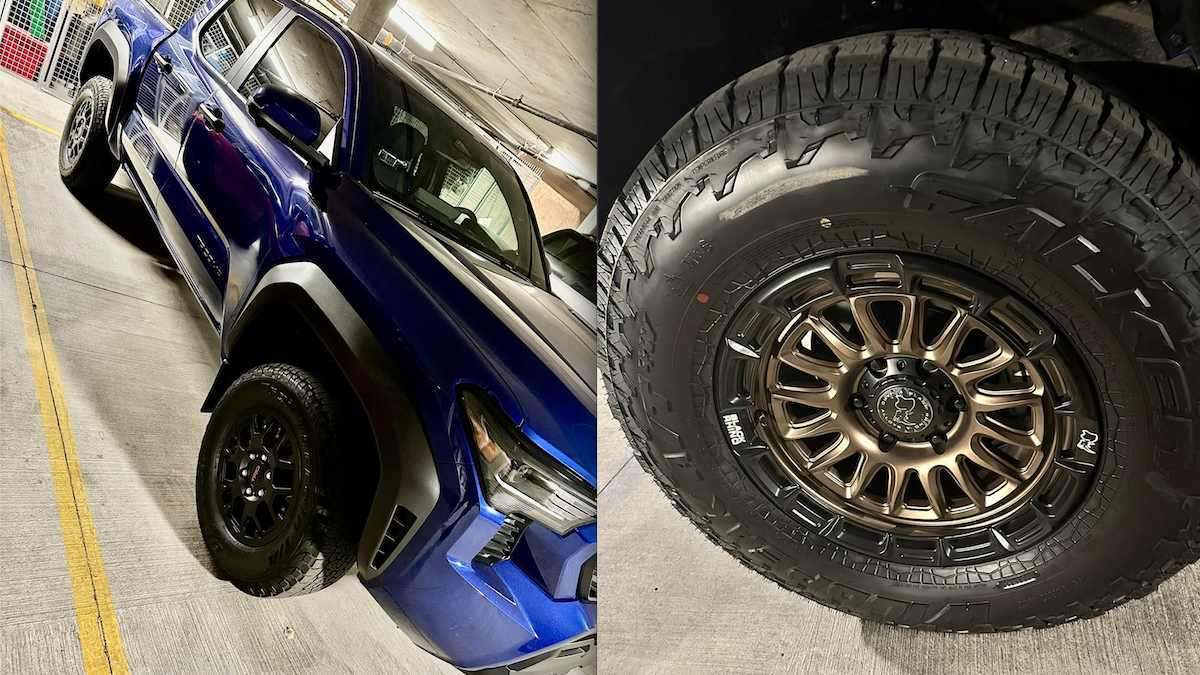

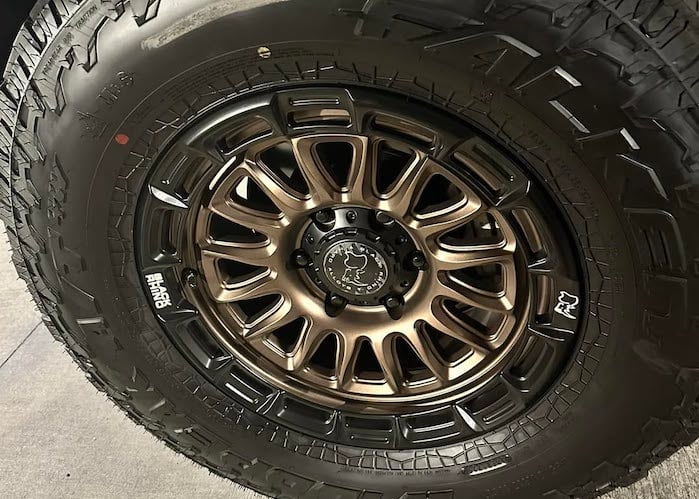
Picture this: you've just spent a lot of money on a set of sleek bronze wheels for your Tacoma, only to have them marred by a careless Toyota tech during a routine service. It's a scenario that happens too often to many Tacoma owners. Here's what you need to know to avoid this common problem at the dealer.
Mike Navalta on the 4th Gen 2024+ Toyota Tacoma Owners Facebook page describes what happened to his new Tacoma's wheels. I came across his post, and it's worth taking a closer look.
He says, "Is it just me? Every time I go to the Toyota dealer for maintenance, having a bronze or Black wheel glossed up, they scratch them with no care or consideration for my truck, due to their impact wrench. Is there any way to request that they do it manually? It pisses me off every time."
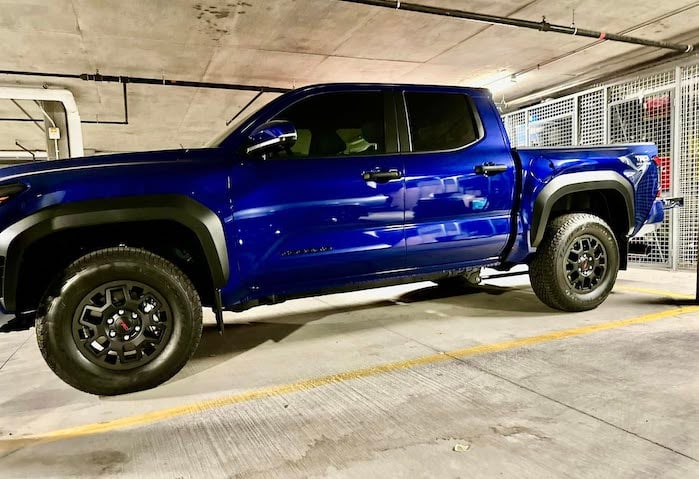
It's an issue I've heard countless times before, but it's especially painful when it happens to a brand-new truck with expensive wheels. Mike's frustration is not unique, and it's a problem that strikes at the heart of every truck owner's relationship with their vehicle and their dealership.
What Would You Do?
My immediate reaction? Absolutely not, Mike, it's not just you. This is a legitimate and all-too-common problem. When you invest in a new vehicle, especially one with sharp-looking bronze or black wheels that make a statement, the last thing you expect is for them to be marred during routine service. His question, How do I prevent wheel scratches at the Toyota dealership, is one of the most critical topics for new truck owners today.
Let's dive into the core of this issue. It's a tale of two processes: efficiency versus precision.
The Impact Wrench: A Necessary Evil?
From the dealership's perspective, the use of an impact wrench is a matter of pure operational efficiency. The technician performing your tire rotation or other maintenance is working on dozens of vehicles a day. An impact wrench allows them to loosen and re-tighten lug nuts in a matter of seconds, dramatically speeding up the process. It's a powerful tool, a workhorse designed for brute force and speed. The problem, as Mike points out, is that this speed comes at a cost—specifically, the cost to his wheels.
The vast majority of Toyota Tacoma wheel damage from impact wrench incidents happens for a few key reasons:
- Improper Sockets: Standard impact sockets are made of hard metal and have no protection. A technician working quickly may not align the socket perfectly with the lug nut, and the friction and sheer force of the wrench can cause the socket to "walk" or scrape against the wheel finish.
- Lack of Protective Sleeves: Many modern sockets are designed with a plastic or nylon sleeve to prevent metal-on-metal contact. A busy or careless technician might use an old and worn-down non-marring socket or grab a standard one without the protective feature.
- Cross-Threading and Over-Torquing: An impact wrench, especially a powerful one, can be notoriously inaccurate. It's impossible to gauge the exact torque applied, and it's easy to over-tighten lug nuts, which can lead to stripped threads on the studs or the lug nuts themselves. Worse, if a tech starts the lug nut crooked—a process known as cross-threading—they can force it on with the impact wrench, causing damage to the stud and nut.
What Should Truck and Car Owners Do?
Now, for the good news. Mike asked if there's a way to request manual work. The answer is yes, absolutely. But it's not just about a simple request. It's about a three-pronged strategy that puts you in control. Think of it as best practices for tire rotation on those expensive wheels—a crucial part of any vehicle's wheel maintenance tips.
Here is a three-step strategy to protect your wheel's finish and ensure they use a torque wrench.
Step 1: The Pre-Service Briefing
Before you hand over your keys, speak to your service advisor. Explain your concern clearly and calmly. Say something like, "I'm a stickler for my wheels. Can you please add a note to the work order that all lug nuts are to be hand-torqued after installation?"
Make sure they write it down. This is your insurance policy. If the wheels get scratched, you have a documented request that the dealership failed to honor. A proactive approach is key to protecting custom truck wheels during service.
Step 2: Understanding the Right Tools
When you make your request, it helps to sound knowledgeable. You're not just asking them to be careful; you're asking them to use the right tools for the job. You're asking them to use a torque wrench, not just an impact wrench.
The difference is critical. An impact wrench uses quick, powerful bursts of rotation to apply high torque, but it's not meant for precision. A torque wrench, on the other hand, is a precision tool.
It allows the technician to tighten each lug nut to the exact factory specification, ensuring proper fit and safety while eliminating the risk of over-tightening or damage. When you ask them to use a torque wrench, you are making a specific, professional, and reasonable request.
By the way, the official spec for your new Tacoma's lug nuts is 83 lb-ft. Knowing this detail shows you've done your homework.
When speaking with the service advisor, be specific. Mention that you want them to loosen the lug nuts with the impact wrench (for speed, as that's fine) but that you want them to manually hand-tighten each one to spec with a torque wrench. Your request for manual lug nut tightening at the dealership is a standard and professional request that any good service department should be happy to honor.
Step 3: The Post-Service Inspection
Never leave the dealership without a thorough inspection. Walk around your truck, examine the wheels, and look for any scratches, scuffs, or nicks on them. If you see any new damage, point it out immediately to the service advisor, before you drive off.
This is why the pre-service briefing and the notes on your work order are so important. They can't claim the damage was pre-existing if you have a documented request for care.
The Bigger Picture
This isn't just about your wheels. It's about the value you place on your vehicle and the right to expect quality service. You've invested in a fantastic truck, and the wheels make a statement. Advocating for their proper care at the dealership isn't being a difficult customer; it's being a smart and responsible owner.
The reality is, a good Toyota dealer's service department should be doing this anyway. The most professional shops use non-marring sockets and finish every job with a torque wrench to ensure safety and precision. The fact that Mike's wheels were repeatedly scratched suggests a systemic problem with the process at that specific location.
This isn't about blaming the technicians, who are often under immense pressure to work quickly. It's about empowering yourself with knowledge and making sure your requests are clear, documented, and followed.
Conclusion
In the end, a little bit of proactive communication can save you a whole lot of frustration—and a lot of money in wheel repairs.
What Would You Do?
Now, I want to hear from you. Have you had a similar experience with your Tacoma or other vehicle? How did you handle it, and what was the outcome? Let me know in the red Add New Comment link below!
Check out my Toyota Tacoma story: And So It Begins, I Picked up My 2025 Toyota Tacoma Yesterday, It Has 30 Miles On It, and It’s About to Be Torn Apart
I am Denis Flierl, a Senior Torque News Reporter since 2012. My 30+ year tenure in the automotive industry, initially in a consulting role with every major car brand and later as a freelance journalist test-driving new vehicles, has equipped me with a wealth of knowledge. I specialize in reporting the latest automotive news, covering owner stories, and providing expert analysis, ensuring that you are always well-informed and up-to-date. Follow me on X @DenisFlierl, @WorldsCoolestRides, Facebook, and Instagram
Photo credit: Denis Flierl via Mike Navalta
Set Torque News as Preferred Source on Google
Follow us today...






Comments
I agree 💯 percent
Permalink
In reply to If they're scratching the… by Luke (not verified)
I agree 💯 percent
All lug nuts are hand…
Permalink
All lug nuts are hand torqued you moron. When people make up garbage to write stories. Tell ChatGPT to do better next time you talentless hack.
absolutely not true, the…
Permalink
In reply to All lug nuts are hand… by Jason B (not verified)
absolutely not true, the HACKS torque the lugs waaaay beyond spec, as for the moron comment GFY
I worked in the automotive…
Permalink
In reply to All lug nuts are hand… by Jason B (not verified)
I worked in the automotive business for 30 years in a Chevy Cadillac and a Toyota dealership and i never saw any tecs use a torque wrench putting Wheels back on a car.
Almost NOBODY in a…
Permalink
In reply to All lug nuts are hand… by Jason B (not verified)
Almost NOBODY in a dealership or service garage hand-torques lugs on passenger vehicles anymore. "Torque Sticks" are a common, reliable standard for both pneumatic and electric impact wrenches. Some newer electric wrenches have reliable internal settings for torque, too.
With that said, as the customer you have every right to ask that all the lugs are tested with a torque wrench, set at the manufacturer's specifications; both the vehicle's and ANY non-OEM wheels.
RELATED:
1) Non-OEM wheels may REQUIRE different lug nuts and torque-specs. The onus is upon the vehicle owner.
2) Use of anti-seize compounds on studs/lugs may significantly affect proper torque. Over-torque is VERY LIKELY, and the onus is upon the mechanic.
Almost NOBODY in a…
Permalink
In reply to All lug nuts are hand… by Jason B (not verified)
Almost NOBODY in a dealership or service garage hand-torques lugs on passenger vehicles anymore. "Torque Sticks" are a common, reliable standard for both pneumatic and electric impact wrenches. Some newer electric wrenches have reliable internal settings for torque, too.
With that said, as the customer you have every right to ask that all the lugs are tested with a torque wrench, set at the manufacturer's specifications; both the vehicle's and ANY non-OEM wheels.
RELATED:
1) Non-OEM wheels may REQUIRE different lug nuts and torque-specs. The onus is upon the vehicle owner.
2) Use of anti-seize compounds on studs/lugs may significantly affect proper torque. Over-torque is VERY LIKELY, and the onus is upon the mechanic.
In a fantasy world my friend…
Permalink
In a fantasy world my friend..
Great advice. You can also…
Permalink
Great advice. You can also go one step further. Walk around with the advisor or manager prior to them taking your vehicle back. Nicely explain that you want it back in exactly the same condition.
If you walk into my…
Permalink
If you walk into my dealership and before anything else you are already bitching about your wheels maybe getting scratched, the only thing I am doing is directing you to the door to seek life elsewhere. Take them off yourself then.
I never, never trust a…
Permalink
I never, never trust a strealership to service my car. I do it myself or, if not, I go to an independent ASE-certified mechanic.
If you are worried about a…
Permalink
If you are worried about a couple scratches, I would ask why do you own a truck? Trucks are made for work or outdoors off-road fun? Yeah it's nice to have a clean good looking truck, but I've never heard of anyone going up to a truck tire and saying "there's a scratch" that poor man has a terrible tire guy?
Again, Dale, as I replied to…
Permalink
In reply to If you are worried about a… by Dale Simpson (not verified)
Again, Dale, as I replied to Ryan:
"Why can't we have nice things?"
Are you seriously blaming the truck owner for owning a nice truck? What any individual likes or how they expect to use it is not for us to judge.
By your argument, it's ok for service techs be careless with customer property if it's "just a truck?"
What if it's a brand new truck? Can you justify abuse because "it's gonna get scratched anyway; especially if this giy uses his truck the way I would if it was my truck?"
A scuffed-up/scratched (from service) wheel IS THE TRUE SIGN of a "tire guy" who doesn't give a damn about his work or customers.
Unless my customer says, "go ahead and damage my wheel's finish because I don't care," I'm going to treat his stuff with the same care as the wheels on the '25 Lexus I'm working on next.
When a messed up wheel comes into my shop, I ask the customer "who did this damage? Because it sure wasn't done here."
Fantastic information for …
Permalink
Fantastic information for "Pass It On" to my Family and Neighbors!!! Thank You For Sharing ~
Using torque sticks ,which…
Permalink
Using torque sticks ,which are sockets with pre set lbs of torque built into them is what most competent mechanics use. When I was a tech in 1990's we used stahl-wiley sockets for lug nuts which had soft aluminum inside sleeve to stop marking lugs. Plus you actually have to care about the quality of your work,
Make the dealer buy new…
Permalink
Make the dealer buy
new wheels every time they scratch them. They also
must pay for remounting and balancing the tires. If they won't do this take them to court and sue them
Good luck, I don't think you…
Permalink
In reply to Make the dealer buy new… by Daniel H Sutton (not verified)
Good luck, I don't think you understand 2 things. 1. there is very little governmental oversight for dealerships your basically looking at the wild west and they'll simply draw out case until you run out of money, if your precious vehicle is that precious do it yourself. 2. As a former dealership technician they are already taught to hand tighten lugs, and from what I've observed many technicians do hand torque but that doesn't prevent scuffs and scratches even with brand new non-marring sockets they will leave a scuff it depends on how the wheel is cast and designed so again if it's that important to you stop complaining go out and spend $300-$400 and do it yourself, nobody will ever meet your standards so stop being lazy and get it done.
You are the problem in…
Permalink
In reply to Make the dealer buy new… by Daniel H Sutton (not verified)
You are the problem in America.
Nobody would agree to buy…
Permalink
In reply to Make the dealer buy new… by Daniel H Sutton (not verified)
Nobody would agree to buy new wheels if they scratched them.
Daniel, you sir, are an…
Permalink
In reply to Make the dealer buy new… by Daniel H Sutton (not verified)
Daniel, you sir, are an idiot.
Take before images when you…
Permalink
Take before images when you arrive at the dealership and after photos with a cell phone. The images contain Metadata that includes the date/time stamp of when the photos were taken. Its a quick easy way to protect your investment. A picture is worth a 1,000 words.
As a former dealer tech…
Permalink
As a former dealer tech theres not many people we laugh at more then people that buy the off road Tacomas then cry about scratches. If you actually used the truck as anything more then a posturing virtue signaling wagon to drive your tiny genitals and inflated ego around in id get scratched. That being said yes you can remove the wheels without scratching it'll just add substantial time and expense to the job which old Kyle in the Tacoma won't likely agree too pay for. The best solution is do the maintenance yourself Kyle. Someone that easily triggered by some scratches inside where the lugs go on a rim isnt a customer anyone wants to deal with.
I’m not minimizing that…
Permalink
I’m not minimizing that damage is very frustrating. I keep auto touch up paint that matches my wheels. I do quick touch to any marks on my rims. Assuming you find a good color match this is effective. Plus if all are touched up before service and marks after service is fresh damage.
Its a truck stop your…
Permalink
Its a truck stop your whining. If you don't like that scratches happen and are normal and unavoidable, do the work yourself, and learn how compleatly stupid your expectations are.
People have such unrealistic expectations and treat service workers with like trash. Do the work yourself and save everyone from your ugly self.
Couple of points. With how…
Permalink
Couple of points. With how you worded the request, the technician would most likely install the lug nuts with an impact (and hopefully a torque limiting stick) and finish with a torque wrench, which doesn't avoid any damage from socket walking. Even if they're put back on entirely by hand, they could still be marred when being taken off with the impact, so you'd have to request that the entire service be done with hand tools for this advice to mean anything. Expect your service to take significantly longer if you do this. As your techs get paid by the job and not hourly, expect to be charged more as well. You're honestly better off taking pictures of your wheels before the service (preferrably with the wheels marked rf/lf/rr/lr and with a time/date card in the pictures) and requesting that the technician use non-marring sockets, and if your wheels do get marred you have the pictures to show, and the dealership will pay for it. Also on the 2023+ model year tacos, the torque spec is 103 lbs-ft, no longer 83 lbs-ft
Hand torque is done at the…
Permalink
Hand torque is done at the end, to assure the proper torque is applied. That wrench is not meant to remove lug nuts. If you come in and ask for a note with "hand removal with torque wrench", I will ignore that.
Is this satire? One ride…
Permalink
Is this satire? One ride in real off road and those pavement princess rims finish is trashed anyways. This must be an A.I. article.
My Sister bought a new 2024…
Permalink
My Sister bought a new 2024 Tacoma and the battery kept dying in the first few months of ownership. The dealership replaced the battery a couple of times. They claimed to not find any issues and insinuated it was her fault. Furthermore, they suggested she disconnect the battery if the truck would not be driven for “long” periods of time. Their definition of “long”? Three days! Little did the dealership know, my Sister is married to an electrical engineer. He documented everything, and provided science based facts. The dealership wouldn’t budge. When the dealership was served with a lawsuit, they finally took the truck back and refunded their money. They had been loyal customers to this dealership, buying 4 new vehicles in 7 years. Sad state of affairs.
Just so we are all clear the…
Permalink
Just so we are all clear the impact gun doesnt scratch your wheels , the tech does , this guy has clearly never heard of torque sticks before designed for use with an impact gun , regardless of any of that , theyre still going to use a rattle gun to put the lugs on, then hand torque with the torque wrench . Glad I can be of service .... aslo side note , who buys a truck with an offroad package and is worried about the inside of the lug holes on their wheels ?
Just put painters tape…
Permalink
Just put painters tape around the lip of each lug pocket prior to bringing it in for service
Many shops now use torque…
Permalink
Many shops now use torque limiting sockets. There's one for each standard torque. I've seen them at Walmart and Discount tire. Overtorqing is dangerous. I always do my own rotations. There's no excuse for wheel damage like that.