
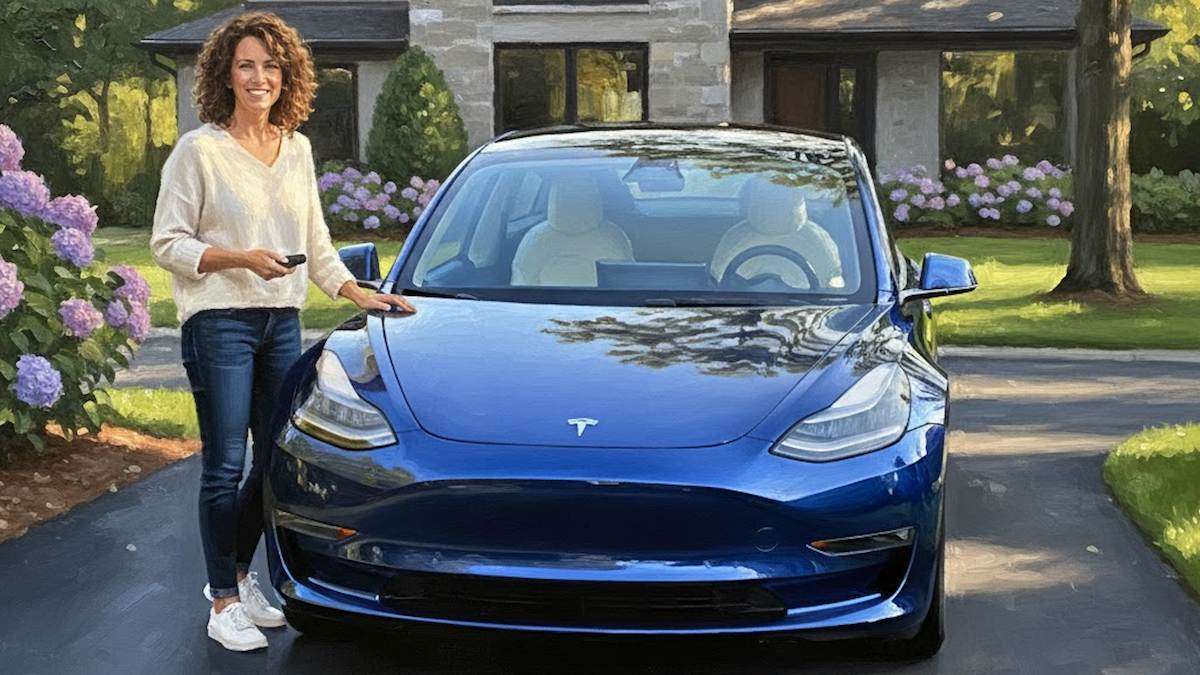

A Tesla Model 3 owner is reeling at a $1041 quote from Tesla to do her brakes. Learn if you can DIY your Model 3 or Model Y brakes and save a bundle of cash.
I saw the post from Danielle Thompson in the Tesla Model 3 and Model Y Owners Club Facebook page, and her frustration is understandable.
When you’re quoted $1041 by Tesla for what sounds like a routine service, it’s a jaw-dropper. The immediate, question she asked—"Please tell me we can do our own brakes at home, help!"—is something every Tesla owner has probably thought when faced with a large Service Center estimate.
Here is a breakdown of this high quote, along with a real-world perspective and the steps you need to take to save hundreds of dollars, whether you wrench it yourself or use a specialized independent shop.
Do Danielle’s Brakes Need To Be Replaced?
First, we need to reset expectations about electric vehicle maintenance, specifically when it comes to friction brakes. Unlike traditional gasoline cars, the Model 3 or Model Y uses the motors to slow the vehicle down, sending energy back to the battery—that’s “regenerative braking.” This means the mechanical friction brakes (pads and rotors) are barely used.
In a normal internal combustion engine (ICE) vehicle, brake pads might last 30,000 to 50,000 miles. For the Tesla Model 3, the regen braking lifespan extends pad wear to easily over 100,000 miles. Many owners who drive responsibly will never need to replace the pads, only service them.
Tesla’s $1041 Quote
When a customer reports that Tesla quoted $1041, that figure usually includes several items, not just replacing worn-out pads:
- Full Pad and Rotor Replacement: They might estimate replacement based on time or moisture exposure, not actual wear.
- Brake Fluid Flush: This is required every two years, regardless of mileage, to prevent moisture contamination. This service item is legitimate.
- Caliper Service (Clean & Lube): This is the crucial, often overlooked item. Because the pads are so rarely used, the calipers, guide pins, and hardware can seize up due to rust and road grime, especially in areas with harsh winters or salty air. This causes squealing, sticking, and reduced efficiency.
The truth is, 90% of the time a Tesla owner receives a high brake replacement cost quote, the car likely just needs the calipers to be cleaned, lubricated, and the fluid flushed.
This preventative maintenance should cost closer to $150–$250 at the Service Center, or even less at a quality independent shop. If they quote over a thousand, they are likely baking in unnecessary pad and rotor replacement labor and parts.
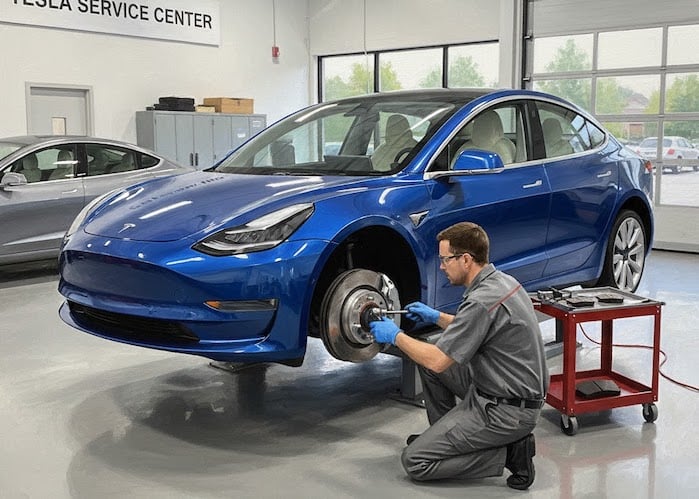
Can You Do It Yourself?
To answer Danielle’s key question: Yes, you absolutely can service and even replace your own Tesla brakes at home, but there are a few high-tech hurdles you need to know about.
The Main Obstacle: The Electronic Parking Brake (EPB).
The rear calipers on the Model 3 and Model Y use an integrated EPB motor. Before you can retract the piston or even remove the pads, you must retract this motor. On traditional cars, you use a simple tool to crank it back; on the Tesla, you must use the software.
To safely proceed with any brake work, you must:
- Engage Service Mode: This must be done via the center screen. This disables key functions, including the airbags and high-voltage systems.
- Activate EPB Service Mode: This specific mode releases the parking brake motors so you can physically work on the rear calipers.
- Special Tooling: While you don't need a dealer-specific scan tool for a full pad replacement, you do need the basic tools (jack pads, jack stands, torque wrench) and a specific piston tool for the rear to wind the EPB back.
For most owners, the most actionable and effective recommendation is to stick to the Service/Maintenance procedure: remove the wheels, inspect the pads for thickness (they should be near-new), and then disassemble, clean, and lubricate the caliper pins and pad channels. This is what prevents the rust and seizing.
The Takeaway
If you are comfortable turning wrenches, and have a garage setup, absolutely proceed with the caliper clean and lube process—it’s detailed in many community guides and videos. If the pads are actually worn (rarely before 75k miles), then source quality aftermarket pads and rotors; you can save 50% on parts alone versus buying Tesla OEM. A good set of pads and rotors will cost around $300–$500, a huge saving compared to the Tesla quoted $1041.
However, if you are not comfortable with the EPB Service Mode via the screen, don't try to replace the rotors. Instead, seek out an independent shop that specializes in EVs. They know the importance of the cleaning/lubrication service and can perform the brake fluid flush at a much more reasonable labor rate than the Service Center. Prioritizing cleaning and lubrication is the secret to extending your regen braking lifespan and minimizing your brake replacement cost.
In The End
Know your maintenance schedule, understand the difference between necessary fluid flushes and friction wear.
So, here are my questions for Tesla owners.
For Model 3 owners who have done their own brake service (pad replacement or cleaning/lubrication), how difficult was the job? What were the total parts/tool costs compared to the $1,041 Tesla quoted? What is the most important tip you'd give a first-timer doing a brake service?
Check out my Tesla Model 3 story: Tesla Did Me Dirty, I Took My 2018 Model 3 In For Warranty Work, and They Gave Me a Model X Loaner, Now I Want One
I am Denis Flierl, a Senior Torque News Reporter since 2012. My 30+ year tenure in the automotive industry, initially in a consulting role with every major car brand and later as a freelance journalist test-driving new vehicles, has equipped me with a wealth of knowledge. I specialize in reporting the latest automotive news, covering owner stories, and providing expert analysis, ensuring that you are always well-informed and up-to-date. Follow me on X @DenisFlierl, @WorldsCoolestRides, Facebook, and Instagram
Photo credit: Denis Flierl
Set Torque News as Preferred Source on Google
Follow us today...


Comments
It still basically comes…
Permalink
It still basically comes down to "Dealerships gouge you on ANY service pricing". Doesn't matter what type of vehicle it is. For decades dealerships have been charging right around twice as much as any other legitimate independent garage. We've seen this time and time again for numerous service requests on dealership garages, and we would ALWAYS go elsewhere for any maintenance and repairs. Plus you have to watch out for lots of unnecessary maintenance that you don't need at all Case in point, the article mentioning that the pads and rotors probably don't need servicing and they're just up selling you unnecessary expenses. We've caught some dealerships in outright lies about service they said it needed, when another garage that really knows what it's doing showed us the parts were perfectly fine and more than passed any inspection. The dealerships are counting on most people to just have service work done right where they're at when they're told something needs to be done. They know most people will be in a hurry and no patience to go elsewhere for either another quote or a second opinion.