
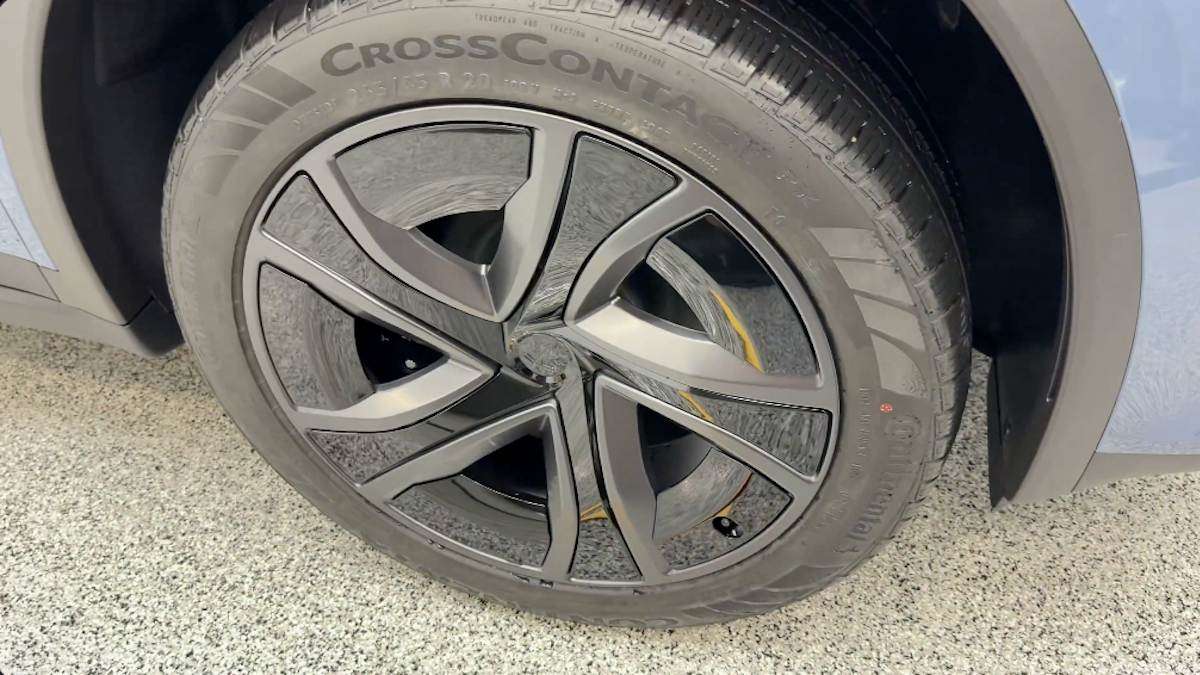

Forget flat tires—a new, critical design flaw in Tesla's Model X Perihelix wheels means if you get a blowout, you might literally be stranded because the car itself prevents you from changing the tire.
I found this disturbing post from Coleton Guerin (@OutofSpecDetail) on X: Tesla's new Perihelix wheels for the Model X suffer from a critical, potentially dangerous design flaw. Guerin reports that he is physically unable to detach the aero covers, which must be removed before the wheel can be taken off the car.
This oversight raises a serious question about driver safety and practicality: if the covers cannot be removed, how is a Model X owner with a flat tire supposed to perform a simple roadside wheel swap? This issue could leave drivers stranded and highlights a major oversight in the design and engineering of the new wheel assembly.
Coleton Guerin says, “The new Perihelix wheels for my Tesla Model X have a serious design flaw: I physically cannot remove the aero covers to remove the wheel from the car. How is someone with a flat tire on the side of the road supposed to swap out a new wheel/tire if they can't remove it in the first place? If I have a blowout, I’m toast.”
The $100,000 Flat Tire: Why Tesla's Perihelix Wheels Create a Critical Roadside Safety Crisis
When I first read the report from Coleton, my reaction wasn't surprise—it was frustration. For over a decade, my work here at Torque News, built on three decades in the automotive industry as a journalist and consultant to major brands, has focused on holding manufacturers accountable, especially when innovation compromises basic utility.
Tesla has always pushed the envelope, but sometimes, their obsession with aerodynamics and minimalism runs headlong into the harsh reality of the road. This is precisely the case with the new Perihelix wheels introduced on the Model X.
The core issue, as Guerin clearly articulated, is a critical design flaw in Tesla Model X Perihelix wheels: the aesthetic aero covers, which must be removed to access the lug nuts, are physically locked onto the wheel, preventing removal. Let's not mince words: this isn't a cosmetic hiccup.
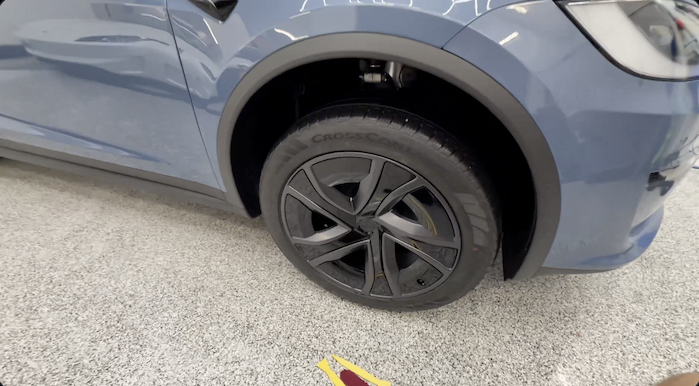
This is a fundamental safety and service failure. How can any driver—let alone one who has paid six figures for a luxury EV—be expected to handle a simple roadside tire change if the vehicle's engineering actively prevents them from doing so? It's what I call a $100,000 flat tire, and it forces us to address the larger pattern of Tesla quality control issues we've seen recently.
This issue of fragile wheel components causing headaches during routine maintenance isn't entirely new for the brand. As I've previously reported in a piece detailing owner frustration, titled, "Tesla Cybertruck Owner Warns, 'If You Go To Tesla Service For a Tire Rotation, Take Your Wheel Covers Off and Leave Them At Home, They Broke Two Of Mine.'" Tesla has struggled with aero covers that are either too brittle or too tightly fitted for standard service procedures.
The Perihelix problem takes this struggle to a new level, transforming a simple maintenance risk into a life-on-the-side-of-the-road crisis, making a roadside tire change impossible. Tesla Model X owners face a truly concerning situation.
The Trade-Off Trap: Aero vs. Access
The goal of these aero covers is to streamline airflow, reducing drag and adding precious miles of range—an admirable engineering pursuit. However, a great design is worthless if it ignores the user experience under duress. My authority in this industry comes from understanding that the best engineering marries complexity with simplicity. Tesla has achieved complexity, but they've failed miserably at maintaining simplicity.
The Model X is a large, heavy vehicle. Changing a wheel safely requires proper tools, clear access to the lug nuts, and a safe environment. When the new Tesla Model X Perihelix wheel controversy breaks down, it highlights a deep flaw in the vehicle validation process.
Did no one in quality assurance test this operation on the side of a busy highway?
The answer, clearly, is no, or the test was performed in an idealized environment that ignores real-world scenarios, which is unacceptable for any major automaker. If the car is designed to be user-serviceable in this respect (i.e., you carry a spare or a tire repair kit), then the components must allow access.
This scenario brings to mind other serious service hurdles that have frustrated owners. As I detailed in an earlier report, Tesla Cybertruck Owner Says, "Sadly, My New Cybertruck is Slowly Turning Out To Be a Lemon, 50 Days In Service, and Tesla Still Can't Fix the Problem", one of the biggest deterrents for mainstream adoption of Tesla vehicles is the friction point between innovative design and routine serviceability. When an owner faces a critical failure—or in this case, a design roadblock—and cannot solve the problem quickly, the experience becomes toxic.
Just imagine being stuck somewhere remote, realizing you can't use the spare tire you might have, simply because you don't know how to remove Tesla Perihelix aero covers without potentially destroying them —or worse, scratching the underlying wheel structure. This directly leads to the high anxiety and regret we sometimes see in other critical vehicle failures.
I covered a similar anxiety point when an owner had a serious service issue, reporting: "Tesla Cybertruck Owner Says, 'I Regret Spending $130K On a Cybertruck, It Had a Critical Failure, I Can't Drive It, and Tesla Can't Get Me In for 39 Days.'" The lesson is clear: when the vehicle fails, the support system must be instantaneous. This Perihelix issue turns every driver into a service technician who cannot perform the required task.
My Expert Advice and Actionable Recommendations
This problem demands more than just a quick fix; it requires a systemic solution. Here's a three-pronged approach:
1. Tesla's Immediate Action:
- Engineering Redesign: Tesla must immediately redesign the Perihelix aero cover retention clips to allow for tool-free, or at least standardized tool-assisted, removal that is possible for an adult on the side of the road.
- Owner Tool Kit: Ship every Model X owner with Perihelix wheels, a proprietary, high-quality removal tool, and clear, video-based instructions accessible via the car's touchscreen, detailing the Tesla Model X wheel design oversight solution.
- Service Bulletin: Issue a service bulletin and voluntary recall to retrofit any existing wheels with an updated, easily removable cover.
2. Owner Protocol (What You Can Do Now):
- The Preemptive Removal: If you live near a service center or have a trusted third-party mechanic, I strongly recommend removing the Perihelix covers now and keeping them in your frunk. Yes, you will sacrifice 3–5% of range efficiency, but you gain peace of mind and the ability to change a tire if necessary.
- The Mobile Service Mandate: If you get a flat, do not attempt to change it yourself. Contact Tesla Mobile Service immediately, and prepare to wait. Given this flaw, Tesla should prioritize these calls as safety-related lockouts.
While these design issues are frustrating, it's important to remember why so many of us are dedicated to the brand. Tesla's long-term durability and foundational technology are often unparalleled, which is why we spend so much time focusing on these crucial friction points.
We know the vehicle platform is solid, as evidenced by reports like my recent one on EV battery longevity, "I Have 250K Miles On My 2021 Tesla Model 3, and You Won't Believe the Battery Health - This Will Silence All the Tesla Naysayers"
We want Tesla to succeed, but success depends on addressing these real-world owner problems. Owners are already looking for owner fixes for Tesla's aero wheel cover problems, which shouldn't be necessary on a new vehicle.
What Tesla Owners Are Saying
The issue of overly difficult or damaging aero covers is a consistent thread among Tesla owners across various models, demonstrating a larger problem with wheel accessory design.
Key Takeaways
- Immediate Risk: The new Model X Perihelix wheel aero covers may be functionally impossible for owners to remove without specialized tools, critically blocking access to lug nuts for tire changes.
- Service Failure: This represents a major failure in product validation, placing vehicle efficiency above basic roadside safety and owner utility.
- Actionable Solution: Owners should consider preemptively removing the covers or insisting that Tesla provide a guaranteed, readily accessible removal solution and specialized tool kit.
- Historical Context: This issue mirrors prior problems with overly tight or fragile aero covers on other Tesla models, indicating that a persistent Tesla Model X wheel design oversight needs to be addressed.
- Manufacturer Mandate: Tesla must issue an immediate fix and recall procedure to ensure this engineering flaw does not strand Model X drivers.
In The End
As a Senior Reporter, I've seen this script before: great ambition meets poor execution. The Perihelix wheel flaw isn't just a nuisance; it fundamentally undermines the driver's ability to maintain safety and control after a blowout. Tesla needs to acknowledge this critical design flaw in Tesla Model X Perihelix wheels and prioritize a rapid, comprehensive solution that respects the investment and trust of its owners.
Tell Us What You Think
If you own a Model X with Perihelix wheels, have you successfully removed the aero covers, or have you been forced to call roadside assistance? Tell Us What You Think of this design oversight in the comments below.
I'm Denis Flierl, a Senior Torque News Reporter since 2012, bringing over 30 years of automotive expertise to every story. My career began with a consulting role for every major car brand, followed by years as a freelance journalist test-driving new vehicles—equipping me with a wealth of insider knowledge. I specialize in delivering the latest auto news, sharing compelling owner stories, and providing expert, up-to-date analysis to keep you fully informed.
Follow me on X @DenisFlierl, @WorldsCoolestRides, Facebook, Instagram and LinkedIn
Photo credit: Denis Flierl via Coleton Guerin
Set Torque News as Preferred Source on Google
Follow us today...





Comments
Follow these instructions,…
Permalink
Follow these instructions, you will be fine. Not that difficult once you understand how, there is a video on you tube. I tried to paste link here, but system didnt allow me