
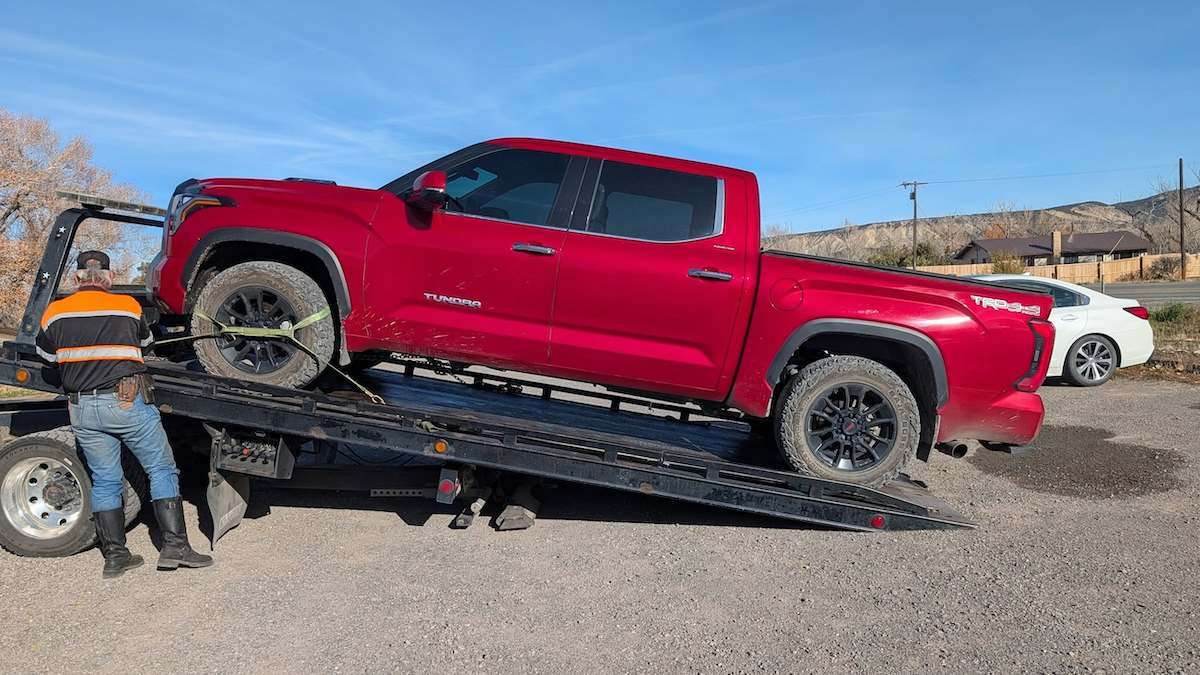

The Toyota Tundra, famed for reliability, is failing another owner with a second radiator replacement and a crippling hybrid malfunction—but the real battle is just beginning at the dealership. Here is what Tundra owners need to know.
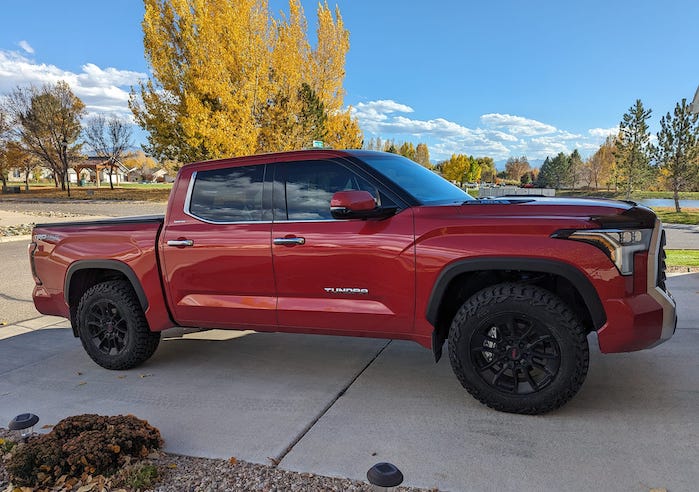
While researching the growing reports of issues affecting the new generation of Toyota Tundras, I encountered a particularly sharp critique from owner David Romero. His post, found on a popular owners' Facebook page, condemns his 2023 Tundra Limited Hybrid as a complete "lemon" after just 30,000 miles.
Romero detailed multiple severe problems, including having to replace his radiator for the second time and, most recently, a sudden hybrid malfunction that forced the truck into limp mode, making it totally unreliable. His summary of the ordeal concluded with the fear that his local dealer would inevitably attempt to "wiggle out" of taking responsibility for the recurring, critical failures.
The 2023 Tundra Hybrid Nightmare: Second Radiator, Limp Mode, and the Warranty Battle: What Owners Must Know
When you invest your hard-earned money in a new truck—especially one from a brand historically synonymous with bulletproof reliability—you expect a partner that can handle the job. When that truck is a premium 2023 Limited Hybrid, you certainly expect it to get you to your hunting spot and back without a catastrophic breakdown.
But for David Romero, that faith has been shattered.
“What a lemon this truck has been, can't even depend on it to take it hunting. There is radiator number two, and last night I got the hybrid malfunction and went into limp mode. I'm sure the local dealer will wiggle out of this one and blame everyone else. It’s a 2023 Limited Hybrid with 30,000 miles.”
David’s experience with a second radiator failure, coupled with a full i-FORCE MAX limp mode, causes a permanent fix dilemma; it isn't just an isolated case of bad luck. It's a flashing red warning light that speaks volumes about the systemic growing pains plaguing the third-generation Tundra, particularly the complex i-FORCE MAX hybrid system. This failure at 30,000 miles puts David right in the middle of a serious reliability crisis.
I’ve been tracking these issues since the first reports started trickling in. The pattern of major mechanical failures—from engine woes to hybrid component breakdowns—is alarming. Just look at the reports I covered recently, like the one detailing how a transmission went bad almost immediately: "My 2025 Toyota Tundra Hybrid TRD Pro 3K Miles In Is Dead, the Dealer Says My Transmission Has Big Pieces of Metal In the Oil and Needs to Be Replaced."
This level of early failure highlights potential manufacturing or design flaws that are only exacerbated when the cooling system—like David’s second radiator—fails.
The Systemic Breakdown: Why Limp Mode Happens
David's truck went into limp mode immediately after the "hybrid malfunction" warning, a classic self-preservation response from the ECU. In a twin-turbo hybrid truck, the cooling system is responsible not just for the combustion engine, but for the turbochargers (which rely on coolant to prevent cracking) and, critically, the hybrid system’s inverter and battery components.
A radiator failure—especially a second one—suggests a chronic defect in the component itself or, potentially, excessive system pressure or vibration causing premature failure.
When the ECU detects overheating or a critical parameter violation (like coolant pressure loss), it restricts power (limp mode) to prevent catastrophic engine failure in the new Tundra. This restriction saves the engine from a total meltdown but ruins the truck’s utility, turning a powerful vehicle into a barely mobile brick.
The fear David voices about the dealer is sadly justified, as I’ve seen time and again how owners are left in warranty limbo. I recently covered a similar story in my piece, It’s Been 2 Months Since My 2024 Tundra Engine Died, It Continues to Rot at the Dealer With No Estimate For Parts, I’ll Never Own a Toyota Again, where the warranty repair process itself introduced new problems.
Decoding the Hybrid Malfunction and Dealer Resistance
The combination of a failed radiator and a "hybrid malfunction" points directly to a crucial system overload. The i-FORCE MAX system uses its own cooling loop, which is often tied closely to the main engine cooling system. If the main radiator or associated plumbing fails, it can create thermal chaos across the entire powertrain. This is the new reality of owning a highly complex, powerful Toyota Tundra Hybrid with a reliability crisis at 30000 miles.
David’s cynicism about the dealer is understandable. When facing a complex hybrid issue, dealers often look for the path of least financial resistance. David needs to prepare for the dealer potentially blaming external factors, such as "road debris," for the radiator failure, or suggesting the subsequent hybrid issue is unrelated. This tactic is used to justify a dealer's refusal to cover a hybrid's malfunction under warranty.
I’ve reported on multiple cases where low-mileage failures turned into drawn-out battles, like the case I detailed: "So, I Just Bought a 2025 Toyota Tundra TRD PRO Hybrid, Headed Out to Maryland, Made it 400 Miles and the Engine Locked Up With Only 1,528 On My Truck.” These warranty struggles are why documentation is your most powerful weapon.
Actionable Steps and Legal Recourse
David, and any owner facing similar issues, needs to move from frustration to documentation. This is where you establish authority and trust with the dealer. Since this is the second major failure at 30,000 miles—a vehicle well within the 3-year/36,000-mile bumper-to-bumper warranty—you have grounds to demand a complete, not just partial, solution.
If the dealer continues to resist, David's experience of a second major component failure (the radiator) followed by a catastrophic electronic/hybrid failure is strong evidence of a lemon law claim for hybrid pickup truck problems. Every state has different thresholds, but generally, if the same issue cannot be fixed after a reasonable number of attempts (often two or three for a severe defect) or if the truck spends too many days out of service (e.g., 30 days total), the vehicle qualifies.
This is the ultimate leverage when the dealer and manufacturer fail to honor the promise of reliability. This advice is critical because, as I highlighted in my piece on deep mechanical faults, owners need to be forceful advocates for their rights: I Have Zero Confidence In My 2024 Toyota Tundra. It Suddenly Shut Down Going 80 MPH, I Finally Got It Started, But Now, the Dealer Will Think I’m Crazy
For all Tundra Hybrid owners, the key takeaway is that you need a proactive, not reactive, approach. This means tracking every coolant top-off, every warning message, and every interaction. This is the core of taking actionable steps for Tundra owners facing engine issues.
What Owners Are Saying
The issues David faces resonate deeply across the owner community. The struggle to get comprehensive warranty coverage, especially for the i-FORCE MAX system, is a recurring theme on online forums and social media.
Reddit (Warranty/Hybrid): “2022-2023 Tundra Hybrid owners are getting absolutely shafted as they are NOT included on the recall. Not to mention late 2023 builds and early 2024 builds- NOT recalled. Those trucks are all experiencing engine failures and Toyota is only offering short block rebuilds. That's absolutely absurd. Give them all long-block Toyotas.”
Reddit (Dealer Resistance): “I have 72,000 on mine and I've had nothing but trouble. And the parts are always on back order. SMH. ... Oil leaks, 4 wheel drive popping, plastic interior pieces falling apart, codes for cruise control and headlights. Also, the windows stutter when you roll them down after they're wet. They haven't fixed a single thing, and now it's out of warranty. I won't buy another Toyota.”
Torque News -YouTube/Forum (Malfunction): “My 23 Tundra hybrid died again today. Last time it needed a hybrid inverter. This time, who knows? I was driving and got a 'hybrid malfunction,' then a 12V charging malfunction, and a parking brake malfunction, and it seemed to be driving fine. Then, as I slowed down, it seemed to shift into hybrid mode and died completely. Now I can't start it.”
Key Takeaways
- Demand Documentation: Do not accept verbal assurances. Get every diagnosis, repair order, and dealer refusal in writing.
- Coolant System is Critical: A second radiator failure is a major red flag, potentially pointing to systemic pressure or component defect, not just a random road hazard.
- Use the Hybrid Malfunction as Leverage: This failure is often covered under the separate hybrid component warranty (typically 8 years/100,000 miles). Force the dealer to engage this coverage.
- Know Your Lemon Laws: David’s situation, with two major failures and a total breakdown at low mileage, puts him in a powerful negotiating position for a buyback or replacement.
- Target Google Discover: The core message for owners must be how to fix and negotiate these issues, specifically around the keyphrase 2023 Toyota Tundra Hybrid radiator failure warranty denial.
Conclusion
David Romero’s heartbreaking experience encapsulates the Toyota Tundra Hybrid reliability crisis 30000 miles currently facing new truck owners. His truck's failure—a double radiator strike culminating in a limp mode hybrid shutdown—demands aggressive action against a likely skeptical dealer. Owners must stop being passive recipients of bad news and become highly organized, document-wielding advocates to protect their significant investment and ensure they get the complete, long-term repair they paid for.
What Would You Do?
If a second radiator fails and your Toyota Tundra Hybrid goes into limp mode at 30,000 miles, will your dealer stand behind the long-term fix, or are you prepared to fight a $10,000 warranty battle on a truck you no longer trust?" Click the red Add New Comment link below and let us know.
I'm Denis Flierl, a Senior Torque News Reporter since 2012, bringing over 30 years of automotive expertise to every story. My career began with a consulting role for every major car brand, followed by years as a freelance journalist test-driving new vehicles—equipping me with a wealth of insider knowledge. I specialize in delivering the latest auto news, sharing compelling owner stories, and providing expert, up-to-date analysis to keep you fully informed.
Follow me on X @DenisFlierl, @WorldsCoolestRides, Facebook, Instagram and LinkedIn
Photo credit: Denis Flierl via David Romero
Set Torque News as Preferred Source on Google
Follow us today...



Comments
Sounds like you are having…
Permalink
Sounds like you are having pretty good luck. Mine blew up way before that. Toyota ...."O" what a feeling...😩