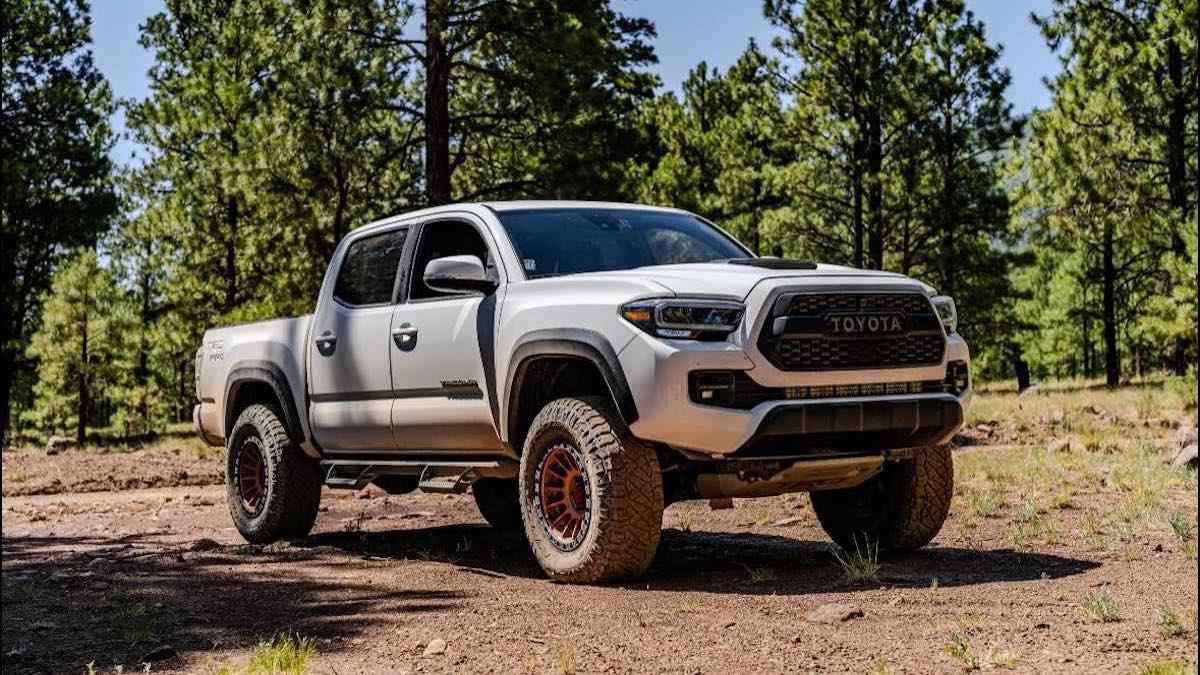

When the Toyota dealership can’t even afford to stock its own oil, you know the price has spiraled out of control; find out what Tacoma owners are using instead.
Imagine heading to your local dealership for a simple fluid change, only to find that the manufacturer’s own service department has stopped stocking the required oil because the price has become astronomical. You are left standing at the parts counter of a major metropolitan dealer, realizing that a single liter of gear oil might cost you more than a full tank of premium fuel.
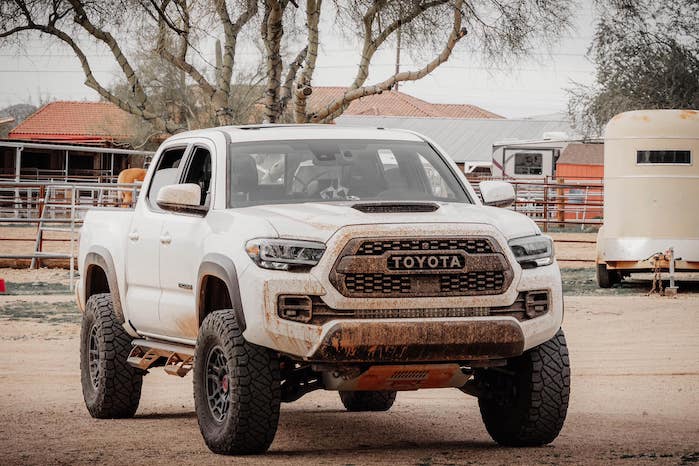
In a recent post shared in the Taco Nation Facebook community, Travis Ralston highlighted growing concerns about the accessibility of specialized maintenance parts and the steep costs of keeping a modern Toyota Tacoma on the road. He says,
“I went to Toyota today, and they don’t even carry the transfer case gear oil at a major dealer in Phoenix, Arizona, because apparently nobody was getting it due to the ridiculous price tag. What do y’all use? I wound up getting Royal Purple 75W-90 at a local Auto Zone as the closest match.”
The $80 Fluid Mystery
During my 30 years in the automotive industry, I have seen plenty of "boutique" fluids, but the situation with the Toyota 75W LF Transfer Case Gear Oil is unique. When a dealer in a massive hub like Phoenix stops stocking a fundamental maintenance item, it signals a breakdown in the ownership experience.
Independent testing from experts at places like Project Farm has shown that while specialty fluids have their merits, the massive price gap often leaves owners wondering if they are paying for protection or just a logo. In fact, many enthusiasts have noted that "the cost of some of these specialized OEM fluids has reached a point of diminishing returns for the average driver," a sentiment echoed in technical deep dives on The Drive.
I have tracked the rising cost of Tacoma maintenance for years, and this specific fluid issue is a prime example of how "the high cost of specialized parts is driving many owners toward the aftermarket," as I recently noted in my report here. It is frustrating to see a truck built on the reputation of being "the everyman’s pickup" suddenly require a fluid that costs nearly $100 per quart.
Why This Backfired
In my professional evaluation, the "Lifetime Fluid" marketing push has backfired. Manufacturers create these highly specific, low-viscosity oils to squeeze out an extra 0.5 MPG in EPA ratings, but they fail to consider the logistical nightmare they create for DIY owners. Technical experts at Car and Driver have noted that "modern vehicles are becoming increasingly dependent on hyper-specific lubricants that are not always stocked at local parts stores," which complicates simple home repairs, as seen in their long-term maintenance tests.
When I looked specifically at the 2022 model year, I discovered that this isn't just a pricing issue; it's a supply chain failure. In a previous investigation, I highlighted how "dealers are often forced to prioritize high-turnover inventory over shared components," a reality I discussed in my analysis of Toyota’s parts availability challenges. This leaves owners like Travis in a bind, forcing them to guess which aftermarket product won't void their warranty.
The Hidden Cost
Beyond the immediate shock of the price tag, we have to look at why this fluid exists. Over my three decades reporting on trucks, I have seen mechanical simplicity traded for incremental efficiency. The 75W LF fluid is designed to reduce "parasitic loss," meaning it is thin enough to let gears spin with almost no resistance. This helps Toyota meet strict federal fuel economy standards, but when that efficiency costs you $90 per quart, you are essentially paying the manufacturer’s regulatory bill.
I always tell my readers to look at the chemistry, not just the brand. Most off-the-shelf gear oils at your local store are GL-5 rated, which contain high levels of sulfur and phosphorus. While great for differentials, these additives can be "aggressive toward yellow metals," such as the brass synchronizers found in many Toyota transfer cases. This is why I stress being user-centric: saving $60 on oil isn't worth a $2,500 transfer case rebuild. If you go aftermarket, you must verify that the fluid is yellow-metal-safe or specifically rated for GL-4 applications to ensure long-term reliability.
I have found that the most trustworthy approach is to seek out "multi-vehicle" synthetics that explicitly list the Toyota Genuine Transfer Case Gear Oil LF specification on the back of the bottle. Brands like Ravenol and Red Line are transparent about these specs, whereas "one-size-fits-all" brands often leave you guessing. In my view, the best alternative to the 2022 Toyota Tacoma transfer case oil is one that meets the low-viscosity 75W requirement while providing superior shear stability.
What I Found: The Search for 75W LF Alternatives
I personally researched the best 2022 Toyota Tacoma transfer case oil alternatives and found that 75W-90 is safe for Toyota 75W LF transfer cases, based on what the community is finding. My takeaway? You don't have to pay the "dealer tax," but you must be careful. While Royal Purple is a fantastic lubricant, it is a 75W-90. The factory fluid is a straight 75W. In extreme cold, that thicker 90-weight can lead to sluggish 4WD engagement.
If you are looking for the most affordable substitute for Toyota Genuine Transfer Case Gear Oil LF, I recommend Ravenol MTF-3. It meets the exact 75W specification and usually retails for about a quarter of the price. My unique insight here is simple: Toyota doesn't make its own oil; they contract it out. Finding the "white label" version of that contract oil is the secret to saving hundreds over the life of your truck.
What Tacoma Owners Are Saying
The community is divided on whether to stick to the script or save their cash. One user on Reddit highlighted the absurdity of the situation, stating, "My local dealer wanted $95 for one can of the LF fluid, so I laughed and walked out to buy Ravenol instead," a sentiment shared in this Tacoma subreddit discussion.
Another owner pointed out the technical risks of going too cheap, mentioning, "The transfer case uses an actuator that is sensitive to fluid thickness, so if you put in a thick 80W-90, you might get a 4WD error light in the winter," which you can find in this detailed thread.
Key Takeaways
- The "LF" stands for Low Friction: This is a thin, 75W fluid designed for fuel economy and quick actuator response.
- Avoid the Dealer Markup: You can find Ravenol or Red Line products that meet the same technical specs for roughly $20.
- Check the Label: Ensure any fluid you use is "Yellow Metal Safe" to protect the internal components of your transfer case.
- Don't ignore the interval: Even if it's expensive, changing it at 60,000 miles is cheaper than a new transfer case.
My Personal Take
My 30 years in the garage have taught me that while fluids are the lifeblood of a vehicle, price does not always equal performance. Toyota is making it harder for the average person to maintain their vehicle by pricing these essentials out of reach. It is a disappointing trend for a brand built on reliability and ease of service.
You Don't Have To Drain Your Bank Account
The era of the $15 oil change is long gone, but $100 for a single liter of gear oil is a bridge too far. By understanding your Tacoma's specifications and considering reputable synthetic alternatives like Ravenol or Red Line, you can maintain your truck’s legendary longevity without draining your bank account.
What Would You Do? Would you pay the premium for the peace of mind of an OEM bottle, or would you trust a high-quality aftermarket synthetic to get the job done for a fraction of the cost? Click the red link below to write your comment and join the community in sharing experiences.
Next Up: In this article, I explore the debate among owners regarding the transition from the 3.5L V6 engine to the new 2.4L Turbo powertrain in the 4th-Gen Tacoma.
Denis Flierl is a Senior Reporter at Torque News with over 30 years of hands-on experience in the automotive industry. Having served as a professional test driver and industry consultant for major automakers such as Chevrolet, Ford, Toyota, Honda, and Tesla, Denis provides a "boots-on-the-ground" perspective that goes beyond standard reporting. Since joining Torque News in 2012, he has specialized in cutting through market noise to deliver data-backed analysis and real-world owner stories. His work focuses on navigating the transition to EVs and the shifting automotive market.
Have a tip or question for Denis? > Engage with him directly on LinkedIn for industry analysis, or follow his latest updates on X @DenisFlierl and @WorldsCoolestRides. You can also find his latest car features on Facebook and Instagram.
Photo credit: Denis Flierl via Travis Ralston - Taco Nation Facebook
Set Torque News as Preferred Source on Google
Follow us today...