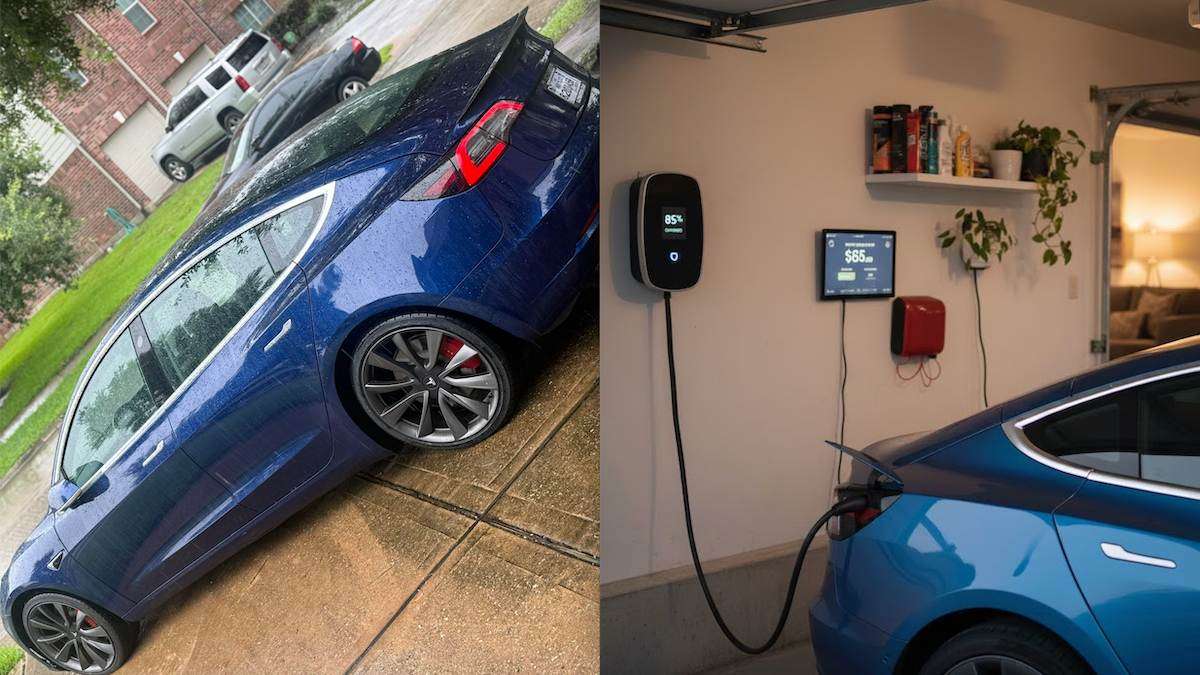

One Tesla driver’s electricity bill looked like a disaster, until he realized he was "refueling" his 400-mile weekly commute for less than the price of a single tank of gas.
Imagine that you finally move into your first home and open that initial utility bill, only to see a staggering $265 staring back at you. Before the panic sets in, you realize your daily 100-mile commute in a Tesla Model 3 might be the culprit, yet the math reveals a shocking secret about the true cost of ditching the gas pump.
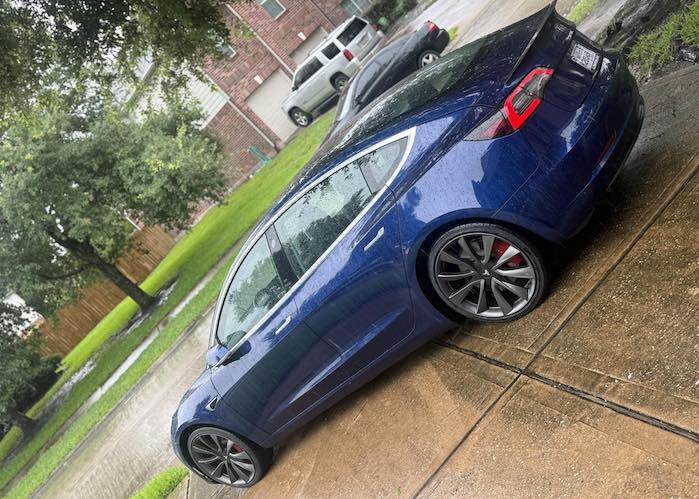
In my research on Tesla ownership costs, I found a recent post shared in the Tesla Model 3 and Model Y Owners Club Facebook community. Owner Devin Arceneaux highlighted growing curiosity about the true impact of home charging on utility bills, especially among those pushing their EVs to the limit on heavy commutes. Devin says,
“I got my first house and also my first light bill ($265). I'm being told this is too high, but I think it's because I charge my Tesla Model 3 almost every day to 85% with a level 2 charger. Is there a way I can find out how much I'm spending on charging alone? Update: I figured out I paid $73 a month, but I travel 100 miles 4x a week for work, so I guess that’s not bad! I’m stunned at how much gas owners are overpaying."
Is Your Electric Bill Actually a Bargain?
In my 30 years of covering the automotive industry, I have seen every shift from the rise of the SUV to the current electric revolution, and Devin’s story is one I hear constantly from new EV converts. People see a higher-than-average utility bill and immediately think the car is "eating" their budget, but they often forget to deduct what they no longer spend at the gas pump. According to EnergySage data, home charging a Tesla Model 3 typically costs about 4.4 cents per mile, a fraction of the cost of fueling a traditional internal combustion engine. EnergySage - How Much Does It Cost to Charge a Tesla?
In my previous reporting on the hidden costs of EV ownership, I have often noted that owners who ignore their utility rate structures are essentially leaving money on the table, as even a small shift in charging times can drastically alter their monthly overhead.
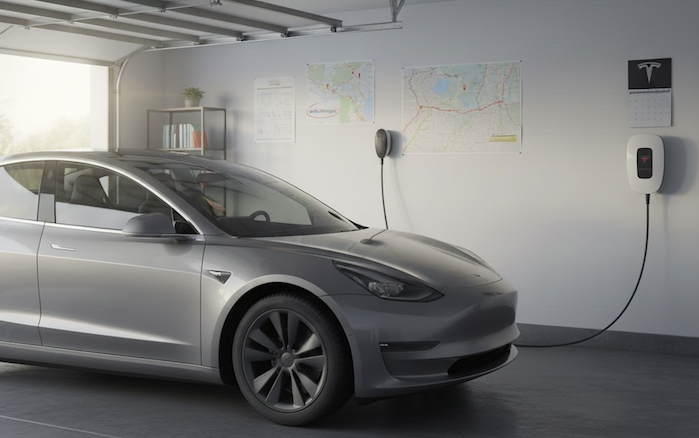
Cracking the Code on Home Charging Efficiency
If you are traveling 400 miles a week for work like Devin, you are putting 1,600 miles a month on the odometer. In a gas-powered car getting 30 MPG, you would be buying roughly 53 gallons of fuel monthly; at $3.50 a gallon, that is $185. Devin’s $73 charge cost represents a 60% savings, proving that high electricity bills for Tesla owners are often just "fuel" costs moved to a different column.
Experts at SolarTech point out that a Tesla adds approximately 38-57% to a household's electricity consumption for the average driver, making the $265 total bill much more reasonable than it looks at first glance. SolarTech - How Much Electricity Does A Tesla Use?
In my latest real-world evaluation, I decided to pit two heavyweights against each other to see how the transition from internal combustion to electric actually feels for the average driver. My honest comparison between the 2025 Honda Accord Sport and the 2025 Tesla Model 3 Long Range revealed that while the Accord remains a benchmark for reliability, the Model 3 offers a digital-first experience that is hard to ignore. You can read my full breakdown of how these two icons stack up in terms of performance and daily usability here:
What Tesla Owners Are Saying
The community feedback on this issue is vital for new owners to understand. One user on Reddit noted the importance of tracking software, stating, "The app just added a really cool feature so you can look at how much you're spending to charge... App says I have spent $78 in charging the last 31 days," which helps bridge the gap between the utility bill and actual car usage, as seen in the full discussion here.
Another owner highlighted the massive difference in regional rates, mentioning, "I live north of Sacramento and have averaged about $60 extra on my PG&E bill... I have put 4800 miles on it in this time, so roughly 1200 a month," found in this Reddit thread. These real-world accounts mirror Devin's experience: once you see the numbers, the "high" bill becomes a badge of savings.
Key Takeaways for Tesla Owners
- Audit via the App: Use the "Charge Stats" feature in the Tesla mobile app to input your local utility rates for an accurate monthly breakdown.
- Time-of-Use (TOU) Plans: Contact your electric company to see if they offer cheaper rates for charging between midnight and 6:00 AM.
- Level 2 Efficiency: Ensure your Level 2 home charger is installed correctly, as these are significantly more efficient than standard wall outlets.
- Gas vs. Electric Perspective: Always calculate your cost-per-mile to appreciate the hundreds of dollars saved monthly compared to fossil fuels.
Winning the Game of Personal Finance
Devin’s "shocking" $265 bill is actually a testament to the Model 3's efficiency. When you are covering 1,600 miles a month for just $73 in energy, you are winning the game of personal finance. My advice to any new homeowner with an EV is simple: don't look at the total on the bill; look at the cost per mile you've traveled. Once you do the math, those gas station visits will feel like a distant, expensive memory.
How About You? What was the biggest surprise on your first electric bill after switching to a Tesla, and are you actually saving as much as you expected? Click the red link below to write your comment and join the community in sharing experiences.
Next Up: Think you're getting a deal? Check out my latest report on how some Tesla owners are now securing unlimited home charging for a flat $15 monthly fee.
Denis Flierl is a Senior Reporter at Torque News with over 30 years of hands-on experience in the automotive industry. Having served as a professional test driver and industry consultant for major automakers such as Chevrolet, Ford, Toyota, Honda, and Tesla, Denis provides a "boots-on-the-ground" perspective that goes beyond standard reporting. Since joining Torque News in 2012, he has specialized in cutting through market noise to deliver data-backed analysis and real-world owner stories. His work focuses on navigating the transition to EVs and the shifting automotive market.
Have a tip or question for Denis? > Engage with him directly on LinkedIn for industry analysis, or follow his latest updates on X @DenisFlierl and @WorldsCoolestRides. You can also find his latest car features on Facebook and Instagram.
Photo credit: Denis Flierl via Devin Arceneaux
Set Torque News as Preferred Source on Google
Follow us today...