
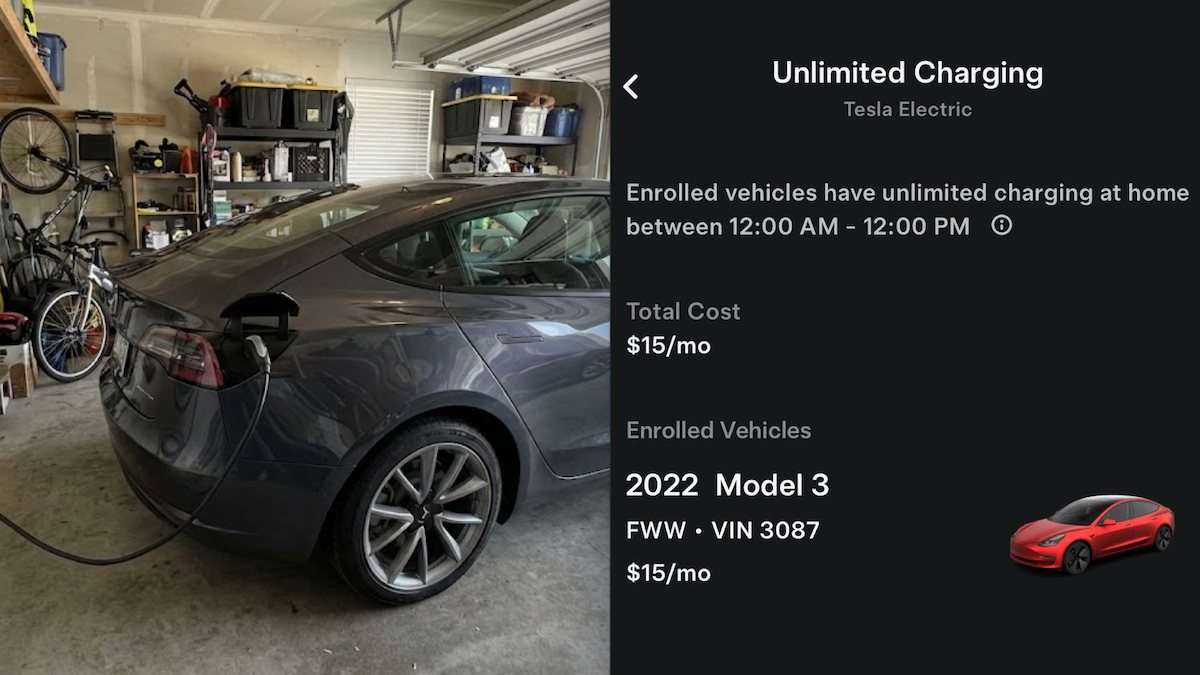

It sounds like a typo, but the screen display is real: while most drivers stress over gas prices, one Tesla Model 3 owner just secured unlimited "Midnight to Noon" fuel for less than the cost of a single lunch, and the internet is losing its mind.
In the rapidly evolving world of electric vehicle (EV) ownership, the cost of charging is often the battleground where skeptics and enthusiasts clash.
However, a recent update from a Tesla owner in Texas has effectively dropped a "mic" on the debate, showcasing a pricing model so aggressive that it makes even the most fuel-efficient hybrid look expensive by comparison.
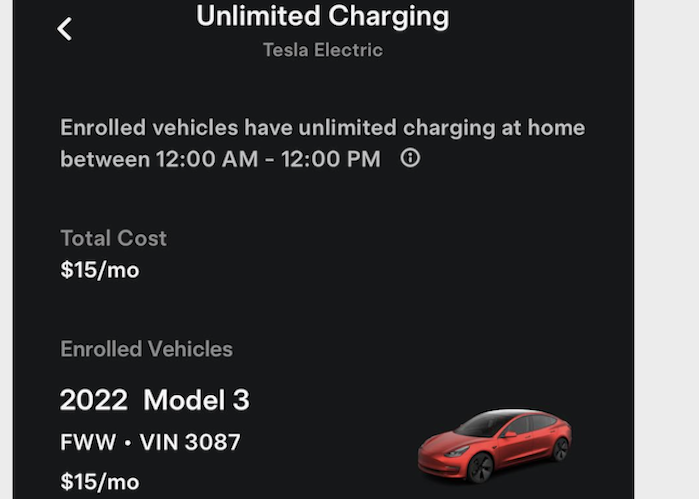
The story originated on the Tesla Model 3 and Model Y Owners Club Facebook page, where member Brad Hoy shared the details of his recent service renewal. In a post that has since ignited a flurry of envy-fueled comments from drivers in other states, Hoy revealed a charging plan that sounds almost too good to be true: a flat $ 15-per-month rate for unlimited home charging, with a generous 12-hour window that defies industry standards.
Hoy wrote: “I just renewed my Tesla Model 3 Electric plan, and the unlimited charging is now a massive 12 hours, and the total cost is only $15 a month. I’ll take that all day!”
As a senior reporter who has covered the automotive industry for over 14 years, I have analyzed thousands of owner reports, from Toyota reliability issues to Subaru maintenance costs. But this specific development in the Texas energy market represents a fundamental shift in the economics of daily driving. It moves the needle from "saving money on gas" to essentially "subscribing to fuel" for the price of a streaming service.
$15 vs. The Gas Pump
To understand why this post is generating such "heat" on social platforms today, we have to look at the raw numbers. For the average American driver who covers roughly 1,000 to 1,200 miles a month, fuel costs for an internal combustion engine (ICE) vehicle are a significant line item in the family budget.
Even with gas prices currently moderating in some regions, filling a standard 15-gallon tank twice a month costs $100 to $120. If you drive a truck or a larger SUV, that number easily climbs to $200.
Under Brad Hoy’s renewed Tesla Electric plan, the cost is fixed at $15.
That breaks down to roughly $0.50 per day to fuel a vehicle. There is virtually nothing else in the modern economy that costs fifty cents a day. You cannot buy a cup of coffee, a newspaper, or even a candy bar for that price. Yet, in Texas, Tesla owners are securing their entire monthly transportation energy for less than the cost of a single lunch.
This "subscription fuel" model is the holy grail for EV adoption. It removes the volatility of global oil markets from the kitchen table budget conversation. Whether gas spikes to $5.00 a gallon or drops to $3.00, the Tesla Electric subscriber pays their $15 and drives on.
The Massive Charging Window
While the price tag is the headline grabber, the most significant detail in Hoy’s report is the 12-hour charging window.
For years, utility companies have offered Time-of-Use (TOU) plans to encourage off-peak usage. However, these plans have notoriously restrictive "super off-peak" windows, often limited to 2:00 AM to 6:00 AM. Missing that narrow window often meant getting hit with penalty rates that rivaled the cost of gasoline.
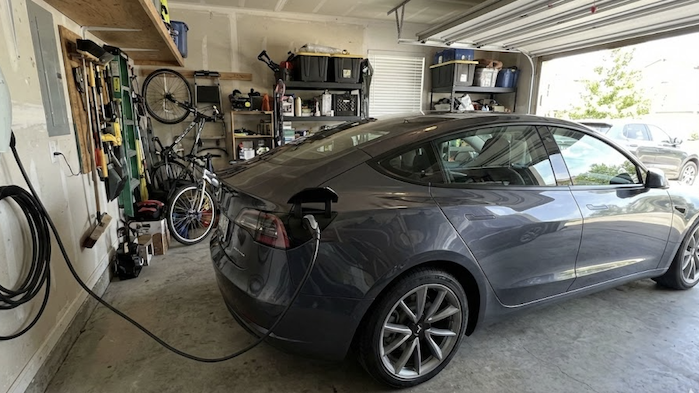
Tesla Electric’s "Drive Plan" in Texas has expanded this window to Midnight to Noon.
This is a massive quality-of-life improvement that cannot be overstated. A 12-hour window aligns with actual human behavior. It means an owner can plug in when they go to sleep, and if they sleep in on a Saturday or work a late shift, they are not penalized for charging until lunchtime.
It removes the "mental load" of EV ownership. You don't have to be a scheduler or a mathematician to save money; you just have to be parked at home before lunch. This shift from "overnight" to "half the day" effectively makes home charging feel unlimited for 99% of use cases.
Why Texas?
Readers in California, New York, or the Northeast, where electricity rates can hover between $0.30 and $0.50 per kWh, are likely reading this with a mix of disbelief and frustration. Why is this happening in Texas?
The answer lies in the unique mechanics of the Texas power grid (ERCOT) and Tesla’s role as a Retail Electricity Provider (REP). Texas is the leading producer of wind energy in the United States. Wind turbines often generate the most power at night when demand is historically lowest.
Tesla Electric is essentially capitalizing on this excess supply. By incentivizing owners to charge when the wind is blowing and the grid is unloaded (overnight and morning), they can offer these rock-bottom flat rates.
It is a symbiotic relationship: the grid gets stabilized by offloading excess renewable energy into millions of rolling batteries (the cars), and the owners get a flat rate that feels like a software perks package rather than a utility bill.
What's The Catch?
Of course, with any viral story, there are caveats. This plan is currently a "unicorn," exclusive to Texas residents living in deregulated energy zones. You can't get this if you are in an electric co-op or a municipal utility area, like Austin Energy.
Furthermore, to fully utilize Tesla Electric's features, ecosystem integration is key.
While you don't always need a Powerwall to get the vehicle plan, the Tesla Wall Connector and seamless integration with the Tesla App make the "set it and forget it" lifestyle possible. The car communicates directly with the energy provider (also Tesla), tracking exactly how many kilowatt-hours were charged into the battery during the free window versus the paid window.
The Verdict
I have spent years writing about the reliability of Toyota Tundras and the practicality of Subaru Foresters. I often advise readers to look at the "Total Cost of Ownership" (TCO) rather than just the sticker price.
What Brad Hoy’s experience illustrates is a potential future where vehicle "fuel" becomes a fixed subscription cost. If this model proves sustainable in Texas and expands to other deregulated markets, it fundamentally breaks the argument against EV ownership costs.
For now, however, this remains a Texas-sized perk. But as virtual power plants (VPPs) expand and renewable generation increases across other states, we may see this "subscription model" for charging roll out further.
Until then, Brad Hoy and his fellow Texas Tesla owners are enjoying the cheapest miles in America. And for the rest of us? We can only watch, wait, and perhaps lobby our local utilities for a "Midnight to Noon" window of our own.
What about you? Are you seeing charging rates anywhere near this low in your state, or are you paying premium prices to plug in? Let us know in the comments below. I’d love to compare the data from different regions.
With over 30 years of industry experience, Denis Flierl brings an insider’s perspective to Torque News, where he has been a Senior Reporter since 2012. Before picking up the pen, Denis consulted for the automotive industry's biggest brands and honed his skills as a test driver. He cuts through the noise to deliver the latest auto news, compelling owner stories, and the expert analysis necessary to navigate today's changing automotive market.
Have a tip or question? Follow me on X @DenisFlierl and @WorldsCoolestRides, or connect with me on Facebook, Instagram, and LinkedIn.
Photo credit: Denis Flierl via Brad Hoy
Set Torque News as Preferred Source on Google
Follow us today...







Comments
What surprises me is that…
Permalink
What surprises me is that there is no mention of what is the usual "catch" of plans like this (for example FPL utility also has an unlimited EV charging plan, I think it's around $27/month including the EVSE(!) and now 2 cents extra/kWh so not quite flat rate.) The catch isn't a bad one, it's that the utility gets some control over when you charge, they can throttle back your charge rate when power demand is high, mostly have it charge during low demand. Many people have other deals with utilities to do this to get credits, I had one until recently. For utilities, this is very valuable, which is why they can offer you such a great deal on the charging fee.