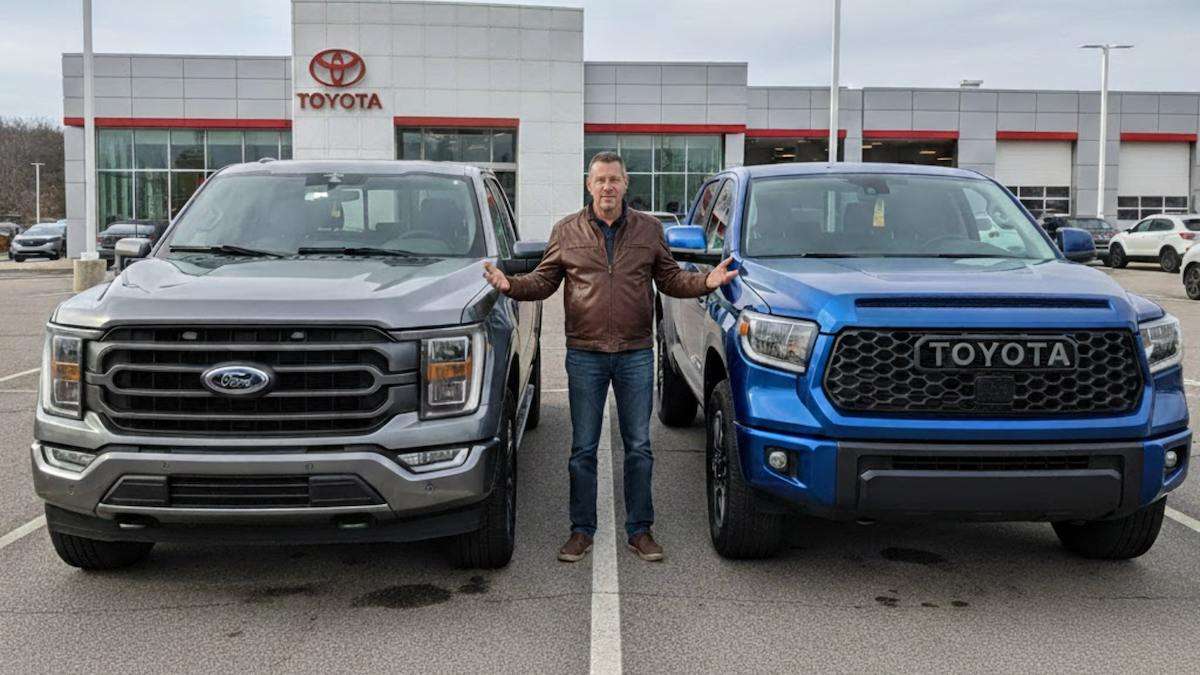

The Ultimate Desperate Trade?
In my three decades covering the automotive industry, I’ve seen some desperate trades, but Mike Thon’s recent declaration on the 2023-2026 Toyota Tundra Owners forum is a "Grand Slam" of automotive frustration. Mike’s situation isn’t just a complaint; it’s a financial and emotional breaking point that should put every 2026 truck buyer on high alert.
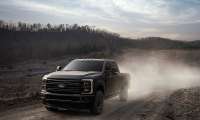
"This entire F-150 truck is just terrible. Everything about it," Mike shared, detailing a 2025 Ford F-150 that has become a rolling catalog of flaws. But it was his math that stopped me in my tracks.
Mike’s F-150 a one-year-old vehicle is currently commanding a trade-in value of just $46,000. Meanwhile, he’s found "recalled" Toyota Tundras sitting on lots for as low as $40,000 to $43,000.
Mike says, “I am considering trading in my absolutely terrible 2025 Ford F-150 for a "recall" Toyota Tundra. Financially I need to do an even trade, truck for truck. I’m taking a $20,000 hit on the F-150. This entire truck is just terrible. Everything about it. I cant drive it without finding another major flaw. My F-150 trade is 46k. There are Tundras all over for $40-43k."
For the uninitiated, this looks like a downward spiral. Why would anyone trade a year-old Ford for a Toyota that has been flagged for catastrophic engine failure? As a senior reporter who has tracked these brands since the 1990s, I can tell you: Mike isn't just jumping from the frying pan into the fire. He’s buying a "fixed" future.
Why Toyota’s "Crate Engine" Reset Beats Ford’s "Coding Nightmare"
In the world of 2026 reliability, there is a massive distinction between a design flaw and a manufacturing cleanup error. What Mike and thousands of other Tundra owners face is "swarf" microscopic metal shavings left behind during machining at Toyota’s Huntsville, Alabama, engine plant.
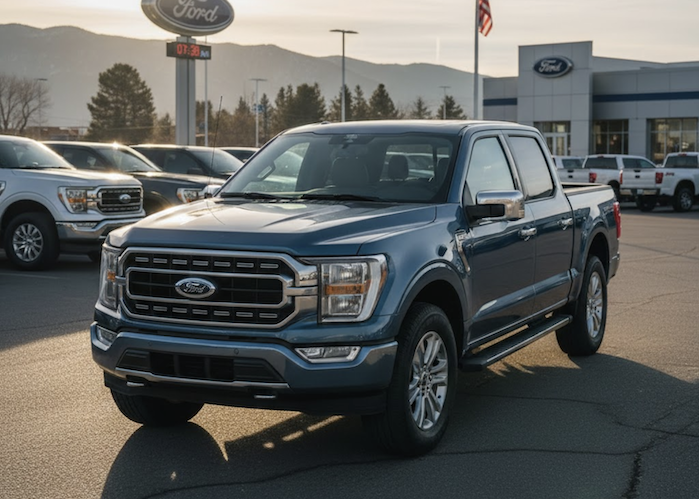
Having followed the Huntsville production lines for years, I can tell you: the V35A-FTS twin-turbo V6 isn't a bad design. It was simply built in a "dirty" kitchen. When that debris migrates into the main bearings, it’s game over for the engine. But here is the "Industry Secret" that makes Mike’s trade-in look like a stroke of genius: Toyota isn't just "fixing" these trucks; they are hitting the Global Reset Button.
In response to the massive recall surge (Safety Recall 24V-381), Toyota is shipping brand-new, debris-free Crate Engines directly to dealers. This isn't a patch; it’s a heart transplant that essentially "zeros out" the odometer on the truck's most expensive component. It turns a reliability nightmare into a massive mechanical upgrade.
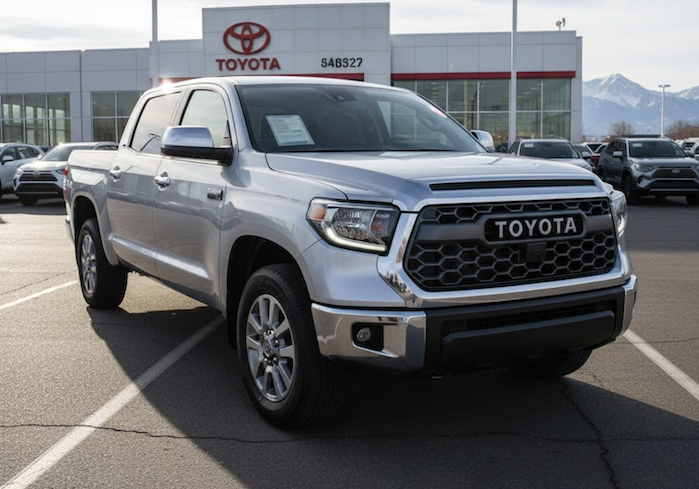
Now, contrast that with Mike's 2025 Ford F-150. While Toyota acknowledges a hardware failure and replaces the entire unit, Ford’s approach to issues like the "Ford Clunk" or the 2025 dashboard blackouts has largely been a "Lemon" strategy of relying on software updates. Owners are being told that a "reflash" or an "adaptive learning" update will fix a truck that feels like it’s falling apart. As an expert, I’ll tell you: you can’t "code" your way out of a physical hardware struggle.
The Huntsville Cleanup Crisis
To understand why Mike is willing to gamble on a Tundra, you have to look at the anatomy of the recall. Toyota’s own teardowns confirmed that metallic shavings from the casting process contaminated the main bearings. Under high loads, this leads to knocking and engine seizure.
But here is the catch: this was a finite manufacturing error, not a recurring design failure. By 2026, the engines coming out of Huntsville are under the most intense quality scrutiny in the plant's history.
For Mike, buying a "recalled" Tundra for $40,000 means getting a truck that has likely undergone more rigorous quality checks than a standard production unit. It’s the "Vegas Odds" of the truck world: a fixed problem is often safer than an unacknowledged one.
The F-150 "Software Hell"
While the Tundra's issues are mechanical and localized, the 2025 Ford F-150 is battling digital instability. Mike’s "absolutely terrible" experience likely includes the widely reported dashboard failures and Gear Shift Module (GSM) malfunctions (TSB 25-2045).
Owners are reporting that their instrument clusters go dark while driving, leaving them without a speedometer or safety indicators. Unlike a spun bearing, these electronic gremlins are notoriously difficult to kill.
I’ve spoken to dozens of F-150 owners who have spent weeks in "Loaner Car Limbo" while technicians swap out sensors, only for the "Check Engine" light to return after 500 miles. For an owner like Mike, the uncertainty of when the next glitch will happen is more taxing than the certainty of a Tundra engine replacement.
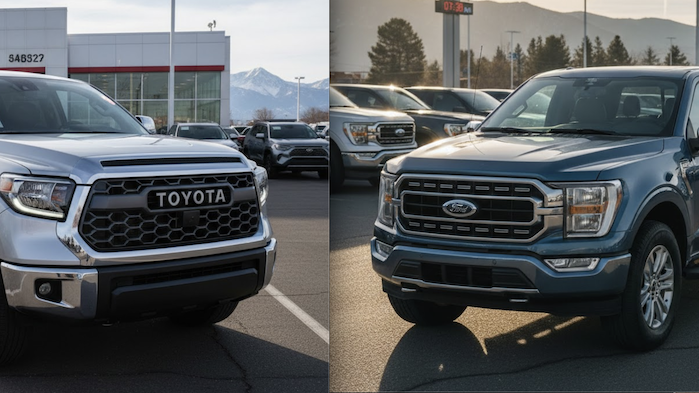
Why $46K Now Saves $$ Later
Let's look at the cold, hard math of Mike's $46,000 trade-in. Historically, the F-150 is the king of sales but the king of depreciation. On average, an F-150 loses nearly 50% of its value over five years.
By contrast, the Toyota Tundra consistently holds the crown for Best Resale Value in its class. If Mike holds onto that F-150 for four more years, the "Reliability Tax" on his resale value will be staggering. Used buyers in 2028 will look at a 2025 F-150 and see a potential out-of-warranty transmission nightmare.
They will look at Mike’s 2026 Tundra and see a truck with a factory-fresh crate engine backed by a corporate giant.
By taking the hit today, Mike is essentially pre-paying for a higher resale floor in 2028. He is trading a high-risk/low-value asset for a low-risk/high-value one. In the long run, the Tundra’s advantage in retained value will likely bridge that financial gap entirely.
The High-Stakes Gamble
Is Mike crazy? To the average person, losing thousands to trade a one-year-old truck for another with an engine recall seems like madness. But in my view, it’s a calculated strike.
Mike is trading a depreciating software experiment (the Ford) for a hardware-reset investment (the Toyota). He’s betting that Toyota’s accountability shipping $15,000 crate engines to every affected owner is a more sustainable business model than Ford’s reliance on "over-the-air" fixes for mechanical woes.
As a third-generation Colorado native who has seen these trucks struggle on the I-70 corridor, I’ll take a fresh engine over a "software patch" every single day. Mike isn't just taking a risk; he's buying peace of mind, even if he has to set a few thousand dollars on fire to get it.
What About You? Would you take a massive hit to get out of a "lemon" or would you wait for the manufacturer to get it right? Let’s hear it in the comments below.
Next Up: “We’re Getting The Shaft” - I looked into why this 245K-Mile F-150 owner is finally done with Ford. In my latest investigation, here's a high-mileage veteran who says Ford’s new reliability isn't just slipping, it’s being "incinerated."
While the old workhorses were built to last decades, owners of the newer $50,000 to $70,000 models are reporting catastrophic engine failures and "parasitic" electrical draws within the first two years of ownership. Is "Built Ford Tough" becoming a hollow promise for the secondary market? Check out my report here.
Check out my full report on the F-150 "Exodus" here: I Looked Into Why This 245K-Mile F-150 Owner Is “Done” With Ford: “We’re Getting the Shaft” On $50K Engine Failures
Denis Flierl is a 14-year Senior Reporter at Torque News and a member of the Rocky Mountain Automotive Press (RMAP) with 30+ years of industry experience. Based in Parker, Colorado, Denis leverages the Rockies' high-altitude terrain as a rigorous testing ground to provide "boots-on-the-ground" analysis for readers across the Rocky Mountain region, California EV corridors, the Northeast, Texas truck markets, and Midwest agricultural zones.
A former professional test driver and consultant for Ford, GM, Ram, Toyota, and Tesla, he delivers data-backed insights on reliability and market shifts. Denis cuts through the noise to provide national audiences with the real-world reporting today’s landscape demands.
Connect with Denis: Find him on LinkedIn, X @DenisFlierl, @WorldsCoolestRides, Facebook, and Instagram.
Photo credit: Denis Flierl via Ford, Toyota
Set Torque News as Preferred Source on Google
Follow us today...