
The Hidden Reality of Dealer-Added Tundra Upgrades
In this investigative deep dive, we uncover a growing trend in which 2026 Toyota Tundra TRD Off-Road buyers are being sold aftermarket seat-heating systems under the guise of "dealer-installed" systems that lack factory integration. Driven by a specific owner case in New England, our report highlights the functional disparity between OEM digital controls and secondary analog switches. We find that while these trucks feature a heated steering wheel as standard, the omission of heated seats often leads to dealership-level modifications that fail to meet ergonomic and resale standards. This report outlines steps to identify genuine Toyota hardware versus third-party kits to protect your vehicle’s long-term value.
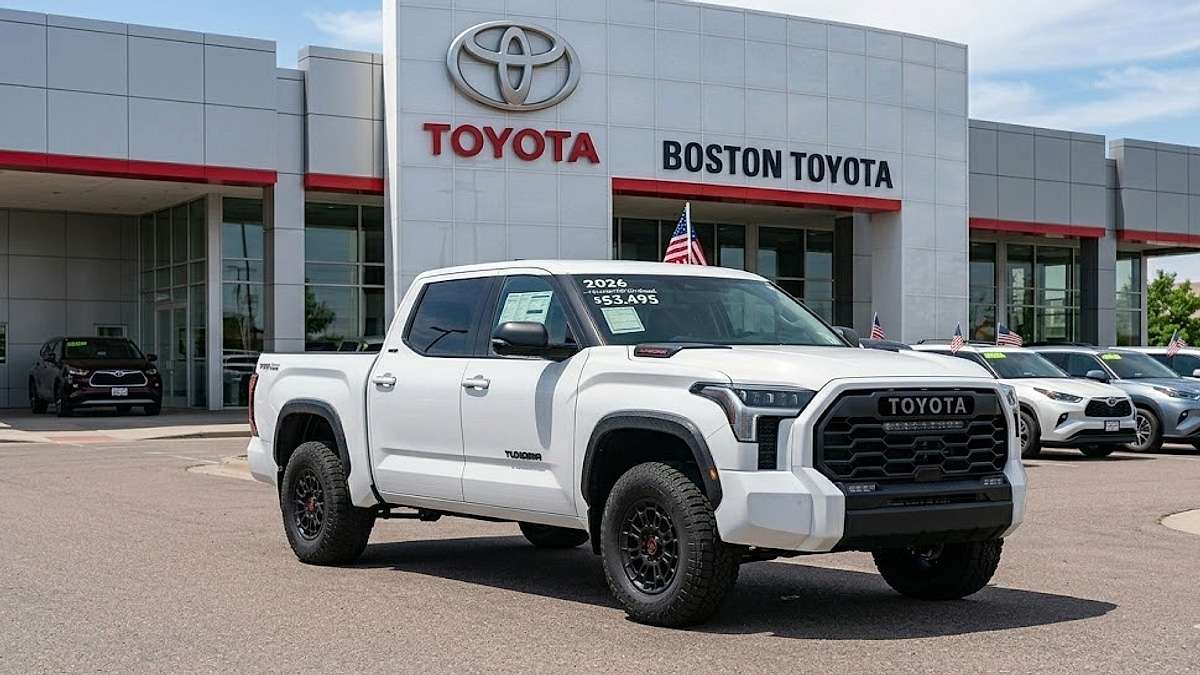
If you are signing papers on a new 2026 Toyota Tundra TRD Off-Road right now, you might assume that a truck equipped with a heated steering wheel automatically includes heated seats. It is a logical conclusion, especially in cold-weather climates like Boston or Denver. However, I have spent 30 years in the automotive trenches, and I can tell you that logic often takes a backseat to trim-level packaging.
The reality for many buyers is a confusing "half-cold" experience where their hands stay warm, but their backsides stay frozen. When owners negotiate for the dealer to "add" the seats, they often end up with a third-party aftermarket kit that features clunky, two-way analog switches mounted on the plastic seat base, where they are impossible for the driver to reach. This is not just a minor inconvenience; it is a fundamental shift in the user experience that affects safety, ergonomics, and the future trade-in value of your Toyota.
I recently saw a post from Larry Clark from Boston, Massachusetts, on the 2023-2026 Toyota Tundra Owners Facebook page that perfectly illustrates the frustration brewing in the community. Larry said, “I just bought a 2026 Toyota Tundra TRD Off Road. The truck naturally came with the heated steering wheel but no heated seats, which makes no sense because I live in New England. While working on the deal at the Toyota dealership, I told them to add the heated seats. The control for these is located on the side where the seat adjustments are. I definitely can’t reach the passenger switch if my wife forgets to turn it off. And there are only two adjustments, Low/High. Did I get sold some aftermarket crap?”

My investigative lens tells me Larry is not alone. The 2026 model year has seen a bizarre shift in how Toyota bundles comfort features. Experts have noted that the complexity of modern automotive wiring makes adding factory-integrated seats after the truck leaves the assembly line nearly impossible for a service department. A report from the technical analysts at MotorTrend confirms that modern vehicle architectures are increasingly locked at the factory level. They state that the modular nature of New Global Architecture (TNGA) platforms makes retrofitting internal cabin electronics a nightmare for technicians, as you can read in their deep dive into modern vehicle electrical limitations.
The Mechanical Disconnect Between Factory Integrated Systems and Dealer Solutions
When I worked as an auto industry consultant, we often saw "we owe" slips those promises a dealer makes to close a deal, resulting in outsourced labor. If a dealership tells you they can "install" heated seats, they aren't pulling genuine Toyota dash components and rewiring the ECU. Instead, they call a local upholstery or electronics shop to pull the seat covers back and glue in heating pads. These pads are then wired directly to a power source, bypassing the truck’s sophisticated computer system. This explains why Larry’s controls are on the side of the seat rather than on the dashboard where they belong.
The issue goes beyond just where the button sits. Industry veterans at Jalopnik have documented that these aftermarket additions often conflict with the sensitive occupant-detection sensors required for airbag deployment. Their reporting highlights that aftermarket seat heaters can interfere with the passenger seat's weight sensors, potentially disabling life-saving safety systems if not installed with extreme precision, as detailed in their investigation into seat modification risks. In my experience, a factory-installed system is calibrated to account for the extra layer of heating mesh, whereas a dealer-added kit is an intruder in a very delicate electrical ecosystem.
Field Observations From Owner Communities and Technical Feedback
The frustration I am seeing in Larry’s story is echoed across the technical forums where the real "citizen journalists" of the auto world live. In a recent technical discussion on r/ToyotaTundra, one owner pointed out the glaring visual difference between the two systems. They noted that the factory Toyota heated-seat button is a soft-touch digital toggle with three distinct LED bars indicating heat intensity, while the dealer-added ones look like something out of a 1995 parts catalog. One Redditor mentioned, "My dealer tried to sell me on an 'add-on' for $600, but when I saw the toggle switch they planned to drill into my plastic trim, I walked away," which you can find in the full Reddit discussion here.
Another owner highlighted a major ergonomic flaw that aligns exactly with what Larry is experiencing in Boston. This user explained that because the switches are on the outboard side of the passenger seat, the driver has zero visibility or control over the passenger’s comfort. They stated, "If my passenger leaves the heat on High and gets out, that heating element stays cooking my leather for the rest of my commute because I can't reach the switch from the driver's seat," found in this Tundra enthusiast thread.
Why This Matters
From a professional standpoint, what Larry was sold is indeed "aftermarket," even if it was sold through a franchised Toyota dealer. Dealers often use terms like "Factory-Style" to blur the lines. When a dealer installs a kit that uses a High/Low rocker switch, they are using a universal kit. These kits are significantly cheaper for the dealer to purchase than the complex components required for a true OEM integration.
I have seen this happen for decades, from cruise control kits in the 90s to navigation systems in the 2000s. The 2026 Tundra is a high-tech machine, and seeing a mechanical rocker switch drilled into the seat base is like seeing a rotary phone plugged into an iPhone. It devalues the vehicle. When you go to trade that truck in three years from now, the appraiser is going to see those non-factory switches and deduct value because they are a point of potential electrical failure. Furthermore, the lack of a "Medium" setting and the inability to reach the passenger switch make the upgrade functionally inferior to the $50,000 truck Larry thought he was buying.
The Search for Transparency in the 2026 Toyota Buying Process
We need to talk about why the TRD Off-Road trim is configured this way. Toyota often bundles the heated steering wheel into a "Cold Area Package" that might not include the "Premium Package," where the seats are located. It is a confusing maze of options that leaves buyers vulnerable. I always recommend that my readers ask for the "Monroney" window sticker. If "Heated Seats" is not printed under the "Standard Equipment" or "Optional Equipment" section on the factory invoice from Japan or Texas, anything the dealer adds is an aftermarket modification.
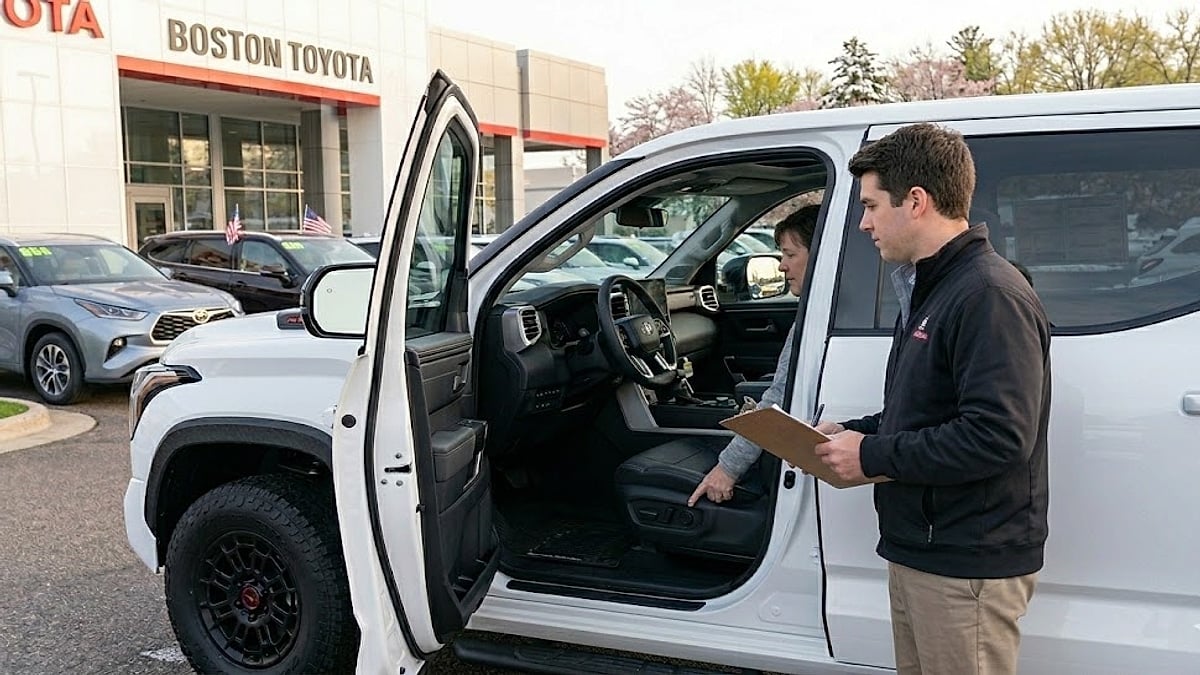
You have to be your own investigator at the dealership. If the salesperson promises to "throw in" heated seats, ask them specifically where the buttons will be located. If they don't say "on the dashboard with the factory controls," you are getting the same kit Larry got. In my three decades of testing cars, I have rarely seen an aftermarket seat heater that feels as consistent or stays as durable as a factory unit. The heating elements in aftermarket kits are often smaller and can create "hot spots" that eventually damage the seat foam or the upholstery.

Navigating the Aftermarket Quality Gap
If you already have these seats, like Larry does, what are your options? First, check your paperwork to see if there is a separate warranty for the seat heaters. Often, the dealer-installed accessories carry a different warranty period than the 3-year/36,000-mile bumper-to-bumper coverage. I suggest testing the passenger seat sensor to ensure that the heating pads aren't interfering with the "Occupant Classification System." If the "Passenger Airbag Off" light remains on when an adult is seated, you have a major safety issue that the dealer must rectify immediately.
We also have to consider the electrical load. A factory-integrated system is managed by the Body Control Module (BCM) to prevent battery drain. An aftermarket kit is often tapped into a simple ignition-on fuse. While this works, it adds a "messy" layer of wiring that can lead to blown fuses or parasitic draws if the installer wasn't top-tier. I have investigated countless cases where a "simple" seat-heater installation led to a truck that wouldn't start after a cold night due to a slow drain in the new circuit.
Is It Possible To Convert Aftermarket Seats To Factory Dash Controls?
The next logical question a Tundra owner will have is whether they can buy the factory dash buttons and "plug them in" to their aftermarket heaters. Unfortunately, the answer is almost always no. The factory buttons on the 2026 Tundra are part of a digital CAN bus network. They don't just send 12 volts to a heater; they send a digital signal to a control module, which then regulates pulse-width-modulated power to the seats. The aftermarket heaters Larry has are simple analog devices. Attempting to bridge these two worlds would require a custom-engineered interface that simply doesn't exist for the consumer market. If you want factory-controlled seats, you must buy the truck that has them from the assembly line.
A Final Perspective on the New Era of Dealer Customization
The landscape of buying a new truck has changed, and the "we owe" culture at dealerships can lead to unexpected compromises in a high-tech vehicle like the 2026 Tundra. My advice is to always prioritize factory-installed safety and comfort over dealer-added shortcuts, as the integration of modern electronics leaves very little room for error. Understanding the difference between a dashboard-integrated digital control and a seat-mounted analog switch is the key to ensuring your investment remains both comfortable and valuable.
Tell Us What You Think! Have you ever had a dealer add "factory" features that turned out to be aftermarket? We want to hear about your experience with the 2026 Tundra or any other vehicle modifications. Leave a comment in the red “Add new comment” link below.
About The Author
Denis Flierl is a 14-year Senior Reporter at Torque News and a member of the Rocky Mountain Automotive Press (RMAP) with 30+ years of industry experience. Based in Parker, Colorado, Denis leverages the Rockies' high-altitude terrain as a rigorous testing ground to provide "boots-on-the-ground" analysis for readers across the Rocky Mountain region, California EV corridors, the Northeast, Texas truck markets, and Midwest agricultural zones. A former professional test driver and consultant for Ford, GM, Ram, Toyota, and Tesla, he delivers data-backed insights on reliability and market shifts. Denis cuts through the noise to provide national audiences with the real-world reporting today’s landscape demands. Connect with Denis: Find him on LinkedIn, X @DenisFlierl, @WorldsCoolestRides, Facebook, and Instagram.
Photo credit: Denis Flierl
Set Torque News as Preferred Source on Google
Follow us today...