
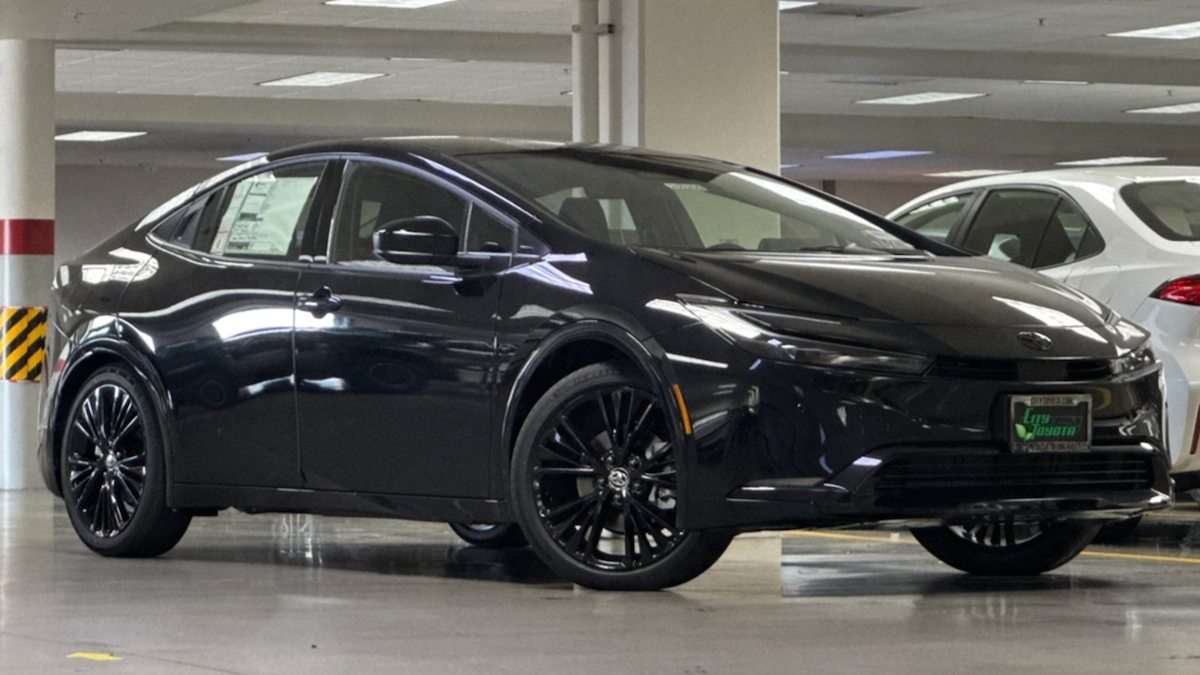

While Toyota insists its modern engines don't need early maintenance, a growing wave of wary owners, haunted by recent "machining debris" recalls, are reaching into their own pockets to defy the dealership and protect their 2026 Prius hybrids.
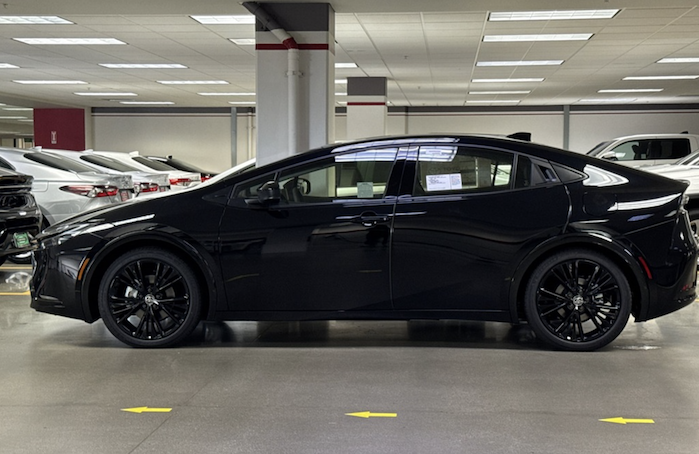
The sleek, midnight aesthetic of the 2026 Toyota Prius Nightshade Edition is enough to make any owner protective. For Dennis Clouser, a proud member of the Toyota Prius 5th Gen Facebook Club, "keeping it in good shape" meant more than just a ceramic coat; it meant an old-school 1,000-mile "break-in" oil change.
But when Clouser pulled into the service bay, he hit a wall. The dealership said no.
This conflict between "old-school" mechanical wisdom and modern corporate maintenance schedules is sparking a viral debate across Toyota forums. With Toyota currently navigating high-profile engine recalls elsewhere in its lineup, owners are asking: Is the dealership being efficient, or are they gambling with the longevity of your engine?
Why Owners Are Worried
Clouser took to social media to vent his frustration:
“Are there any break-in requirements for my new black 2026 Toyota Prius Nightshade Edition? The salesperson didn't seem to know, and the service advisor told me no. I want to keep my car in good shape, and I want to get my first oil change after 1,000 miles.”
The response was immediate. Veteran owners like Mike Smith quickly validated Clouser’s anxiety:
“Definitely do that oil change at a thousand miles... It's so important because it removes the small machining particles from when the engine was made... Definitely want to remove those quickly so that they don't cause damage to your engine.”
Smith’s logic refers to "machining debris”, tiny metal shavings or casting sand left over from the manufacturing process. In the past, this was a standard concern. Today, Toyota insists its tolerances are so precise that such debris is a thing of the past.
The Shadow of the V6 Recall
The skepticism from Prius owners isn't appearing in a vacuum. Clouser himself pointed to a deeper "trust gap" currently affecting the brand:
“Especially with Toyota's machining problems with V6 engines. Better safe than sorry.”
He’s referring to the massive recall involving the 3.4L Twin-Turbo V6 (V35A-FTS) found in the Tundra and Lexus LX. That recall was triggered by, you guessed it, machining debris left in the engine during production, which caused catastrophic main bearing failure.
While the Prius uses a 2.0L 4-cylinder hybrid powerplant (M20A-FXS), the "debris" headlines have made "Toyota Reliability" feel less like a guarantee and more like something owners need to actively defend.
Why Does Toyota Say "No" to the 1,000-Mile Change?
If you have ToyotaCare, your first 25,000 miles of maintenance are free. However, that "free" service follows a strict 10,000-mile interval for synthetic oil changes.
The "No" usually comes from two places:
1. Cost Mitigation: ToyotaCare pays the dealer for specific intervals. An "early" change isn't in the system, and some advisors don't want to deal with the paperwork or "wasted" oil.
2. Engineering Confidence: Modern 0W-8 or 0W-16 synthetic oils are designed to last. Toyota engineers argue that the oil filter is more than capable of catching any microscopic particulates during the break-in phase.
The "Break-In" Reality for the 2026 Prius
Contrary to what Clouser's salesperson said, there is a break-in period for the 2026 Prius, though it’s hidden in the fine print of the owner's manual. To "set" the engine for a long life, Toyota recommends:
- First 200 miles: Avoid sudden stops.
- First 600 miles: Avoid extremely high speeds and sudden acceleration.
- First 1,000 miles: Avoid driving at a constant speed for long periods (don’t use cruise control on a long highway trek immediately).
- The Missing Link: The manual does not mandate an oil change at 1,000 miles. However, master technicians often suggest that while the engine might not "need" it to survive the warranty, it does need it to survive to 300,000 miles.
To Change or Not to Change?
I spoke with independent Toyota specialists who suggest a middle ground.
"The 10,000-mile interval is designed to make the 'Cost of Ownership' look low for the first five years," says one veteran tech. "If you plan to trade the car in at 60,000 miles, follow the dealer. If you want to keep that Nightshade for 15 years, pay for the 1,000-mile oil change out of pocket."
The reality is that an early oil change costs roughly $75–$100. Compared to the $35,000+ MSRP of a 2026 Nightshade, it is the cheapest insurance policy you can buy.
The Final Verdict for Nightshade Owners
If you’re like Dennis Clouser and you’ve just picked up a 2026 Prius, don't let the dealership's "No" stop you. They aren't saying the oil change will hurt the car; they are saying they won't pay for it.
The Pro-Tip: Ask for a "Customer Pay" oil change. Most dealerships will happily take your money if you aren't trying to use your free ToyotaCare voucher early.
What would you do? Is the 1,000-mile oil change a relic of the past, or is it essential for modern "shaving-prone" engines? Click the red link below to write your comment and join the community in sharing experiences.
Next Up: If you think the debate over 1,000-mile oil changes is intense, wait until you hear why the Prius drives like a sports car, but winter kills the EV mode. A 2024 Prius Prime owner exposes the reality of freezing temps, dead 12V batteries, and a shocking $2,000 windshield repair bill. Would you trade your old reliable Gen 3 for this?
Read the full story here: 2024 Toyota Prius Prime Owner Says “Sports Car Acceleration” Can’t Make Up For Winter Power Loss and a Dead 12-Volt Battery
With over 30 years of industry experience, Denis Flierl brings an insider’s perspective to Torque News, where he has been a Senior Reporter since 2012. Before picking up the pen, Denis consulted for the automotive industry's biggest brands and honed his skills as a test driver. He cuts through the noise to deliver the latest auto news, compelling owner stories, and the expert analysis necessary to navigate today's changing automotive market.
Have a tip or question? Follow me on X @DenisFlierl and @WorldsCoolestRides, or connect with me on Facebook, Instagram, and LinkedIn.
Photo credit: Denis Flierl via Toyota
Set Torque News as Preferred Source on Google
Follow us today...







Comments
In 1.5 million miles in…
Permalink
In 1.5 million miles in various vehicles and maintaining per mfr recommendations I've only had one that used oil, and that was a 318 V8 with notoriously bad valve stem seals.
I’m a super commuter and got…
Permalink
In reply to In 1.5 million miles in… by Duke Woolworth (not verified)
I’m a super commuter and got sick of the dealership and the oil changes and funding wars/pollution with my hard earned money. Went electric 6 years ago and will never go back! Former JDM junkie now I drive a car built and designed in Cali.
As a Toyota master…
Permalink
As a Toyota master technician with 45 years at dealerships, I can say there's no such thing as changing your oil too often.
Especially on a brand new car.
As long as factory oil filters and correct oil is used.
Our dealership with do your first 2 free Toyota care oil changes whenever you want.
I change my personal vehicles oil every 5k miles or less. It's cheap insurance.
As a Toyota master…
Permalink
As a Toyota master technician with 45 years at dealerships, I can say there's no such thing as changing your oil too often.
Especially on a brand new car.
As long as factory oil filters and correct oil is used.
Our dealership with do your first 2 free Toyota care oil changes whenever you want.
I change my personal vehicles oil every 5k miles or less. It's cheap insurance.