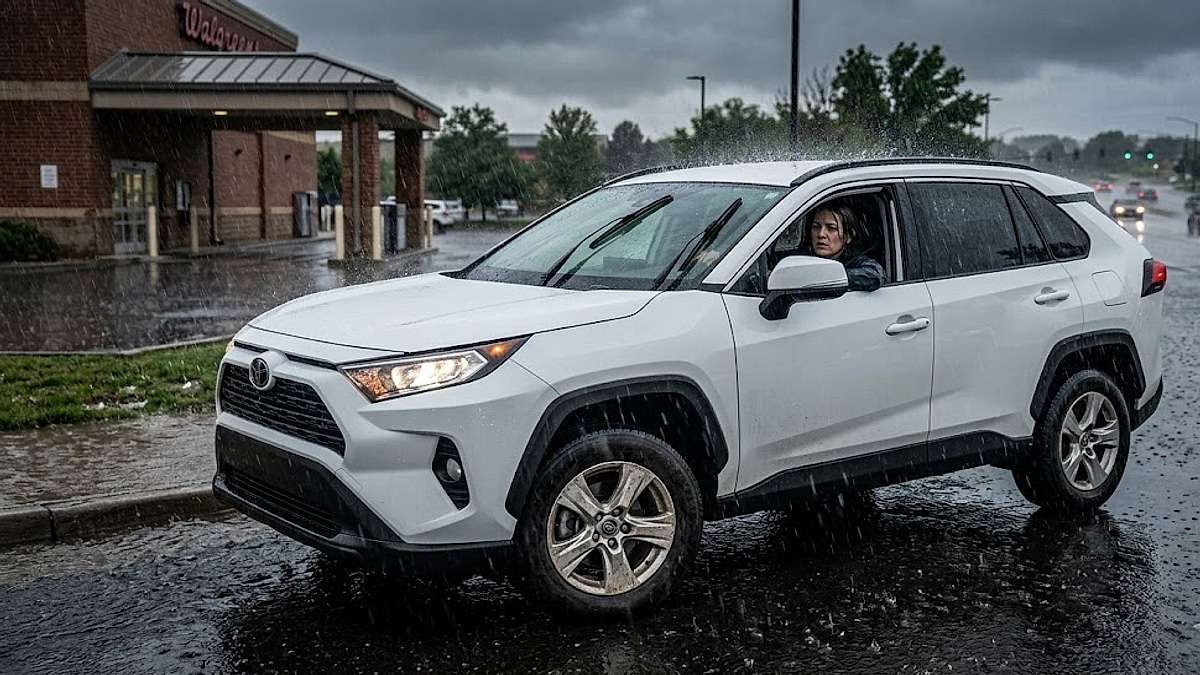

I have spent three decades investigating the automotive industry, and I’ve learned that a vehicle's true character isn’t found on a shiny showroom floor but rather in a rain-slicked drive-thru lane when the technology decides to quit. Kristin Moore, a first-time Toyota owner from Colorado, recently discovered this the hard way when her 2024 RAV4 gas XLE, with only 3,500 miles on the odometer, suddenly began shaking and refused to exceed 5 mph during a downpour. This specific "Limp Mode" event is the most shocking discovery I have analyzed this year because it suggests a recurring moisture-related electrical fault that Toyota’s legendary reliability reputation currently masks.
After replacing a 12V battery just three months into ownership, Kristin is now facing the terrifying reality that her $28,000 investment is less dependable than the 14-year-old Chevy Equinox she traded in. We are seeing a pattern where moisture ingress or a software conflict between the intermittent wipers and the Stop/Start system triggers a total power loss, leaving drivers vulnerable in traffic without a single warning light on the dashboard.
Kristin Moore shared her experience on the Toyota RAV4 Discussion Group 2019-2025 - Gas + Hybrid + Prime Owners Facebook page, stating:
"I bought a 2024 RAV4 gas XLE, and I've already replaced the battery once at 3,500 miles. Then today, driving home in a rainstorm, the car started shaking like it was trying to die. I put it in gear and couldn't get it past five miles an hour; I had to limp it out of the lane. I’m flabbergasted that I’ve had more problems in three months of Toyota ownership than I had with my 14-year-old Chevy Equinox."
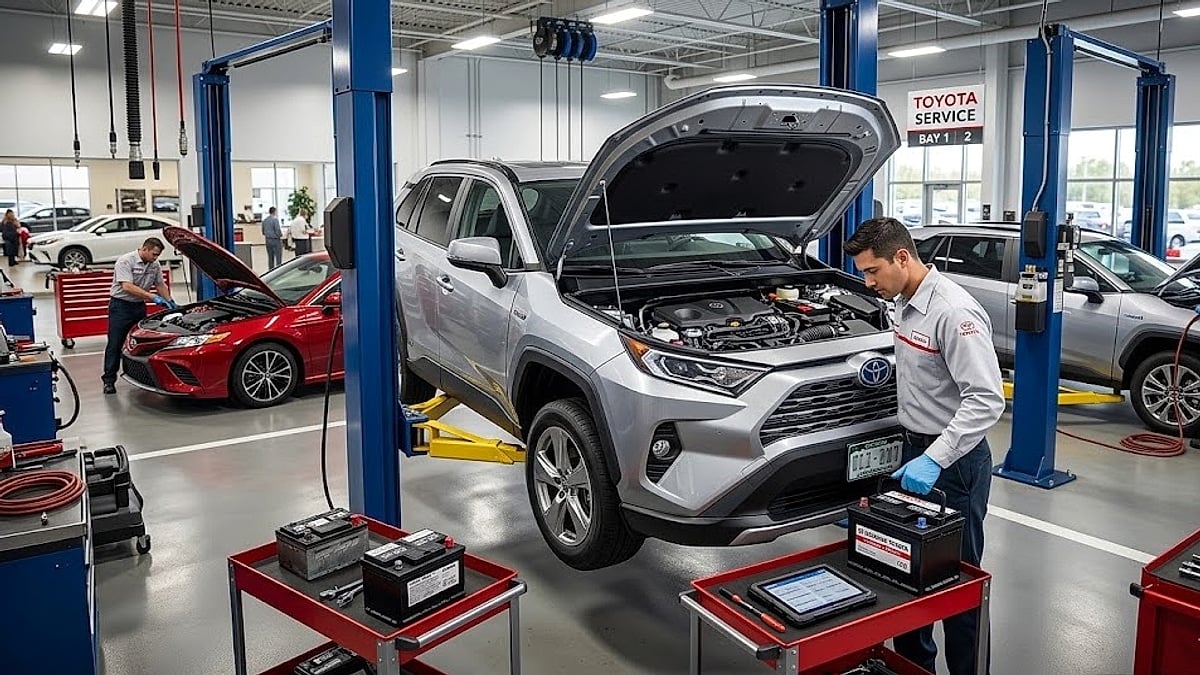
The Wet Weather Stall Pattern
In my three decades of testing vehicles in the high-altitude, unpredictable weather of the Rocky Mountains, I have seen how moisture can wreak havoc on sensitive electronics. Kristin’s situation is not an isolated quirk of a "Monday morning" car. Lemon Law Experts noted that one of the more serious problems involves sudden engine stalling or shutdown, particularly in the XLE FWD gas model, where water might enter the engine bay during heavy rain. This observation from Lemon Law Experts is vital because it aligns perfectly with Kristin's report of the vehicle "trying to die" while idling in a rainstorm.
When a car enters "Limp Mode" without triggering the Check Engine Light, it often indicates a "rationality fault" in which two sensors provide conflicting data that the computer cannot resolve, so it defaults to a low-power safety state to prevent mechanical damage. I have previously reported that several RAV4 owners have experienced an alarming problem: their engines shutting down without warning, often accompanied by an error message and occurring during rainy conditions. You can read my previous investigative work on this specific phenomenon in this Torque News report.
The Hidden Connection Between Batteries and Rain
You might wonder how a battery replacement at 3,500 miles relates to a car stalling in a drive-thru. In my experience, these are two symptoms of the same disease: a compromised electrical architecture. Modern Toyotas rely heavily on the Data Communication Module (DCM) to stay connected to the "cloud." According to RepairPal, electrical issues, including faulty sensors or wiring problems, can create instability in engine performance, especially when a weak battery cannot provide a clean voltage signal to the ECU. This insight from RepairPal underscores why Kristin’s "battery charging" messages were the first domino to fall.

If the alternator is struggling to keep up with the load of the wipers, radio, and infotainment while the battery is already degraded, the voltage can drop just enough to "scramble" the throttle position sensor. When Kristin "limped" it out and things normalized after a few minutes, it likely gave the alternator enough time to restore the system voltage to the "green zone." However, the lack of a stored trouble code makes this a nightmare for dealership technicians who often hide behind the "could not replicate" excuse.
Field Observations from Owner Communities
The technical community on Reddit has been buzzing about these "wet weather" gremlins for months. In a recent technical discussion on r/rav4club, one owner noted that their dealership replicated a stall and found that when the wipers are on the intermittent setting, and the start/stop is on, it's causing an issue with the steering, and the car stalls, which you can find in the full discussion here. From my 30 years of experience, this aligns with how modern CAN bus systems can suffer from "signal noise" when high-draw components like wiper motors are active.
Another owner highlighted a different vulnerability, suggesting that moisture ingestion might be the culprit. They mentioned that some owners suspect air intake problems, as the engine may stop while idling but restart after a brief period, as found in this Reddit thread. If water enters the intake plenum or saturates the Mass Airflow Sensor (MAF), the engine will misfire or "choke," exactly as Kristin described. This is a terrifying experience for someone who just spent nearly $30,000 on a vehicle they expected to be bulletproof.

Key Takeaways for 2024 RAV4 Owners
- Identify early warning signs, such as quiet remote door beeps or infotainment glitches, as these often precede a total 12V battery failure or system "limp mode."
- Deactivate the Auto Stop/Start system when driving in heavy rain to prevent potential sensor conflicts linked to engine stalling.
- Document every "ghost" incident where the car loses power without a dashboard warning light, as these are critical for future lemon law claims.
- Demand a deep-dive diagnostic into the Data Communication Module (DCM) if you experience recurring battery drain or parasitic power loss.
Summary of the 2024 RAV4 Reliability Gap
The 2024 Toyota RAV4 remains a top seller, but my investigation reveals a growing gap between perceived reliability and the actual owner experience regarding the 12V electrical system and moisture management. The combination of undersized batteries and sensitive telematics modules (DCM) makes the RAV4 vulnerable to parasitic drains. When environmental factors such as heavy rain occur, the electrical load from wipers and safety sensors can trigger a "Limp Mode" event that leaves no diagnostic footprint. Owners are currently acting as "beta testers" for a fix that Toyota has yet to formalize through a nationwide recall.
Is Your RAV4 a Lemon?
The very next logical piece of information an owner needs is: "What constitutes a Lemon Law claim in 2026?" If your 2024 RAV4 has been to the shop three times for the same battery issue or stalling, or has been out of service for a cumulative 30 days, you likely qualify. My advice is to stop letting the dealer "reset" the computer without a paper trail. Every time that car shakes in the rain, you must record it on your phone and demand a RO (Repair Order) that specifically mentions "Limp Mode" and "Safety Hazard."
Final Verdict on the 2024 RAV4
We are witnessing a shift in the automotive landscape where even the most trusted brands are struggling with the complexity of their own software. While Toyota will likely eventually issue a TSB (Technical Service Bulletin) for these moisture-related stalls, owners like Kristin Moore are left feeling "flabbergasted" and unsafe in the interim. A 14-year-old Chevy Equinox shouldn't be the benchmark for reliability that a brand-new Toyota fails to meet, but until the "Limp Mode" mystery is solved, I recommend all RAV4 owners keep a close eye on their battery health and never drive through a storm without a backup plan.
Tell Us What You Think
Have you experienced a sudden loss of power or "shaking" in your new Toyota RAV4 during a rainstorm? Please leave a comment in the red Add new comment link below and share your story so we can continue this investigation together.
About The Author
Denis Flierl is a 14-year Senior Reporter at Torque News and a member of the Rocky Mountain Automotive Press (RMAP) with 30+ years of industry experience. Based in Parker, Colorado, Denis leverages the Rockies' high-altitude terrain as a rigorous testing ground to provide "boots-on-the-ground" analysis for readers across the Rocky Mountain region, California EV corridors, the Northeast, Texas truck markets, and Midwest agricultural zones. A former professional test driver and consultant for Ford, GM, Ram, Toyota, and Tesla, he delivers data-backed insights on reliability and market shifts. Denis cuts through the noise to provide national audiences with the real-world reporting today’s landscape demands. Connect with Denis: Find him on LinkedIn, X @DenisFlierl, @WorldsCoolestRides, Facebook, and Instagram.
Photo credit: Denis Flierl
Set Torque News as Preferred Source on Google
Follow us today...