


If you think Toyota's legendary reliability extends to every component under the hood, this owner's expensive 12V lesson might make you think twice.
The 5th Generation Toyota Prius has been praised for its stunning redesign, finally shaking off its "dull" reputation. However, the honeymoon phase is ending for some owners who are discovering that the sleek new look hides some practical frustrations. As I reported recently, one owner lamented that while the new Prius looks genuinely stunning, the driving experience can feel like "one of life's cruelties" compared to what the exterior promises.
Now, a discussion on the Toyota Prius 5th Gen Club Owners Facebook page highlights another vulnerability that is catching drivers off guard and leaving them with empty wallets. The issue? The 12-volt battery, and specifically, how you use it when the car is parked.
The "Accessory Mode" Trap
Dan Mallard, a Prius owner who relies on his vehicle for his livelihood, sparked the conversation with a stern warning to fellow owners. Like many drivers, Mallard enjoyed sitting in his car while parked, using the infotainment system. It's a common habit: waiting for an appointment or a pick-up, killing time with the radio on and the engine off. In a traditional gas vehicle, you can get away with this for a while. In a modern hybrid, Mallard found out the hard way that this is a recipe for disaster.
"Here's the thing. The Battery," Mallard wrote to the group. "You can forget about just sitting in your car and jamming out to some tunes while the car is off. I drained my battery on a few occasions until I figured out that's a no-no."
Mallard's experience is not unique, but his usage pattern accelerated a problem that eventually affects many hybrid owners. The root cause lies in the misunderstanding of "Accessory Mode." When you press the "Start" button without your foot on the brake, the car enters this mode, powering the windows, radio, and massive infotainment screen solely from the small 12-volt auxiliary battery. Crucially, the high-voltage charging system remains off.
High Miles, High Costs
Mallard isn't your average commuter. As a medical courier, he has logged over 60,000 miles in his Prius in just over a year. While the hybrid powertrain is designed for high efficiency, the standard 12V auxiliary battery, which powers the electronics, computers, and radio, appears to have a much shorter fuse.
After draining the battery multiple times, Mallard was eventually forced to replace it. That is when he received shocking news from his dealership.
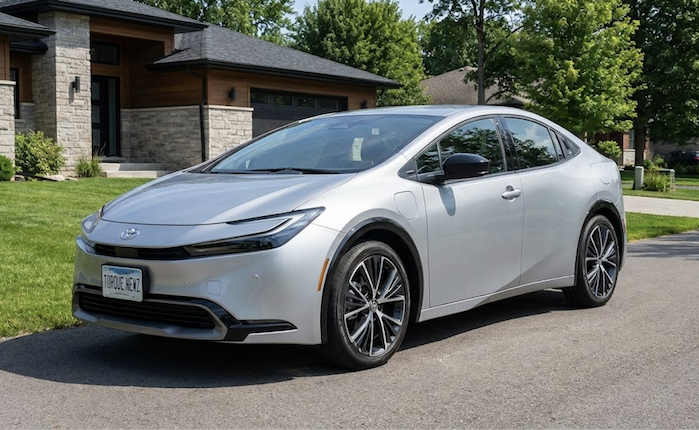
"I was told by Toyota they're only good for about 30k miles," Mallard shared. "Talk about a kick in the teeth. I didn't know they cost that much!"
Because Mallard had exceeded the standard 36,000-mile warranty period due to his high-mileage job, the replacement came entirely out of pocket. There is a reality high-mileage drivers must face: components wear out faster than calendar years suggest. In a similar case I covered, a 2017 Prius owner with 228,000 miles faced a tough decision when his traction battery finally gave up, proving that while these cars go the distance, the battery bill eventually comes due.
The Technical Reality: Why This Happens
To understand why Mallard and potentially you could burn through a battery so quickly, you have to know how the Prius differs from a traditional gas car.
In a standard vehicle, a massive lead-acid battery is required to crank a heavy starter motor. It has a high reserve capacity. In a Toyota hybrid, the 12-volt battery is typically a Group H4 (or LN1) AGM battery, which is significantly smaller. Its primary job is to boot up the computers and close the relays to engage the massive High-Voltage (HV) traction battery. It does not crank the engine; the HV battery handles that.
Because the 12V battery is physically smaller, it has very little reserve power (roughly 45-50 amp-hours).
- Accessory Mode: When you press the "Start" button without your foot on the brake, you are draining this small battery with no way to replenish it. While Toyota does include an "Auto Power Off" feature that cuts power after about 20 minutes to an hour (depending on the model year), repeated cycles or high-drain activities (like blasting the AC fan or sound system) can critically discharge the battery before the safety cut-off saves it.
- Ready Mode: When you press "Start" with your foot on the brake, the "READY" light appears. The gas engine may not run, but the High-Voltage system is active. A DC-DC converter steps down the voltage from the massive traction battery to keep the 12V battery constantly topped off.
Mallard's mistake was sitting in Accessory Mode. By doing so, he repeatedly deep-cycled a battery that was not designed for it, killing its ability to hold a charge long before its expected lifespan.
Symptoms of a Dying 12V Battery
Before you get stranded, your Prius often gives subtle hints that the 12V battery is on its last legs. Unlike a gas car, where the engine sounds "slow" to crank, a hybrid fails more digitally. Look out for these symptoms:
- Weird Error Messages: You might see "Park your vehicle on level ground" or "Check Hybrid System" errors that disappear after a restart.
- Dim Interior Lights: The dome lights may appear yellow or dim when the car is off.
- Key Fob Issues: You may struggle to unlock the doors, or the vehicle may not detect the key fob immediately.
- The "Boot Up" Fail: The car powers on, but the "Ready" light never appears, leaving you in a zombie state where the radio works but the car won't drive.
The Cost of Neglect
So, how much is this "kick in the teeth"? For the 2023 and 2024 Prius, the OEM 12V battery is a specific AGM unit (TrueStart H4).
- Dealership Cost: Expect to pay between $350 and $500 for parts and labor. The battery itself lists for around $200-$220, but dealer markups and installation fees drive the price up.
- DIY Cost: You can find aftermarket options, such as the Duralast Platinum AGM Group H4, at auto parts stores for approximately $260. While cheaper, it's still significantly more expensive than the standard $150 lead-acid battery found in older economy cars.
"I was told by Toyota they're only good for about 30k miles," Mallard claimed. While this sounds alarmingly low, it is likely a reflection of his specific usage of high-frequency stops and extended periods of idling in the wrong mode. For the average driver who commutes normally, a Prius 12V battery typically lasts 4 to 6 years. However, for gig workers, campers, or anyone who treats their Prius as a mobile office, the "30k mile" warning is a very real threat if you don't change your habits.
Conclusion:
The 5th-Generation Prius remains a marvel of efficiency, and arguably the best-looking hybrid Toyota has ever produced. However, as Dan Mallard discovered, modern tech comes with modern quirks. The 12-volt battery is the Achilles' heel of the hybrid system if treated like the one in a 1990s sedan.
The lesson here is expensive but clear: The days of sitting in a parking lot with the engine off and the radio blasting are over, at least if you want your battery to last. This issue stems from a misunderstanding of how modern hybrids manage power, similar to the confusion I addressed recently, where a Prius owner was baffled that their sister's plug-in hybrid only got 35 miles of range, not realizing that the engine is there to do the heavy lifting once the battery is depleted.
When in doubt, just leave the car in "Ready" Mode. A few cents of gas to keep the engine cycling is a lot cheaper than a $400+ battery replacement and a tow truck bill.
It's Your Turn
Have you experienced premature battery failure in your Toyota hybrid? Do you regularly use "Accessory Mode," or do you keep your car in "Ready" when parked? Let us know in the comments below.
I'm Denis Flierl, a Senior Torque News Reporter since 2012, bringing over 30 years of automotive expertise to every story. My career began with a consulting role with every major car brand, followed by years as a freelance journalist, test-driving new vehicles, which equipped me with a wealth of insider knowledge. I specialize in delivering the latest auto news, sharing compelling owner stories, and providing expert, up-to-date analysis to keep you fully informed.
Follow me on X @DenisFlierl, @WorldsCoolestRides, Facebook, Instagram and LinkedIn
Photo credit: Denis Flierl
Set Torque News as Preferred Source on Google
Follow us today...







Comments
This is an issue experienced…
Permalink
This is an issue experienced by a large number of owners, due to the strategy adopted by Toyota giving priority to maximizing EV driving range over the health and longevity of the 12V battery, which they treat as a deep cycle battery. The batteries are not deep cycle types, so the practice of using the battery for network and monitoring when the car is parked and off results in the lead acid batteries perpetually being in a low state of charge, which is not good for the long term health of these batteries.
Even when plugged in to a charging source and having unlimited utility power, they will not keep the 12V battery topped off, but instead will taper back down after an initial charge.
That's just their misguided strategy and causing the owners all sorts of angst if they come in with expectations it can be treated as a normal vehicle without taking special steps to address the issues in their own, something they never needed to do before.
My Hyundai 2020 PHEV warns…
Permalink
My Hyundai 2020 PHEV warns you about battery drain within about a minute of sitting with accessories on and the traction battery off.
Also I was able to source a replacement 12v battery for it with substantially more reserve than the dealer-only OEM replacement - - for $200 less.