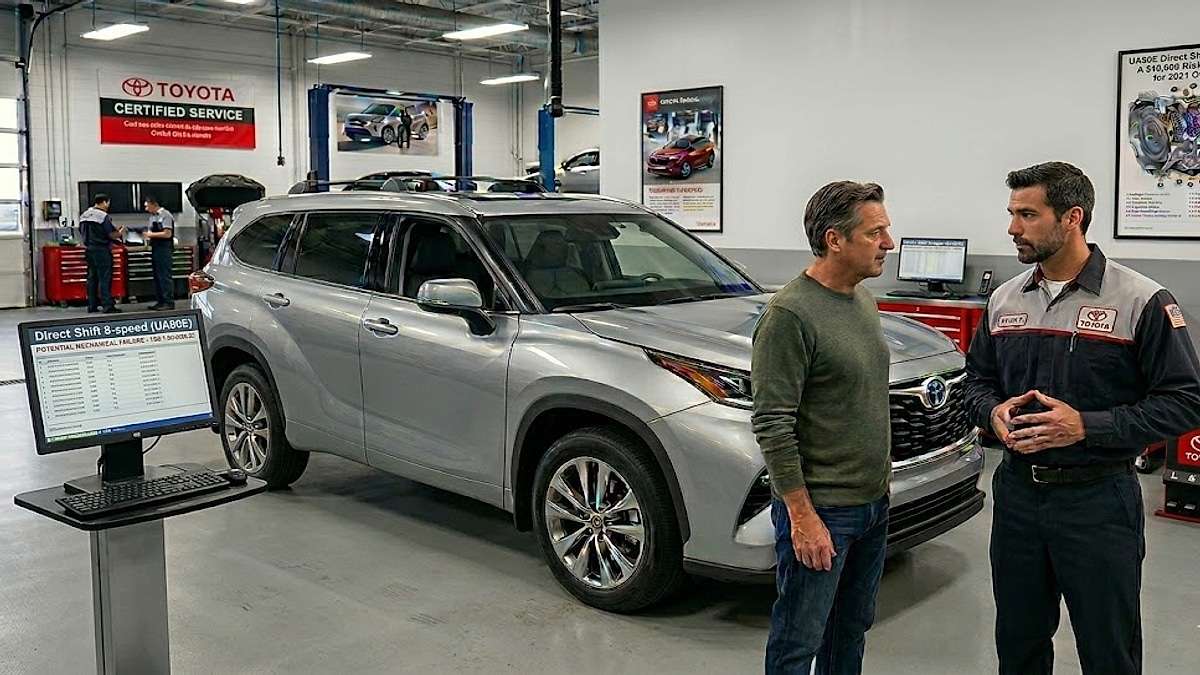

The 2021 Highlander Transmission Crisis
In this investigative report, I analyze the increasing failure rates of the Direct Shift 8-speed transmission (UA80E) in the 2021 Toyota Highlander XLE. Following a high-profile warranty replacement for an owner in California, we break down why the "fix" may only be temporary. Key findings include an analysis of Technical Service Bulletin T-SB-0008-21, a cost-benefit comparison of the $10,000 out-of-warranty replacement, and actionable advice for owners approaching the 60,000-mile powertrain threshold. This report synthesizes three decades of automotive expertise with current field data to determine if Toyota’s legendary reliability is at a breaking point.
The $10,000 question for any 2021 Toyota Highlander owner today is not just whether your transmission will fail, but whether the replacement unit sitting in your engine bay right now is actually any better than the one that just bit the dust. I have spent 30 years watching manufacturers struggle with the transition to high-gear-count automatics, and what we are seeing with the UA80E Direct Shift 8-speed is a classic case of mechanical ambition outstripping real-world durability. When a vehicle fails under 60,000 miles, it is a fluke; when it happens across a specific production year with predictable symptoms, it is a pattern that demands an investigation.
We are looking at a situation where the "new" transmission might simply be a ticking clock. If your Highlander has already been in the shop for a full swap, you are likely feeling a mix of relief and deep-seated anxiety. The relief comes from dodging a five-figure repair bill thanks to the powertrain warranty, but the anxiety stems from the lack of a "revised" part number. If Toyota is replacing a flawed part with the exact same component, the cycle of failure is almost guaranteed to repeat once that 60,000-mile safety net evaporates.
The California Case Study: When Warranty Protection Isn't Enough Peace of Mind
I recently came across a story that perfectly encapsulates the dilemma facing thousands of families. Rob Kopty from California shared his experience on the Toyota Highlander Owners Club Facebook page, and his words should ring alarm bells for anyone holding a 2021 XLE key fob. Rob stated, "I have a 2021 Toyota Highlander XLE, and I just had the transmission replaced under warranty. Now, I’m not sure if I should get something else or keep it? Will the new one crap out like the other one did?"
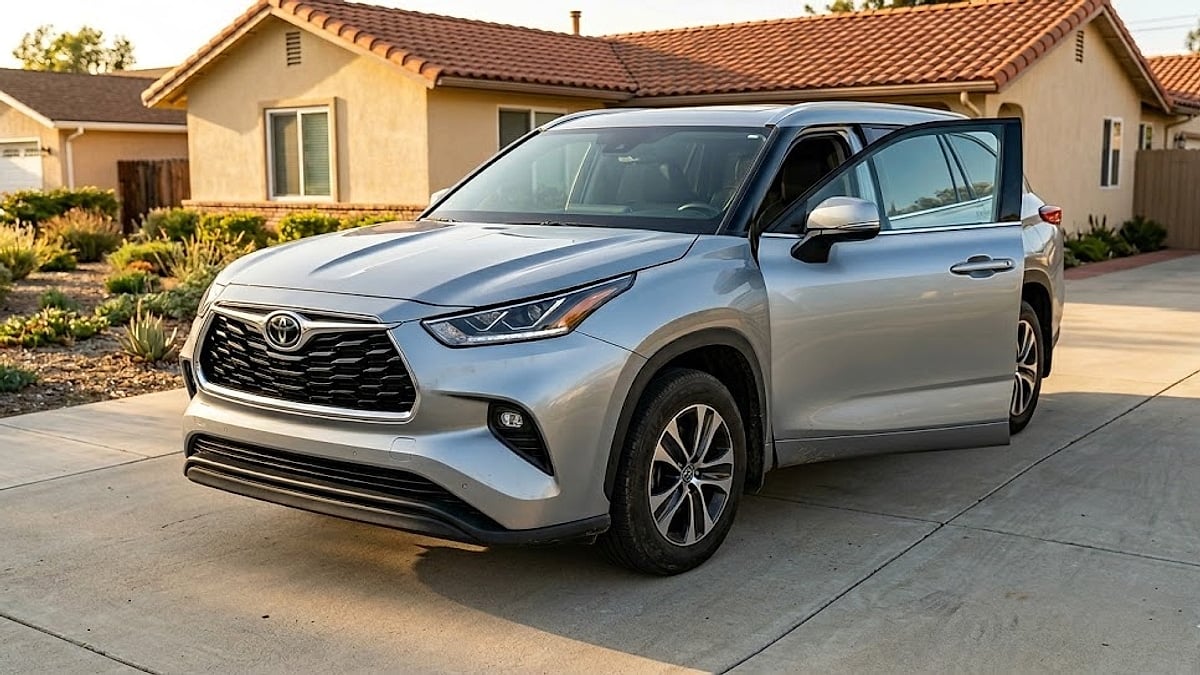
The raw, unfiltered owner experience challenges the marketing brochure. Rob isn't just complaining about a broken car; he is asking about the platform's long-term viability. From my perspective, his fear is grounded in a very specific mechanical reality. The UA80E unit is known for a "whine" or "grind" noise that typically precedes a total loss of motive power. If you hear that sound, the internal damage to the planetary gear sets is likely already irreversible.
Validating the Mechanical Failure Through Expert Data
To understand why Rob is so worried, we have to look at the broader landscape of modern transmission failures. According to a detailed reliability analysis from Consumer Reports, the 2021 Highlander has seen a dip in its predicted reliability scores, specifically due to transmission hardware issues. As noted by the experts at Consumer Reports, "Major transmission problems can be a deal-breaker for used car buyers, and we've seen an uptick in reported hardware failures for the 2021 model year," which you can investigate further in their comprehensive reliability guide.
Furthermore, the technical experts at CarComplaints.com have documented a surge in reports of "transmission hesitation" and "total failure" for this specific 2021 XLE trim. Their data indicate that the average mileage for these failures is hovering around 45,000 to 55,000 miles. One expert contributor noted that "the Direct Shift 8-speed has shown a propensity for early solenoid failure and torque converter shudder," a sentiment that is echoed in the detailed owner logs found here.
Why the T-SB-0008-21 Bulletin Is a Double-Edged Sword
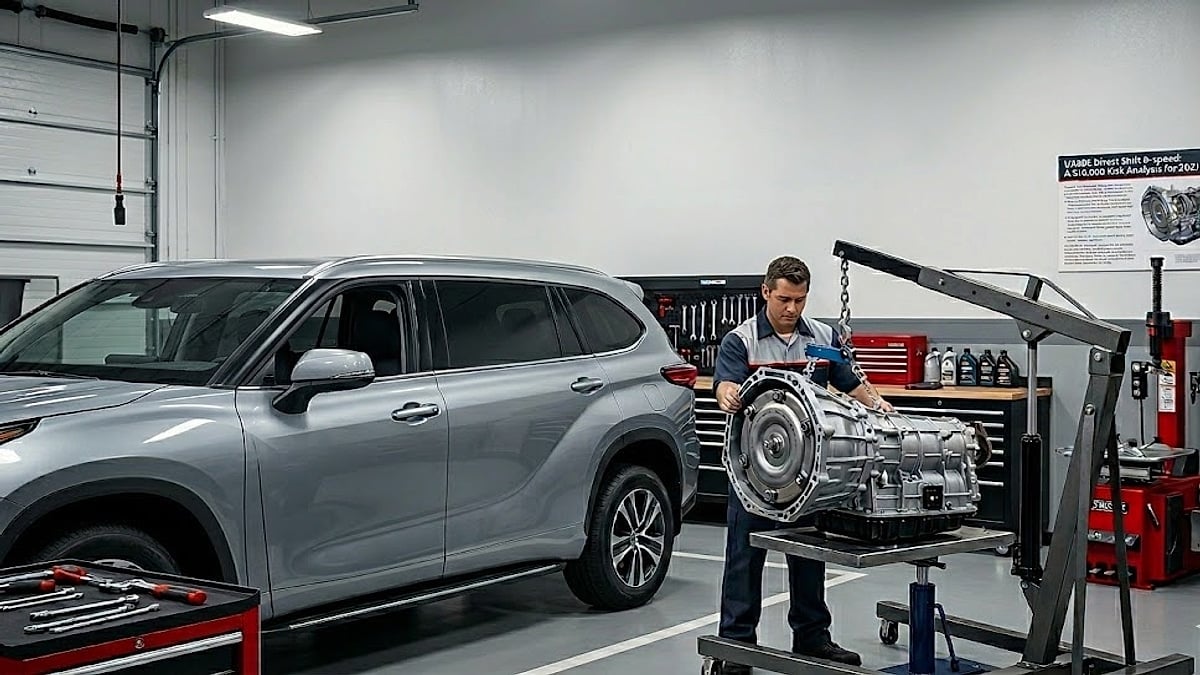
In my three decades covering the beat, I have learned that Technical Service Bulletins (TSBs) are the closest thing we have to a manufacturer's "confession." Toyota released T-SB-0008-21 to address "Shift Shock" and "Harsh Shifting" in the 8-speed units. While a TSB allows technicians to perform software flashes and component swaps under warranty, it does not always mean a permanent engineering fix has been implemented on the assembly line.
I want to be very clear with my readers: a software update can mask a mechanical flaw, but it cannot fix a physical metal-on-metal clearance issue within a gearbox. If the planetary carrier is out of spec, no amount of "re-learning" the shift points will prevent eventual failure. We are seeing these units fail because they are being pushed to achieve maximum fuel economy through aggressive "gear hunting," which generates excessive heat and causes premature clutch wear.
Technical Observations from Owner Communities
The Reddit community has been a goldmine for "boots-on-the-ground" data that often precedes official recalls. In a recent technical discussion on r/ToyotaHighlander, one owner highlighted a terrifying aspect of this failure, writing, "The car just went into a neutral state while I was merging onto the highway, no warning lights until after the power was gone," as noted in this Reddit thread.
Another owner in the same community shared a professional synthesis of their dealership experience, noting, "The master tech told me off the record that they are seeing more 2021s for the UA80E swap than almost any other year in the current generation," which is available in the full discussion here.
My analysis of these Reddit observations is that the 2021 model year was the "perfect storm" of post-pandemic supply chain issues and early-generation manufacturing tolerances. Based on my 30 years of experience, this aligns with how manufacturers often struggle to maintain consistency when a specific component is sourced from multiple sub-suppliers during periods of high demand. The "neutral state" failure on a highway is particularly concerning because it suggests a hydraulic pressure loss so catastrophic that the safety "limp mode" isn't even an option.

The Hidden Financial Reality of the $10,000 Replacement
If you are like Rob and you just got your car back, you might think you are in the clear. But let's talk numbers. Out of warranty, a full transmission replacement on a 2021 Highlander XLE at a certified Toyota dealership will cost you between $8,500 and $11,000, including labor and fluids. If you plan to keep this car for another 100,000 miles, you are essentially gambling that the replacement unit, which often carries only a 12-month or 12,000-mile warranty, is fundamentally better than the original.
I have seen many owners get burned by the "warranty loop." They get a free transmission at 58,000 miles, then that unit fails again at 110,000 miles, and suddenly they are looking at a bill that represents 40% of the car's total trade-in value. If you are a high-mileage driver, the smart move is often to trade the vehicle while it has a "fresh" transmission and a clean bill of health before the factory powertrain coverage expires.
Is There an Extended Warranty Solution?
The very next logical question you probably have is: "Can I just buy an extended warranty to protect myself?" The answer is yes, but with a major caveat. Not all Service Contracts are created equal. If you are going to stay in your 2021 Highlander, you must ensure you have a "Manufacturer-Backed" (Toyota Care Platinum) policy.
Third-party warranties often use "used" or "remanufactured" transmissions from salvage yards to save costs. If your transmission fails again, you do not want a 70,000-mile gearbox from a wrecked car going into your engine. You want a factory-remanufactured unit that meets the 2026 updated tolerances. If you cannot secure a Toyota-backed extension, my expert advice is to move to a different platform, perhaps the Highlander Hybrid, which uses an eCVT system that is mechanically unrelated and significantly more durable.
My Investigative Verdict on the 2021 Highlander Future
I have covered Toyota for a long time, and I still believe they build some of the best vehicles on the road. However, no manufacturer is immune to a bad production run. The 2021 Highlander XLE transmission issue is real, it is documented, and for owners like Rob, it represents a crossroads. If you choose to keep the car, you must become a "maintenance zealot." Forget the "lifetime fluid" claims; if you want that 8-speed to last, you should be performing a drain-and-fill every 30,000 miles to keep the friction modifiers fresh and the heat levels down.
It’s Your Turn: Tell Us What You Think
Are you driving a 2021 Highlander? Have you noticed a slight whine when accelerating or a hesitation when shifting from second to third gear? We want to hear your story to help build a better database for the community. Leave a comment using the red "Add new comment" link below and let us know whether you would trust a replacement transmission or are heading to the dealership to trade it in today.
About The Author
Denis Flierl is a 14-year Senior Reporter at Torque News and a member of the Rocky Mountain Automotive Press (RMAP) with 30+ years of industry experience. Based in Parker, Colorado, Denis leverages the Rockies' high-altitude terrain as a rigorous testing ground to provide "boots-on-the-ground" analysis for readers across the Rocky Mountain region, California EV corridors, the Northeast, Texas truck markets, and Midwest agricultural zones. A former professional test driver and consultant for Ford, GM, Ram, Toyota, and Tesla, he delivers data-backed insights on reliability and market shifts. Denis cuts through the noise to provide national audiences with the real-world reporting today’s landscape demands. Connect with Denis: Find him on LinkedIn, X @DenisFlierl, @WorldsCoolestRides, Facebook, and Instagram.
Photo credit: Denis Flierl
Set Torque News as Preferred Source on Google
Follow us today...