
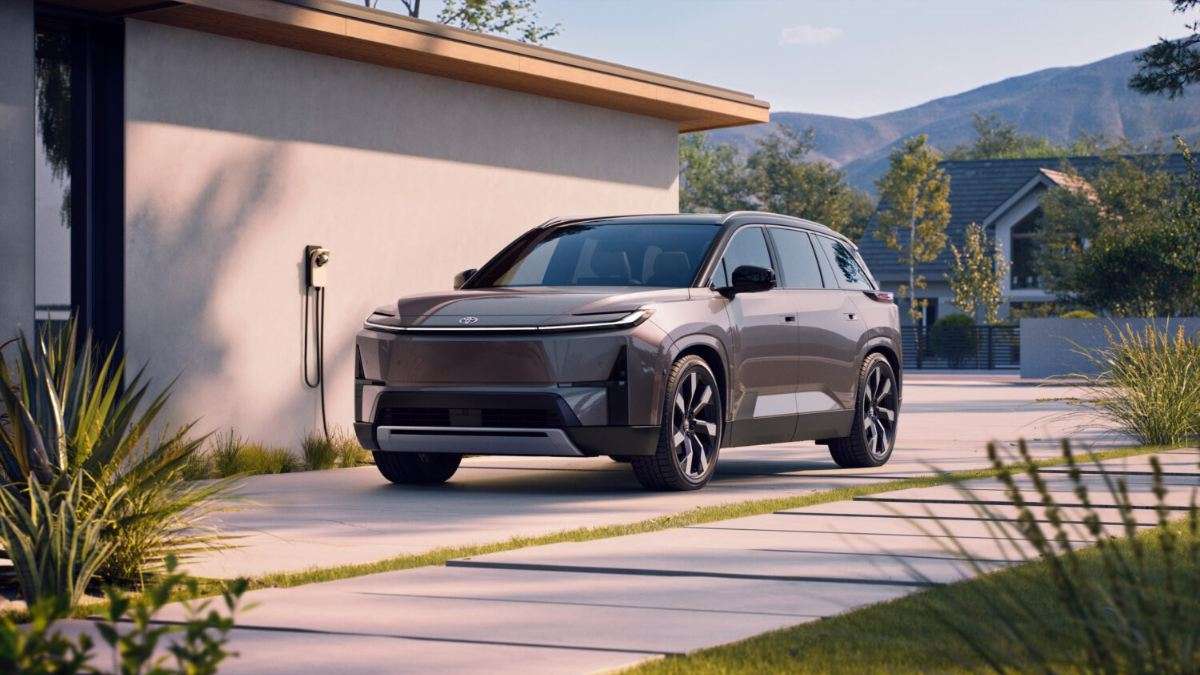

It’s an unfortunate truth, but more than nine in ten new vehicle buyers completely ignore electric vehicles. Sure, the selection and availability of EVs have never been better. There are 70 on sale. DC charging for those near urban areas or a random highway station has certainly improved. There are now multiple EV models with ranges of 400 miles or more, and many with ranges above 350 miles. Yet, EV market share is now lower than it was in 2023. And has been below 7% market share for five months. In the midst of this, Toyota is about to push hard on EVs, and may well succeed where every other brand has failed. Other than Tesla, of course, which has just two successful models.

Why People Buy Toyotas
Let’s set aside the technical stuff for a moment and focus on feelings. My family was made up of loyal GM owners for many generations after World War II. Nobody in the family ever bought anything but a GM product. Sure, we had that one uncle who worked for Ford, and he bled Ford blue, but we were 110% all-American car buyers. And then we all stopped and shifted to Toyota/Lexus, Subaru, and Mazda. All at once. My grandmother went first, buying one of the first Kentucky-built Camrys. She was the leader. My dad then bought a Celica GTS. I owned a Supra. My brother had a Celica GT. My son’s first new car is a 2025 GR86. Fifty years and four generations passed before any of us bought anything not built by a Japanese manufacturer associated with Toyota. I broke the chain by buying a new Ford in 2023, and they still look at me funny at Thanksgiving.
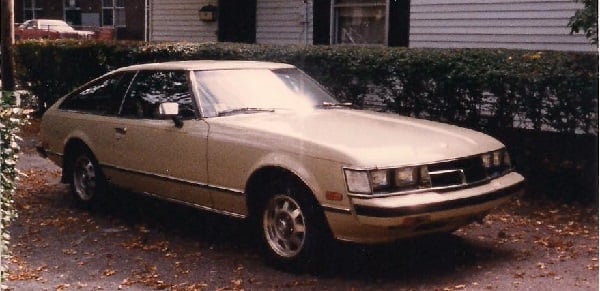
So why the shift? Reliability. All of us worked. Every generation, every gender, every person over age 16 worked as many hours as possible. We needed cars that would start and go every workday, or night, in my union 3rd-shift dad’s case. The cars we moved to did that. GM let us all down on quality, so we had to find a vehicle that would just work. We found it in Toyota and later in some brands that are connected to Toyota.
Many people buy Toyota vehicles because they are the most reliable. That’s not our opinion; it’s what J.D. Power and Consumer Reports showed us all over many decades. And we all know from personal experience that it’s true. EVs have been a disaster for reliability. The latest full-year Tesla Model Y reliability report from Consumer Reports showed a 30/100 rating. That’s terrible. Hyundai Ioniq 5 owners are going nuts with the ICCU failure issue. All Chevy Bolts were recalled due to battery fires. My colleague leased a Leaf a year or so ago, and it bricked in the first week. Another bought a Dodge Charger EV, and it hasn’t worked since he got it. Two of my colleagues have had new EVs towed more than three times due to breakdowns. Another owned one of the Hyundai Konas that had a battery failure. “Ain’t nobody got time for that,” is our motto. We need to be at work. No time for nonsense.
Why People Don’t Buy Toyotas
People don't buy Toyotas because they have solid-state batteries. They don't buy them because they can sprint from 0-60 MPH in 1.98 seconds. They are not interested in dog mode. I can assure you that none of them want to buy a Toyota EV and find out that it can’t charge without an adapter at the nation’s largest and best charging network. First and foremost, we want them to start and go. Always. And Toyotas do that better than any other brand.
Toyota and Economics
EV companies are trying to pull a flim flam with manufacturer give-away leases. Most Toyota buyers don't want to lease. They mostly settle into their Toyota, keep it a long time, gift or sell it to a family member, who keeps it a long time, and then passes it on yet again to a high-school-aged family member. We did all those things with our Toyota Highlander until we ran out of family members. So, we gifted it to a new mom in our community who needed a car. The idea of being back at the dealer in just three years is not attractive to us. That’s a missed day of work. “Ain’t nobody got time for that.”
For those who want to get a new car and turn in the one they own, Toyota was the brand that held its value best for over half a century. EVs have the worst trade-in value ever. Period. Brand does not matter. That’s why EV manufacturers were forced to move to leases. And they are eating those depreciation losses. At first, because the government told them they had to, and now because they are so heavily invested in EVs, they can’t get out of the business fast enough. They are sure making a strong effort, though. When Ford canceled the F-150 EV, it was a watershed moment. It received significant coverage, but not enough.
Toyota owners understand car economics. They pay a small premium for the new Toyota compared to all the other brands, but they pay less for repairs, don't have to take days off to get the darn car fixed, and if they later want to sell or trade the Toyota, it is worth a LOT more than any comparable car they may have bought. Toyota hybrids also enjoy the lowest cost per mile of energy in many regions. Buying a Toyota is logical. It’s a safe, smart buy.
Toyota Started the Modern Age of EVs
In 1996, GM released the EV1, and it garnered a lot of attention from a certain small segment of the population. It looked goofy. It had only 2 seats. Nearly simultaneously, Toyota introduced an all-electric RAV4. It was a RAV4. But electric. Toyota learned a lot. Then they created a second-generation RAV4 EV. Toyota learned a lot. Toyota even became partners with Tesla. Invested in Tesla via a factory for a stock swap. Ended a partnership with Tesla. Dumped the Tesla stock at a huge profit. Hit pause on EVs. They recognized that the technology and supply chain were problematic at the time.
Toyota as a Punching Bag
For much of the modern era of EVs, the EV advocates and EV publications hammered on Toyota for being dumb by offering cars that had great resale value. Hammered on Toyota for making old-fashioned cars (that always worked). The tiny, vocal EV fan community worked hard to change public policy, and they succeeded. For a while. And Toyota told them all the truth all along. It was not the time for EVs. The technology was not yet there. Too expensive. Not reliable yet. A mix is better. Hybrids are a solution, just not the preferred solution of the tiny, vocal EV minority. That made the small, vocal EV minority even madder.
Toyota Times the Market
Heading into 2026, Toyota is suddenly emerging as an EV leader in America. In January, Toyota’s EV deliveries jumped, while every other automaker that reports monthly deliveries saw steep declines. In February, Toyota announced it would shift its legendary Highlander to all-electric. The plan is for Toyota to have ten EVs on sale in the US by 2030. In car years, that’s right around the corner. Unlike the laughable promises made by most EV manufacturers. Toyota tends to keep its promises and hit its deadlines. I can’t think of any examples where Toyota didn’t. By contrast, I can’t think of any EV maker that has ever met a deadline for new vehicle launches. How’s that Tesla Roadster 2.0 coming along? Or the sub-$30K EV from Tesla? How are Lordstown Motors and Bollinger’s EV trucks doing? Will Aptera ever ship products to customers?
The reason Toyota will succeed with EVs is that it’s a serious company that builds vehicles for people who need to be at work tomorrow and who want the car to start. If 2026 to 2030 is the right time for EVs, Toyota will be among the most successful with EVs, and they will be reliable, hold their value, and very likely not be able to sprint from 0-60 MPH in 1.98 seconds.
What are your thoughts? Will Toyota buyers migrate to the brand's EVs as time passes? Tell us in the comments below.
Top of page image courtesy of Toyota
John Goreham is the Vice President of the New England Motor Press Association and an expert vehicle tester. John completed an engineering program with a focus on electric vehicles, followed by two decades of work in high-tech, biopharma, and the automotive supply chain before becoming a news contributor. He is a member of the Society of Automotive Engineers (SAE int). In addition to his fourteen years of work at Torque News, John has published thousands of articles and reviews at American news outlets. He is known for offering unfiltered opinions on vehicle topics. You can connect with John on LinkedIn and follow his work on his personal X channel or on our X channel. John employs grammar and punctuation software when proofreading, and he sometimes uses image generation tools.
Set Torque News as Preferred Source on Google
Follow us today...




Comments
Small premium? An educated…
Permalink
Small premium? An educated guess for Highlander it pulls in $7k higher than segment base. Assuming that as profit over almost $300k US sales is $2 billion! per year. They aren't that $ much more reliable, if the resale cult disappears. They may have capitulated to a mafia that'll have them burn billions.
But being the biggest threat to Tesla, why not Model Y and 3 fighters? They don't need to be 'skate to where the puck is going' agile like Gretzky, when they can muscle in and dominate the puck like Forsberg. The EV puck isn't moving in the US.
Great viewpoints. I hope…
Permalink
In reply to Small premium? An educated… by anonymous (not verified)
Great viewpoints. I hope your profit prediction proves correct, but for the vehicles to make money, they need buyers. Time will tell.
That $7k/per was from a…
Permalink
In reply to Great viewpoints. I hope… by John Goreham
That $7k/per was from a conversation I had about what Toyota was giving up with the old Highlander.