


You’ve probably heard the scary headlines: “Car prices have soured!” There are endless publications that torture the data until they can find a way to scare you with punchy headlines. There are really two problems here. First, the average cost to a consumer of a new vehicle, called the average transaction price or ATP, hasn’t budged much since 2021. Second, the average price of a new vehicle was a lot higher just five months ago.
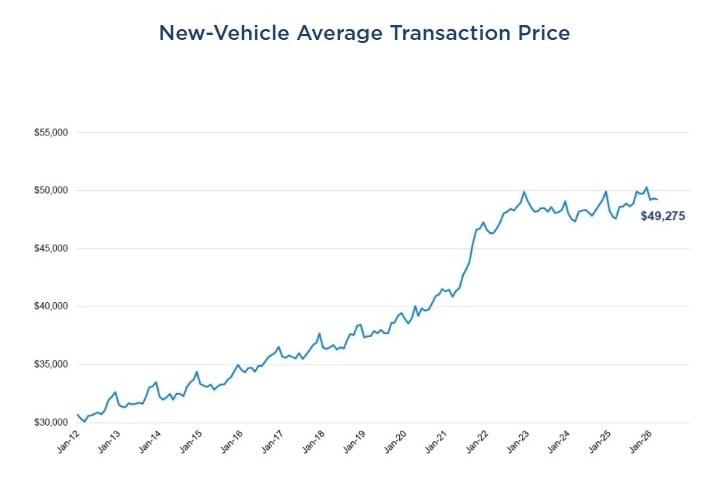
Let’s take a look at a few graphs. First, the graph above is the way that Cox Automotive shows average transaction prices over time. Notice that the graph is not full scale. The Y axis running from top to bottom does not start at zero dollars, but rather at $30,000. It goes up to $55,000 at the top of the graph. This helps the reader to better visualize the changes happening in the data. Cox is an honest broker of data. We trust Cox Automotive, and we use their data every month in our reporting. So do the folks who just want to scare you into clicking their fake stories about rising car prices.
One side effect of the way Cox scales that graph is that it makes it look like the peaks are higher than they are if you scale the graph “full,” meaning from zero to the highest value. Let’s take a look at the same data but scaled fully. Here it is below:
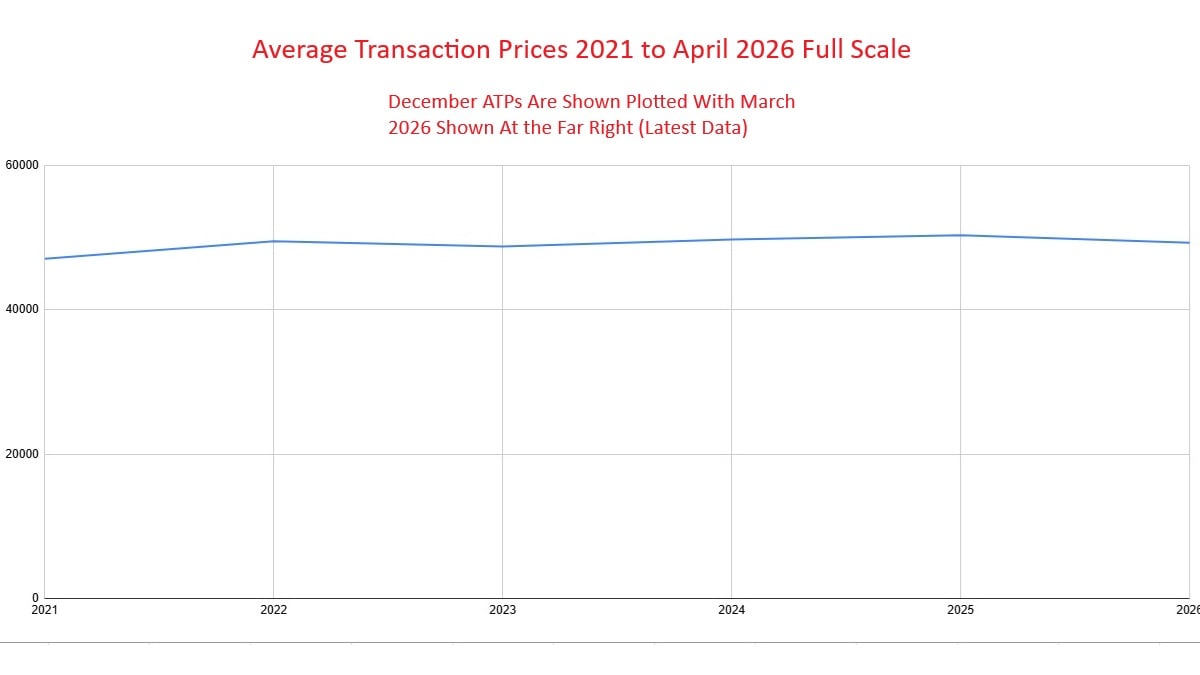
As you can see, when you look at the ATP data honestly represented from 2021 to the present day, it’s pretty unremarkable. Perhaps boring would be the right word. It looks that way because there hasn’t been any meaningful change in average vehicle costs since 2021. But that news won’t get many clicks, right? So the publications that want your attention find a way to pretend that there is some new scary thing happening. If they can find a villain to pin the problem on, all the better.
For transparency, let us tell you we chose the December ATP for each of the years from 2021 to 2025. ATPs tend to be the highest in December. We didn’t want to be accused of showing just the “happy” data points, so we selected the “worst” ones for each year to show you in the line graph. ATP bounces up and down a bit each month, mostly due to the mix of vehicle styles that are selling best in that particular moment. In March of 2026, big SUVs and trucks sold well, and that bumped up the ATP a smidge from the prior month. We also need to mention that ATP is the average of ALL VEHICLES. The average price of a new car like a Sentra or a Civic is $27,469. The average price of a five-passenger crossover like a RAV4 or a CR-V is $37,055. Luxury vehicles and pickup trucks skew the overall average upward significantly.
As an educated reader, you know that our government, heck, every global government, has an official policy to devalue its currency each year. I know why, but I don't want this story to take a turn towards politics. Hit this link if you have any doubts that I’m being straight with you. Our government targets a 2% annual depreciation of our dollar. It’s been running in the 2-3% range for the past year or so, and in prior years it was much higher at times. This intentional devaluation of the dollar is called inflation by some. That’s a little disingenuous because inflation happens due to shortages and other market disruptions. Admitting in advance that everything will be 2% more expensive by official policy isn’t really “inflation.” It’s policy.
OK, so our dollar today is worth less than it was in the past. Dollars from past years had more buying power. Remember when a coffee cost a buck? Now it’s three bucks, right? That’s not because we have less coffee to sell and drink. It’s because we devalued our currency. I used the U.S. government’s official dollar value adjustment tool, called the CPI adjuster, to redo the same graph, using the same data, but with the ATPs adjusted to today’s dollar value. Look below to see the result.
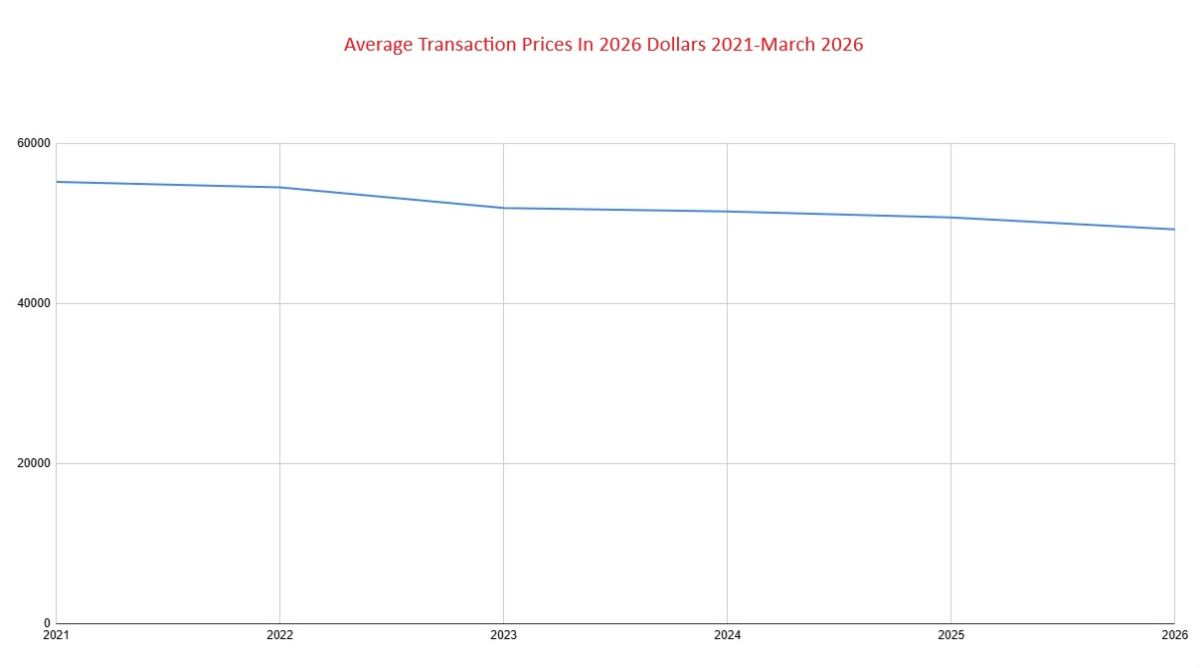
As you can see, the average new price of a vehicle was more expensive in each of the past six years. That’s not scary. “Cars cost less now!” does not make your fingers move the mouse to click that headline. Even if it’s true. Which it most certainly is.
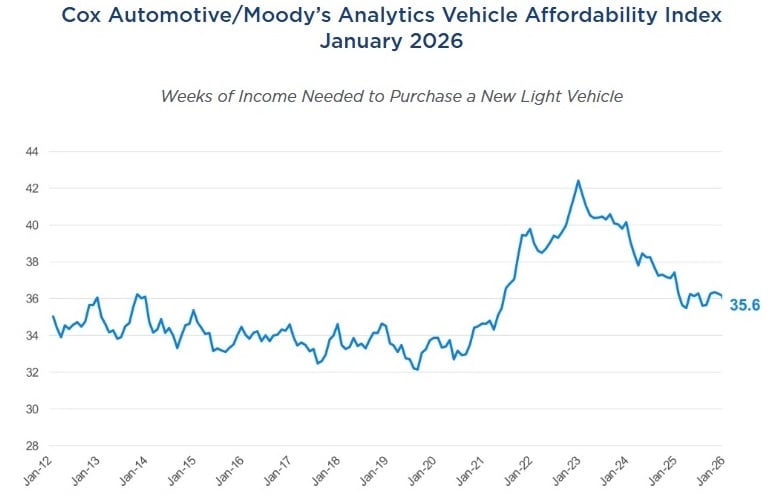
There is no flim flam here. Cox Automotive has a different way to help illustrate how much a new vehicle actually costs the consumer. Instead of raw dollars, it plots the number of weeks it takes a worker to be able to afford the average new vehicle. It's called the "Vehicle Affordability Index." Guess what? It’s not going up. It took more weeks of work in 2013 to buy a new car than it does today. The only time it was meaningfully higher was during the Biden administration. Here's that chart below:
Now, lets turn our focus to what has been happening in just the past half-year. In December, the average transaction price of an automobile was $50,326. Right now, the average is lower at $49,275. That means that if you held off buying, you did the right thing. However, here’s another fact, and we’ll quote Cox directly: “The annual price gains accelerated in March for the fourth consecutive month.” Vehicle prices are headed up right now, and the average transaction price is being held down by incentives that won’t last forever. Wait too long, and you may find yourself in a seller’s market, and you’ll be overpaying. Tell us in the comments below if you are surprised to learn that vehicle prices have dropped.
Here are all of the data links to all the ATPs used in the charts in this story.
In case you missed it in the body of the story, here is the CPI adjuster tool.
Data Links
2021 ATP
Image by John Goreham. First and last chart courtesy of Cox Automotive. Other charts created by John Goreham.
John Goreham is a 14-year veteran of Torque News. An accomplished writer and a long-time expert in vehicle testing, Goreham also serves as the Vice President of the New England Motor Press Association and has a growing social media presence. He’s also a 10-year staff writer and community moderator for Car Talk. Goreham holds a B.S. in Mechanical Engineering and an undergraduate Certificate in Marketing. In addition to vehicle and tire content, he offers deep dives into market trends and opinion pieces. You can follow John Goreham on X and TikTok, and connect with him on LinkedIn.
Set Torque News as Preferred Source on Google
Follow us today...







Comments
The article didn’t mention…
Permalink
The article didn’t mention tariffs. I don’t want to pay the government any extra tax. I wouldn’t buy a new imported vehicle until they are severely reduced.