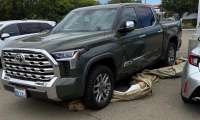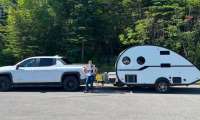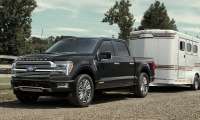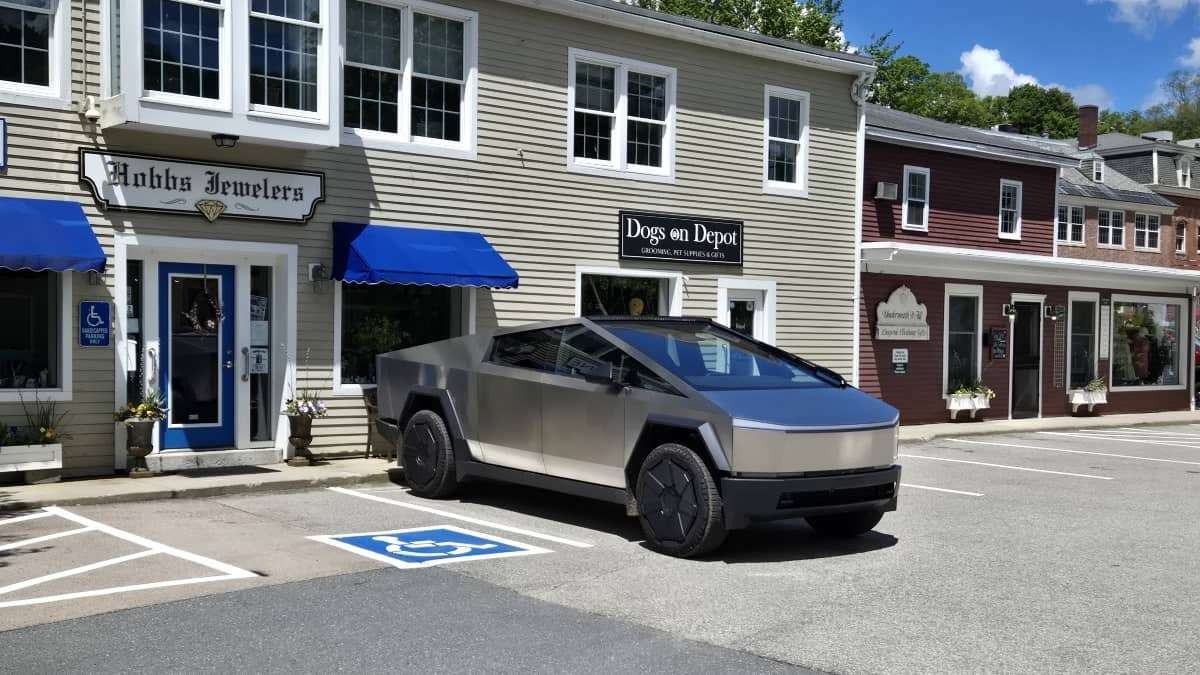

One Cybertruck owner was dismayed to find that his truck’s computer was calculating that he had less than 100 miles of range when towing a trailer. This was surprising, since he planned to have quite a bit more range when towing light loads. Let’s examine what the owner posted to the Facebook CyberTruck Owners Group:
I'm a bit confused about why the truck computer says I can't go 100 miles on a full charge at 55-60 mph, especially when pulling an empty 8 1/2 by 16 trailer that likely weighs around 2,000 lbs. I know that towing usually cuts your range in half.
What is frustrating the owner the most is how the trip and charging computer seem confused by the trailer being attached. He adds:
When I navigate past a pre-planned charging spot on my route, the computer suggests charging at another one that's even further away. However, it's not showing me the state of charge percentage that will be remaining when I get there. Instead, it just shows me a line. Why is the Cybertruck’s trip computer so confused?
Towing In General With Trucks and EVs In Particular
Pickup trucks are designed for towing and other utility tasks. Without the ability to tow a meaningful distance, the truck is really just a poser that looks real but isn’t. Battery-electric trucks rely on battery power alone to power the truck when towing, and that means shorter ranges, more frequent stops for charging, and longer travel times to the ultimate destination.
A fellow Tesla owner in a Tesla Facebook club created a great overview that we think can’t be topped. We broke down member J.S.’s guide below:
1) There is nothing that inherently makes an EV unsuitable for towing. In fact, your largest “towing” vehicles, such as large diesel trains, actually use their engines as electric generators, and potent electric motors drive the train.
2) For automotive applications towing capacity is a combination of load carrying capacity for the tongue weight (the weight transferred to the chassis of the towing vehicle the trailer connection through the hitch) the ability for the vehicle to get up to speed and maintain a safe speed up significant grades (hills) and most important controlling speed and being able to stop on the downhill side.
3) EVs obviously have no trouble getting up to speed due to the instant and always available torque. They also do not have any issue maintaining speed. Regen capabilities greatly aid braking. This reduces the wear and tear on the friction brake system.
This is a great overview by J.S. highlighting he plusses of the towing capabilities of a battery-electric vehicle, but it doesn’t help with understanding the downsides. Hybrid trains can carry as much energy as they need to in order to meet their travel goals. They pack fossil fuels into tanks, and the high energy density of the fossil fuels enables extreme distances between needing the tanks to be topped off. Diesel pickup trucks are similar in that regard. Many heavy-duty trucks used for towing actually have multiple fuel tanks. This enables the person towing to travel from the start to the finish, in many cases, without needing to top off. Once towing is completed, the truck can be refilled. On the road, diesel pumps built to accommodate vehicles with a trailer are available, and they are often open 24/7/365, making long-distance toping very convenient. EV pickups have a limited range to begin with and suffer from a dramatically shorter distance when used in winter, for towing, or on the highway. Add all three of these range-challenge scenarios up, and the towing range can easily be under 100 miles.
Don't take our word for it, watch this detailed video showing how a Cybertruck’s range is under 100 miles in towing in certain circumstances. Yes, it is an extreme case, but that is the point. To show how multiple factors compound to reduce range when towing with a Cybertruck.
Trip Computers Are a Tool - Use Them Wisely
The issue this Cybertruck owner struggles with most is that the trip computer appears unwilling to provide an exact answer for all circumstances. He admits to having over-driven a charging stop and is then frustrated that the trip computer doesn’t offer a clear picture of what to do. Our instructions would be simple. Find the next exit after the missed charging spot exit, and return to the planned stop to charge. If that is not an option, and the next exit at which to turn back is beyond the range of the vehicle, prepare for a very long day, including meeting and befriending the local towing company. Towing requires more planning than typical travel. Ranges are lowered, and the available charging options are reduced.
Our Suggestions For Towing With Battery-Electric Pickups
Towing can be a safe and rewarding way to use one’s Tesla Cybertruck. It can also be unsafe and frustrating. It all depends on preparation. We suggest the following to any Cybertruck owner or EV pickup owner of any type.
- Do your own range planning and route preparation.
- Be conservative, and leave a safety factor of at least 20% to ensure ample range.
- Have a backup plan in case any of your planned charging locations are out of service or have a long line to charge.
- Ensure the places you plan to charge can accommodate trucks towing a trailer, as not all locations can.
- Start with short trips. Take careful notes of your range in varying conditions.
- Always have a full-size matching spare tire and tools in case you have to change a flat tire while towing.
- Never tow any load that exceeds 75% of your vehicle’s maximum capability.
One fellow Cybertruck owner commented on the Cybertruck towing range, saying, “Cybertruck isn’t what they promised, far from it. Hopefully, in a few years, they will improve.” We won’t go so far as to agree with this statement entirely, but we will say that many owners expect better towing performance from EV trucks of all types than they end up getting.
We’ve offered advice here from fellow Tesla owners, along with our own advice. What advice would you offer this Cybertruck owner who is having trouble towing? Tell us in the comments below. Your advice may help a fellow truck owner.
John Goreham is the Vice President of the New England Motor Press Association and an expert vehicle tester. John completed an engineering program with a focus on electric vehicles, followed by two decades of work in high-tech, biopharma, and the automotive supply chain before becoming a news contributor. He is a member of the Society of Automotive Engineers (SAE int). In addition to his fourteen years of work at Torque News, John has published thousands of articles and reviews at American news outlets. He is known for offering unfiltered opinions on vehicle topics. You can connect with John on LinkedIn and follow his work on his personal X channel or on our X channel. Please note that stories carrying John's by-line are never AI-generated, but he does employ grammar and punctuation software when proofreading and he also uses image generation tools.
Image by John Goreham
Set Torque News as Preferred Source on Google
Follow us today...