

Key Takeaways Before You Read:
- Multiple Tesla owners with 200,000 to 554,000 miles report different charging strategies, yet many still hold their original batteries.
- Avoiding a dead pack below 10% state of charge appears more critical than whether you charge to 80% or 100%.
- Monitoring battery health with a third party diagnostic tool every few months gives you the clearest picture of your pack's condition.
- Scroll to see the comments or be the first to voice your opinion.
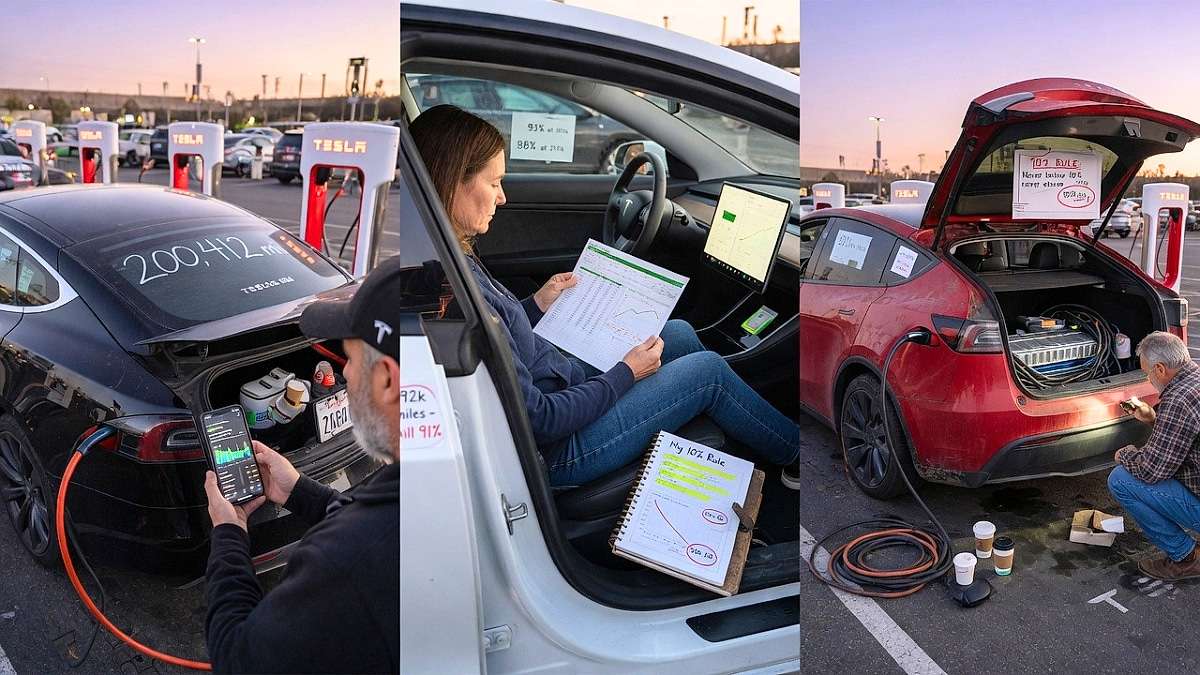
One question cuts through every Tesla ownership group like a blade. How do you charge your Tesla to get the most miles out of it? After 15 years of covering the automotive industry, I can tell you this conversation never gets old. And it has never been more urgent.
This morning I opened the TESLA High Mileage CLUB group on Facebook, and a thread from Elyssa Young got my attention.
Elyssa wrote: "For all of you that have reached 200,000+ miles what are your charging habits? I have a 2022 Tesla Model 3 Dual Long Range and I get 280 miles of range at 80% of charging, but 100% of charging my Model 3 would suit my lifestyle and long travel time better. Yet, I am careful not to do that in order not to hurt my Tesla's battery. I have a home charger, and I Supercharge when needed. The closest Supercharge to me is 50 minutes away. I'm told it's bad, but I see people do it successfully and reach 400,000+ miles."
That is a real problem. Elyssa has a legitimate lifestyle need, a practical concern about battery health, and a gap between what she is told and what she actually sees other owners doing. This article closes that gap.
What Tesla Owners With 200,000 Miles Actually Do
The first thing you notice in the TESLA High Mileage CLUB is that there is no single charging rule everyone follows. The second thing you notice is that most of these owners still have their original batteries.
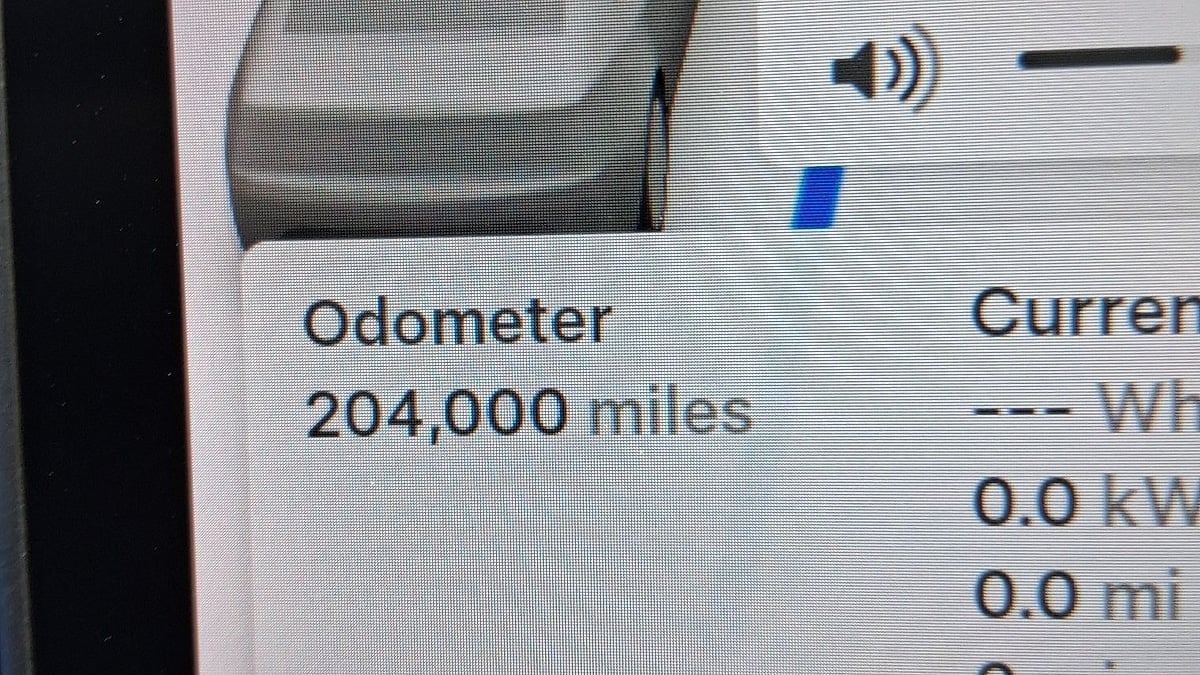
CA Ortegon drives the same car as Elyssa, a 2022 Tesla Model 3 Dual Long Range. He shared an image of his odometer showing 204,000 miles on it, confirming he has crossed that threshold. His answer was direct. He charges to 100% on a Level 2 charger every time and keeps the car plugged in whenever it is not in use. He cites the Tesla service manual as his source, which advises exactly that. In fact, here is Ortegon's odometer image, which he shared with the group.
Roy E Fernandez went further. He reports 508,000 miles on his Tesla, still on the original battery, and he Supercharges to 100% every single time. Ken Gibson replied that he does the very same.
Those numbers deserve a moment of respect. Half a million miles on original equipment using a charging method many people consider harmful.
Paul Cuzon drives a 2016 Model S with 554,103 miles on it. He shared an image confirming it. Original battery, original motors. He charges to 100% most nights and Supercharges multiple times a day. His reported range loss is 70 miles. For context, 70 miles of loss on a car with over half a million miles is a story worth telling.
These are the voices that challenge the conventional wisdom. And they force you to rethink what you actually know about Tesla battery health at high mileage.
The Other Side of the Argument
Not every owner in that group charges to 100%. And not every owner is doing fine.
Austin Ammarell has a 2018 Model 3 Long Range with 240,000 miles, and his battery shows 77% CAC remaining. He charges to 80% to sit, then bumps to 100% before a long trip. Some months he cycles from 100% down to 0% and back multiple times per week. He relies on home charging about 85% of the time. He also admits that if he accidentally leaves it at 100% for two days, it just sits there.
Marty Brownlees takes an even more conservative approach with his 2020 Model 3 at 220,000 miles. He charges to 80% overnight, then tops off to 90% or 95% the morning before a long drive.
Then there are owners who push back on the whole idea that habits are the deciding factor. Steve Sersha put it plainly. He wrote that it has nothing to do with charging habits at all. Either you got a reliable battery or you did not. There are no warning signs when you got a bad one, he said. It just fails. And then you hope the remanufactured replacement is better than the first one.
That is a sobering statement. And data from owners tracking early Tesla Model 3 range loss does show that some packs degrade faster than others regardless of how carefully the owner charges.
The Number That Changes Everything: 10 Percent
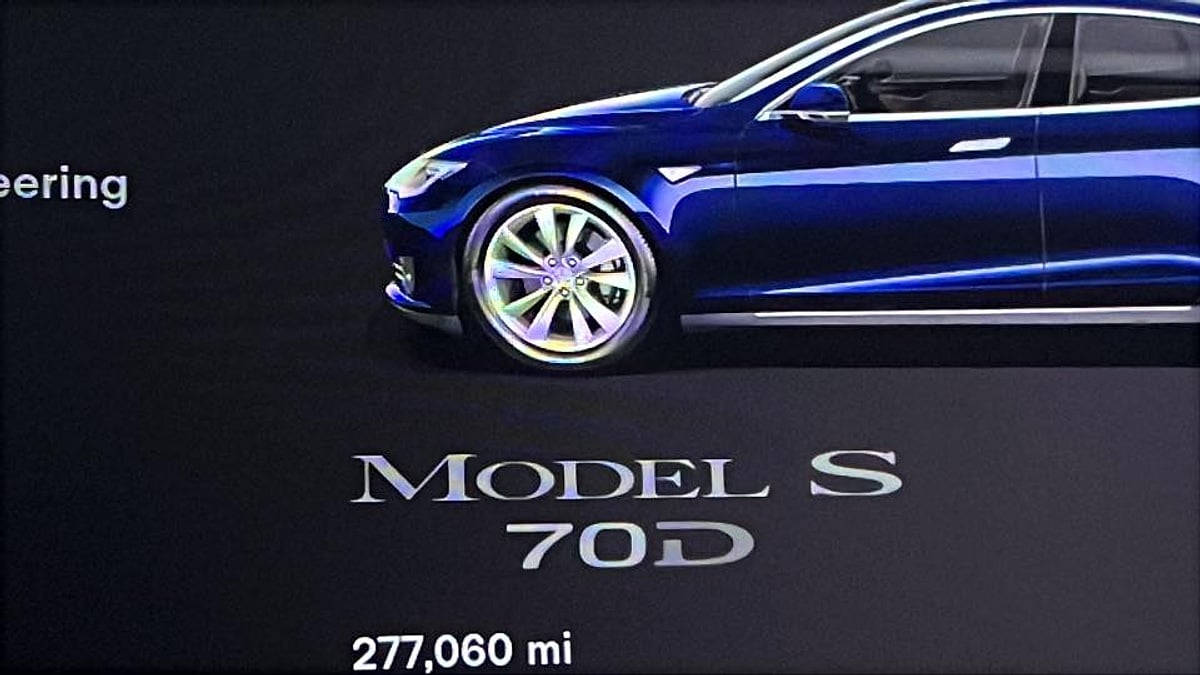
Here is where the conversation gets specific. Devin Heagey drives a Model S 70D with 277,060 miles on it. He shared an image of his odometer to confirm it. He charges to 100% at least once a month to keep the pack balanced. He has original hardware going back to early Tesla days. His key rule is simple. Never run the battery below 10% state of charge.
Devin explained that a pack out of balance below 10% has a higher probability of flat dead cells. And flat dead cells destroy older batteries. He compared it to an old laptop battery that you fully drained too many times. You know what happened to those. The analogy lands.
This is a critical and often overlooked piece of the puzzle. Most owners focus on the top end of charging. Devin focuses on the bottom. Owners who have tested their Tesla battery health with third party tools confirm that cell imbalance is a major contributor to sudden drops in measured battery capacity.
Now Consider This: Standard vs Long Range Batteries - What's The Real Difference?
Long Range: Nickel-based cathode (NCA/NMC). Standard Range: LFP (lithium iron phosphate).
Key difference: Nickel = higher energy density (more range) Iron phosphate = no nickel/cobalt = safer, lasts longer, and can charge to 100% daily.
That's why Tesla recommends 80-90% daily limit for LR, but 100% for SR/LFP.
Always consult the official Tesla Owner's Manual that came with your vehicle for the most accurate, model-specific guidance. (From Michael Buckley's explanation. Michael is a Customer Experience Specialist.)
Should You Supercharge or Not
This question divides Tesla owners more than almost any other. The real answer is: it depends on frequency, temperature, and your battery chemistry.
Roy and Paul Supercharge constantly and have extraordinary mileage. But Cybertruck data from our own reporting shows that owners who rely primarily on Supercharging can show up to 5% degradation in the first few months, which is 30 times the degradation rate of owners who primarily charge at home. Those are 4680 cells, a different chemistry, but the principle is not irrelevant.
What about the Model 3 and Model Y? A study by Recurrent analyzing more than 12,500 Tesla vehicles found no statistically significant difference in battery degradation between frequent Supercharger users and those who rarely used them. Tesla Motors Club members have confirmed this finding repeatedly.
The nuance is that Supercharging at V3 speeds, meaning 250 kilowatts, puts more thermal stress on cells than Level 2 home charging. A Tesla Model S owner with 130,000 miles who Supercharges extensively reports minimal battery impact, and attributes far more degradation to extreme temperatures and extreme states of charge held for long periods.
Heat, not speed of charging, is the real accelerant.
What Your Battery Chemistry Actually Requires
Here is a detail that changes everything for owners like Elyssa. Your charging strategy must match your battery chemistry. This is not optional.
Long Range and Performance Teslas built before 2021 or so use NCA or NMC chemistry. These cells are sensitive to consistently sitting near 100%. Keeping them there regularly accelerates cathode breakdown. The honest recommendation for these packs is to charge to 80% daily and reserve 100% for travel days.
Standard Range Teslas from 2021 onward often use LFP chemistry, which is lithium iron phosphate. These packs are chemically stable at 100%. In fact, Tesla's own guidance for LFP vehicles recommends charging to 100% regularly so the battery management system can calibrate accurately. Not doing so causes the BMS to lose track of the real capacity, which shows up as phantom range loss.
CA Ortegon's service manual quote makes perfect sense in this context. If his 2022 Model 3 uses LFP cells, then 100% Level 2 charging every day is exactly right.
How to Monitor Your Battery Before Problems Arrive
Mike Hoepfinger gave practical advice that every Tesla owner should act on. He recommends downloading ScanMyTesla and measuring your CAC, or cell available capacity, every few months. Most battery problems, he says, are moisture related or tied to the battery management system leads. Staying near 50% charge is ideal when you are not driving.
Owners who skip battery health testing until they see a problem often miss the window when early intervention could have mattered. Tesla does not provide a native battery health score. Third party tools are your only window into actual cell condition.
This is also where the question of charging amps at home becomes relevant. Some owners charge at lower amperage not to protect the battery cells directly, but to reduce thermal stress on home wiring and to keep charging sessions calm and predictable over tens of thousands of cycles.
What Known and Documented Charging Habits Help You Reach 400,000 Miles
Here is what the evidence, across real owners and real data, consistently supports.
Keep your battery between 20% and 80% for daily driving if you have an NCA or NMC pack. Never let it sit at 0% or below 10% for any extended period. Never flat dead your cells. That is the single highest risk behavior for long term pack health, as Devin confirmed from real experience with older Model S hardware.
If you have LFP chemistry, charge to 100% regularly to keep your BMS calibrated. Plug in whenever you are home. Use a Level 2 home charger as your primary source. Reserve Supercharging for road trips or genuine necessity.
Avoid parking in extreme heat whenever possible. Tesla Model Y owners in Arizona report faster early degradation than owners in cooler climates, and the thermal stress is cumulative. Precondition your battery in cold weather before charging or driving.
Keep your software updated. Tesla pushes battery management improvements regularly, and those updates protect your pack whether you see them doing it or not.
Monitor your CAC with ScanMyTesla every few months. Stay in front of moisture and cell imbalance issues before they cascade.
And know your battery. Understand whether you have NCA, NMC, or LFP cells. The charging advice that is right for one is wrong for another. This is not a one size fits all situation.
The moral here goes beyond battery chemistry. The owners who reach 400,000 miles are not lucky. They are intentional. They learned what their specific car needed and they committed to it, even when it was inconvenient. That kind of disciplined, patient ownership is a habit that transfers well beyond the garage.
And before I end this article, I suggest you also see these real Tesla owners with 200,000 miles or more who are sharing what actually keeps a battery alive past 400,000 miles, and the answers in same cases challenge a lot of things we read online about how to charge your Tesla the right way.
What charging habits have helped your Tesla hold its battery health past 100,000 or 200,000 miles? And if you own a high mileage Tesla, would you change anything about how you charged it in the early years? Share your personal experience in the comments below.
About The Author
Armen Hareyan is the founder and Editor-in-Chief of Torque News and an automotive journalist with over 15 years of experience writing car reviews and industry news. Now based in the Charlotte region (Indian Land, SC, he founded Torque News in 2010, which since then has been publishing expert news and analysis about the automotive industry. He can be reached at Torque News on X, Linkedin, Facebook, and Youtube. Armen holds three Masters Degrees, including an MBA, and has become one of the known voices in the industry, specializing in the landscape of electric vehicles and real-world stories of actual car owners. Armen focuses on providing readers with transparent, data-backed analysis bridging the gap of complex engineering and car buyer practicality. Armen frequently participates in automotive events throughout the United States, national and local car reveals and personally test-drives new vehicles every week. Armen has also been published as an automotive expert in publications like the Transit Tomorrow, discussing how will autonomous vehicles reshape the supply chain, and emerging technologies in vehicle maintenance.
Set Torque News as Preferred Source on Google
Follow us today...







Comments
2 ev, 21 gt performance in 5…
Permalink
2 ev, 21 gt performance in 5 years no battery loss, costs are tires cabin air filter rear wiper blade. 12v battery tests positive voltage ok after 5 years. Charge from 30% to 80% when needed, on winter plugged in every night to precondition in an. Supercharger using adapter when traveling at 100%. 23 model y AWD long range same. Costs so far tires. Both top trims fully optioned. You buy cheap you get cheap. Alwa ys buy the top ones if you plan on keeping it like us. Never a problem deprecation after a decade.