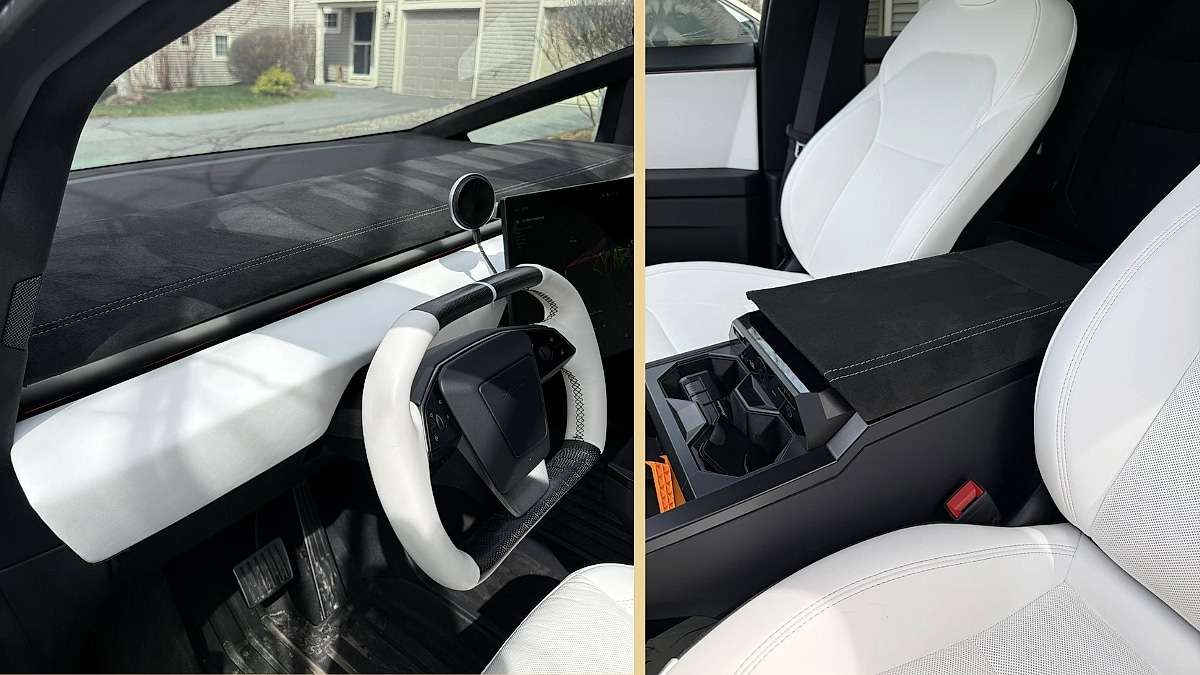

- Reid Tomasko of Shock Auto Styling installed custom Alcantara and white contrast stitch on his Cybertruck's dash and arm rest, calling the dash removal process "definitely very involved."
- He also retrofitted Model Y Juniper seats into his Cybertruck and added a Hannshow swivel screen, creating a fully personalized cabin Tesla does not offer from the factory.
- Reid tested everything on his own 14,000-mile Cybertruck first before offering the service to paying customers, a move the community is calling a sign of real craftsmanship.
What happens when a New Hampshire auto shop owner decides his Cybertruck interior simply is not good enough? He tears it apart, figures it out, and then does it for his customers too. Reid Tomasko (X), the owner of Shock Auto Styling in New Hampshire, recently posted images inside several Cybertruck Facebook groups showing a stunning custom Alcantara and white stitch dash and arm rest transformation on his personal Cybertruck. If you have been following how Tesla Cybertruck owners are pushing the limits of interior personalization and customization on TorqueNews.com, you know this kind of creative ambition is growing fast. And if you have wondered whether Cybertruck modifications affect your trade-in value or Tesla warranty coverage, that is a real question worth asking before you start pulling things apart.
What Reid Actually Did to His Cybertruck
Reid wrote in the Facebook groups, "Custom Alcantara and white stitch dash and arm rest for my Cybertruck. This is now something I can do. I think it looks so much better with a contrast stitching to match the interior color." That one sentence tells you everything. This was not an accident. This was a deliberate, well-executed upgrade from a professional who knew exactly what he was doing. Reid's Cybertruck only has 14,000 miles on it. He is not flipping it. He is learning on it. He used his own truck as the proving ground before he takes that same skillset to his paying customers.
That approach says a lot about his character. Reid told Torque News, "I tried to do it on mine first before I do it on theirs." Think about that for a moment. He absorbed the risk himself. He did not experiment on someone else's expensive truck. That is the kind of integrity you want from any shop you trust with a vehicle.
How Involved Was the Removal Process?
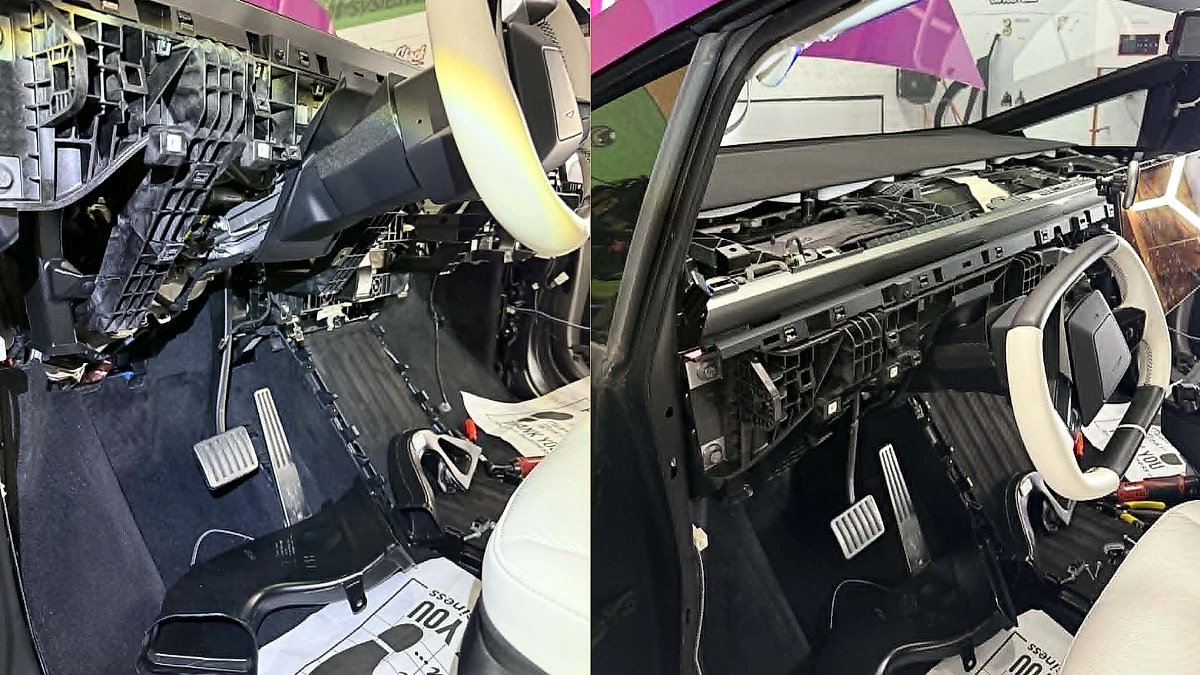
Here is where the story gets really interesting. When Facebook group member Shemuel asked how hard it was to remove the dash, Reid did not sugarcoat it. He said it was "definitely very involved" and sent Torque News images showing just how deep the disassembly goes. To reach the dash panels, Reid had to remove a significant number of components. He told Torque News directly, "You need to remove a ton of things to get to it."
This image that Reid shared with Torque News shows the amount of work involved in tearing down the dashboard of his Cybertruck and rebuilding it with Alcantara and stitches.
This is important information for any Cybertruck owner thinking about a similar upgrade. This is not a Saturday afternoon project. It requires patience, the right tools, and a real understanding of how Tesla assembles its interiors. Cybertruck owners who have attempted even simpler interior modifications often discover how tightly integrated the interior components are, and the dash is a whole different level of complexity compared to installing accessories.
The Hannshow Swivel Screen and the Model Y Juniper Seat Retrofit
Two other details from Reid's Cybertruck caught the attention of group members. When Federico asked whether the screen tilted toward the driver, Reid confirmed that it does. He is running the Hannshow swivel screen, which is one of the most popular aftermarket screen upgrades for Tesla vehicles. Adding a swivel screen to a Tesla is one of the simplest yet most impactful upgrades any owner can make to improve daily usability, and Reid paired that functional upgrade with his premium Alcantara dash work to create a cabin that feels genuinely custom from every angle.
Even more resourceful was his seat choice. When someone asked about his seat covers, Reid clarified that those are not covers at all. "Those are Model Y Juniper seats I retrofitted into the Cybertruck," he wrote. Retrofitting seats from one Tesla model into another requires fabrication skill and a thorough understanding of mounting points and compatibility. Some Cybertruck owners have already noted that the Foundation Series interior seats feel noticeably more premium than the 2025 AWD model, which explains why owners like Reid are looking to other Tesla model lines for upgraded seating solutions.
The Community Response Was Overwhelmingly Positive
The Facebook Cybertruck community loved what Reid built. Group member Craig summed up the enthusiasm while offering a practical design suggestion. "Love the color combination," he wrote. "The white steering wheel will be a pain to keep clean over time. Maybe do the top and bottom of the wheel white and the sides the same as the dash? Might prolong the look. But still looks amazing." That is the kind of thoughtful community feedback that only comes when people genuinely respect the work being done.
Federico simply wrote "Looks great," while others responded with similar appreciation. The white contrast stitching against the Alcantara surface creates the kind of texture and visual depth that Tesla's factory interior simply does not offer. For years, Cybertruck owners have had essentially one interior option, and the aftermarket community has been filling that gap creatively, with shops like T Sportline using Alcantara, Bordeaux leather, and custom carbon fiber to transform the cabin into something truly individual.
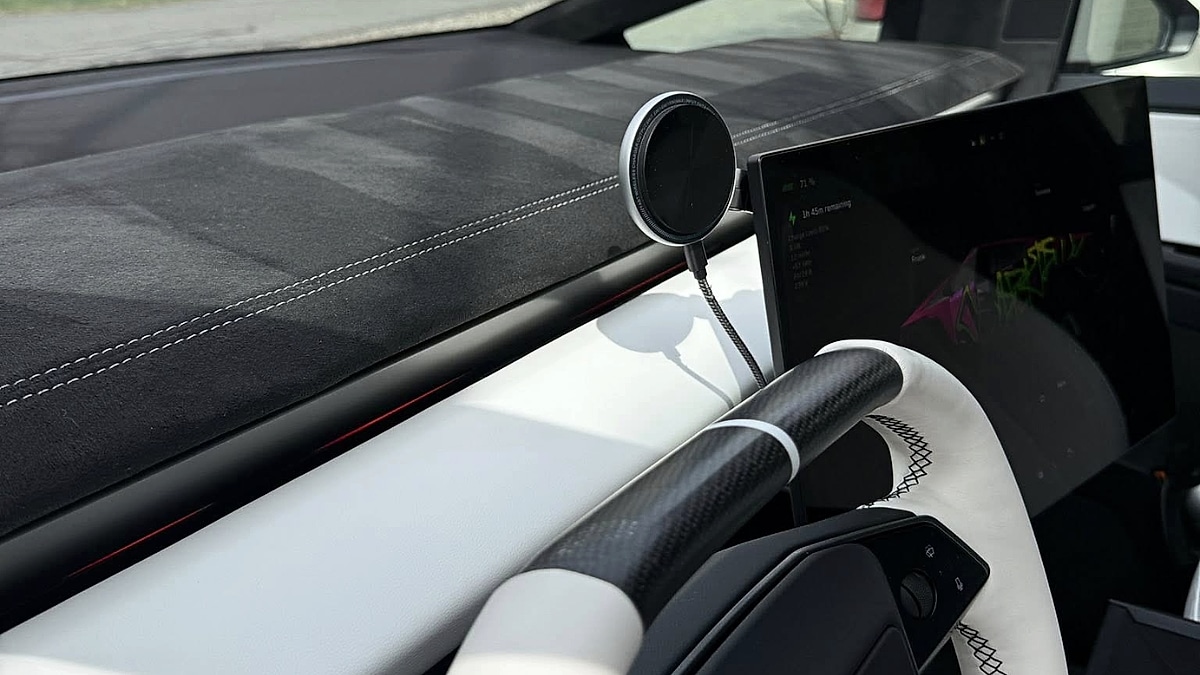
In this image Reid shows the completed work of his Cybertruck's custom Alcantara and white stitch dash and arm rest.
What Alcantara Actually Brings to a Tesla Interior
Alcantara is not just a luxury material. It is a functional one. It resists glare, provides better grip on surfaces, and gives any interior a tactile warmth that hard plastic and standard vinyl simply cannot match. Some aftermarket customizers have noted that Alcantara was later incorporated by Tesla itself into the upper dashboard of the Cyberbeast trim, after customers pushed back on the factory interior options. That tells you something. The aftermarket community often leads where the factory eventually follows.
For Reid's build, the contrast white stitching is the visual signature. It ties the steering wheel, the dash, and the arm rest together into a unified interior theme. This is exactly the kind of attention to detail that separates a skilled shop from someone simply wrapping panels. According to autoevolution, the Cybertruck's interior has been one of the last frontiers for customization, with far fewer shops attempting dash-level modifications compared to exterior wraps and wheel changes.
What This Means If You Want the Same Thing Done
Reid made clear to Torque News that Shock Auto Styling in New Hampshire now offers this custom Alcantara and contrast stitch work for Cybertruck and other Tesla models. He used his own vehicle to develop and prove the process before bringing it to customers, which is exactly the right way to introduce a complex new service. If you are a Cybertruck owner who has been looking at your factory white-and-black interior and wishing for something more personal, this kind of shop is worth a serious inquiry.
Cybertruck owners who have struggled with even basic exterior care like car wash restrictions know how carefully Tesla engineered this truck's components to fit together, which makes the depth of disassembly Reid describes all the more impressive. He navigated that engineering intentionally and came out the other side with a result that looks factory-quality.
The Moral of This Story
There is a lesson here that goes beyond automotive customization. Reid did not take a shortcut. He did not practice on a customer's truck. He invested in his own vehicle, accepted the risk personally, and built the competence before he offered the service commercially. That is what separates real craftsmanship from guesswork. In any trade, in any business, the most trustworthy professionals are the ones who test their own ideas on their own time before charging someone else for the result. Cybertruck owners who have had shops attempt unproven modifications sometimes pay a steep price when things go wrong, which is why Reid's approach of proving the process on his own truck first is a genuinely smart and ethical way to build a business.
When you find a shop owner willing to absorb the learning curve personally before billing a customer, you have found someone worth trusting. That is rare, and it is worth recognizing.
Two Questions for Cybertruck Owners
Have you considered customizing your Cybertruck's interior with Alcantara or a similar premium material, and if so, what has stopped you from pulling the trigger? And would you trust a shop more knowing the owner personally tested the modification on his own vehicle before offering it to customers? Share your experience and thoughts in the comments section below.
About The Author
Armen Hareyan is the founder and Editor-in-Chief of Torque News and an automotive journalist with over 15 years of experience writing car reviews and industry news. Now based in the Charlotte region (Indian Land, SC, he founded Torque News in 2010, which since then has been publishing expert news and analysis about the automotive industry. He can be reached at Torque News on X, Linkedin, Facebook, and Youtube. Armen holds three Masters Degrees, including an MBA, and has become one of the known voices in the industry, specializing in the landscape of electric vehicles and real-world stories of actual car owners. Armen focuses on providing readers with transparent, data-backed analysis bridging the gap of complex engineering and car buyer practicality. Armen frequently participates in automotive events throughout the United States, national and local car reveals and personally test-drives new vehicles every week. Armen has also been published as an automotive expert in publications like the Transit Tomorrow, discussing how will autonomous vehicles reshape the supply chain, and emerging technologies in vehicle maintenance.
Images by Reid Tomasko, shared with Torque News.
Set Torque News as Preferred Source on Google
Follow us today...