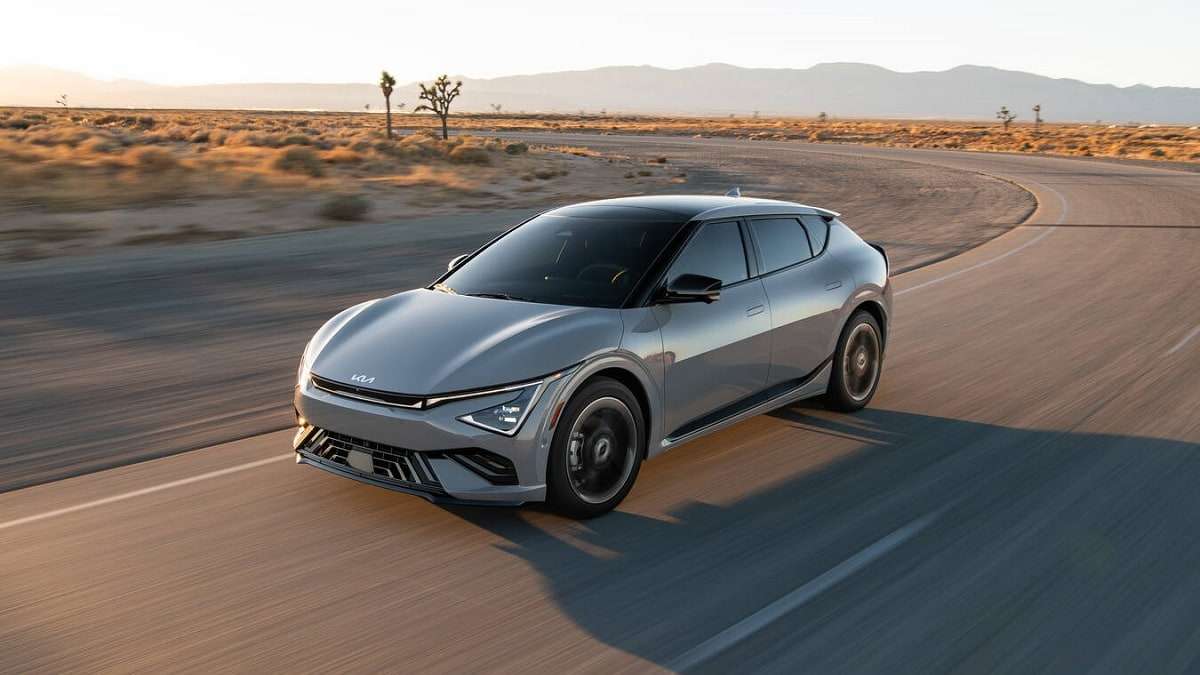

With factory jobs disappearing and tariffs driving up prices, Americans are desperate to support vehicles built at home. I thought buying a Kia meant shipping jobs overseas, but in a twist that’s setting Reddit and Facebook comment sections on fire, the 2025 Kia EV6 ranked sixth on the American-Made Index. Turns out, the EV6 was built in Georgia and packed with more American-made parts than most Chevys. Meanwhile, some “American” cars are assembled overseas with imported parts.
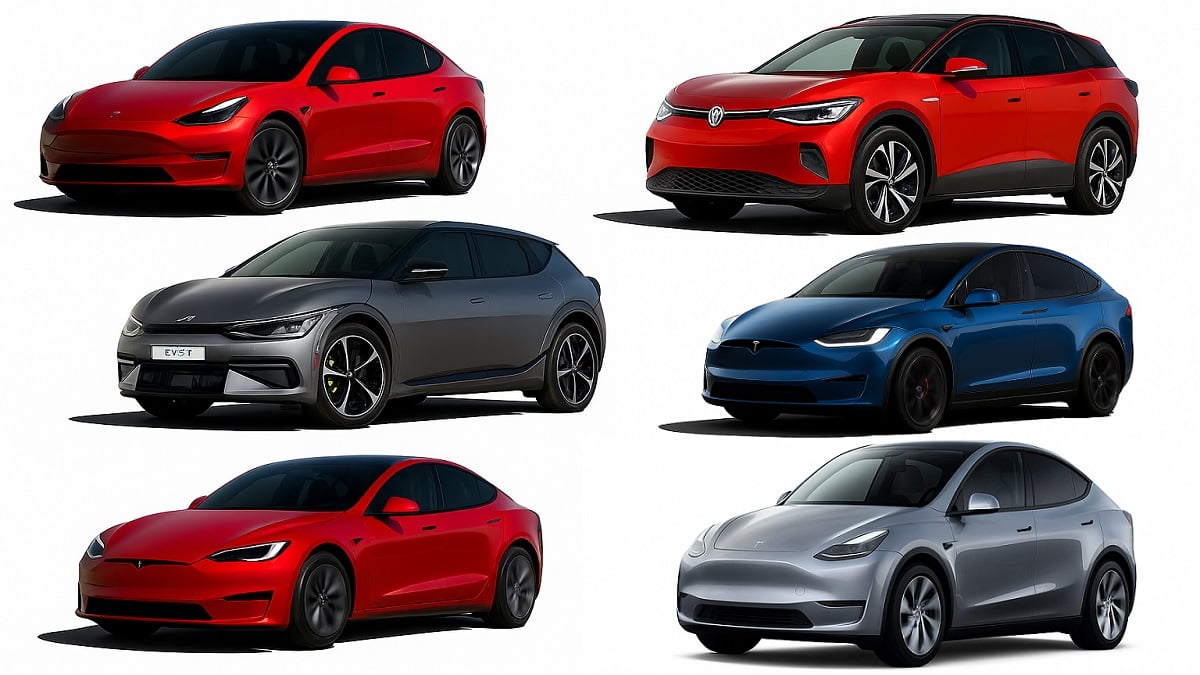
For the first time, six of the top ten vehicles in the 2025 American-Made Index (AMI) are electric, signaling a major shift in domestic EV production. The AMI, compiled annually by Cars.com, ranks vehicles by how much of their content and labor is sourced from the United States. In 2025, the Tesla Model 3, Model Y, Model X, and Model S claimed the top four spots. The Kia EV6 ranked sixth, and the Volkswagen ID.4 came in tenth. Other EVs on the broader list include the Ford F-150 Lightning (22nd place), Hyundai Ioniq 5 (30th place), and the Kia EV9 (67th place). The surge in electric models reflects deeper integration of EV manufacturing into the U.S. auto economy. This year, 11 battery-electric models qualified, up from just eight last year, with another 19 hybrids and plug-in hybrids also making the list. The top 10 models show that EVs are not only here to stay but are being made closer to home.
This has led to a lot of social media buzz about which EVs made the list and the implications for “buying American.” Here’s a recent post on Reddit by black88mx6 about why the 2025 EV6 made the top ten.
“The battery on the EV6 is manufactured here in the USA and is one of the reasons for the delay for the new 2025 model. This is reflected in the 80% USA/Canada content 2025 EV6 percentage vs 20% USA/Canada for the 2025 Ioniq 5's up to VIN 10,000.”
detox4you responded with:
“Building batteries in the USA will become difficult if China keeps blocking exporting materials needed.”
black88mx6 added:
“Materials will be sourced from elsewhere, just not for the same cost.”
The American-Made Index (AMI) is important because it provides transparency into how much of a vehicle’s content and labor is sourced from the United States. This helps consumers make informed choices that align with their economic, patriotic, or sustainability values. The AMI has taken on more importance as supply chain concerns, tariffs, and geopolitical tensions affect global trade. Consumers are increasingly interested in buying vehicles that support American jobs and reduce reliance on foreign production. The AMI helps spotlight automakers that have invested in U.S. manufacturing, like Tesla, Kia, and Volkswagen. It also underscores contradictions, as some traditionally “foreign” brands may build more American-made cars than legacy U.S. brands.
The American-Made Index ranks vehicles using five key factors: location of final assembly, percentage of U.S. and Canadian parts, origin of available engines and transmissions, and U.S. manufacturing workforce. With growing awareness of economic nationalism and supply chain reliability, these criteria matter more than ever to both consumers and analysts. This year’s rankings reflect a shift toward valuing domestic content and job creation. For example, the Kia EV6 surprised many by ranking sixth due to its assembly at the West Point, Georgia plant and its impressive 80 percent U.S. and Canadian parts content, the highest of any vehicle sold in the country. Cars.com emphasized that transparency around where cars are made is increasingly important as buyers weigh their purchasing decisions. In a year marked by global instability and trade tensions, the index has become more than just a technical measure, it’s now a key signal of economic and industrial alignment.
Tariffs and Policy Changes Drive Consumer Behavior, plus Affordability and Incentive Concerns
The new 25 percent tariffs on foreign-built vehicles and imported auto parts have amplified consumer interest in domestically produced cars. These import taxes, introduced under the Trump administration, are expected to raise car prices by several thousand dollars and create pressure on affordability, especially for lower-priced models. According to Cars.com, vehicles priced below $30,000 are mostly imported, and only two such vehicles are made in the U.S. Political dynamics are also shifting. While the Biden administration backed EV adoption with tax credits and infrastructure investment, a Republican-led rollback is gaining momentum. The House has already passed a bill to end the $7,500 EV tax credit, and the Senate is now considering it. Former President Trump has vocally criticized EV incentives and distanced himself from Tesla CEO Elon Musk. These developments create an unpredictable policy environment for both automakers and consumers and could slow the momentum of U.S.-based EV production and adoption.
Rising vehicle prices and the potential loss of federal tax incentives are fueling concerns about EV affordability. The $7,500 federal tax credit, which helped offset EV costs for many buyers, is now under threat in Congress. Without it, the barrier to EV ownership could grow, especially for first-time or budget-conscious buyers. Analysts note that most EVs priced under $30,000 are imported and may become even more expensive with new tariffs. Cars.com data shows that among 18 sub-$30K vehicles, only two are made in the United States. While a majority of surveyed shoppers say they are willing to pay more for American-made cars if it means supporting U.S. jobs, that sentiment may not translate into action for buyers seeking affordability. Automakers now face the dual challenge of keeping costs down while building vehicles domestically. Without incentives, the industry could struggle to meet its electrification goals, especially among mainstream consumers.
Tesla continues to dominate the American-Made Index, a position it has held for several years. For 2025, Tesla vehicles take the top four spots, led by the Model 3 at number one, followed by the Model Y, Model X, and Model S. These results reflect the company's vertical integration and localized production strategy. All of Tesla’s light-duty passenger vehicles are assembled in California or Texas, boosting their rankings based on U.S.-based labor and parts content. Tesla’s consistent lead in the AMI highlights the company’s investment in domestic supply chains and workforce. Its manufacturing model gives it an edge over conventional automakers who rely more heavily on foreign assembly and parts. This strong U.S. presence also insulates Tesla from some of the volatility tied to global logistics and trade policy. As the EV landscape evolves, Tesla’s early commitment to building vehicles in America has allowed it to remain at the forefront of AMI rankings.
Please Drop Your Thoughts in the Comments Below
Would you still consider buying an EV if the $7,500 tax credit disappears?
Does it surprise you that a Kia or VW might be more “American-made” than some Ford or Chevy models?
Chris Johnston is the author of SAE’s comprehensive book on electric vehicles, "The Arrival of The Electric Car." His coverage on Torque News focuses on electric vehicles. Chris has decades of product management experience in telematics, mobile computing, and wireless communications. Chris has a B.S. in electrical engineering from Purdue University and an MBA. He lives in Seattle. When not working, Chris enjoys restoring classic wooden boats, open water swimming, cycling and flying (as a private pilot). You can connect with Chris on LinkedIn and follow his work on X at ChrisJohnstonEV.
Image sources: KIA media kit, AI
Set Torque News as Preferred Source on Google
Follow us today...