
For most EV owners, a major repair like a main battery replacement is supposed to mark the end of the stress. It is the moment when you finally feel like the worst is behind you and that the vehicle should return to being reliable, predictable transportation. That expectation makes it especially frustrating when the opposite happens and a car fails almost immediately after what should have been a definitive fix.
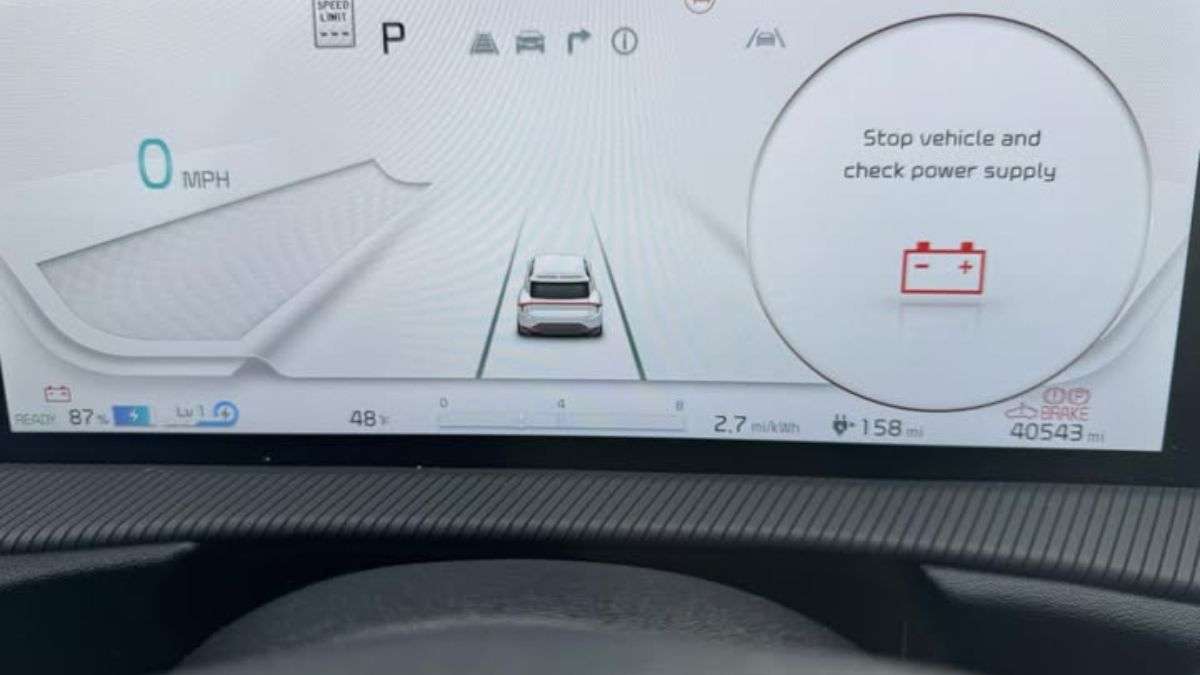
That frustration was on full display this week after I came across a post in the “KIA EV6 Owners USA” Facebook group from Taryn OBrien Myre. Just two weeks after having the main battery replaced in her Kia EV6, Taryn says the vehicle suddenly died without warning and became completely unresponsive. Worse though, the car would not even power on long enough to be put into neutral.
As Taryn explained in her post, “Welp this just happened 2 weeks after getting a new main battery put in it. My car just died. I’m over it. A tow truck is on the way. I can’t even turn the car on to put it in neutral, so it has to be dragged. God I’m pissed!”
A Post-Repair Failure Feels Even Worse
Breakdowns are frustrating under any circumstances, but failures that happen immediately after major repairs tend to hit owners harder. In cases like this, there is often a sense that something deeper may still be wrong, or that the original issue was never fully resolved in the first place. For EV owners, the emotional impact can be amplified because battery-related repairs are among the most significant and expensive procedures these vehicles undergo.
With the EV6 positioned as a refined, mainstream electric vehicle rather than an early experiment, many owners expect that once a major component is replaced, reliability should improve rather than decline. When that confidence is shaken, it can quickly turn excitement into exhaustion.
Being Unable to Shift Into Neutral Matters
One detail in Taryn’s experience that stood out to many readers was the inability to put the EV6 into neutral. In traditional vehicles, even serious mechanical failures often still allow the car to be rolled or pushed. In modern EVs, however, electronic interlocks can prevent any movement if the system does not detect safe operating conditions.
When an EV cannot power on at all, it may also lose the ability to release the drivetrain, leaving towing companies with no option but to physically drag the vehicle. It's a situation that feels extreme to owners, especially when the underlying problem is not immediately obvious.
What Commenters Are Saying About ICCU Concerns
As the discussion unfolded, several commenters pointed out their own issues with the Kia EV6.
Laura Rye shared a particularly concerning experience, writing, “This has happened to me three times in the last two weeks. Jumps do appear to work this time. We had the ICCU replaced last year.”
Repeated failures, even after a component replacement, naturally raise questions about whether certain issues are being fully resolved or simply reset temporarily. That's why situations like this are troubling, because the ICCU plays a critical role in managing charging and supporting the 12-volt system that keeps the vehicle’s electronics alive. When it fails or behaves unpredictably, the car can appear completely dead even if the high-voltage battery itself is healthy.
How Reliability Perception Shapes Buying Decisions
Kevin Yu took a broader view of the issue, saying, “So glad I didn't buy a KIA EV after seeing all the ICCU issues on Facebook/Reddit.”
Comments like this highlight how online owner experiences can influence buyers long before they ever set foot in a showroom. This kind of perception challenge is not unique to EVs either. In other segments, buyers often acknowledge Kia’s strong value proposition but still gravitate toward competitors with longer-established reliability reputations, a pattern that has been explored in why the Kia Carnival is emerging as a better-value minivan than the Toyota Sienna. For EVs where trust in new technology is still being built though, recurring stories of electronic failures can carry even more weight.
Growing Frustration With the Lack of a Clear Fix
Scott Caughell echoed that sentiment with a more direct critique, writing, “The fact that Kia won’t properly address these major issues is concerning. I was considering buying an EV6 but I don’t think so anymore. An improved ICCU and 12V charging fix should have been made by now along with a full recall.”
While manufacturers rarely comment publicly on individual cases, comments like Scott’s reflect a growing impatience among consumers who expect faster and more transparent responses when common failure points emerge. Even when repairs are covered under warranty, repeated disruptions can erode confidence in the ownership experience.
Some Owners Are Still Moving On Anyway
What makes stories like this especially interesting is that they exist alongside accounts from owners who ultimately decide to move on from the EV6 entirely, including owners who just switched from a Kia EV6 to a Rivian R1S Gen 2 and say that they cannot think of a better upgrade.
Others continue to praise aspects of the EV6 itself, including its efficiency and real-world range in challenging conditions, with some pointing to how the vehicle can still perform impressively in winter conditions when features like Snow Mode are used properly. The contrast between those positive experiences and stories like Taryn’s highlights just how uneven modern EV ownership can feel.
Stories like this underscore a critical moment for EV adoption. Electric vehicles are no longer niche products, and buyers reasonably expect them to be as dependable as the cars they replace. When a vehicle fails shortly after a major repair, it is not just an inconvenience, as it becomes a trust issue. I think manufacturers need to recognize that reliability concerns, even when they affect a minority of owners, can have an outsized impact in an era where experiences are shared instantly and widely.
For the EV6 specifically, the challenge is not convincing people that the car can be great on a good day. It is convincing them that bad days will be rare, well-handled, and decisively fixed. Until that confidence is solidified, stories like this will continue to shape the conversation.
Key Takeaways for EV Owners and Shoppers
• Post-repair failures hit harder: A breakdown after a major repair often raises deeper concerns than a random issue.
• Electronic systems matter: Components like the ICCU can immobilize an EV even when the main battery is not the root problem.
• Online experiences influence buyers: Repeated stories of similar issues can affect purchasing decisions far beyond individual cases.
• Warranty coverage is not everything: Convenience, downtime, and confidence play a major role in owner satisfaction.
• Consistency builds trust: Long-term success in the EV market depends on predictable reliability, not just strong performance on good days.
Join the Conversation
Have you ever experienced a major failure shortly after a significant repair? Whether in an EV or a gas-powered vehicle?
And for EV6 owners specifically, how has your long-term reliability experience been? Would you choose the same vehicle again knowing what you know now?
I'd love to hear your thoughts and experiences in the comments below.
Aram Krajekian is a young automotive journalist bringing a fresh perspective to his coverage of the evolving automotive landscape. Follow Aram on X and LinkedIn for daily news coverage about cars.
Image Sources: The “KIA EV6 Owners USA” public Facebook group and Kia’s gallery, respectively.
Set Torque News as Preferred Source on Google
Follow us today...