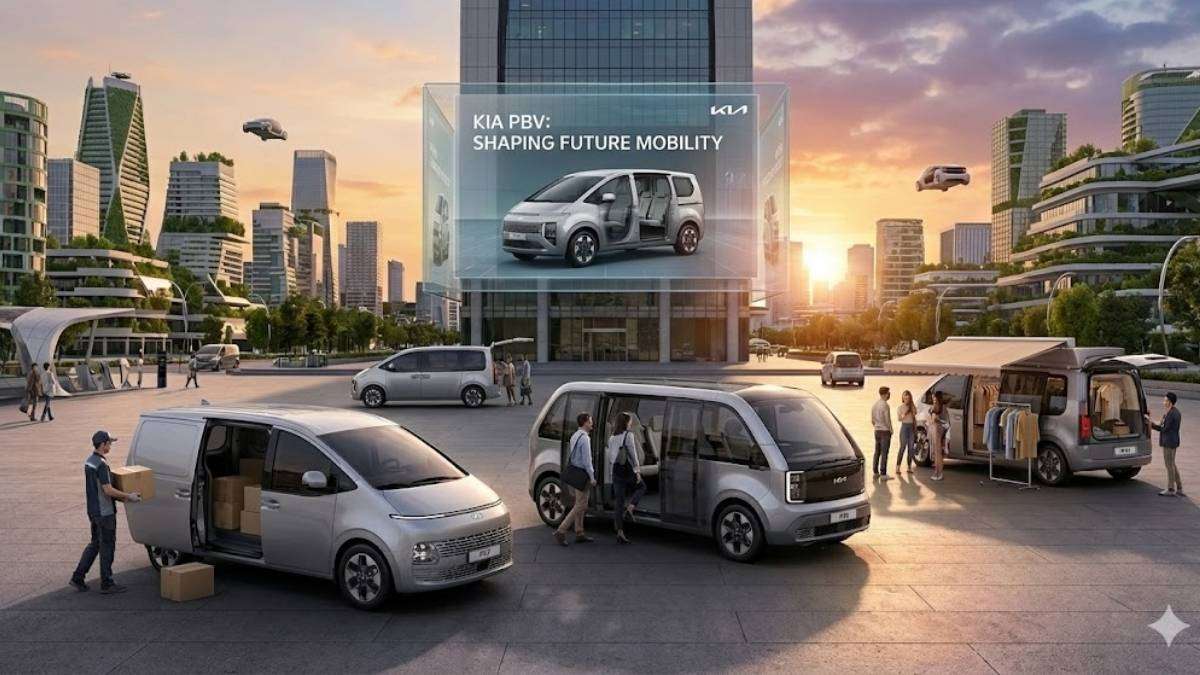

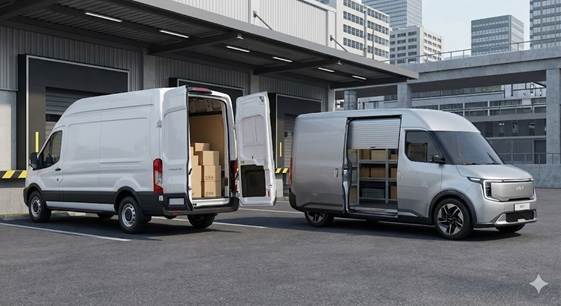
The automotive industry is currently witnessing a pivot that rivals the shift from horses to internal combustion. For decades, the "van" was a static tool: you bought a cargo van for boxes or a passenger van for people. If your business needs changed, you traded the vehicle. At CES 2026, Kia has effectively declared that era over. With the formal showcase of the production-ready PV5 and PV7, Kia is moving beyond the concept of a car as a product and toward the vehicle as a flexible, software-defined platform.
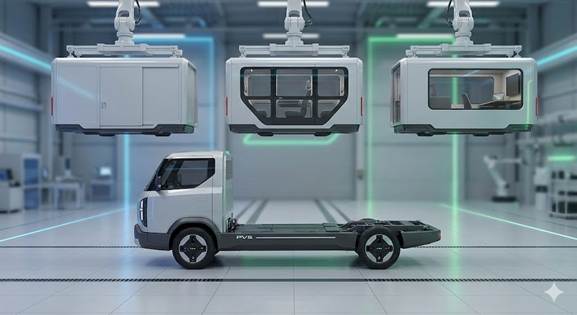
The Kia PBV (Platform Beyond Vehicle) initiative is not just about another electric van; it is about a radical rethinking of asset utilization. By utilizing a "Skateboard" EV chassis combined with a mechanical and electromagnetic coupling system, Kia allows owners to swap the "life modules"—the upper body of the vehicle—on the fly. This modularity is the industry's most direct answer to the volatile demands of the modern gig economy.
The Swiss Army Knife of the Gig Economy
The timing of Kia’s entry into this space is surgical. We are currently seeing a massive convergence of the delivery and ride-hailing markets. Companies that once only moved people are now moving parcels, and vice versa. However, a driver in an Uber environment often finds their vehicle ill-equipped for heavy-duty grocery or package delivery, while traditional delivery vans lack the comfort or configuration for premium ride-sharing.
Kia’s solution addresses the "empty mile" and "idle time" problems that plague fleet owners. A single PV5 chassis can work a morning shift as a high-capacity commuter shuttle, swap its module at a localized hub in ten minutes, and spend the afternoon as a high-volume delivery vehicle for Amazon or UPS. This capability dramatically lowers the Total Cost of Ownership (TCO) because a single vehicle can now perform the work that previously required two distinct capital investments.
The Competitive Landscape: Specialization vs. Modularity
Kia isn't the only player eying the commercial throne, but their strategy is unique. Most competitors are doubling down on Fixed-Purpose Electrification.
- Ford Pro: The Ford E-Transit is the current gold standard for traditional fleets. It offers incredible reliability and integrated software for fleet management. However, it remains a "fixed" vehicle. If you buy a high-roof cargo E-Transit, it will never be a comfortable 12-passenger shuttle.
- Rivian: The Rivian EDV (Electric Delivery Van) was designed from the ground up for last-mile delivery. It is a masterpiece of ergonomics for drivers, but it is highly specialized. It is a scalpel, whereas Kia’s PBV is a multi-tool.
- BrightDrop (GM): General Motors’ BrightDrop has successfully targeted the massive logistics players with their Zevo vans. Their focus is on the ecosystem—using electrified containers (e-carts) to move goods from the van to the door.
Where Kia differentiates itself is in adaptability. While Ford and GM are selling "the best van," Kia is selling a "variable environment." For small to medium-sized businesses that cannot afford to maintain specialized fleets, the ability to have one chassis that changes with the day’s work schedule is a competitive advantage that current offerings from Detroit or Stuttgart cannot match.
Future Offerings: The Rise of Purpose-Built Spaces
The PV5 and PV7 are just the beginning. As this modular ecosystem matures, we can expect "Life Modules" that target emerging opportunities that we currently don't even categorize as "automotive."
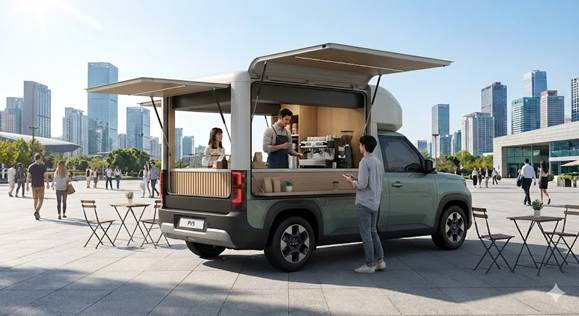
- Mobile Retail and "Pop-up" Stores: Imagine a module that is a fully branded clothing boutique or a high-end espresso bar. Retailers could lease modules rather than storefronts, moving their "shop" to where the foot traffic is based on real-time data.
- Mobile Medical Clinics: With the aging population, the "doctor comes to you" model is returning. A modular PBV could be outfitted as a mobile diagnostic suite, equipped with portable X-ray or dialysis machines, traveling between residential neighborhoods.
- The Personal Digital Twin/Office: As remote work evolves, the "Office" module could become a personal sanctuary. A professional could have their office module parked at home, then simply have a chassis pick it up and transport them to a meeting while they continue to work in a familiar, optimized environment.
The Strategic Shift: Forcing the Hand of Tech Providers
Much like IBM once dictated the standards for the computing industry, Kia is positioning itself to dictate the standards for the "modular" era. By creating a robust, open-standard interface for these modules, they are inviting third-party developers to create specialized bodies. This "platform-first" approach ensures that Kia stays at the center of the value chain, even as the specific tasks of the vehicles evolve.
Furthermore, the integration of AI in these platforms allows the vehicle to recommend configuration changes. If the AI detects a 40% spike in ride-sharing demand in a specific zip code, it can alert the fleet manager to swap cargo modules for passenger modules to maximize revenue. This is not just a van; it is a mobile, profit-optimizing robot.
Wrapping Up
Kia’s PBV strategy, led by the PV5 and PV7, represents a fundamental shift from "buying a car" to "deploying a solution." By solving the problem of asset utilization through rapid modularity, Kia has leapfrogged the traditional commercial players who are still focused on static electrification. As the delivery and ride-sharing markets continue to explode, the ability to reconfigure a vehicle on the fly will move from being a "cool feature" to a survival requirement for modern businesses. Kia isn't just building vans; they are building the flexible fabric of future urban logistics.
Disclosure: Images rendered by Nano Banana Pro
Rob Enderle is a technology analyst at Torque News who covers automotive technology and battery developments. You can learn more about Rob on Wikipedia and follow his articles on Forbes, X, and LinkedIn.
Set Torque News as Preferred Source on Google
Follow us today...