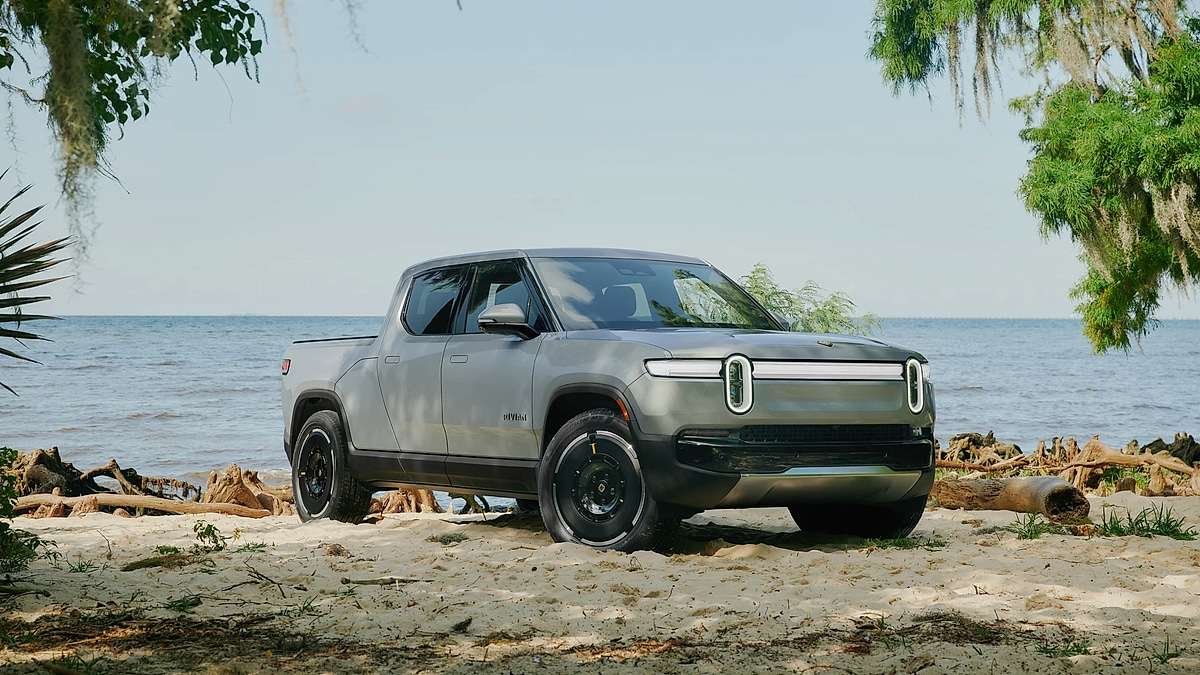

Rivian delivered 42,247 total vehicles in 2025, according to its full-year production and delivery release, while third-party model splits put R1T volume far below the R1S and far below the legacy pickup scale. One widely circulated model estimate put R1T sales at 5,857 trucks through the first nine months of 2025, down 32 percent year over year, but that is not a Rivian-reported model-level figure and should be treated as third-party analysis. Ford, meanwhile, sold 828,832 F-Series trucks in the United States in 2025, and F-Series includes F-150 and Super Duty.
California remains central to Rivian's story, but California registration claims come from California dealer/registration reporting, not Atlas EV Hub. The R1T remains on sale, yet its strongest signal is still concentrated in places that value adventure branding, home charging, and premium EV identity.
California Is Important, but It Is Not Atlas Data
Atlas EV Hub currently publishes public EV registration files for 13 participating states at the ZIP code or county level. California is not in that public table, so Rivian's California registration trend needs separate attribution. California dealer-association reporting and secondary EV coverage put Rivian's California registrations at 12,027 in 2024 and 11,134 in 2025, a 7.4 percent decline. Third-party market summaries also estimate California at roughly 30 percent of Rivian's U.S. volume.
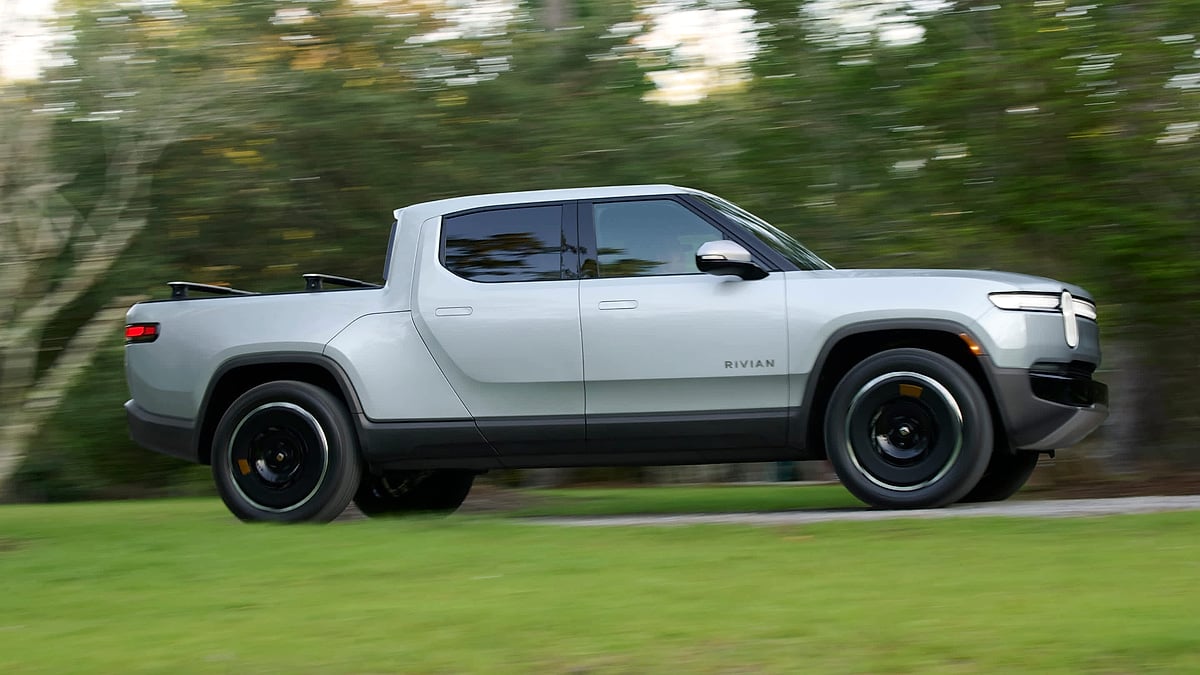
Those numbers expose the gap between a coastal EV brand and a national truck manufacturer, but they should not be credited to Atlas. A brand that depends heavily on one state has built a powerful regional beachhead. It has not automatically built a national truck business.
Colorado and Minnesota Show the Adventure Market
Third-party Rivian market summaries show strong demand in outdoor-recreation states such as Colorado and Utah, and Minnesota registration snapshots have also put Rivian products among the more visible non-Tesla EVs. These are cold-weather, outdoor-recreation markets with buyers who ski, camp, and tow boats on weekends. TorqueNews covered an R1T owner who logged 83,000 miles across long road trips. That visibility is real, and the hardware can clearly handle distance when charging, routing, and ownership habits cooperate. Those states do not represent the bulk of America's half-ton truck volume. Colorado and Minnesota buy trucks, but they do not buy them at the scale of Texas, Michigan, or the broader F-Series heartland. The R1T is winning many weekend-warrior ZIP codes. It has not yet proven it can dominate job-site counties.
Texas, Michigan, and Ohio Show the R1T Has Not Cracked Truck Country
The core truck states where full-size pickups dominate include Texas, Michigan, Ohio, Pennsylvania, Indiana, Missouri, Alabama, Tennessee, Kentucky, Oklahoma, Arkansas, Mississippi, and Louisiana. Atlas provides a public Texas file and several other state files that can be used to compare EV concentration by ZIP code or county, but it does not provide a complete national truck-country map. The available pattern still points in the same direction: EV registrations cluster around metro corridors, income, and charging access. The electric truck reality is settling in across all brands, and the geographic split shows the R1T competes with premium SUVs and adventure vehicles as much as it competes with Ford or Chevy work trucks.

Rural dealerships and service networks matter in these states because a work truck that sits at a service center for two weeks is a tool that is not earning money. Contractors buy trucks that they can service nearby. Rivian's service density is still a hurdle for primary work-vehicle duty in many of those markets.
Current R1T Pricing, Range, and Towing Define the Buyer
The current 2026 Rivian R1T Dual Standard is listed at around $70,990, including destination, by pricing guides, while Rivian's earlier Gen 2 comparison sheet listed the base truck from $69,900 before destination. Current EPA range varies by configuration: the 2026 Dual Standard is listed around 258 miles by Edmunds, while Dual Max versions can reach about 420 EPA miles. Tri-Motor Max pricing is around $100,990, including destination in current pricing guides, and high-output Quad versions climb well above that. Curb weight sits near 6,700 to 7,100 pounds, depending on pack and trim. Towing ratings also vary: Standard-pack trucks are listed around 7,700 pounds, while Max-pack versions can reach 11,000 pounds with the proper setup. Car and Driver's R1T tow testing showed a 6,100-pound trailer cutting highway range to 110 miles at 70 mph, less than half of normal highway range in that test. Payload and bed utility matter more than acceleration when the truck is carrying drywall, not kayaks. The R1T is holding resale value better than many EVs, but the payment, insurance, service access, and charging demands still filter the audience toward premium buyers with home charging.
Atlas EV Hub Data Reveals a Geographic Ceiling the R1T Has Not Broken
The Atlas public data covers 13 states, which is enough to see EV concentration patterns, but not enough to claim a complete national verdict. The R1T sells best where EV infrastructure is dense, outdoor recreation is part of the buyer identity, and household income can support a premium electric truck. It sells less convincingly where trucks function as primary tools for hauling, towing on rural routes, or reaching job sites beyond the nearest fast charger. Real towing routes through the Great Plains and the Deep South do not always follow the interstate corridors where fast-charging stations cluster. One owner report said the factory jack failed under load, and that kind of anecdote should stay framed as an owner case, not a fleetwide defect. I put the registration maps next to the pickup sales maps and saw two different countries. One is buying an electric adventure truck. The other is waiting for an electric truck that works like the one it already owns.
Rivian built a compelling adventure product, but adventure branding and replacement demand are two different markets. The R1T will find buyers in Boulder and Bend for years. The question is whether it will ever find them in Baton Rouge.
About The Author
Noah Washington is an automotive journalist based in Atlanta, Georgia, covering sports cars, luxury vehicles, and performance culture. His reporting focuses on explaining the engineering, design philosophy, and real-world ownership experience behind modern vehicles.
Noah has been immersed in the automotive world since his early teens, attending industry events and following the enthusiast communities that shape how cars are built and driven today. His work blends industry insight with enthusiastic storytelling, helping readers understand not just what a car is, but why it matters.
Noah is also a member of the Southeast Automotive Media Association (SAMA), a professional organization for automotive journalists and industry media in the Southeast.
His coverage regularly explores sports cars, luxury vehicles, and performance-driven segments of the automotive industry, including the evolving culture surrounding Formula Drift and enthusiast builds.
Read more of Noah's work on his author profile page.
You can also follow Noah here:
Set Torque News as Preferred Source on Google
Follow us today...