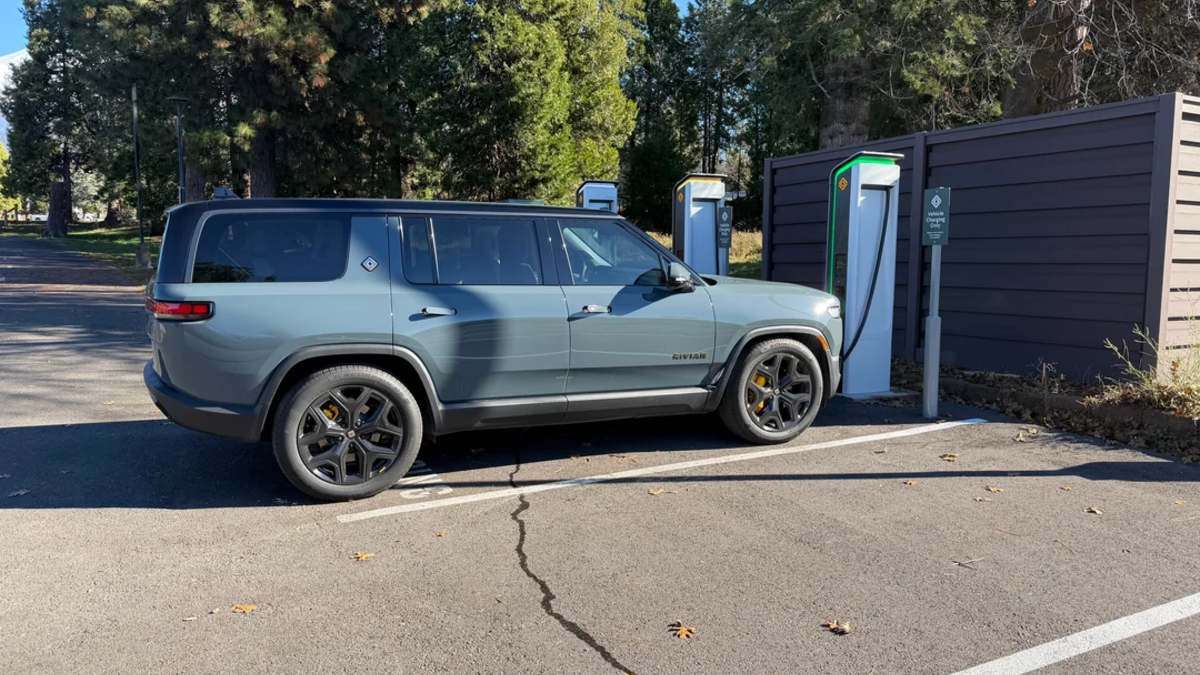

There is a particular kind of road trip tension that sets in long before anything actually goes wrong. It is the uneasy knowledge that a thousand miles of American highway, weather, concrete, and chance lie ahead and that eventually something will ask more from the driver than a light foot on the accelerator. For one Rivian R1S owner heading out on his first major journey, that moment arrived not through mechanical drama but through a stubborn lull in software communication. A quiet failure to connect can feel more unnerving than a sputtering carburetor once did, because it strikes with no scent, no noise, and no clue. Yet what followed was not a tale of misfortune but a lesson in modern troubleshooting that still left the driver proud of his machine by the time he rolled home.
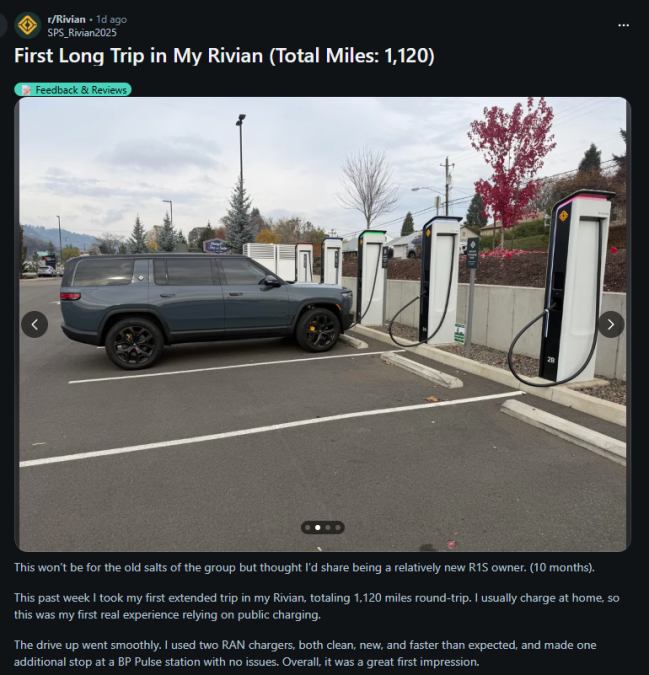
“This won’t be for the old salts of the group, but I thought I’d share, being a relatively new R1S owner. (10 months).
This past week, I took my first extended trip in my Rivian, totaling 1,120 miles round-trip. I usually charge at home, so this was my first real experience relying on public charging.
The drive up went smoothly. I used two RAN chargers, both clean, new, and faster than expected, and made one additional stop at a BP Pulse station with no issues. Overall, it was a great first impression.
The big lesson: plan destination charging better. I arrived with about 23 percent, assuming a decent-sized college city would have plenty of chargers. That assumption was wrong. After searching around, I ended up at a ChargePoint station pulling about 65 kW, which saved me from a 35-minute backtrack to the freeway chargers.
The return trip got interesting. My hotel had a parking garage, and when I got in to start the drive home, my truck showed I was offline. Once I pulled out of the garage, it reconnected, but that was just the beginning.
My first planned charge stop was at an EVConnect station. It kept throwing errors and would not connect. I then drove to an Electrify America station nearby and paid at the charger, which finally worked and got me back on the road.
Next, I stopped at the same RAN charger I had used on the way up. I plugged in and immediately got a failure to connect message. I tried another stall with the same result. Meanwhile, a Black Tesla next to me was charging with no issues at all, which made the situation even more embarrassing.
Advertising
I continued to the next stop, another RAN I had used earlier in the trip, and got the same failure to connect message. At that point, I realized the problem was likely the truck, not the chargers.
After a quick YouTube search, I performed a soft reboot. Once it restarted, the truck reconnected and charging worked again. The only thing I can think of is that the combination of being in the parking garage, connected to Starlink, with no view of the sky for an extended period, somehow contributed. Who knows.
My final stop was at an Electrify America station, where I arrived with 6 percent remaining. I plugged in, hit 219 kW, and had no issues at all. It ended up being the smoothest charge of the return trip.
When I arrived home, I plugged into my Rivian wall charger, and it took 109 kWh to get back to 100 percent overnight. (My choice).
Overall takeaway: This trip taught me a few valuable lessons. Planning destination charging is just as important as planning the highway stops, and knowing simple troubleshooting steps like a soft reboot can save a lot of time and stress when something glitches.
The drive itself was the best part. Enhanced Highway Assist made the long stretches incredibly easy, the truck tracked smoothly, and the ride was comfortable the entire way. And after doing 1,120 miles with a mix of charging networks and real-world conditions, I can confidently say I have no more range anxiety. The Rivian proved itself completely capable on a long road trip. Oh! RAN chargers were the most expensive!
Overall, the experience reinforced how great this truck is for covering serious miles.”
The quiet panic that arrives when several charging attempts fail in a row is not unfamiliar to longtime Rivian owners. One commenter pointed out that three consecutive fast charge failures prompt the vehicle to begin a thirty-minute lockout timer, after which either a full reset or the natural expiration of the countdown is required before the truck will accept a charge again. Another owner noted that even after more than one hundred thousand electric miles in various vehicles, he still ran into the same issue on his first Rivian road trip. He added that a simple notice explaining what is happening would reduce the confusion that naturally follows a string of error messages.
Rivian R1S: Charge Time & More
- Depending on the battery pack, the R1S offers an EPA-estimated range of roughly between ~258 miles (Standard pack) and up to ~410 miles (larger battery / “Max” pack) on a full charge.
- Using a proper DC fast charger, the R1S can recharge from about 10 % to 80 % in approximately 30–41 minutes (depending on battery size).
- As a full-size, seven-passenger SUV with foldable seats, it offers ample space for cargo and gear when the rear seats are folded down, useful for road trips, camping, or hauling bulky loads.
- The R1S can tow up to about 7,700 pounds, enough for a good-sized camper, trailer, or boat.
The R1S driver figured out the solution through the modern equivalent of a roadside conversation with a veteran mechanic. Instead of leaning over a fender with a stranger at a gas station, he opened YouTube and typed in a few searching words. The soft reboot he found there, simple as holding the outer wheel buttons and waiting through a brief blackout of the displays, restored charging immediately. It did not matter whether the root cause was the underground garage, the truck lingering on Starlink with no view of the sky, or an internal lockout sequence. What mattered was that the fix was quick, and it worked.
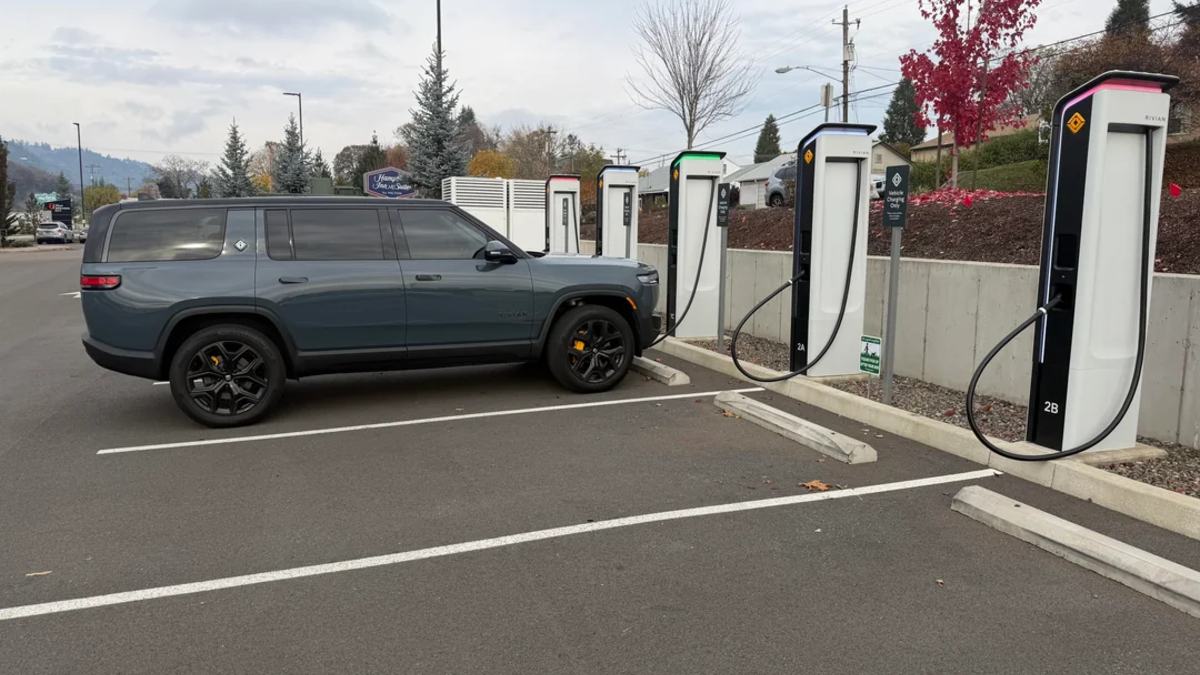
There were brighter spots along the way. One commenter gave a nod to the 65-kilowatt ChargePoint station that kept the trip intact when options grew thin. He noted that on several of his own journeys, the best available charging was six kilowatts or even a regular household outlet at a rental property. It made this mid-level charger feel almost luxurious. Meanwhile, the Electrify America session near the end of the return trip delivered 219 kilowatts and proved the smoothest stop of the entire venture.
The R1S itself seemed to take the miles in stride. The owner praised Enhanced Highway Assist for easing the long stretches and reported that the vehicle tracked well, rode comfortably, and dissolved what remained of his range anxiety. The hiccups only reinforced how important it is to plan destination charging with the same care given to highway stops, while also knowing the basic troubleshooting steps that keep the trip on schedule. By the time he reached home and plugged into the wall unit for an overnight refill, he had gained confidence, not doubt, in his truck.
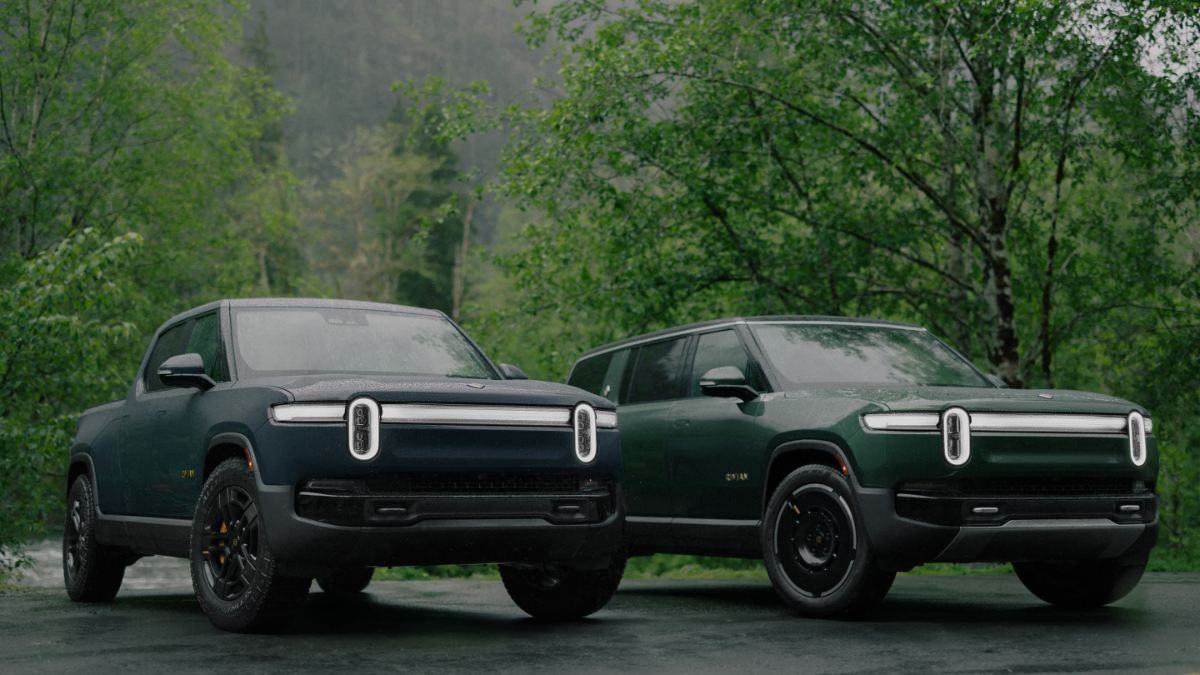
This story is not about frustration or defeat. It is about how modern road trips increasingly combine mechanical confidence with digital understanding. Every long journey teaches its own set of lessons, and this one revealed that a soft reboot can be just as valuable as a tire gauge or a pressure check. The Rivian covered 1,120 miles across diverse networks and unpredictable conditions and still convinced its driver that it is fully capable of serious travel. The brief scare simply added to the education of an owner learning how to master a very modern kind of adventure.
Image Sources: Rivian Media Center
Noah Washington is an automotive journalist based in Atlanta, Georgia. He enjoys covering the latest news in the automotive industry and conducting reviews on the latest cars. He has been in the automotive industry since 15 years old and has been featured in prominent automotive news sites. You can reach him on X and LinkedIn for tips and to follow his automotive coverage.
Set Torque News as Preferred Source on Google
Follow us today...