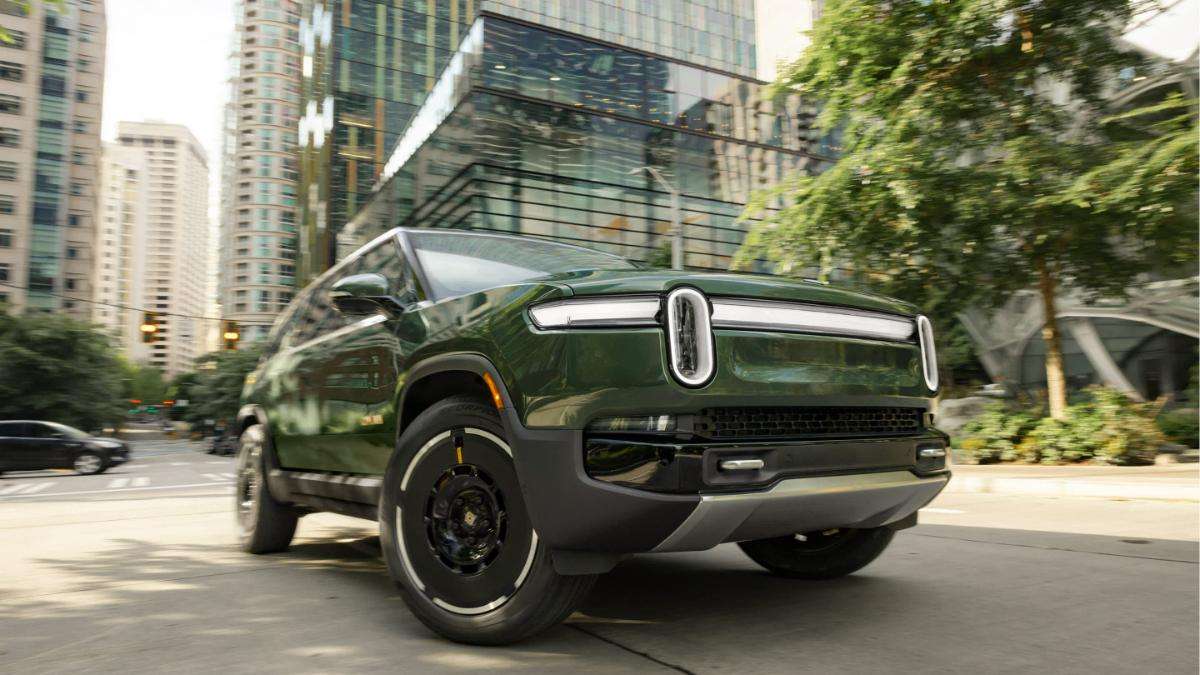

There are moments that pierce through the noise of traffic and touch something deeper. Something industrial. Something American. It happened in Indianapolis, not far from the kinds of roads that once carried steel from mill to market and now hum with the promise of battery packs and start-up grit. A Rivian R1S had just pulled up to a light when a woman with Illinois plates and a Rivian hoodie pulled alongside and waved like she knew the man behind the wheel. She didn’t. But she knew that vehicle. She helped build it.
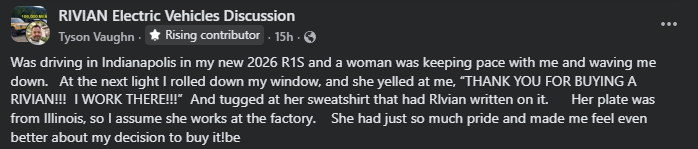
“I was driving in Indianapolis in my new 2026 R1S, and a woman was keeping pace with me and waving me down. At the next light, I rolled down my window, and she yelled at me, “Thank you for buying a Rivian! I work there!” And tugged at her sweatshirt that had RIvian written on it. Her plate was from Illinois, so I assume she works at the factory. She had just so much pride and made me feel even better about my decision to buy it!”
It captures what Detroit once exported in bulk: pride, born not just of labor, but of purpose. There’s a quiet revolution brewing in Normal, Illinois, and it's not being led by flashy executives or lobbying campaigns. It’s being carried on the shoulders of line workers who have watched the ebb and flow of industry in America, and still show up every day to build something that matters. These are the new standard bearers of American automotive pride.
Rivian R1S: Design Process
- The R1S’s design process emphasizes adventure utility, integrated gear solutions, modular interior, and family-oriented ergonomics, rather than radical structural innovation.
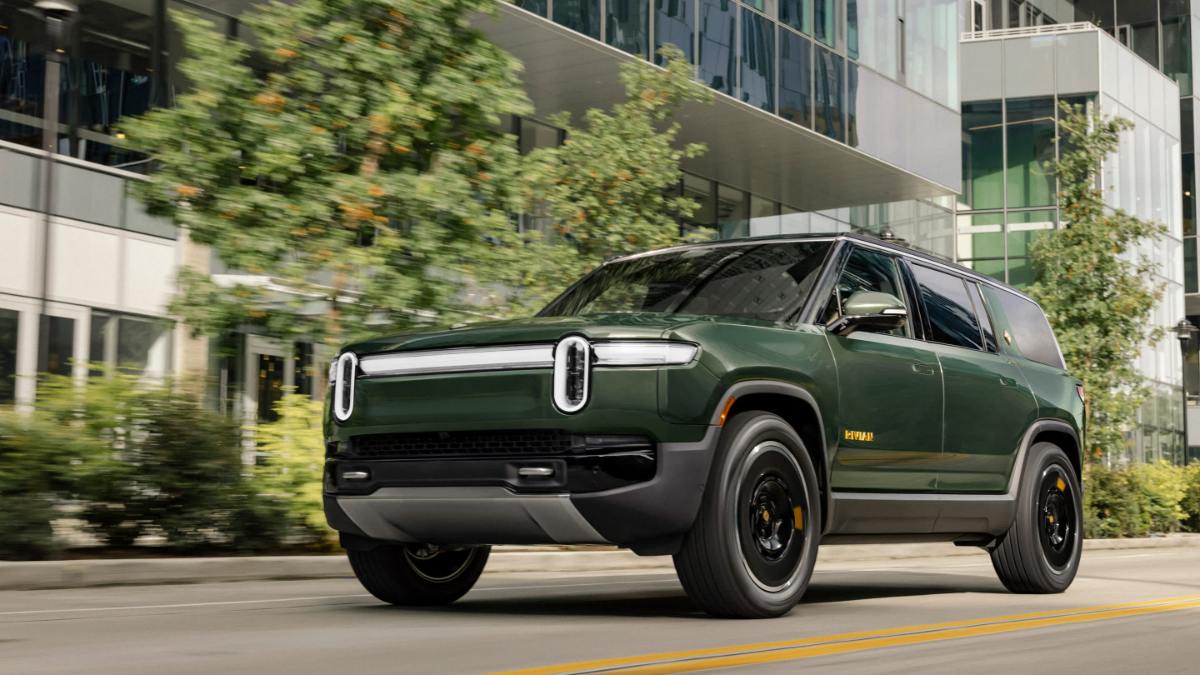
- Rivian builds the R1S at its Normal, Illinois, plant, using more conventional stamping and welding methods that allow for smoother curves and premium finish aesthetics.
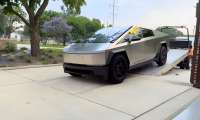
- Compared to the Cybertruck’s aggressive industrial minimalism, the R1S embraces a friendly, modern-retro design language, appealing to buyers who want capability without the spaceship bravado.
And that pride isn’t isolated. It showed up in the comment section. A Rivian employee named Kathryn chimed in: “I thank you as well! I also work there, but on the Amazon van line.” Another, Eric Chapman, simply said, “Can confirm – we love seeing them in the wild.” These aren’t sound bites. These are the small, unprompted gestures of people who genuinely care about the machines they’re making. In the 1960s, those machines were Corvettes, GTOs, and Road Runners. Today, it's dual-motor EVs with enough torque to humble a diesel. The context has changed. The pride has not.
You don’t have to squint too hard to see the echoes of the past. In an earlier era, it was common to know someone who worked at the plant that built your car. Your cousin might’ve handled your dashboard. Your neighbor welded the frame. That connection was lost in the outsourced years, when supply chains grew long and impersonal. But here’s Rivian, in the middle of Illinois, rekindling that intimacy between builder and buyer. When a worker chases down a customer in traffic just to say thanks, you’re not watching a transaction. You’re witnessing a relationship.
That Rivian facility, built on the bones of a former Mitsubishi plant, has seen darkness. When the original factory shut down, it didn’t just take jobs. It took confidence. It stole futures. So when Rivian fired the place back up, hired some of the same people, and started building trucks that people actually wanted to buy, it wasn’t just a business success. It was a cultural resurrection. One commenter, Craig, recalled a worker at a Culver’s drive-thru telling him she’d built his truck. “Not sure why not working there anymore,” he added. Even in departure, the pride remains.
Of course, it’s easy to romanticize. Rivian still has to survive the brutal economics of carmaking. They’re not immune to the pressures of capital markets and production scaling. But there’s a difference here. These vehicles aren’t being built in a lab. They’re being built by people with skin in the game, in a town that remembers what it’s like to lose everything. That emotional investment isn’t listed in any quarterly report, but it shows up at intersections, in parking lots, and on Facebook groups filled with genuine gratitude.
And now there’s competition. Kristina Schroeder, another commenter, wrote, “We pick ours up next Monday. So excited!!! Goodbye Tesla, hello Rivian.” That’s not just a consumer upgrade. That’s a vote of confidence in a different kind of American EV company, one rooted in traditional manufacturing towns, building something new without forgetting where it came from. Tesla showed the world what was possible. Rivian is showing that it can be done with a different tone, a different crew, and maybe even a different soul.
What happened in Indianapolis is more than a feel-good story. It’s a reminder that American manufacturing, when done with integrity and purpose, still means something. It means a worker pulling alongside you just to say thanks. It means a factory that once stood silent now buzzes with the sound of relevance. It means that buying something built here can still feel like more than a purchase. It can feel like a handshake, like a shared victory, like being part of something real. And in this moment, on this street, that’s exactly what it was.
Image Sources: Rivian Media Center
Noah Washington is an automotive journalist based in Atlanta, Georgia. He enjoys covering the latest news in the automotive industry and conducting reviews on the latest cars. He has been in the automotive industry since 15 years old and has been featured in prominent automotive news sites. You can reach him on X and LinkedIn for tips and to follow his automotive coverage.
Set Torque News as Preferred Source on Google
Follow us today...