
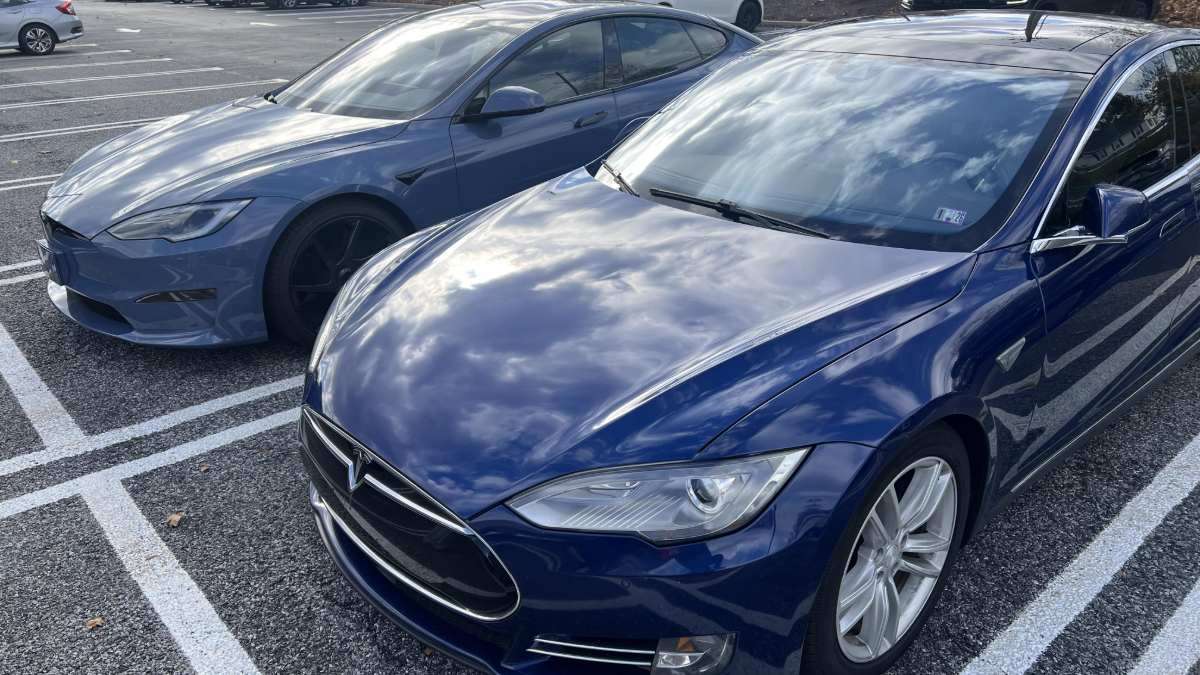

There is a moment in every long run when the show stops trying to shock you and starts trying to win you over with craft. The Model S has reached that phase. The 2026 car carries the same silhouette and the same quiet confidence as the original, then adds depth to the performance, calm to the ride, and more maturity to the tech. What began as a moonshot sedan now feels like a proper grand tourer that happens to run on electrons. The headlines remain: speed, range, software, but the story is in the details, tighter structure, cleaner assembly, more thoughtful interfaces, and fewer rough edges that once let critics in.
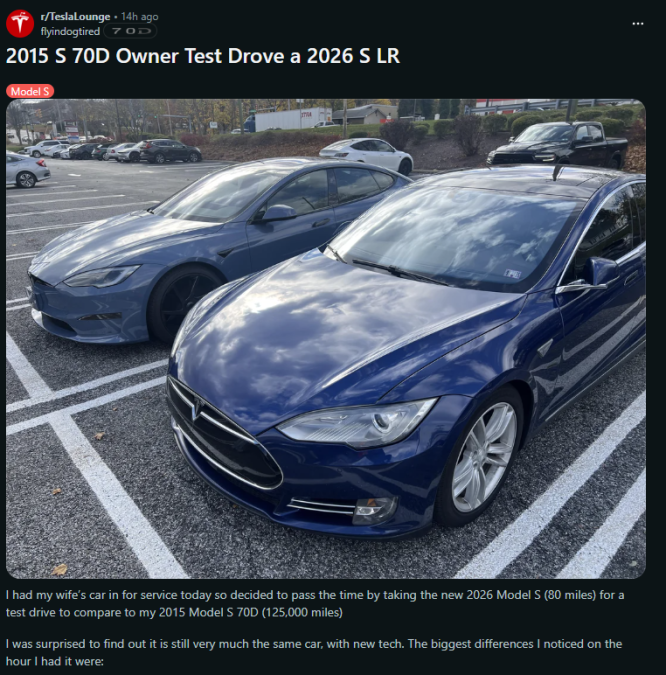
“I had my wife’s car in for service today, so I decided to pass the time by taking the new 2026 Model S (80 miles) for a test drive to compare to my 2015 Model S 70D (125,000 miles)
I was surprised to find out it is still very much the same car, with new tech. The biggest differences I noticed in the hour I had it were:
-Suspension is night and day better. My 2015 doesn’t have air suspension, so that was an immediate and substantial improvement.
-The acceleration is significantly faster, and I scared myself a bit when I first floored it. I knew there would be a difference, but wow.
-I prefer the “portrait” orientation of the screen over the new “landscape”. In my normal seating position, the left side of the screen is partially obscured by the steering wheel. Which seems like very poor design, considering the gear selection, along with nav selection, is on that part of the display.
-Blinkers as buttons instead of a stalk is a miss for me.
-Separate voice command button from the scroll wheels is a win.
-Physical blind spot indicator lights in the speaker grills, along with the camera display on the speedometer, are brilliant and much needed. I would pay for that upgrade to mine.
-FSD (v 13) with the bumper camera seems to work about the same as my wife’s HW4 model Y. If this ever goes unsupervised, that would make it worthwhile for me. Current state, I think it’s great to buy a month for road trips.
Advertising
I didn’t notice any difference in seat comfort. In fact, the seats seem to be a bit shorter on the bottom cushion. That’s disappointing as a tall person.
-More headroom with the closed glass roof instead of the sunroof you can open on mine.
-No FSD visuals or ability to pick a parking spot on the main display is a miss for me. So much screen real estate goes mostly unused. Having to use the scroll wheel to pick a parking spot is cumbersome.
-Didn’t have it long enough to test range, but this should obviously be significantly better on the new one. For me, it’s a work commuter and around-town car, so the range on my 70D is more than sufficient.
-Finally loved the matte blue color way.
Still a great car, but there’s not enough there to make me run out to buy one tomorrow.
Anyway, nobody probably cares, but I thought I would share my notes with the community.”
Ride quality is the first tell. The 2015 car without air could skate across broken pavement, quick but busy. The 2026 Long Range reads the road with more authority and answers with composure rather than bravado. The adaptive hardware and software tuning feel coordinated, less springy, more planted, and the shell around you now seems quieter and more solid. Acceleration remains a parlor trick that still works; the newer motors hit harder and sooner, and even veteran owners admit it can surprise them. The leap is real, but the character is familiar, a decade of revisions that stack up without erasing the original cadence. As one owner put it, Porsche style evolution, the song changes key but not melody.
Tesla Model S: Driving Experience
- The instant torque delivery transforms highway merging and passing into effortless maneuvers, while the low center of gravity from the battery placement gives it surprisingly nimble handling for such a large sedan
- The minimalist cabin centered around that massive touchscreen takes some adjustment, but once you learn the interface, controlling everything from climate to suspension settings becomes intuitive and almost addictive
- The over-the-air updates continually refine the driving experience, meaning the car you own actually improves over time rather than feeling increasingly outdated
Maturity shows in the hardware you do not notice at first. Panel fit and interior trim feel more consistent, doors close with a proper report, and the cabin has fewer distractions from squeaks or misaligned edges.
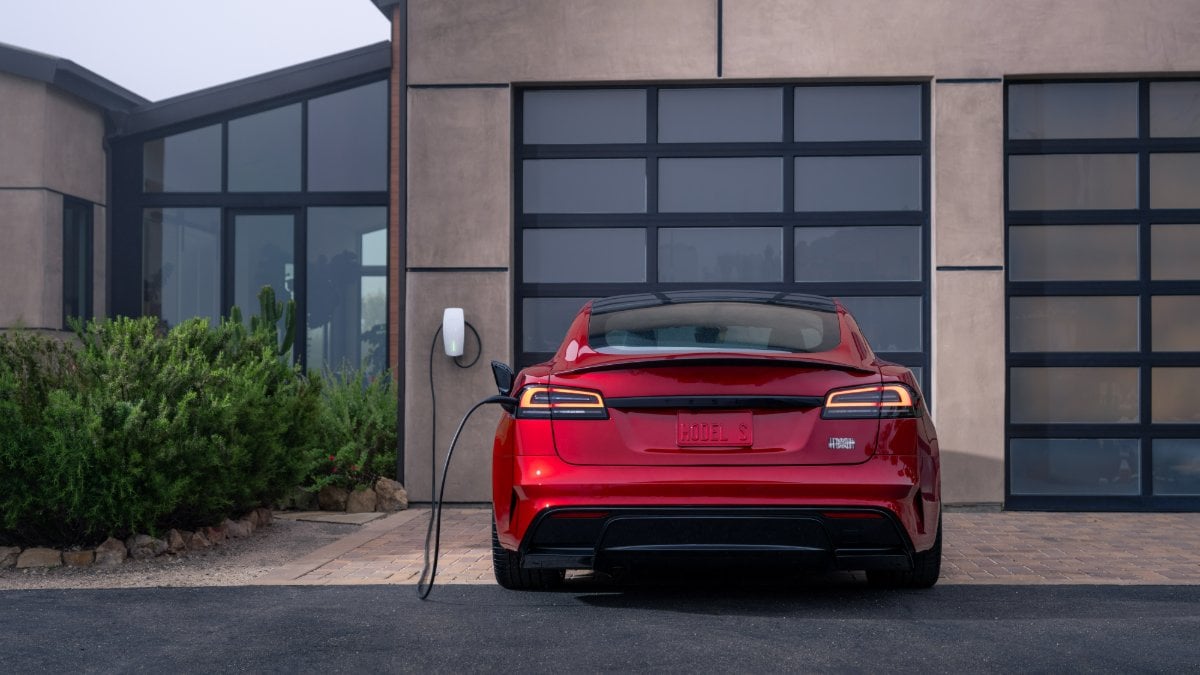
The sensor suite is more complete and better integrated. Physical blind spot indicators in the speaker grilles pair with a camera view in the driver display, a simple idea executed cleanly, and the kind of improvement drivers say they would pay to retrofit. FSD version 13 with bumper camera coverage behaves like the latest Hardware 4 cars, competent and helpful on a long haul, still supervised, still best understood as an advanced assistant rather than a chauffeur. That honesty matters more than marketing.
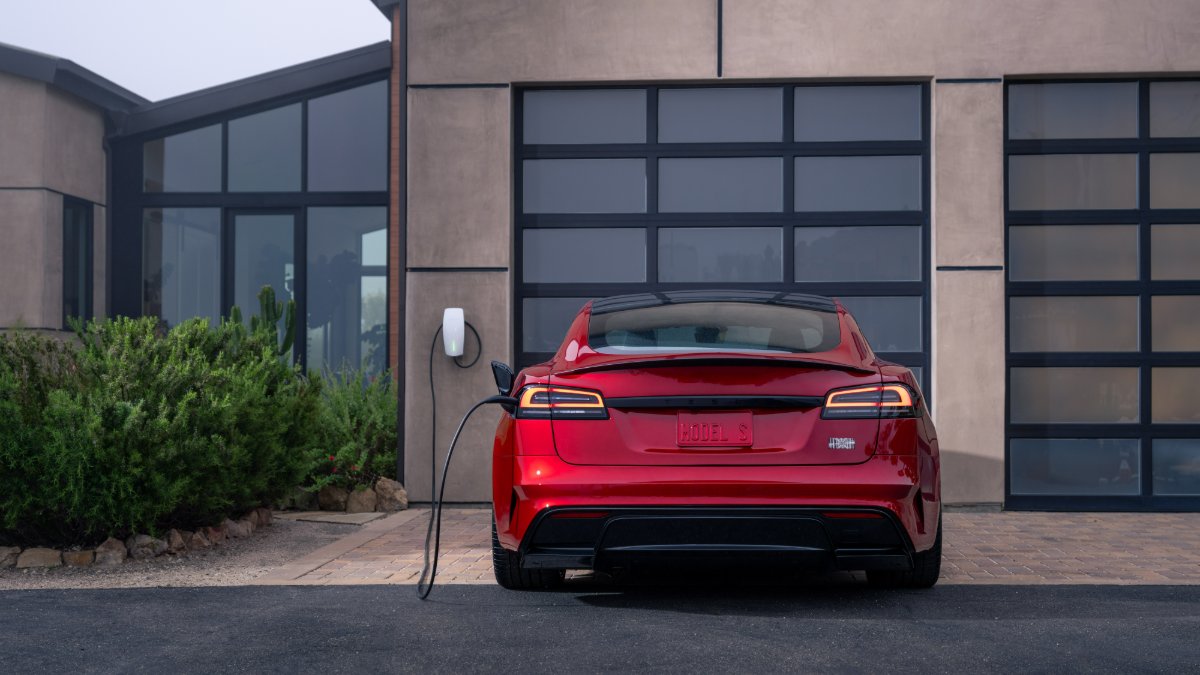
The human machine interface is where the debate heats up. The portrait screen of the early cars was a defining piece, tall, legible, and easy to parse. The switch to landscape brings flexibility for split views, yet it can lose the plot with a round wheel in front of it. Several owners point out that the left side of the display can hide behind the rim, which is not ideal when drive selection and navigation controls live there. The design was clearly optimized with a yoke in mind, where the screen breathes, and retrofitting a wheel creates an overlap that no software update can fully erase. It is not a fatal flaw; it is a tradeoff, and the kind you notice every time you reach for a control.
Controls have shifted, too. Stalks are gone, turn signals become steering wheel buttons, and the learning curve is real. Some adapt quickly and move on. Others miss the tactile certainty of a stalk that works by muscle memory. The scroll wheels remain, but their jobs have changed; legacy cars used them flexibly while a separate stalk carried Autopilot duties. Clarifications from long-time owners help; there are two wheels, both customizable, and on the newer cars, you gain a dedicated voice command button that earns praise. The on-screen drive selector can work fine, and the auto direction feature that chooses forward or reverse based on context can handle a tight three-point turn better than you might expect.
Comfort notes are mixed, which is typical for a low-slung sport sedan. One tall driver finds the new seat cushion shorter and less supportive, another with Plaid sport seats calls them fantastic while acknowledging the different brief, and yet another says the Model X of the same year suited them better. Headroom impressions vary with seat height, and the fixed glass roof can feel airier even if the numbers do not move much. The climate story is brighter. The heat pump and smarter thermal strategy make the cabin warm up with less drama, and the new hidden vents move serious air that early cars could not match. These are the quiet upgrades you appreciate on a cold commute more than on a spec sheet.
The handling of information could be better organized. FSD visuals belong on the largest screen in the car, not squeezed to a smaller cluster while the main display runs a map. Owners suggest swapping those roles, big visuals for the driving model, and a map in the binnacle, and they are right. Parking spot selection via a scroll wheel feels like a workaround rather than a solution. None of this diminishes the fundamental capability, which is strong, but it does underline the point that interface choices can either amplify or dampen the hardware gains.
Step back and the verdict reads like a seasoned road test. The 2026 Model S Long Range is a better car in the ways that matter: a calmer ride, stronger thrust, fuller situational awareness, cleaner assembly, and smarter heating and airflow. It is also the same car at heart, which is why a 2015 owner can admire it and still not rush to trade keys. That is not a knock; it is proof that the original got the fundamentals right. Evolution over revolution can frustrate shoppers who want a new face every five years, yet it rewards owners who value continuity, refinement, and the sense that their car was not a beta but a baseline that time has improved.
Image Sources: Tesla Media Center
Noah Washington is an automotive journalist based in Atlanta, Georgia. He enjoys covering the latest news in the automotive industry and conducting reviews on the latest cars. He has been in the automotive industry since 15 years old and has been featured in prominent automotive news sites. You can reach him on X and LinkedIn for tips and to follow his automotive coverage.
Set Torque News as Preferred Source on Google
Follow us today...



Comments
Nobody should but a Tesla…
Permalink
Nobody should but a Tesla. Elon is a fascist trying to destroy our country.
Best cars on the market. …
Permalink
In reply to Nobody should but a Tesla… by Shane (not verified)
Best cars on the market. This recourse of the Model S is very well written and spot on. Tired of the anti-Elon people (get a life people) commenting on his cars. Thanks Elon!
MSNBC much?
Permalink
In reply to Nobody should but a Tesla… by Shane (not verified)
MSNBC much? Oh that's right, they even had to change their name.