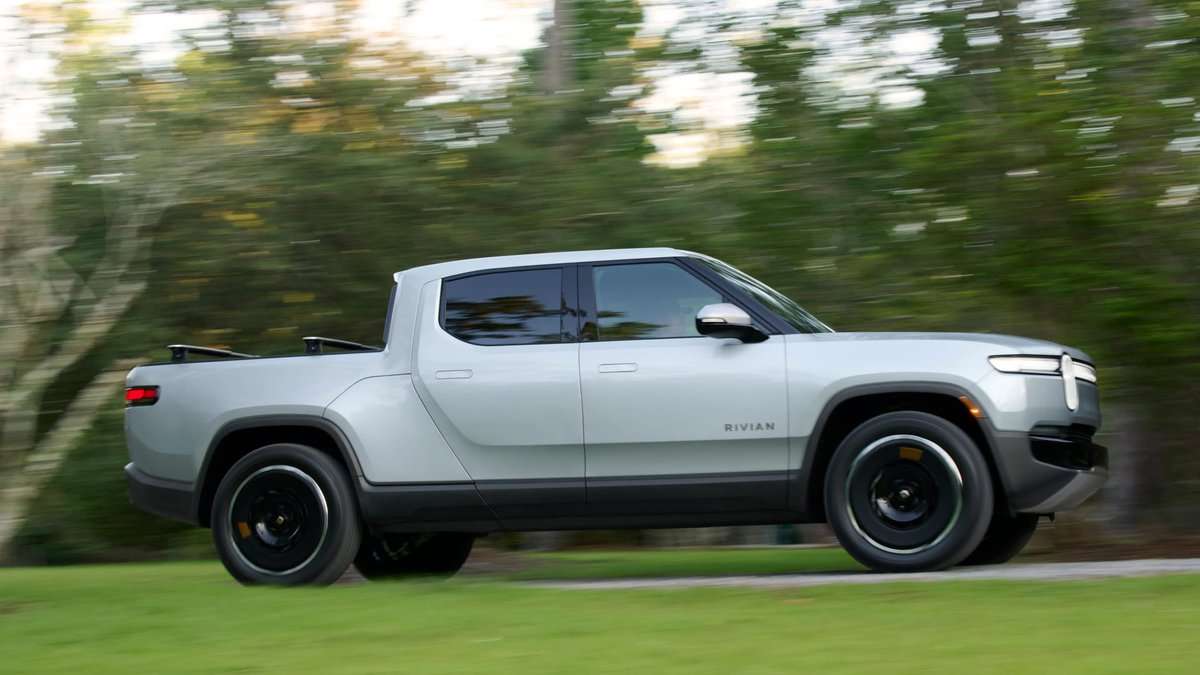

There’s a special kind of lunacy that fuels great road trips, the sort that straps otherwise rational people into a truck and points them at terrain that swallowed wagons and snapped axles. Saline Valley Road isn’t a polite jaunt on graded gravel; it’s 84 miles of rock and ruts stitched over two mountain ranges, plunging into a basin like a roller coaster designed by a sadist.
And last weekend, a Rivian R1T didn’t just survive it. It went to work.
“Stretching out across the most remote corner of Death Valley National Park is Saline Valley Road, an 84-mile mostly unmaintained unpaved dirt & rock track that traverses two mountain ranges over 6K feet to get you in (and ideally, out) of Saline Valley itself. Nestled down in the heart of the valley is a dry lake where salt was mined by the dozens of tons per day back in the early 1900s, and a small oasis campground with a half a dozen warm spring pools that have been slowly improved by local nature lovers since the 1920s. The total distance of Saline Valley Road, including a side trip to the warm springs, is 93 miles, and as best I can tell, no EV has ever completed the full journey end-to-end before without assistance...until last weekend. Yes, August in Death Valley, it was 115°F., we are a little crazy.
I say end-to-end because there have been a handful of Teslas and Rivians that have made the journey from Bishop to the springs and back, the more maintained half of the road to the closest charger. And I say unassisted because there was one intrepid soul back in 2015 with an early dual motor Model S, a generator, and a dream, who did the whole run from Bishop through Saline Valley to the Lone Pine Supercharger.
I'm going to include elevations as I list out the waypoints of our journey because they are such a significant key to understanding relative consumption from one point to another. That being said, the Rivian will reclaim back ~75% of the power you spend going up when going back down, and so keeping in mind how many thousands of feet different your elevation is from your destination and/or your next recharge is always important to understand and respect. I.E., getting into the springs is 'easy' from an SOC burn perspective, getting out is not.
Starting from Buttonwillow first thing in the morning, we jumped over Tehachapi to the Olancha RAN charger, where we had breakfast and charged from 4.6% to 100% over an hour and 40 minutes, elevation 3658 feet, putting 141kwh into our Gen1 R1T PDM Max AT. 32 miles later, we hit the south end of Saline Valley Road with 87% SOC and aired down our tires to 40psi, elevation 4751 feet. The first dozen miles of the trail run through some fantastic Joshua Tree forests and climb to 6234 feet before descending just a bit to the junction with Hunter Mountain Road. From there north we descended rapidly, and road conditions were pretty good all the way to the junction with Lippincott Road, 26 miles in and at 2238 feet. After that, however, the road appears near totally unmaintained after recent seasons of monsoon rains; it was like driving down a dry river bed all the way to the salt lake, and was in many places a slow walking pace roll through the rocks and wash-outs. Ultimately, we arrived at our camping spot at the upper warm springs with 70% left in the tank after 54 miles at an elevation of 1473 feet.
Refreshed after two nights and a day in the late summer desert sauna, we started back out again with a 64% SOC, having burned 6% camping...which was okay, but we totally could have done better! Our Jackery camp battery overheated and stopped accepting charge from our solar panels, so we had to use truck power to drive our Induction camp kitchen and coolers on Sunday afternoon
Advertising
Continuing out to the north, then is the shorter and more well-maintained half of Saline Valley Road, yet the peak elevation, which comes just as you reach pavement at the junction with the Death Valley / Loretta Mine Road, is way, way up at 7538 feet. We aired our tires back up, having cleared Saline Valley Road with 28% SOC, having burned 80kwh since the start of the trail for an average of 1.165m/kWh off-road (plus remember, about 3K feet elevation gain). Then we rolled significantly downhill to the RAN charger in Bishop, arriving with 26.9% SOC at 3998 feet, where everything was a complete insane gridlock chaos, being the last day of Labor Day weekend + the end of Burning Man...omg what a zoo, let's just go back!!”
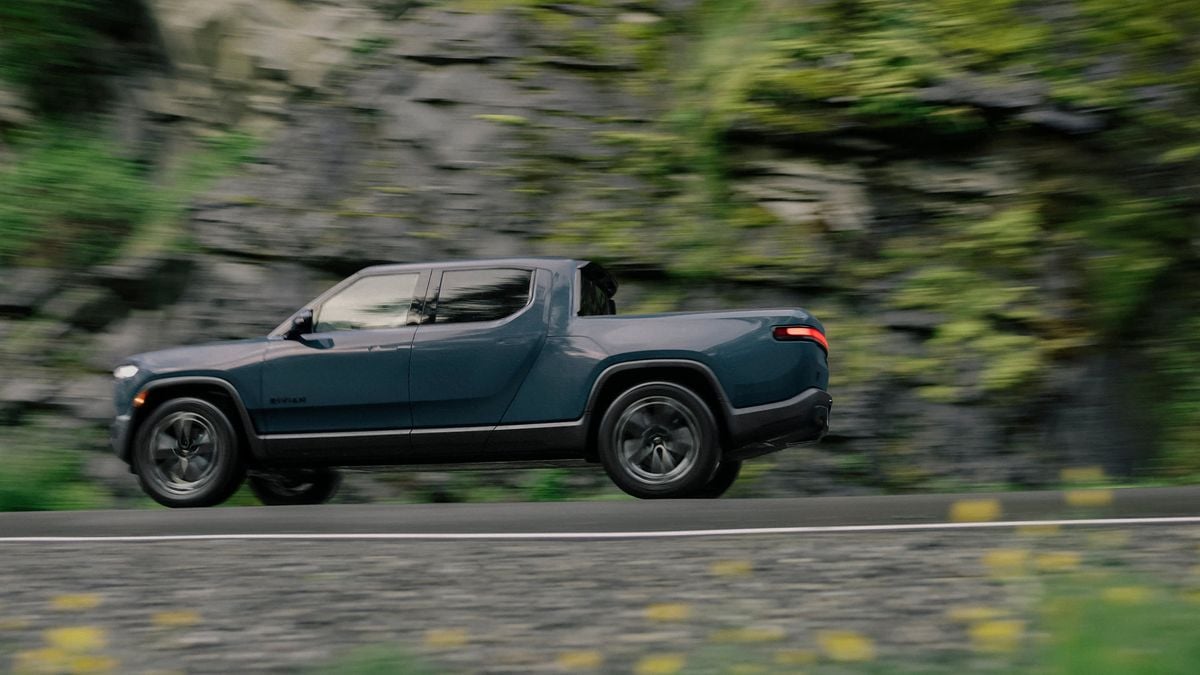
Strip away the romance and you’re left with a clean proof: unassisted, end-to-end, in 115°F heat, over hostile geology that punishes sloppy planning. The road was a mosaic of Joshua Tree highlands, dry riverbed rock gardens, and wash-outs that demanded a walking-pace crawl. Tire pressures were set with intent (40 psi), energy was budgeted by altitude, and the truck’s regeneration, recovering roughly three-quarters of the climb on the way back down, wasn’t theory. It was the difference between a story and a recovery bill. The R1T punched its timecard and did the job.
Rivian R1T Adventure-Ready Capability Features
- Delivers impressive 400+ mile range with large-pack battery configuration for extended adventures
- Features unique Tank Turn capability allowing 360-degree rotation for enhanced maneuverability
- Includes 11,000-pound towing capacity with integrated trailer brake controller and sway control
- Offers wading depth of 3+ feet with sealed undercarriage for serious off-road capability
And it did more than haul people and gear. It camped. Two nights in a desert sauna and the Rivian became a quiet utility yard: powering an induction cooktop, keeping coolers cold, and absorbing the failure of a heat-soaked auxiliary battery without complaint. Six percent state-of-charge for the creature comforts of a small apartment in the middle of nowhere is not a flaw; it’s the point. A workhorse earns its keep when the day’s labor extends into the night.
The community chorus underscores the significance. “Thanks for this! I camped in Olancha last November and wondered how well the R1T would do on a trip into Saline Valley; decided to save this for another day,” wrote Jim Donovan, equal parts gratitude and calibration. Sherwin Martin added, “I want to go back there with my new R1S so I can’t set a new record for lowest elevation. Sand dunes were fun in my R1T.” That’s how a frontier becomes a route: one owner shows the math, others mark their calendars.
The numbers tell the rest. Start at 4.6% SOC, top to 100% at Olancha (3,658 feet), roll onto dirt at 87%, air down, climb past 6,234 feet, drop to 1,473 at the springs with 70% remaining. After a layover, depart at 64%, grind north to a 7,538-foot crest, then re-pressurize and descend into Bishop with 26.9% in hand, an off-road average of 1.165 mi/kWh while the thermometer threatened to melt the horizon. That’s not luck. It’s disciplined energy and elevation management, the kind that turns “range anxiety” into a spreadsheet and a smile.
Rivian R1T Innovative Pickup Truck Design
- Features a distinctive light bar design with customizable LED signatures for brand recognition
- Includes innovative Gear Tunnel storage with 11 cubic feet of secure lockable space
- Offers an air suspension system with adjustable ride height from 8.1 to 14.9 inches
- Features Camp Mode with 120V and 240V outlets providing up to 11kW of exportable power
Even the chaos at the Bishop charger, the final-day swirl of Labor Day and Burning Man return traffic, reads like punctuation, not peril. The trip’s thesis had already been proven miles earlier on rock and heat. The R1T was a transportation, base camp, and power station in one cohesive package. It became a workhorse in the oldest sense: shoulder the burden, keep the people happy, get everyone home.
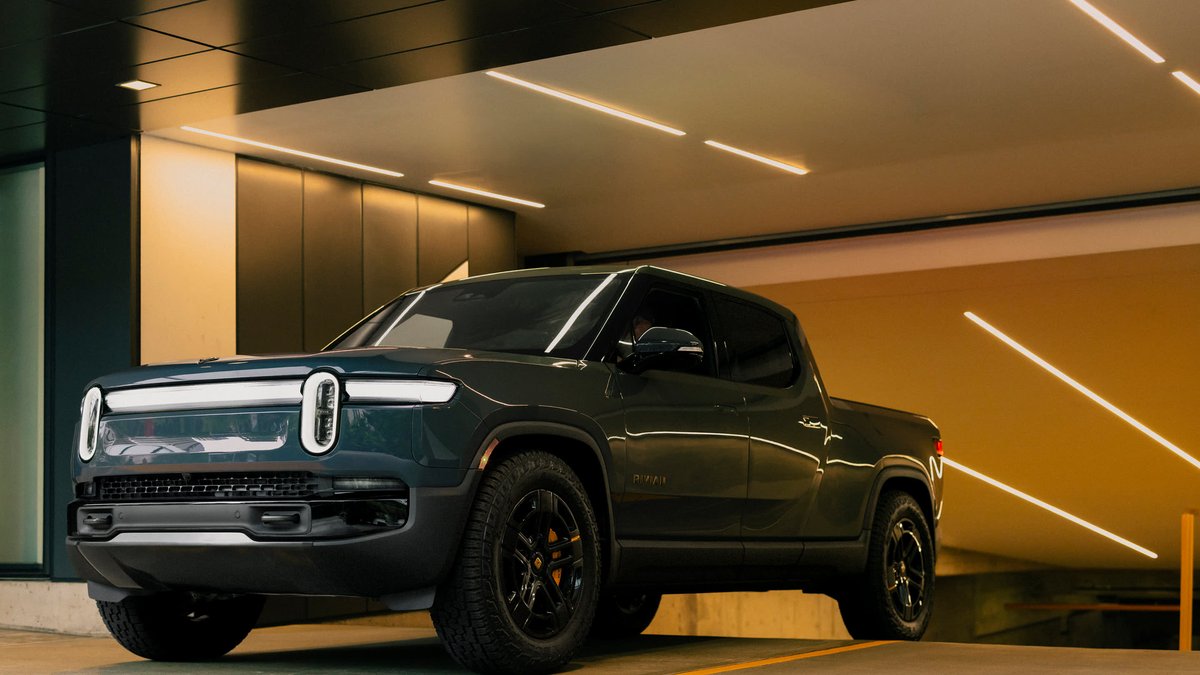
Call it a watershed or simply a well-executed plan, but the takeaway is durable. This wasn’t a publicity stunt, and it didn’t require caveats. It was an owner, a map, and a truck that matched its promise. In a place that has little patience for exaggeration, the Rivian R1T made good, quietly, competently, and with the kind of grace that lets you enjoy the stars over a warm spring before climbing 7,000 feet back to pavement.
Image Sources: Rivian Media Center
Noah Washington is an automotive journalist based in Atlanta, Georgia. He enjoys covering the latest news in the automotive industry and conducting reviews on the latest cars. He has been in the automotive industry since 15 years old and has been featured in prominent automotive news sites. You can reach him on X and LinkedIn for tips and to follow his automotive coverage.
Set Torque News as Preferred Source on Google
Follow us today...