
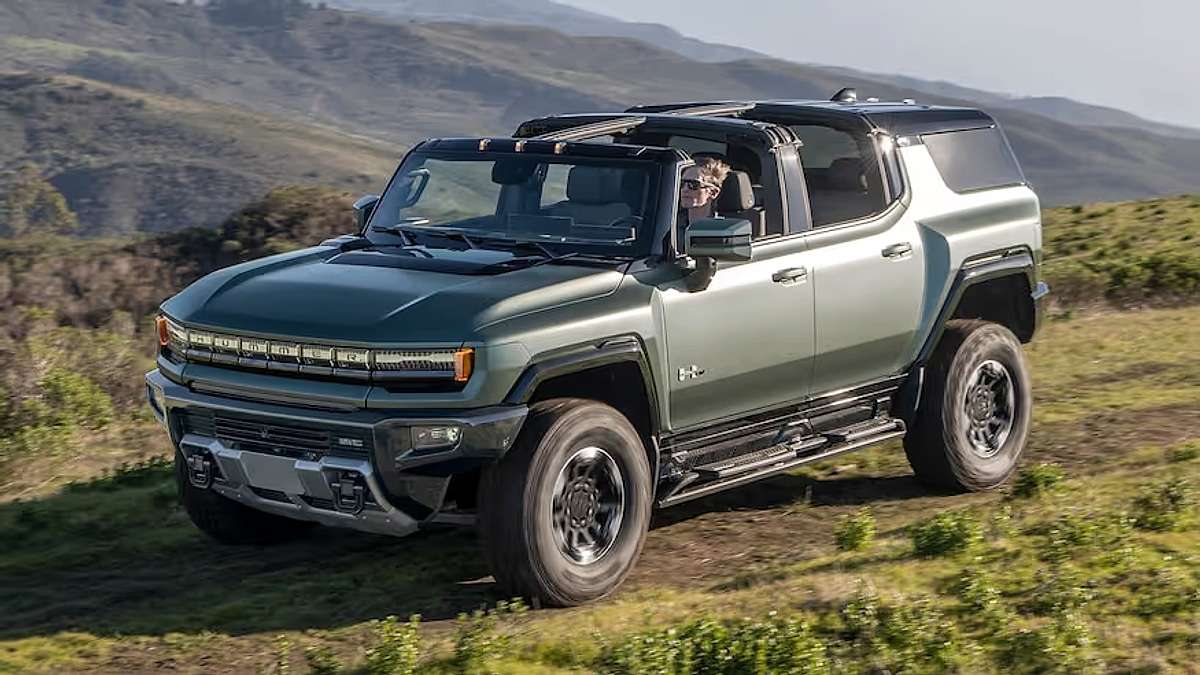

The used market for the GMC Hummer EV is starting to look unusual, and it doesn’t take much digging to see why. Trucks with almost no mileage are showing up at steep discounts, often tens of thousands below their original sticker price. Some are being listed as “used” despite having fewer miles than a typical weekend test drive.
I found a few example listings myself, and a few mentioned on Facebook stand out. A 2024 Hummer EV with just 350 miles was reportedly sold through a Cadillac dealership at roughly half its original MSRP. Another unit, showing only 35 miles, was listed at a 45 percent discount, with the dealer explaining the vehicle was a “demo” sourced directly from GMC.
When I searched Autotrader, I was able to find a similar pattern with this search link:
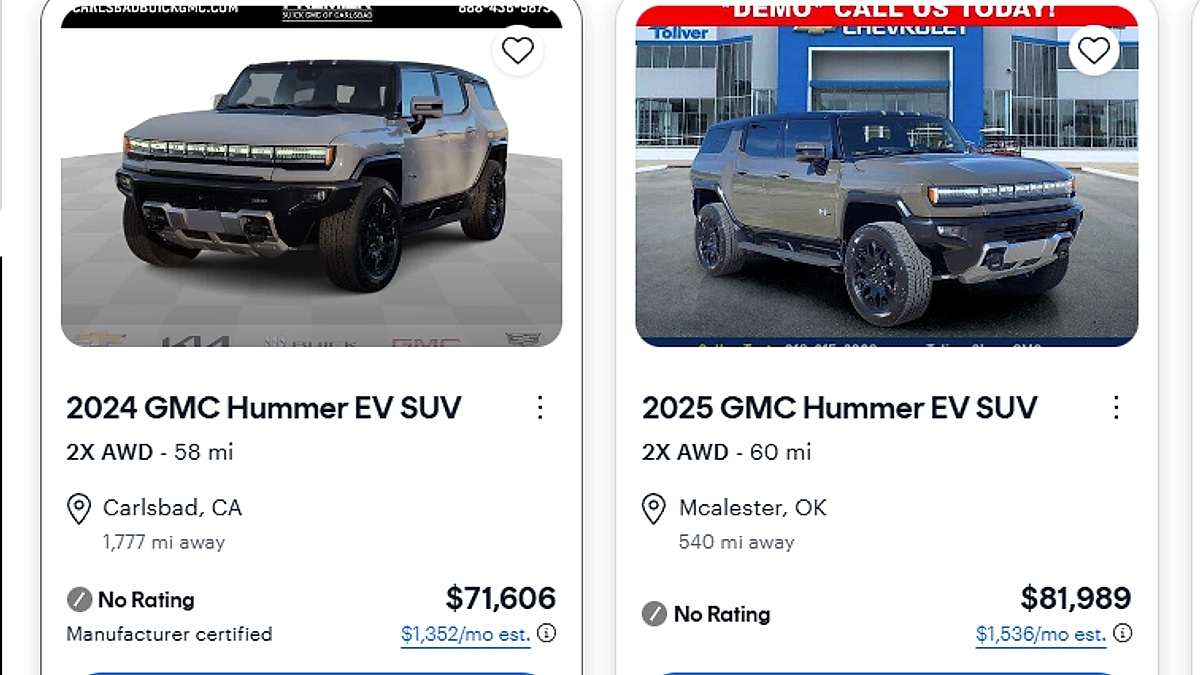
This pattern has already sparked speculation online. One widely shared post lays out the concern in plain terms:
“So with the reach of this group, I have to be a bit careful about what I say, but I’m sure some of you can read between the lines.
GM has been boasting about the increase in Hummer EV sales. So I decided to check one out, it had 350 miles on it and was exactly HALF MSRP at a Cadillac dealer. Odd, but OK. It was sold just before the Fed tax rebates ended. So I test drove it, a very interesting vehicle. When I came back, they had another one too, with 35 miles. I asked how a used car had 35 miles… and was 45% off MSRP. They told me they get them from GMC; they were demos and stuff. Does anyone remember the C&C Music Factory song “Things That Make You Go Hmmm?”
So I started looking through Autotrader and cars dot com, and I saw row after row after row on a nationwide search of Hummers, all for ridiculous prices “used” and all with under 300 miles. Many with double-digit miles.
What’s going on here? I asked myself. Remember when China had this problem? Many “zero-mile” EV’s were ending up in used car lots for half price. The CCP got wind of this and came down hard as the car makers seemed to be selling cars to “buyers”, who applied and got the rebates, then never drove the car and sold them to used car places.
If you don’t believe me, go look for yourself. You can get any number of them with virtually no miles at Cadillac dealers, or Chevy dealers, or other GM subsidiaries. For like half. Full warranties remain.
What on God’s Green Earth have I stumbled onto? Yikes.
I may delete this post at any point. I’m concerned about even making it. If you do want the most amazing deal on a pretty amazing vehicle… they’re there. May I just add that this vehicle can power a mansion for a week? It contains $50-60K worth of backup power alone. For another 10-20K, you get a vehicle that sold for $140,000.”
The observations in the post line up with what’s actually happening in the market: low-mile Hummer EVs, steep discounts, and widespread listings. Where it stretches is the explanation.
The comparison to China’s “zero-mile” EV situation doesn’t translate cleanly to the U.S. market. That situation involved direct exploitation of consumer subsidies tied to vehicle registration. In the U.S., the math doesn’t work the same way.
The federal EV tax credit for vehicles like the Hummer EV was capped by MSRP limits, and most versions of the truck didn’t qualify in the first place. Even heavily discounted, they’re nowhere near the price thresholds for used EV credits either. There isn’t an obvious subsidy pool here to harvest in the way the post suggests.
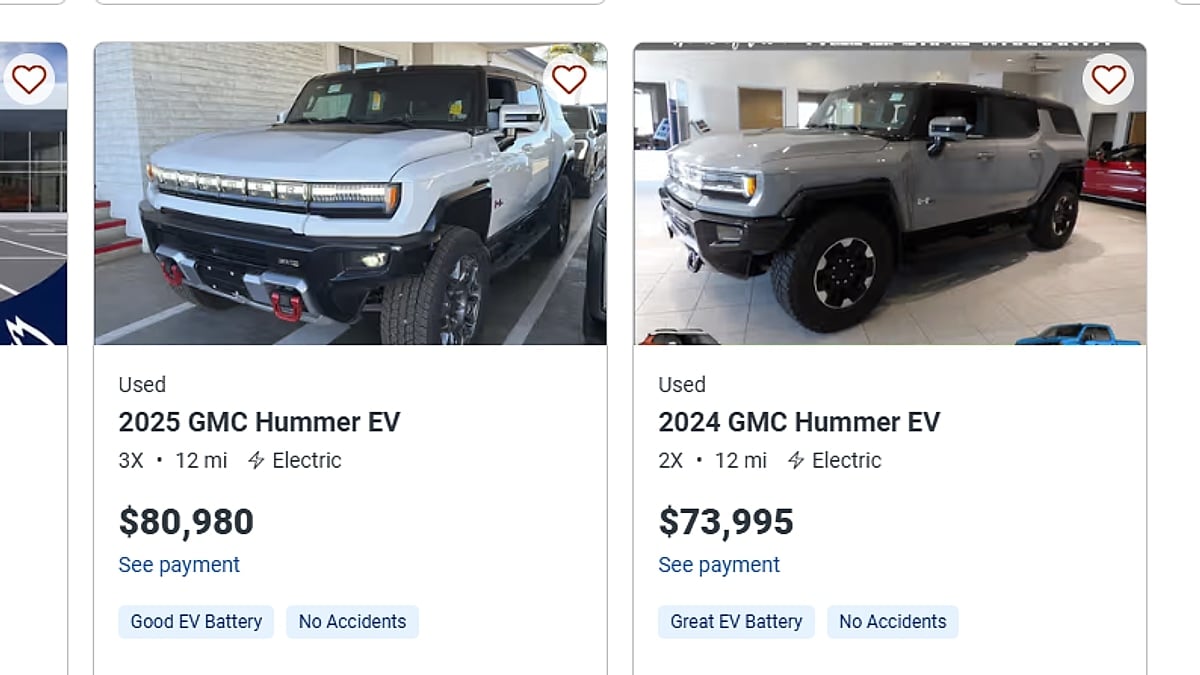
There’s also a simpler explanation for the “how is this used?” question. Demo units, courtesy vehicles, and internal fleet rotations routinely produce cars with double-digit or low triple-digit miles. They get titled, they enter service briefly, and then they’re resold. That process turns a new vehicle into a used one on paper without adding meaningful wear. It’s not unusual, just more visible here because of the price swings.
The scale can make it seem questionable, even prompting coverage from The Wall Street Journal. Rows of nearly identical low-mile listings look strange, especially at this price level. But that’s what happens when a high-cost vehicle meets softer demand than expected. Inventory builds, and the system designed to move cars starts working overtime.
GMC Hummer EV: Unpacking the "Used" Market Discrepancy
- The GMC Hummer EV Edition 1 launched with a starting MSRP of $112,595, quickly rising to over $140,000 for fully optioned models. These vehicles are now appearing at dealerships for as low as $70,000 with minimal mileage.
- The Hummer EV is built on GM's Ultium platform, featuring a 212 kWh battery pack in the Edition 1, providing an EPA-estimated range of 329 miles. Its three electric motors produce 1,000 horsepower and 1,200 lb-ft of torque.
- The vehicle's advanced features include "CrabWalk" four-wheel steering and "Extract Mode" air suspension, allowing for significant off-road capability and ground clearance. Its 800-volt architecture enables rapid charging at up to 350 kW.
- Despite its technological prowess, the Hummer EV's curb weight exceeds 9,000 pounds, making it one of the heaviest passenger vehicles on the market. When a flagship EV, positioned as a technological marvel, is widely available at half its original price within months of its initial release, it erodes consumer confidence in the Hummer EV and GM's entire electric vehicle strategy.
A large portion of these low-mile trucks are tied to demo units, courtesy fleets, or internal company vehicles. These are cars that technically enter service, often through dealer programs, before being resold. On paper, that makes them used. In reality, many have barely been driven.
Think of it like a hotel that rents out rooms for a few hours just to say they’ve been occupied, then offers them again at a discount. The room isn’t worn out, but it’s no longer “brand new” either.
GM has long used programs like dealer loaners and demo fleets to manage inventory. With a high-priced vehicle like the Hummer EV, those channels appear to be playing a larger role. The result is a pipeline of lightly used trucks entering the market at prices well below MSRP.
The bigger story is how much they’re being discounted. Reports of $30,000 to $45,000 off are becoming common, and in some cases, the cuts appear even deeper depending on configuration and timing.
That kind of drop points to a mismatch between initial pricing and what buyers are willing to pay. The Hummer EV launched as a flagship product, with early models climbing well past $100,000. At that level, the pool of buyers is small to begin with, and it shrinks quickly once incentives disappear or market sentiment shifts.
When that happens, inventory gets rerouted. Demo programs expand. Lease deals become aggressive. Vehicles move through channels that help clear stock without formally slashing MSRP across the board.
While the financial maneuvering is significant, the underlying product issues cannot be ignored. Peter Goesinya, in his comment, states, "After seeing some of the videos of the insane issues people have experienced, it turned me away from them." This sentiment, combined with the aggressive discounting, paints a picture of a vehicle struggling to find its footing. Whether these "insane issues" are widespread manufacturing defects or simply the growing pains of new EV technology, the market's perception of reliability directly impacts demand.
It’s tempting to frame this as something more coordinated or opaque, but the basic mechanics are familiar. Automakers build inventory based on forecasts. If demand comes in softer than expected, they lean on every available tool to move units.
None of it requires hidden programs or unusual accounting. It’s closer to a retailer marking down last season’s inventory, just with six-figure trucks instead of jackets.
A truck that was marketed as a premium, tech-heavy flagship is suddenly available at a massive discount with almost no miles. That creates confusion about what the vehicle is actually worth.
It also puts early buyers in a tough spot. Anyone who paid full MSRP is now looking at resale values that dropped faster than expected. At the same time, new buyers are being presented with what looks like a bargain, even though it reflects a pricing reset more than a traditional used-car deal.
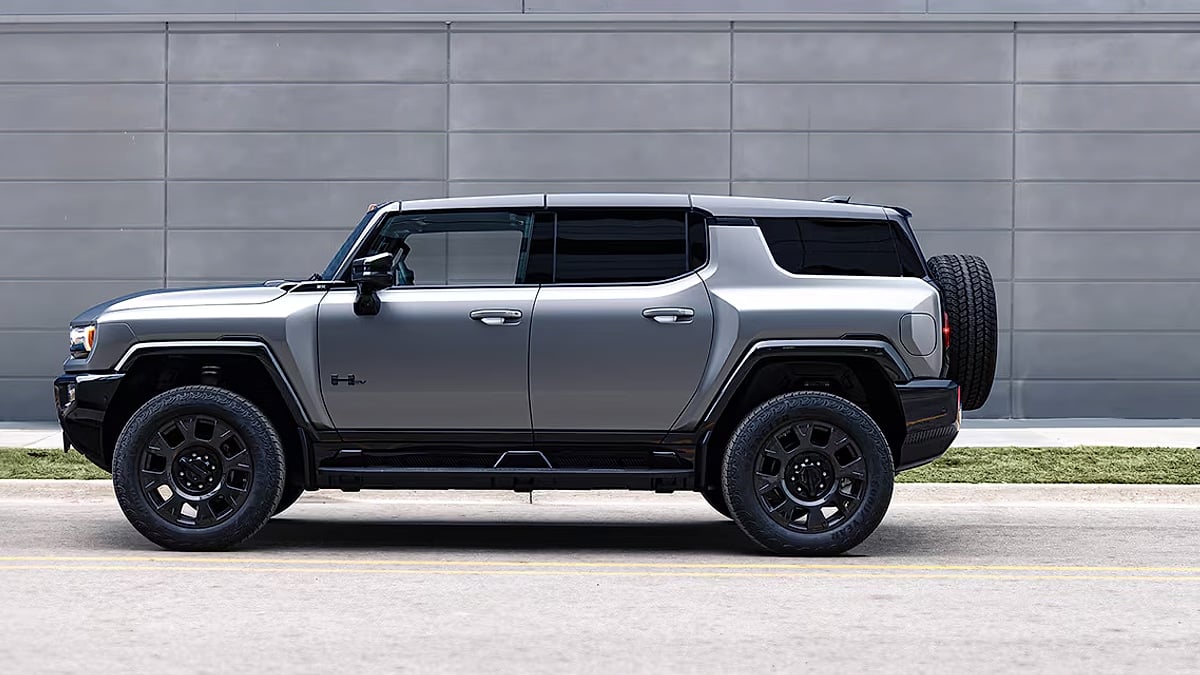
Supply got ahead of demand at the original price point. The market is correcting, and these low-mileage “used” Hummer EVs are one of the ways that correction shows up.
Is this a sign of the EV bubble bursting? Let us know in the comments.
Image Sources: GMC Media Center
About The Author
Noah Washington is an automotive journalist based in Atlanta, Georgia, covering sports cars, luxury vehicles, and performance culture. His reporting focuses on explaining the engineering, design philosophy, and real-world ownership experience behind modern vehicles.
Noah has been immersed in the automotive world since his early teens, attending industry events and following the enthusiast communities that shape how cars are built and driven today. His work blends industry insight with enthusiastic storytelling, helping readers understand not just what a car is, but why it matters.
Noah is also a member of the Southeast Automotive Media Association (SAMA), a professional organization for automotive journalists and industry media in the Southeast.
His coverage regularly explores sports cars, luxury vehicles, and performance-driven segments of the automotive industry, including the evolving culture surrounding Formula Drift and enthusiast builds.
Read more of Noah's work on his author profile page or on his personal website.
You can also follow Noah here:
Set Torque News as Preferred Source on Google
Follow us today...






