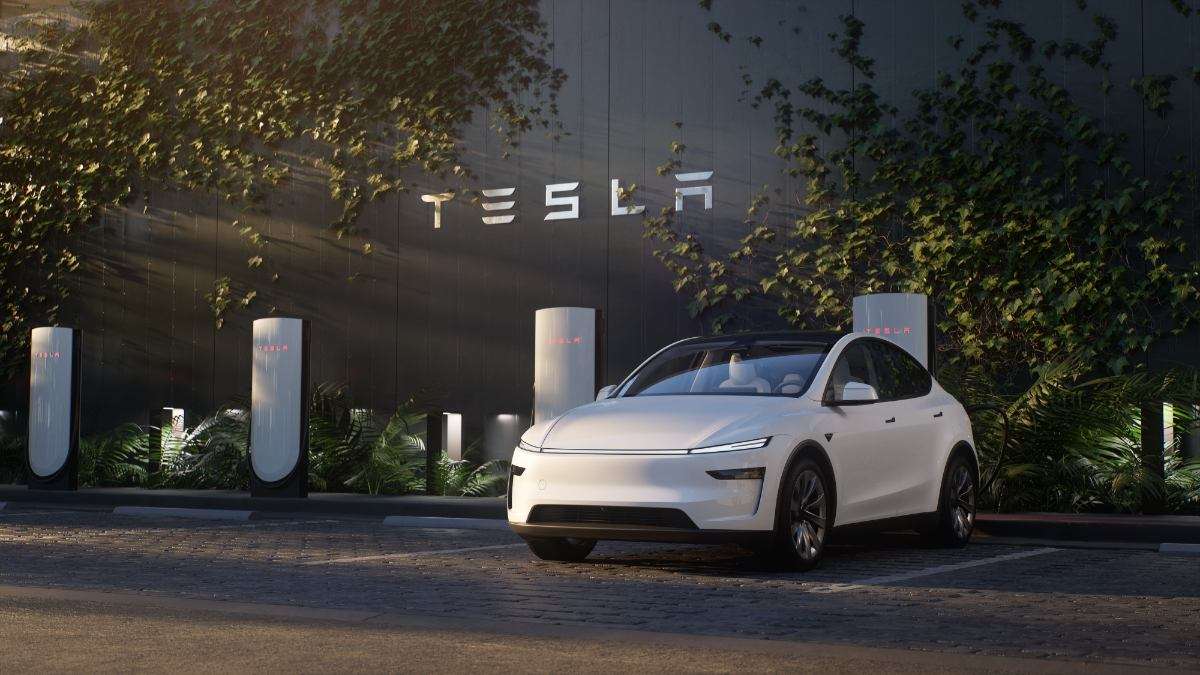

Teslas have taught owners to expect improvement while the car sleeps. Updates arrive overnight, promising smoother interfaces, smarter driver assistance, or subtle refinements you only notice after a few miles. But that trust depends on a fragile assumption: that the supporting systems quietly doing their jobs will keep doing so. A recent post on r/TeslaSupport shows what happens when that assumption fails, and how quickly a routine update can turn into an expensive uncertainty.
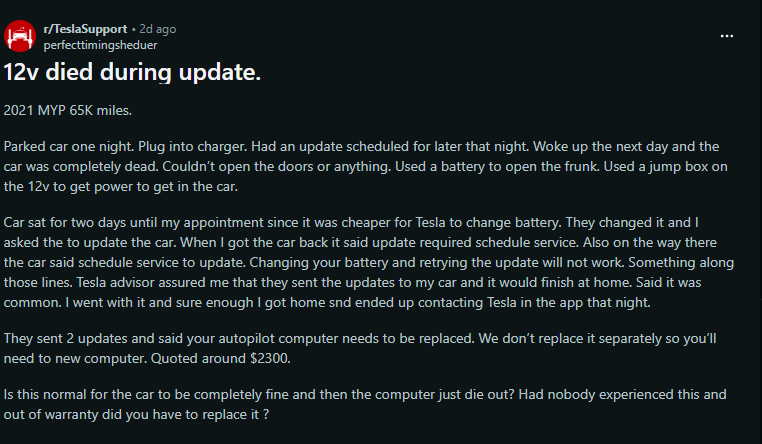
The owner, driving a 2021 Model Y Performance with roughly 65,000 miles, parked the car, plugged it in, and went to bed with a software update scheduled. By morning, the vehicle was completely dead. Doors would not open. Screens were dark. The only way in was through the frunk, powered externally, followed by a jump box on the 12-volt battery to wake the car enough to gain access. In a vehicle defined by its high-voltage sophistication, it was the smallest battery that brought everything to a halt.
“2021 MYP 65K miles.
Parked a car one night. Plug into the charger. Had an update scheduled for later that night. Woke up the next day, and the car was completely dead. Couldn’t open the doors or anything. Used a battery to open the frunk. Used a jump box on the 12v to get power to get in the car.
The car sat for two days until my appointment, since it was cheaper for Tesla to change the battery. They changed it, and I asked them to update the car. When I got the car back, it said update required, schedule service. Also, on the way there, the car said schedule service update. Changing your battery and retrying the update will not work. Something along those lines. Tesla advisor assured me that they sent the updates to my car, and it would finish at home. Said it was common. I went with it, and sure enough, I got home and ended up contacting Tesla in the app that night.
They sent 2 updates and said your autopilot computer needs to be replaced. We don’t replace it separately, so you’ll need a new computer. Quoted around $2300.
Advertising
Is this normal for the car to be completely fine and then the computer just die out? Had nobody experienced this, and out of warranty, did you have to replace it ?”
Tesla replaced the 12-volt battery after the car sat for two days, a decision made partly because it was cheaper than towing. On paper, that should have been the end of it. Instead, the car immediately reported that an update was required and instructed the owner to schedule service. On the drive home, the same warning appeared again. The service advisor reassured the owner that updates had been pushed and that the process would complete normally at home, describing the situation as common. It did not.
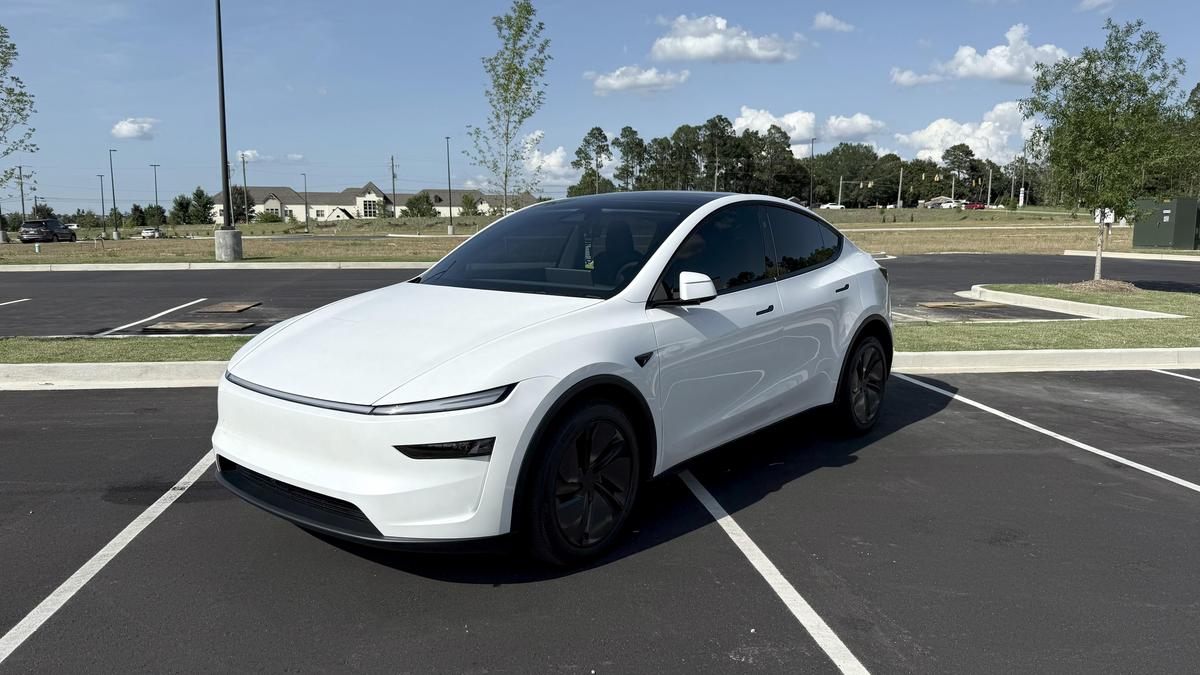
Tesla Model Y: Efficiency and Scale in a Mainstream EV
- The Model Y builds on a familiar electric platform, prioritizing efficiency and interior space rather than dramatic styling or performance theatrics.
- Its elevated seating position and wide glass area contribute to good outward visibility, making it easy to place in traffic and parking situations.
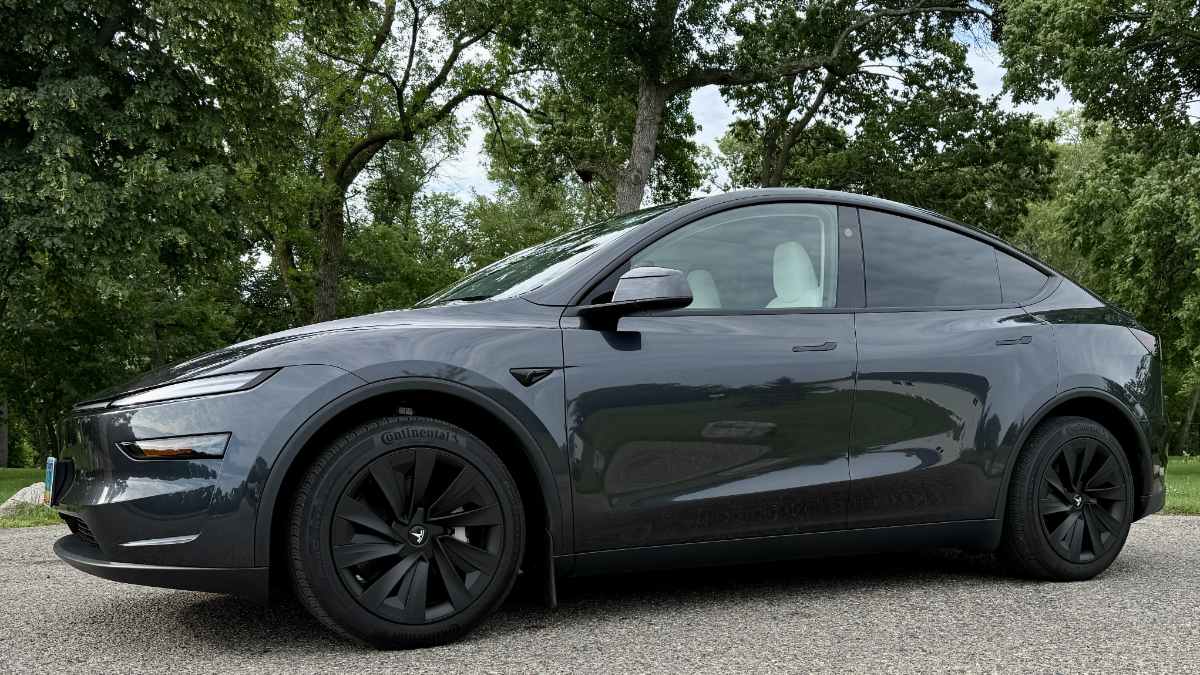
- Acceleration feels quick and seamless, yet the overall driving character remains tuned for everyday use rather than aggressive handling.
- Software integration plays a central role in ownership, with navigation, charging planning, and driver assistance systems working together as a single experience.
That evening, Tesla remotely attempted two additional updates. The conclusion came swiftly and bluntly: the Autopilot computer needed replacement. Tesla does not service the component internally, so the fix would require a full computer replacement at an estimated cost of $2,300. The owner’s question was the obvious one. Is it normal for a car to be functioning normally one day, then lose a major control module immediately after a 12-volt failure and software update?
The comment section reveals why this scenario resonates. Another owner described a cascade of error codes after a 12-volt replacement, errors that Tesla initially blamed on aftermarket accessories that had been installed for years without issue. That owner ultimately resolved the problem with a full power-down procedure, disconnecting both low- and high-voltage interfaces to force a clean reboot. In that case, the errors disappeared. In this one, they did not, reinforcing the uncomfortable possibility that something more permanent had occurred.
An independent EV technician weighed in with a concise explanation. If an update begins or resumes while the 12-volt system is not being properly maintained or commanded to charge, the process can fail catastrophically. In plain terms, software updates do not tolerate unstable power. If a critical module is writing firmware when the voltage collapses, it can be left in an unrecoverable state. In traditional computing, this is known as “bricking.” In a car, it is a four-figure problem.
What makes this case especially troubling is not the failure itself, but the ambiguity around responsibility. The update was scheduled by the car. The vehicle was plugged in. The owner did nothing unusual. Yet the proposed repair is treated as an out-of-warranty hardware failure rather than a downstream consequence of a software event occurring during a known weak point in the system. The owner’s final question cuts to the heart of modern EV ownership: if an update bricks a module during a 12-volt failure, is that on the manufacturer or the customer?
This episode underscores a quiet truth about software-defined vehicles. The high-voltage battery may power the drivetrain, but the 12-volt system remains the gatekeeper for everything else. When it falters, the car is not partially degraded. It is inert. As vehicles become more update-dependent, the margin for power instability shrinks, and failures that once would have required physical damage can now occur silently overnight.
For owners outside warranty, this is more than an anecdote. It is a reminder that reliability is no longer just mechanical. It is procedural. It depends on update timing, battery health, and how gracefully systems fail when conditions are imperfect. Whether Tesla ultimately covers repairs like this will shape trust as much as any new feature release. Because the promise of over-the-air improvement only works if the process itself does not become a liability when something as small as a 12-volt battery gives up at the wrong moment.
Image Sources: Tesla Media Center
Noah Washington is an automotive journalist based in Atlanta, Georgia. He enjoys covering the latest news in the automotive industry and conducting reviews on the latest cars. He has been in the automotive industry since 15 years old and has been featured in prominent automotive news sites. You can reach him on X and LinkedIn for tips and to follow his automotive coverage.
Set Torque News as Preferred Source on Google
Follow us today...